Rivers’ Roar.

Caspian Lake, Greensboro, Vermont

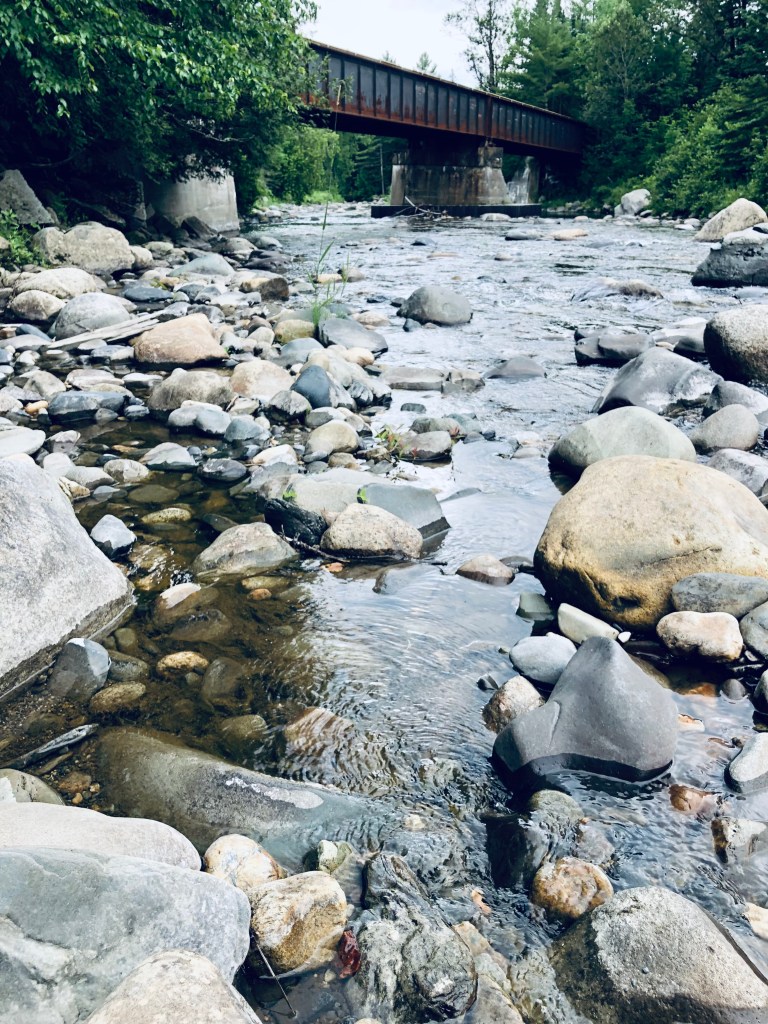
The rivers are running again. I pause on a Sunday morning run, on a large bridge state money funded for the rail trail project. The river roars in spring lust. People can — and do — drown in April. This season is as fierce as winter.

The countdown has begun, the green steadily eroding the brown.

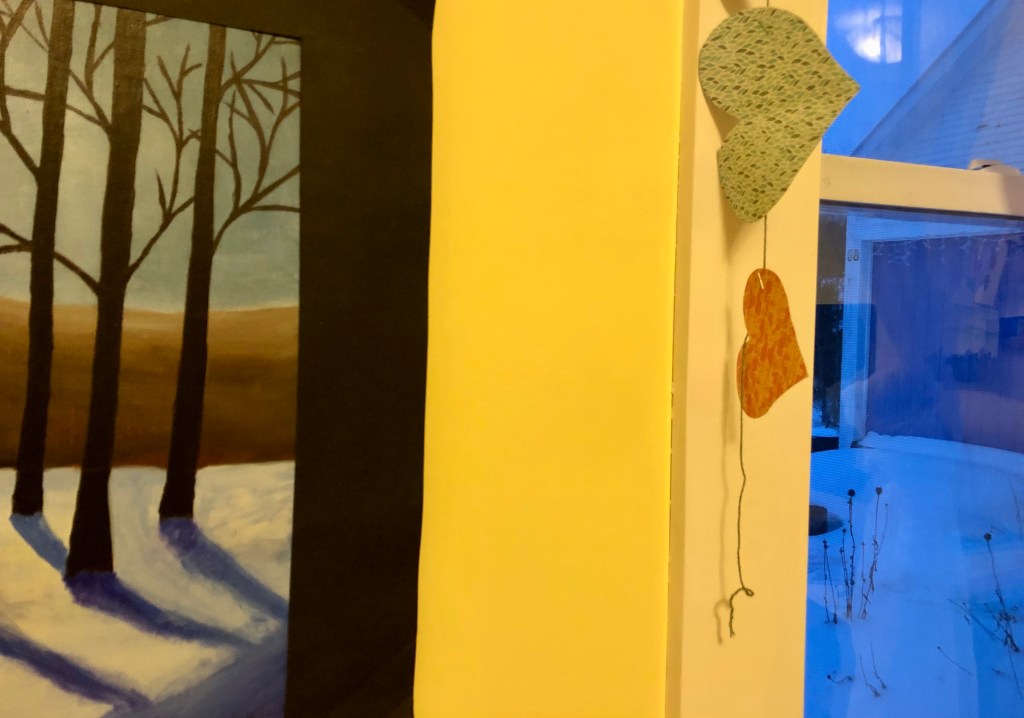
A year ago, my family was quarantined with my daughter’s positive Covid test. Yet unvaccinated, I lay awake at night, wondering why I hadn’t yet written a will, why I hadn’t added my oldest to my skimpy bank account. During the day, I painted the inside of our porch windows a brilliant blue and listened to Derek Chauvin’s trial for the murder of George Floyd.

When the jury verdict was read, our quarantine had ended. My youngest and I were sitting my car, listening to the radio, waiting for her soccer practice to begin on a cold evening. A V of geese flew over the wet field.

Years fly by. Sure. But that year doesn’t seem like yesterday. It was one full year. While my daughter played soccer, I walked among the cedars along the river, watching the remaining pieces of ice dislodge and wash into water.

…. In other news, grateful for two lovely review of Unstitched in Montpelier’s The Bridge by Tom McKone and for Tyler Orion Glauz-Todrank’s review in Lucky Cloud Books.
Somewhere in March.

Hardwick, Vermont

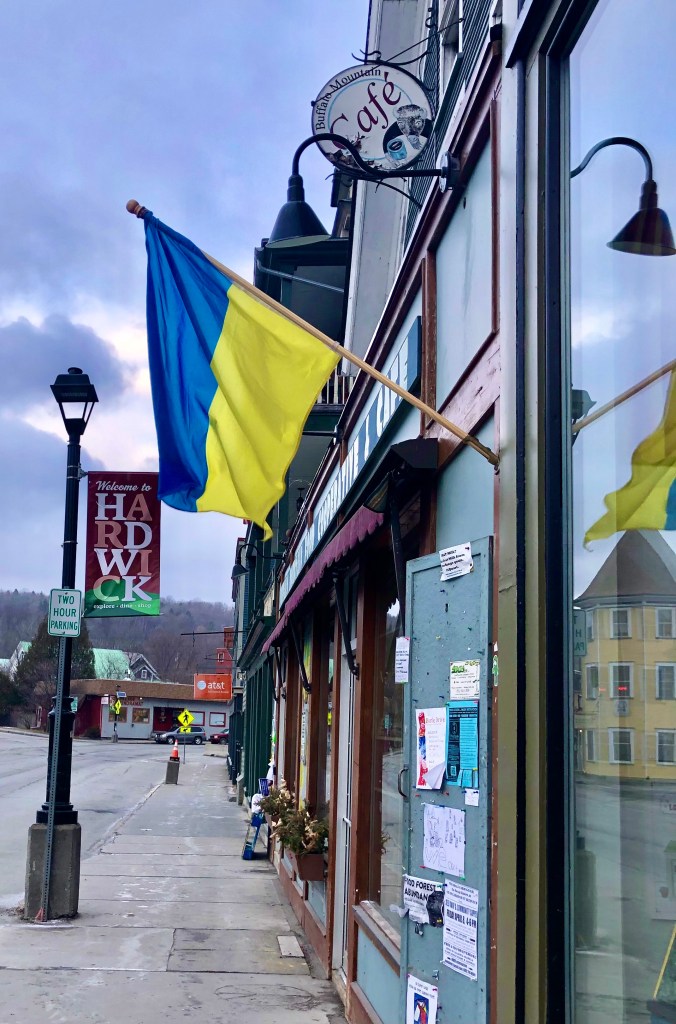
Mud season is fierce this year. The school busses cease running on some roads. Families share photos of kids waist deep in mud ruts. Time, more than all the gravel in the state, is more likely to true up the roads than anything else.

Mud season is the odd shoulder season in Vermont. The skiing winds down. There’s no good biking. The tourists are all in sunnier southern locations, and Vermonters muddle along.

All day long, the prettiest and lightest snow falls — nothing serious, nothing much at all — just a scattering of the purest white and enough of a chill that the wood stove is welcoming when I come in with cold cheeks and armfuls of wood. I put a quiche in the oven and head out for a walk. The snow has (mostly) melted here now, and so my paths through the fields and woods have opened up again. Behind the elementary school, the turkey vultures circle over my head. They’ve just returned from their winter sojourn, to their long-time nest in a stand of white pines. I know what they want; there’s no secret here.

I hurry down the hill and along Main Street. A woman stands outside the laundromat, hands in overall pockets, staring up at the drifting snow. She raises one hand to me. I do the same, round the corner, and head home.

Overheard.

Far enough after twilight that the darkness has set in for the night, I walk up to the library to leave my returns in the book drop. The bitter cold has snapped, worn down by the day’s warmth. Cold in February will return — it nearly always does — but the tide of winter has pushed over.

Spring in Vermont is a long ways off. This is a rude truth, and it’s also true that this is the time of year I begin hungering for green. I take my time, walking back through a neighborhood. Hardly anyone is out, save for a man standing on his back step, drinking a beer and smoking. The smoke curls upward in the lamplight just above his head. Down the street, a small child comes running at me, his or her head hung down a little, tired perhaps. The child wears a knit cap and a dark coat and hurries along, keeping a wide berth from him. At the house with the man and the cigarette, the child leaps the snowbank. The man says, “Hey now, been waiting.”

The boy rambles about “sledding gone soft.” As I turn the corner, the man’s deep voice follows me. He says kindly, “Wait a week, kiddo.”

Good advice for kiddo, I think. I follow the steep street up to my house, where the cat is waiting in the windowsill for me, and the daughter is solving math equations.

Collectively, I think, we’re all in a waiting period.

Color.

We’re nearly at midwinter, the turning-around point of early February. The ice is hard; there’s snow; the light returns, an extra dipperful of it each day.

There’s that Currier & Ives vision of midwinter, nestled deep in fluffy snow that I’ve experienced in a few flashes. This year, unease eats us all around the edges, in strange kinds of ways. A shortage of kitty litter in the supermarket. What does that mean? Maybe nothing worth thinking about at all.

I buy a gallon of paint at the local hardware store. The young man who mixes it went to high school with my daughter. He puts the paint to shake, and I wait and wait in my winter coat and my knitted hat. I remember the first summer I canned so much from my garden and the endless jars I bought here — invested in, really — so many mason jars. High on a storage shelf above my head are those boxes of Ball jars, waiting for tomatoes and green beans and chutney.

He reappears, his face mostly hidden behind his mask. With a key, he opens the can of newly mixed paint. For a moment, he stands there, studying it. Then he asks if that yellow is the right color. I tell him, Yes. He hammers back on the lid, then pushes the can towards me. Good luck, he says.

As I walk out, I wonder if he means good luck with the color, or the painting, or just generally. But what’s the point, really? We all could use a little good luck.

Lovely review of Unstitched in Carved Spines. Thank you!

August. Somewhere.

In the midday heat, my youngest drives us north, following vague directions, and we hike along two small ponds. The merest wind blows, ruffling sunlight over the water like sparkling scales.

Through the woods, we follow a trail up and then sit on a rocky ledge, admiring the view, drinking water and eating crackers and talking. The humidity reminds me of summers in southern New Hampshire, and how a summer seemed so long as a kid.

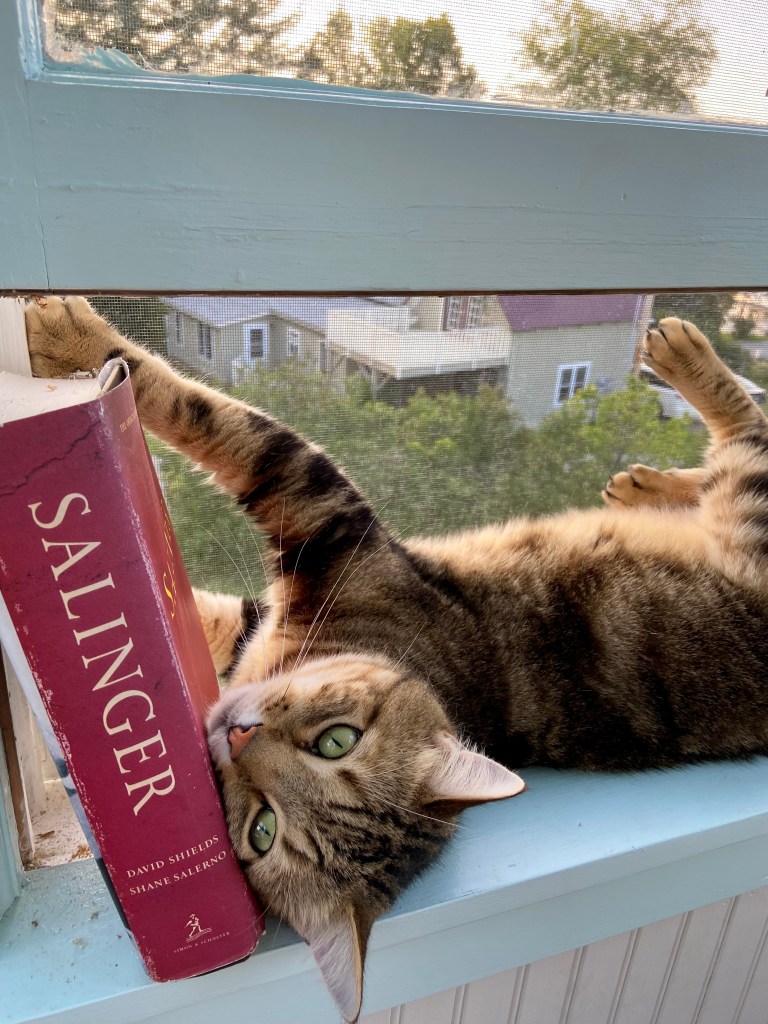
The sticky heat spreads out this day, elongates it. There’s plenty more ahead — my daughter heads into work and then goes swimming with a friend; I write on the back porch; my oldest returns from work and attends class on the upstairs porch; our cat catches his claw on the window screen. Rain falls.

But before all that, my youngest and I stop by a farmstead, and eat drippy and creamy-delicious vanilla ice cream cones. As we get into her car to leave, my daughter bites into a fresh peach. A friend pulls up beside us, and we talk for a bit. Our conversation winds quickly to work and misogyny. My friend apologies to my daughter for our conversation flying around.

My daughter asks politely, What? and pauses with that half-eaten peach in her hand.

My friend says, Oh, she’s in that lovely peach world.

Hard-working house cat, Acer.

Poem for America.

I was pruning the rose bushes along our house, pressed up against the clapboards, when I had the strangest feeling that I had stepped into a snapshot collage of my life: thorn, blood, house, half-hidden, wet moss under my knees, a cat bird screeching in the lilacs. This morning, I’m wearing a bulky sweater. Oh, Vermont July, how I love you.

Every year, my daughters and I end up in some lengthy discussion about the Fourth of July. This year, as if jointly agreeing to avoid words, we ate ice cream and lit sparklers after dark. The fireflies blinked, in their own particular journeys.

Here’s a poem in its entirety from Tony Hoagland’s Twenty Poems That Could Save America:

Even if the geraniums are artificial

Just the same,

In the rear of the Italian café

Under the nimbus of electric light

They are red; no less red

For how they were made. Above

The mirror and the napkins

In the little white pots . . .

. . . In the semi-clean café

Where they have good

Lasagna . . . The red is a wonderful joy

Really, and so are the people

Who like and ignore it. In this place

They also have good bread.”

“The Geraniums” by Genevieve Taggard

Hardwick, Vermont