Flattening the Road.

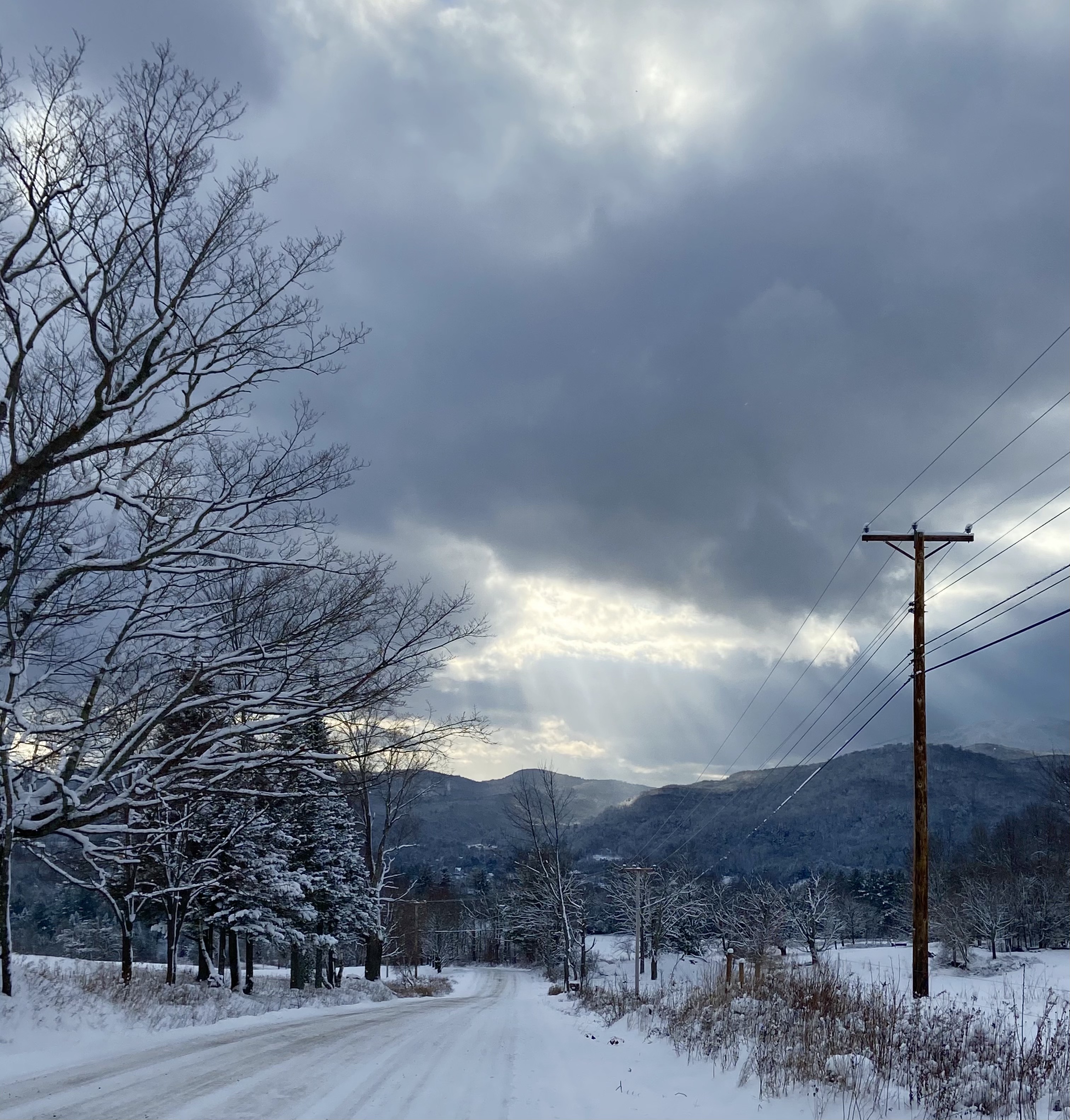
I drive home in a pouring snow, remembering when we bought a Toyota pickup years ago, and I drove with four-wheel drive, how the road suddenly flattened out. I’m driving my daughter’s car. In Hardwick, I stop at the auto parts store. Her right wiper is torn. I’ve known the person my daughters call The Auto Parts Man for years. He opens the wiper packages on the counter and then puts on his coat and heads out in the snow and replaces my wipers, too.

It’s the last day of February, and he says he’d rather winter just quit. He laughs and shrugs.

Nonetheless, for the moment, my windshield is clear.

This hill
crossed with broken pines and maples
lumpy with the burial mounds of
uprooted hemlocks (hurricane
of ’38) out of their 
rotting hearts generations rise
trying once more to become
the forest

just beyond them  
tall enough to be called trees  
in their youth like aspen a bouquet  
of young beech is gathered

they still wear last summer’s leaves   
the lightest brown almost translucent  
how their stubbornness has decorated   
the winter woods

— Grace Paley

Ceremony.

High school graduation this year is under an enormous white tent, surrounded by the community. Not everyone is pleased with the arrangement — that’s pretty much a given — but the tent looks regal, the weather is magnificent, and, well, we’re still pulling out of a pandemic.

I chose a seat in the sun just under the edge of the tent. The principal’s speech goes on and on, and I begin to wonder, where are you headed with this, David, when suddenly I begin to guess. He’s facing the sixty or so graduates, speaking directly to them, about the hard year and a half they’ve endured. A few months before the pandemic, a member of their class committed suicide. Shortly afternoon, the pandemic shut down our world.

Looking through the tent and over the soccer field, I see people I know in one way or another, and many more I don’t know at all. Listening, I feel the principal’s speech pulling us together, acknowledging the difficulty of these past 15 months without bitterness or regret, the layers of isolation and anxiety, of political division, of frustration with a world turned awry.

He asks us to breathe in deeply, collectively.

Around us, the sunlight sparkles on the grass. A tiny girl stands outside the tent, her long hair unbrushed, staring in.

The strange thing is, I can’t breathe in deeply; I’ve been holding my breath for so long. But looking around, I realize these friends and acquaintances and strangers are collectively here for one reason — to champion our youth forward — and for the first time, I begin to feel (not think, not believe, but feel) that the way forward is indeed opening.

Rain

Just before dawn, a brief thunderstorm breaks apart and cools our world, followed by a dawn suffused with rosy and gold light. Much of the town might be sleeping, but the birds aren’t.

The clouds move in again and swallow up the colorful dawn with gray.

The human world around us unfolds in its uniquely human way, clumsy and jerking as vaccination rates rises. There’s a larger story of who contributes to herd immunity and who’s riding unvaxxed along the vaccinated wave. It’s a very, very complex story, with outcomes that aren’t even approaching murky yet. At the heart of this is that eternal koan, How do we know anything?

A koan the pandemic hasn’t made any easier.

I open all our house’s windows and the cool, rain-washed air rushes through.

Relish This

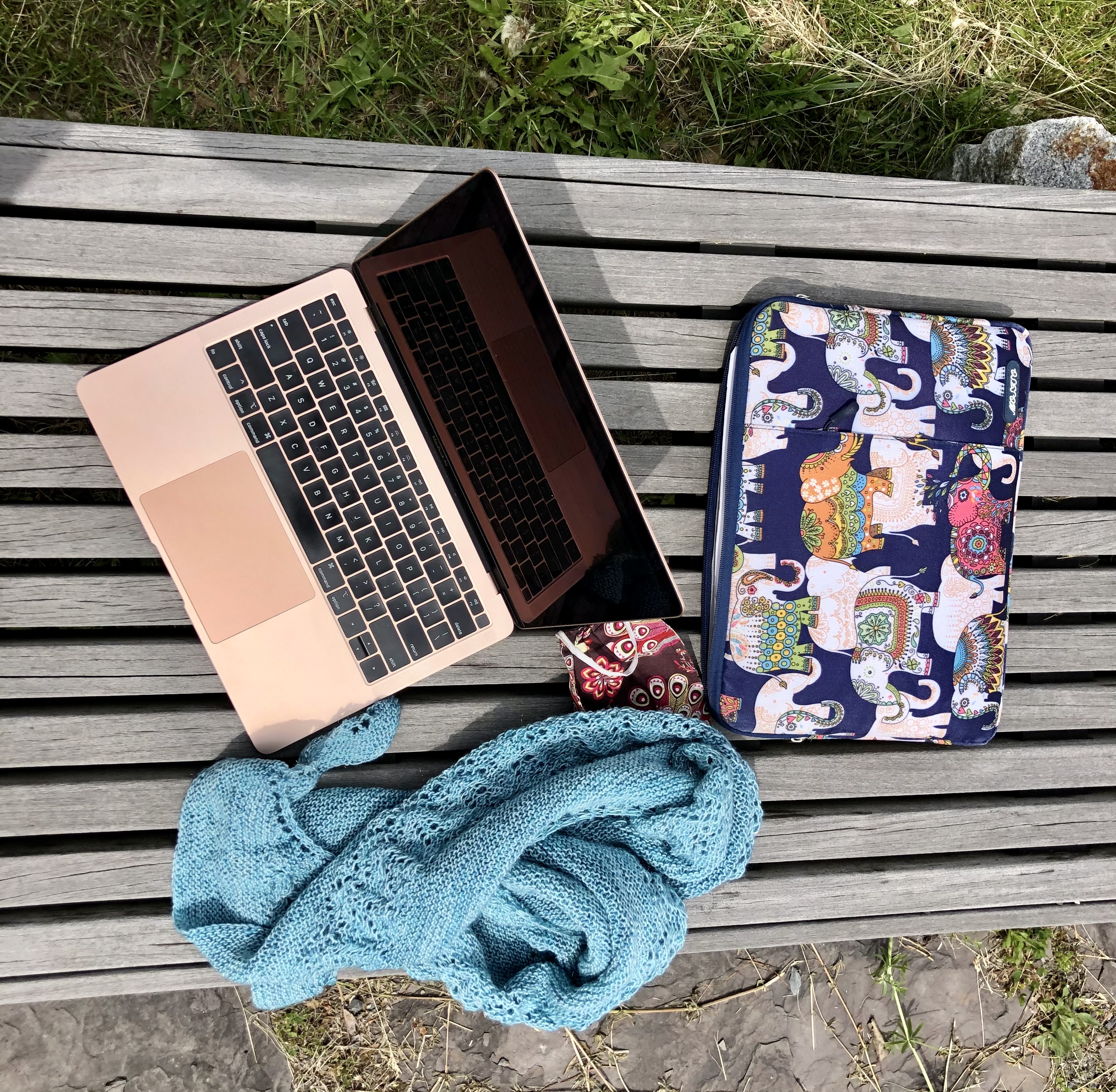
Unexpectedly, I end up with a short period of time in Montpelier, and, rather than work in the library as I once did (for years), I open my laptop on a bench. I set up beside the city’s old train roundhouse, marked now by a sign but nearly hidden under foliage.

It’s fitting, in these days of change.

In our family life, my youngest daughter’s birthday approaches. Last night, I watched my daughter and her friends laughing in the flickering campfire. What a change from last year.

In the world-at-large, the world changes, too. Our town canceled the annual Memorial Day parade, but set off fireworks at the high school. This is now, I kept reminding myself as we watched the fireworks from our yard, not a memory, but now.

The temperature sank. We wondered about frost warnings. I remembered how Peak Oil was the buzz right after this daughter’s birth. But here we are, sixteen years later, young girls on the cusp of womanhood.

Sweet, I thought as I gathered the dinner’s dirty plates. An actual potluck again. Sweet, sweet sixteen.

March

The winter my youngest daughter was two, I remember lying in bed one night with her after we had been in our sugarhouse all day. The washing machine churned with the children’s wet snowsuits, grimed with mud and ashes. I was worn out with working, my hair laced with the scents of wood smoke and maple, infinitely pleased that we had made a barrel of syrup.

As my little daughter fell asleep, I read Louise Glück’s poem “March” in the newest New Yorker, beginning:

The light stays longer in the sky, but it’s a cold light,
it brings no relief from winter…

A year into the pandemic, I feel as though we’re mired in an eternal Vermont March. I am now old in ways I have never been old before; all three of us have bent and changed this year, as has everyone I know.

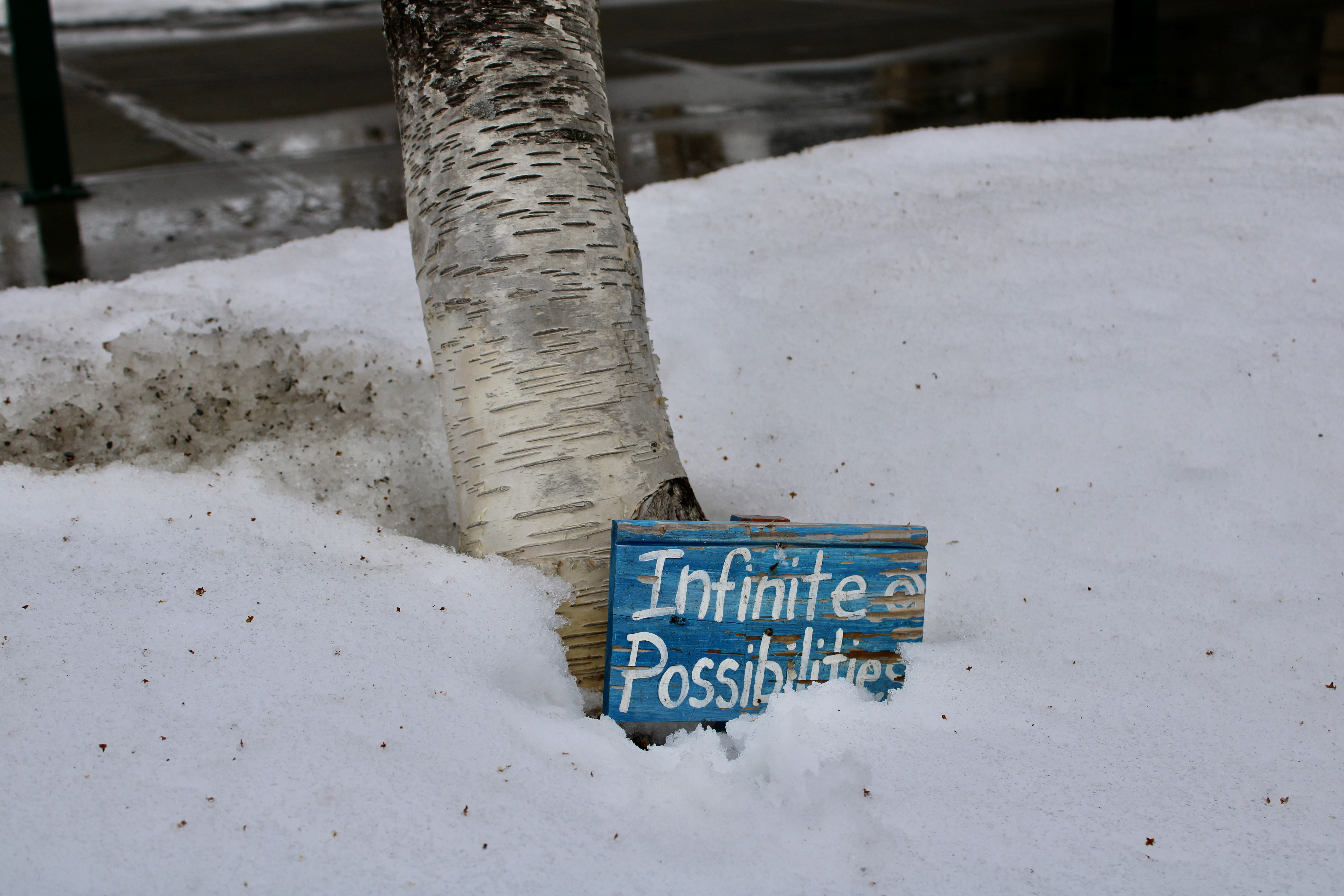
When my daughter gives me this photo she took, I cringe for a moment, with a definite glass-half-full fear. But she doesn’t. Infinite possibilities…. surely, spring is there.

Photo by Gabriela S.

Little Bright Bits

A friend and I have a habit of emailing back and forth requesting send me something good. We’ve been doing this so long now that I can’t remember when we started, although I’m nearly 100% certain this began in a long Vermont winter.

Generally, we offer little bright bits — a book to share or a decent recipe. Yesterday, she emails about the rising full moon. Drivers along the County Road pulled over and took photos.

Little bits that are maybe not slight at all.

After dinner, my daughters and I bundled up against the sharp cold and went walking in the silvery moonlight. We hadn’t dressed warmly enough and shivered by the time we returned. Chattering, my girls were exuberant that winter had finally arrived in all its radiant beauty.

That gleaming round moon, the sparkling snow, a warm house: solid strands of our web.

  Barn’s burnt down 

     Now I can see 

     the moon! 

— Mizuta Masahide

Photo by Molly S./Hardwick, Vermont