Where We Are.

Mackville Pond, Vermont

My daughter and I drive around in the evenings. It’s a teen/parent compromise I suppose — a walk in the town forest where I gush over blooming trout lilies and spring beauties and trilliums as if ephemerals have never done this amazing show before. My daughter is cool and tough, utterly on that rugged cusp of childhood and womanhood. It makes my heart ache. It makes my heart swell.

We drive around in what might appear to anyone else as aimless nothingness, checking out geese and listening to the peepers. In our driveway again, I slip off my sandals and lean back in the carseat. Goddamn, I could sleep in her car, that the slip of moon would rise over us, and then we’d just begin again in the morning. Maybe we’d drive to Nebraska. Maybe to her high school. Maybe we’d just keep sitting here, talking, or not.

Meanwhile — spring goes on. Leaves unfurl.

My wrists and eyes and heart are baggy with wrinkles. That is how old I am. Meanwhile, I keep thinking of a line about doubt by Søren Kierkegaard. As a young woman, I thought this doubt thing was for the weak and the foolish. I believed in striking out, holding firm, sucking up the consequences of my actions. Now, it’s a koan that keeps rattling around in my late night, my early morning, my stray driving thoughts: “Doubt is conquered by faith….” I think, take heart from from that. Then, when I look up the line, I realize I’d forgotten the second half: “… just as it is faith which has brought doubt into the world.”

I think, Go listen to the peepers again.
Breaking Ice.

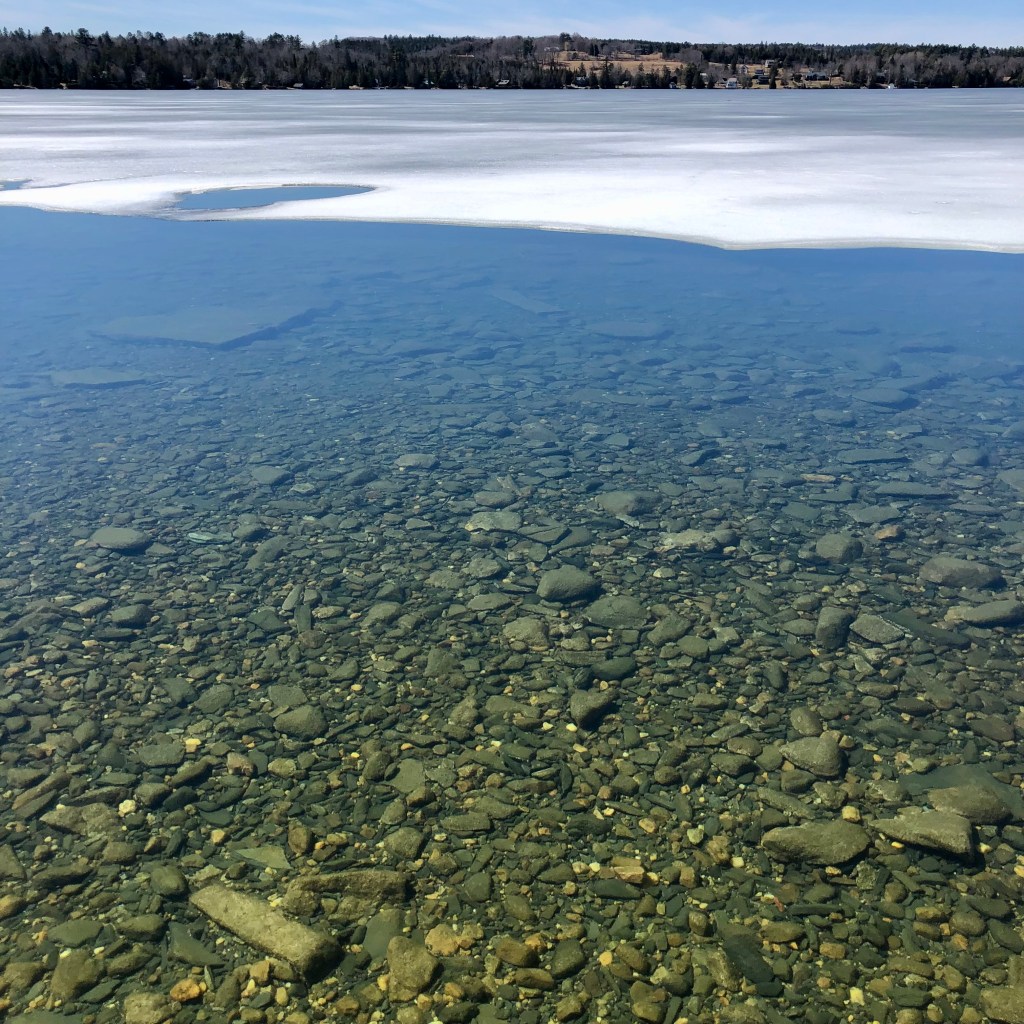
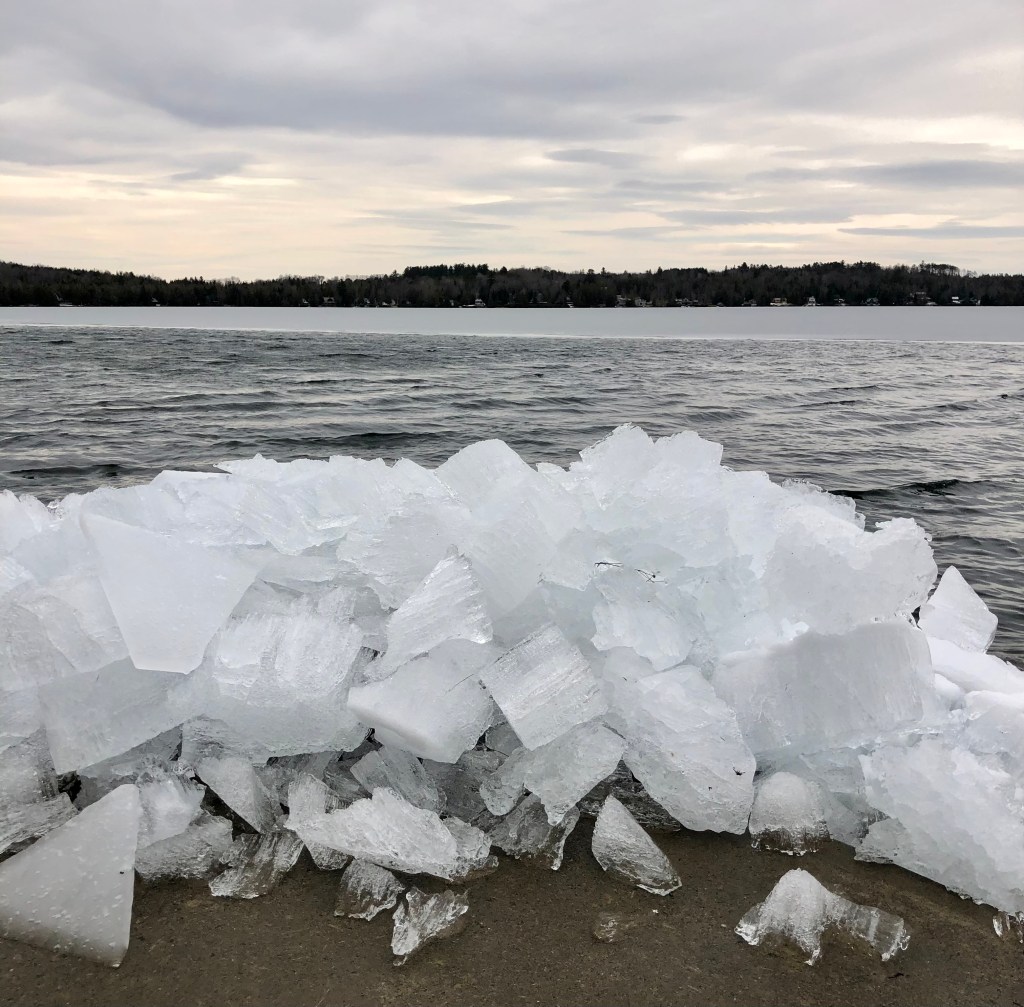
On a midday walk around the lake, I hear bits of breaking-up ice crash against a cement pier. Vermont spring — ice and green shoots, rain and rouge snow and sometimes sun.

This time of year — school break and tail-end-of-winter doldrums — many folks have flown to warmer and sunnier climates, seeking the old stand-by of the geographical cure. Around the lakes where summer folks own the large houses, hardly anyone is there, save for carpenters and roofers and painters, their pickup trucks clustered in driveways.

But the lake keeps on with its own steady world, the fierce ice gradually giving up its ghost. By the time these summer folks return, the water will have warmed again. For now, though, ice clinks as it breaks apart.

I tie my long hair back with a rubber band I found in my coat pocket. The breeze carries the damp scent of the earth, the dream of unfurling leaves, the memory of children crouched among the cedar tree roots, playing.

“The sun was warm but the wind was chill. You know how it is with an April day.”

~ Robert Frost

Not Rabbits, Hares.

Robin songs come through my open window this morning. Although I’m still keeping the wood stove at least tepidly warm, we leave the bedroom windows open all night. In this corner of Vermont, we’ve had Easters of snow, others of hot sun.

After dinner last night, we started talking about what this holiday is about anyway. My teenager pulled her sweatshirt hood over her head and scooted down on the couch. Unintentionally, she looked like a little kid again, listening to the chat around her and diving in at times.

I remembered the Easter she was four or so, and her friend from down the road came to play. The girls ran around under the giant spruce tree in our scrappy yard. When I stepped out of the kitchen to sit on the porch and talk to the girls, the little children were running around with two large snowshoe hares that were molting to brown. The girls asked me what was wrong with their fur; it was so patchy and strange. They were worried the hares were injured.

Our house was surrounded by thousands of acres of wilderness, but we had never seen hares, only their tracks all through the woods. The hares stayed for a visit that morning, running between the girls. Delighted, the girls kept calling, “rabbits! rabbits!” I moved on, distracted by whatever chore I was sure I needed to do. When I returned, the hares had disappeared. We never saw them again.

This morning, my alarm buzzed before dawn, and I lay there, wondering if I really needed to keep on with what I’m doing. Indeed, apparently, I do, although I often feel like a molting hare. The robins sang sweetly, actually for dear life. I got up to feed the cats and make coffee.

It’s been a very long two years. Savor whatever birdsongs or sweetness or coffee comes your way.

Wildflowers. String.

Five Aprils ago, I was looking for a house for my daughters and me. In a nearby town, on a weekday afternoon, I climbed over a chainlink fence separating an empty house from a town cemetery. The fence spikes ripped the back of my leggings. I was on my way to the library where I was working, and I wore those torn leggings for the remainder of the day. I still have those leggings. I wear them when I paint, and they’re now stained with patches of lemon yellow.

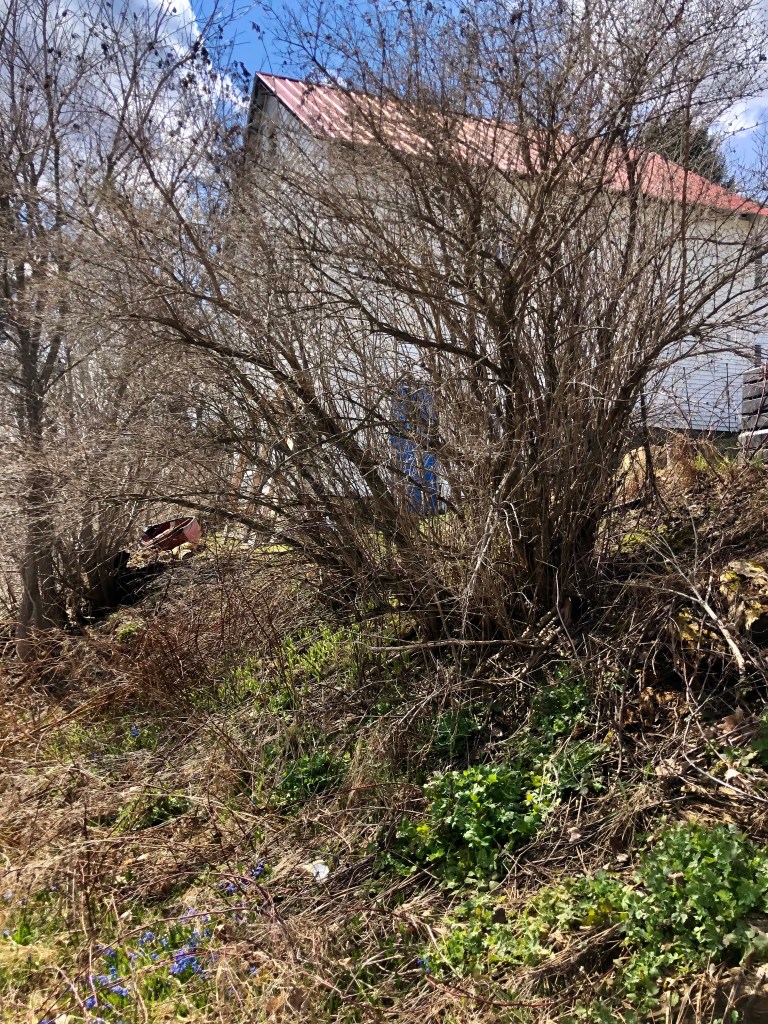
When I walked behind the house, I discovered tiny blue quill — spring flowers I didn’t know. The house was surrounded by those flowers and the promise of profuse lilacs in June.

I bought the house in 2017, although it wasn’t until the pandemic nailed down that the house began to feel truly ours. We are not a rowdy family of nine. We are a family of three and now two housecats.

The thing about spring is — turn around and it’s there, quietly, blooming in some unexpected way.

Look at the silver lining, they say.

But what if, instead,

I pluck it off

and use that tensile strand to bind

myself to those things I do not 

want to lose sight of.

“Notions” by Paula Gordon Lepp

The Long View.

I’ve reached the point in my life where suddenly my parents are old and my daughters are fleeing childhood. Technically, this is the Empty Nest realm, although I dislike that phrase. I’m not heading anywhere. Do the cats count for nothing?

A different woman might be plotting a sewing room. Instead, I’m plotting my own Huck Finn plans, and I’ll pack my knitting needles, thank you very much.

While my youngest is still here, and I’m still reveling in the teen world (which is, honestly, utterly fascinating), I sense more and more how I saddle two generations.

So I read poet Diana Whitney’s recent IG post about intergenerational trauma and female bodies with keen interest today. I followed by reading Whitney’s essay in Longreads. You should read it, too. We’d all be healthier, perhaps, if we spoke a little more about these hard things. And that, today, is as far as I’ll write about that.

Appetite.

Before it’s warm enough, I open the open to our glassed in porch. This porch (nor its upstairs counterpart) isn’t heated. In Vermont’s long winters, we simply close the door and leave the space be. I think of this as a standard New England practice. I store empty canning jars, summer flip-flops, things like old blankets I don’t really want any longer, but nor do I want to cast away.

All day long, doves and cardinals, juncos and chickadees and sparrows, dip and fly around our house. The crocuses struggle upward. I should be cleaning our house, I think, taking a broom to the cobwebby corners before the spring sets in mightily and I’m in the garden as much as possible, happy as I could ever be, the warming soil between my toes.

Now, snow falls intermittently. The robins dig into the earth hungrily.

Consider the tulip,

how it rises every spring

out of the same soil,

which is, of course,

not at all the same soil,

but new.

~ Rosemerry Wahtola Trommer