Falling Ice

In the night, ice slides off our back roof and breaks our porch railing. I discover this in the morning while I’m carrying out the stove ashes, cautiously looking for one of the neighborhood skunks.

The broken railing doesn’t even register as an annoyance. While I’m making coffee, I think this over. Just a few years ago, I would have brooded on the broken wood, resentful of the expense of money and time to repair this piece of our house. Now, I think merely, That can be repaired.

There’s a lesson here, I think, on this mundane Thursday morning. Of all the broken things in my life — inevitably, in all our lives — a snapped piece of wood hardly matters. For years, I saw the accumulation of disrepair, from a loose coat peg to a leaking roof, as sure evidence that my family life was unfolding. A year into the pandemic, a broken railing is evidence of warming nights. Repair, and move on.

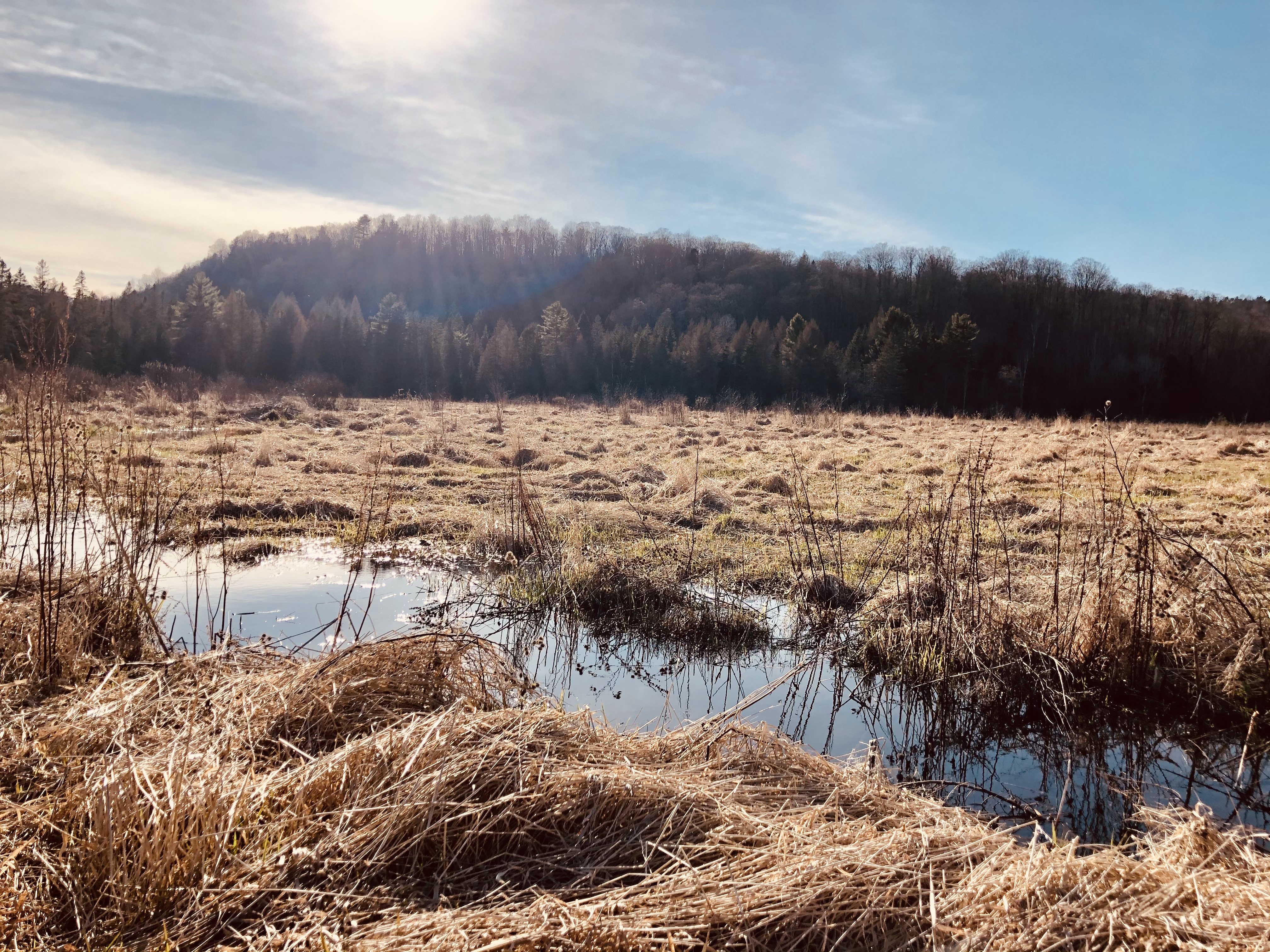
From Leland Kinsey’s poem “Winter Stay in a Peat Bog”

Sunday Sweets

Skiing through the town forest yesterday, I ducked beneath sap lines. The sugarbush there is tapped and ready for the sap to run. I’m ready, too.

For years, our family sugared, and February began weeks that turned around the season and sap flow. We had no weekend. We had no days off. So now, on Sundays, I (mostly) fold up my laptop and lean into family.

One (small) silver lining of the pandemic is the pleasure of a single donut: peach, flower, poppy seed.

Ten degrees and sunny. Perfect for ice skating.

Here

I’m here —

the snow falling.

― Issa

Strangers

A stranger comes into my office and tells me about the guesthouse he might want to build in ten years or so. Then he stops and asks rhetorically, Who am I kidding? I don’t know what will happen this summer.

I say (through my mask), Really, what might happen next week?

There’s a moment before we both laugh. What else could we do?

Driving home, through this gorgeous Vermont scenery — white snow sprinkled on blue mountains, enormous red barns, pretty clapboard villages with church spires the highest manmade mark — I think how lucky I was to travel a lot as a kid and in my twenties. So much camping, so much washing of hair beneath spigots. And yet, everything is just weird. Maybe this will change by the summer; maybe not.

At dinner, my daughter tells me about an elderly couple who stopped their car while she was walking and asked for directions to the high school. She said they told her they were on their way to get vaccines, and they waved happily to her as they drove off.

Listening, for some reason I remember an old word from novels I read as a child: Godspeed.

Thinking of that couple, I thought, Godspeed. Thinking of all of us, I thought, Godspeed.

And here’s inspiring news of an ancient shell.

Tuesday

When I step out to start my daughter’s car before she heads to work this morning, a very light snow is falling, flakes drifting in the light from the kitchen window.

Last year, I would have been headed to Burlington through the snow, driving through whatever the weather might have tossed at me. This year, I’m headed a far shorter distance up a back road.

In my twenties, I lived in Washington state for a few years, on the western side, in the Cascade mountains. The mountains were beautiful, the people kind, but I missed the heart of winter, the drama of Vermont’s swinging seasons. On mornings like this, I sometimes wonder what the heck I was thinking. In February, so many Vermonters draw in — even pre-pandemic — hibernating at our hearths against the winter.

For a moment longer I stand shivering. In the village below, only a few lights glow. A milk truck drives along Route 14.

Then I head back in to make more coffee. My daughter yawns and packs her bag for work. She asks me, Remember the smell of rain?

Yes, I say. I do.

Photo by Gabriela

Sweet Day

All day on my oldest daughter’s birthday, I remember that this was the day I became a mother. The day is imbued with a rosy holiness, transforming the everyday world of mundane things — a laundry basket, a cheese grater, a dutch oven — into pieces of our miraculous life. Parenting is a long, long road — there’s no doubt about that — the world would be unimaginable without this road.

At the end of a very long labor with this baby, I saw myself descending deeper and deeper into a dark, stone-lined well, my arm outstretched, reaching for my baby who I knew was somewhere down at the well’s bottom.

This child was born at the very end of the 20th century, in contemporary Vermont. Modern medicine made her life possible, and certainly saved my own, too. Every year, when I’m grateful for this young woman’s life, I remember the strangers who brought her into the world.

Happy February.

Border Crossings

On inauguration eve, I dream of wandering through my childhood hometown and wake thinking of the November morning four years when I woke early and realized I would have to tell my daughters that Donald Trump won the presidency.

Four years seems so long ago — far longer ago than my own childhood of the 1970s when not all that much seemed to happen.

As I lie in bed reading about the Vikings — these ancient, fascinating people — snow drifts down outside, twinkling in my neighbor’s porch light. She’s up, too, as are my neighbors across the street, all three of our houses awake this morning long before dawn. In a different world, I’d pull on my coat and slip into my boots, walk through those unshoveled inches of fresh snow, and offer a piece of coffee cake my daughter baked.

In my own family life, we’ve slipped through so many borders and changes in these four years, one tiny ripple in the endless ripples of human life. Today, January 20, yet another change. May this be for civility and decency.

The Viking Age was very much a time of borders—between cultures and ways of life, between different views of reality, and between individuals, including at the level of liberty itself.

— Neil Price, Children of Ash and Elm: A History of the Vikings

Photo by Gabriela S.