A retired man shows up at my job, looking for a little info and then stays to talk, sitting in a chair while I lean against one of the cement posts that hold up the ceiling, and the building overhead.
A former landscaper, he’s survived numerous joint replacements, an overseas war as a young man, and he’s holding cancer at bay, for now. He’ll succumb to the cancer, he says, at some point. But for now, he tells me how much he savors that first slurp of hot tea every morning.
I have plenty to do, but for that time, I might as well, really, have nothing else to do. He tells me about a double blossom primrose flowering in his garden. Another spring, he says.
Blue squill reappears in our front yard and over the hill behind our house, in the thickets of wild raspberry canes — tiny flowers that sprinkle color in our landscape that is otherwise brown dirt and gray mountain.
In the rough patches of roadsides and rocky ditches, coltsfoot springs up. Along the brick school gymnasium, I discover blooming dandelions.
These tiny flowers, some no larger than my thumbnail, are mighty tough. There’s a lesson here, I know, as I crouch in that tangle of thorny vines, admiring a clump of starflowers. That lesson might be as simple as the determination of the world’s beauty. Who planted these flowers, I don’t know. But every spring I’m grateful for that gardener who lived here and who so loved these spring gems.
On a sunny spring Friday afternoon, I’m outside a St. Johnsbury car dealership, waiting for a recalled part to be replaced on my car.
A warm breeze blows up and drifts dust over my keyboard.
90 minutes later, I’m finished, and stop in the downtown. The doors of all the businesses are open. I wander into the bookstore, lift a book, and read — a casual gesture in a public space that I may not have done for a year, or more.
I open a book of poetry randomly and read:
You may have to break your heart, but it isn’t nothing to know even one moment alive. The sound of an oar in an oarlock or a ruminant animal tearing grass. The smell of grated ginger. The ruby neon of the liquor store sign
I have the strangest rush through my body, a tingling all the way down to my fingers.
On my way home, I stop in at a store and buy mayonnaise and two avocados at my daughter’s request. I walk out holding these things, blinking in the hot sunlight.
In the parking lot, a woman driving a pickup rolls down her window and remarks about the lovely weather, saying how happy she will be to get home. I nod, and we talk for a moment.
When she’s left, I stand with those things in my hands, on this ordinary afternoon, doing this ordinary errand. Someday, not too far off, this daughter will be out sourcing her own mayonnaise.
Our quarantine with Covid has likely turned my hair irretrievably to gray. So be it. Our lives were never meant to stay burnished and unblemished. I stand there, suddenly amazed at my good fortune, and then I head home for BLTs.
The temperature weirdly shoots up to 70 degrees. 70 degrees in Vermont in early April! For anyone who doesn’t live here, know that this warm, daffodil-growing weather makes our world a communally happy place.
While my daughter plays soccer, I take a walk, then spread out my work on a picnic table. Three geese fly overhead, making a honking racket. On the other side of a school building, I hear the kids laugh. Two dads roll up on bikes and stand in the parking lot, chatting.
Another parent I haven’t seen for a long time appears and stands at a distance. We talk and talk, about how our work has changed, and what’s happening with our kids, and even more, about each of us might want this summer — happiness, in some small way. Listening, I think, of all the many things we’ve learned this year, surely valuing the connection between us rises high. How little that might seem, and how infinitely valuable.
My daughter returns with a blister. At home, the carpenter has just finished repairing the porch railings broken by falling ice. We stand for a bit, talking and waving at early mosquitoes. He admires the view of the village below us and asks how I like living beside a cemetery. I like it just fine, I tell him.
Don’t talk to me about the stars, about how cold and indifferent they are, about the unimaginable distances. There are millions of stars within us that are just as far, and people like me sometimes burn up a whole life trying to reach them.
Sunday afternoon finds me talking to the Vermont Department of Health contact tracer about my daughter’s positive Covid test. My results, he determines, haven’t rolled in yet.
I’m at the dining room table, chipping wax off a candlestick, doodling on a piece of paper. He asks where she’s been, and I answer honestly, school, home, and the woods.
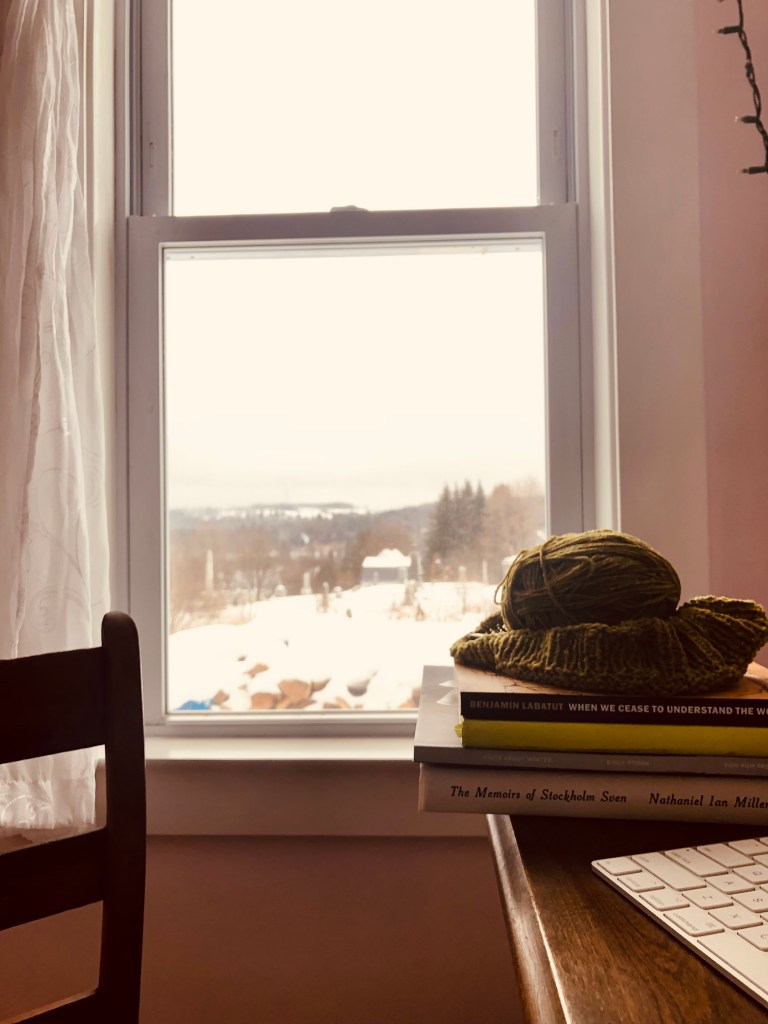
Through the window, I see a cold rain falling. He tells me about the potential for what seems to me an incredibly long quarantine period for myself, if I don’t test positive. If I do, well, that’s a different kettle of fish so to speak, he says.
What you’re saying, I clarify, is that there’s no good options here.
He pauses.
I apologize immediately. The good thing has already happened. Covid has washed right over my daughter with the lightest touch. My other daughter is vaccinated.
I answer all his questions. Then I ask, Wait and watch?
It’s maddening, he says, but yes. That’s where you are.
The wind bends the pear tree in our front yard. We’ve endured plenty. Our house is warm, stocked with firewood and food. And so it goes.
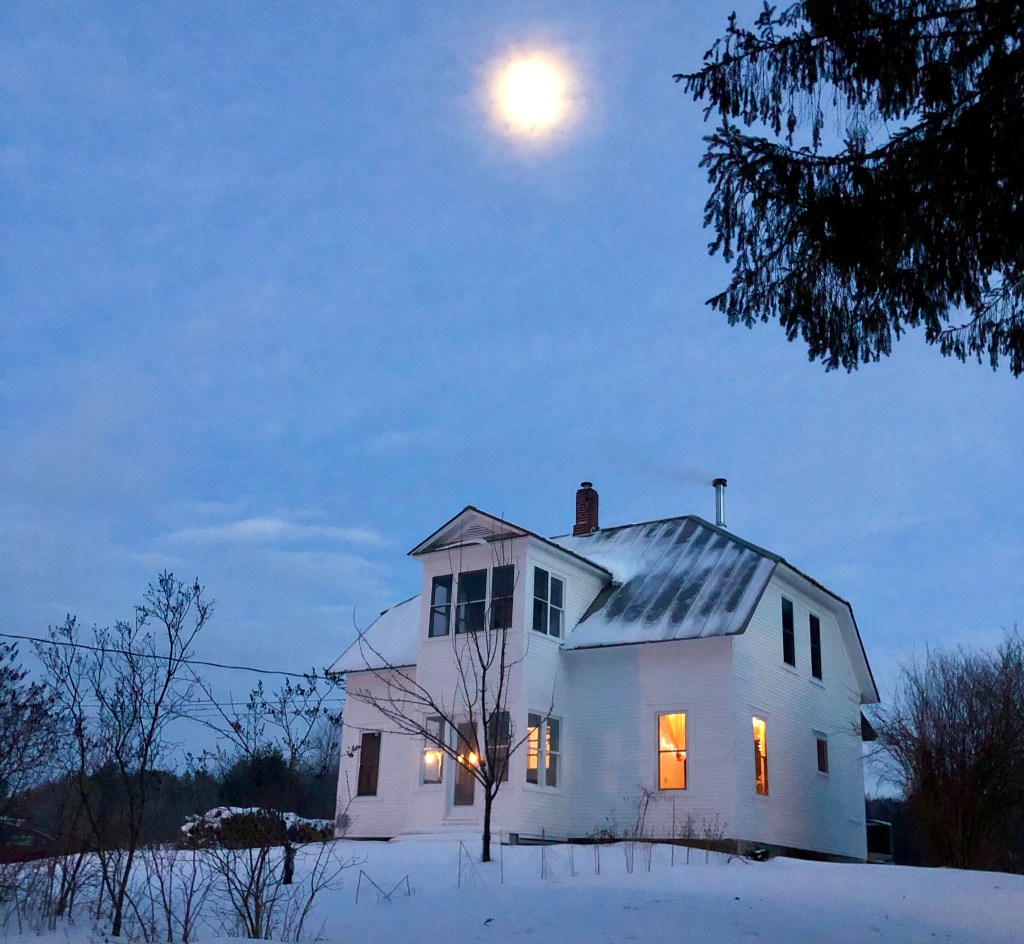
I lingered on our porch yesterday evening, gathering a few pieces of firewood. It’s warm enough now that the fire could stay out, but somehow letting the hearth go cold in March just doesn’t seem right.
There’s that worn-out cliche that the laughter of babies is one of the best sounds on this planet — and it’s not a cliche, because baby laughter is really dear.
But so is the songs of robins.
We’re back again in these melodies. Around us, mud and thaw pushing up the debris that’s hidden under the snow all winter. Pieces of cardboard and empty yogurt containers, the runny mess of my ash pile, my youngest’s holey (or is that holy) pink socks where she tossed them over the porch railings in a burst of spring enthusiasm.
Oh, robins, mud your nests, lay your eggs, raise your newborns. We need you!
Open a window. Rain falling on good land is good for melancholy.