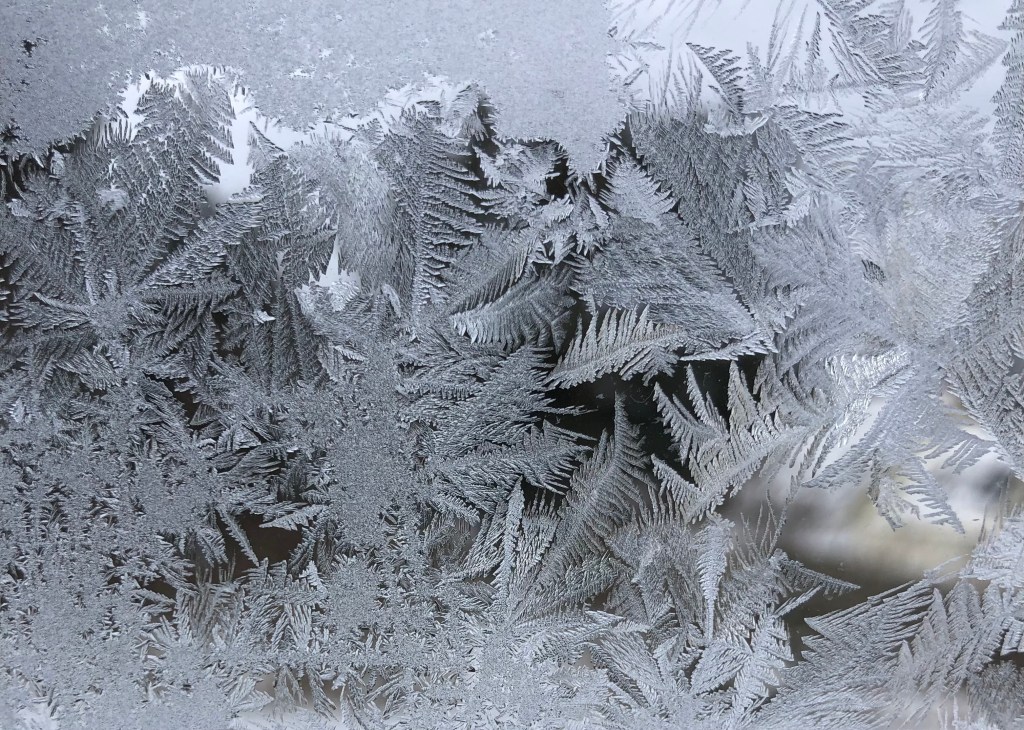
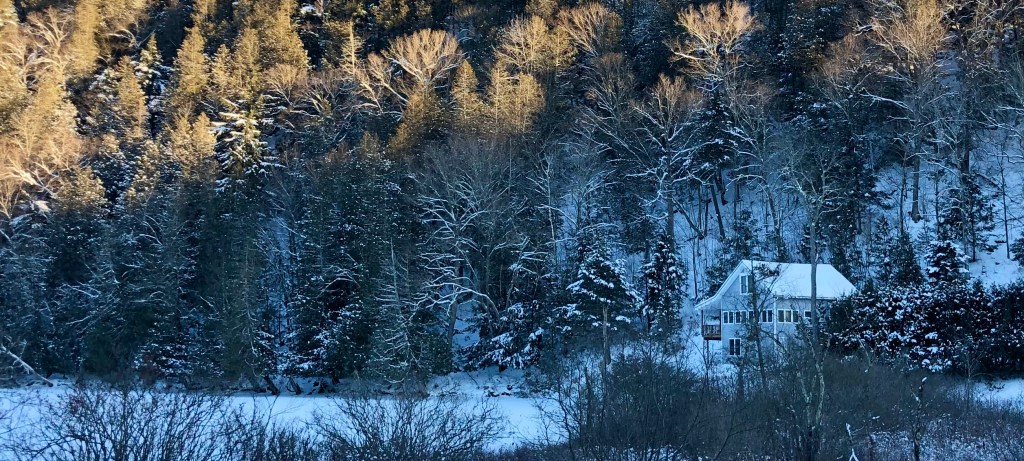
View from our front porch. Which pretty much sums up where we are now.
… oh voiceless trees
Under the wind, I knew
The eager terrible spring
Hidden in you.
— Sara Teasdale
View from our front porch. Which pretty much sums up where we are now.
… oh voiceless trees
Under the wind, I knew
The eager terrible spring
Hidden in you.
— Sara Teasdale
The air has turned this morning when I step outside in the dark with my bucket of hot stove ashes. Even without my coat, I’m not immediately shivering, and the cold doesn’t come at me with daggers on my face.
Beneath the starry sky, I gazed up at Ursa Major, a single gauzy cloud suspended overhead, as if in water. I’m reminded of frog’s eggs, those cushiony pillows I sought with my daughters when they were little. Every spring, we found clusters in ponds and in the ditches along our dirt road. We’d visit these clusters every day on our wanders. Sometimes the eggs hatched. Sometimes the clustered disappeared.
On this early February morning, beneath the stars, I stood for a few more quiet moments, thinking about stars and frogs’ eggs. Snow’s expected to move in soon, too.
As water given sugar sweetens, given salt grows salty,
we become our choices.
~ Jane Hirshfield
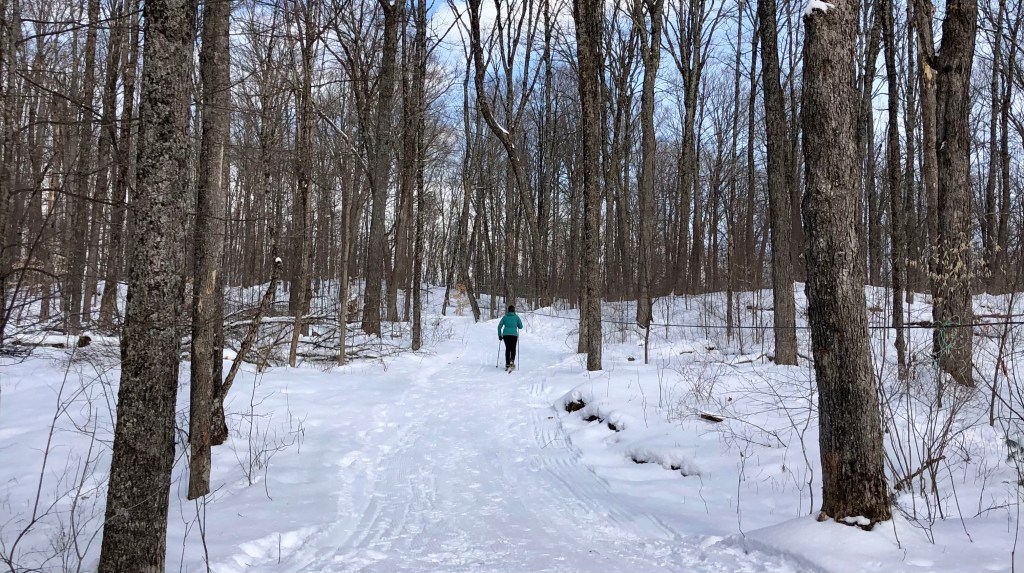
Daughter and sap line
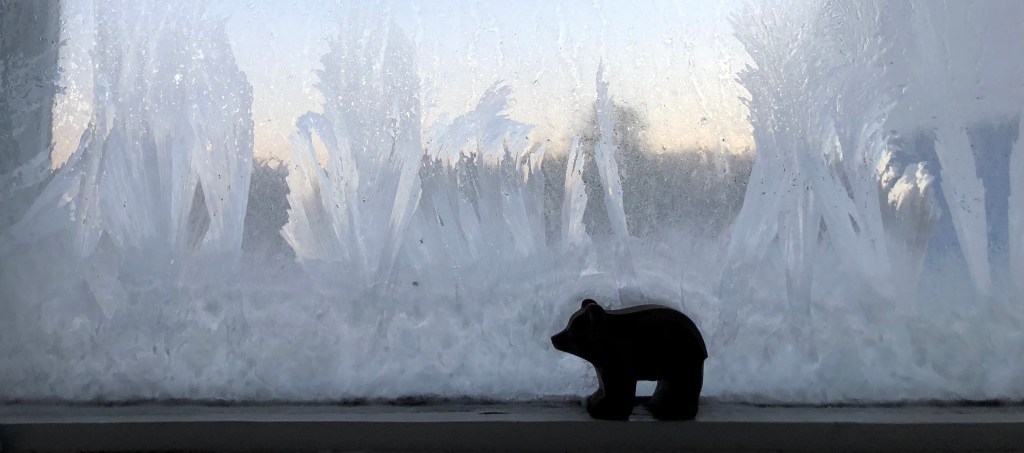
20 below this morning as I head out to start my car. The moon hangs in a crescent over our house, visible through the smoke from our wood fire. In January, Vermont, the days creak along with the cold.
In an evening meeting, it’s just me at the town hall, holding that physical place as an open meeting law requirement, everyone else virtual from their living rooms or home offices. From the hallway, I pick through a box of cast-offs and take a pair of Teva sandals. A kind of promise, for another season.
Tonight as it gets cold
tell yourself
what you know which is nothing
but the tune your bones play
as you keep going.
— Mark Strand
We’re nearly at midwinter, the turning-around point of early February. The ice is hard; there’s snow; the light returns, an extra dipperful of it each day.
There’s that Currier & Ives vision of midwinter, nestled deep in fluffy snow that I’ve experienced in a few flashes. This year, unease eats us all around the edges, in strange kinds of ways. A shortage of kitty litter in the supermarket. What does that mean? Maybe nothing worth thinking about at all.
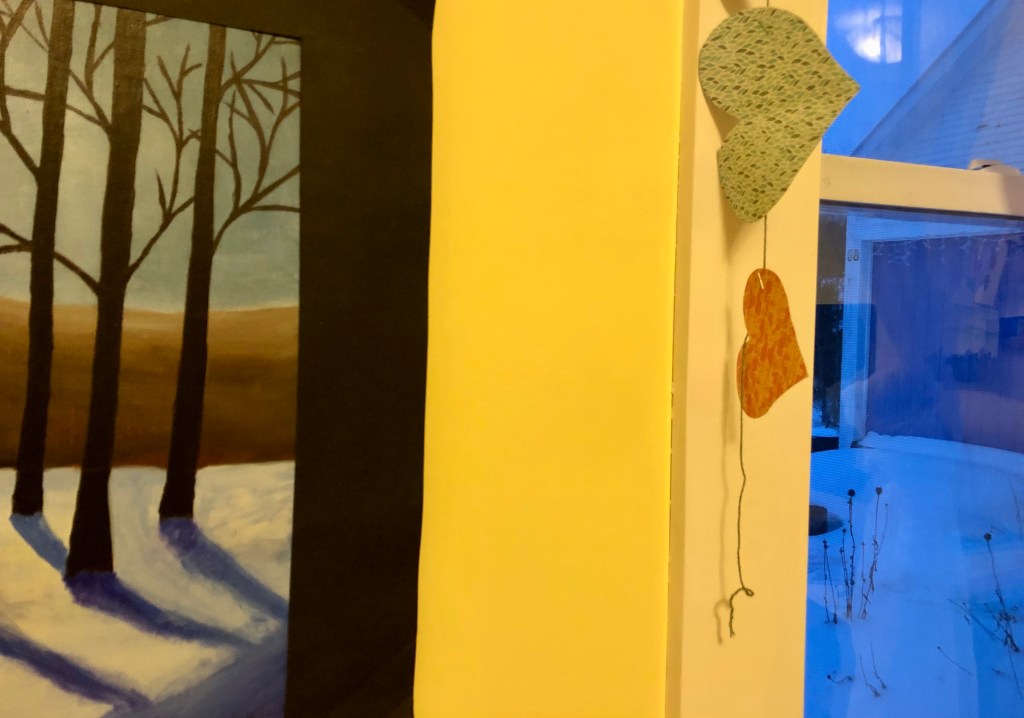
I buy a gallon of paint at the local hardware store. The young man who mixes it went to high school with my daughter. He puts the paint to shake, and I wait and wait in my winter coat and my knitted hat. I remember the first summer I canned so much from my garden and the endless jars I bought here — invested in, really — so many mason jars. High on a storage shelf above my head are those boxes of Ball jars, waiting for tomatoes and green beans and chutney.
He reappears, his face mostly hidden behind his mask. With a key, he opens the can of newly mixed paint. For a moment, he stands there, studying it. Then he asks if that yellow is the right color. I tell him, Yes. He hammers back on the lid, then pushes the can towards me. Good luck, he says.
As I walk out, I wonder if he means good luck with the color, or the painting, or just generally. But what’s the point, really? We all could use a little good luck.
Lovely review of Unstitched in Carved Spines. Thank you!
At the end of the afternoon, I’m out with my skis, insufficiently dressed against the zero degree temps, hoping the movement will warm me even as I caution my youngest every day — bring enough clothes.
I warm.
I ski on the former railroad bed, behind a daycare. Earlier this winter, a new playground was built for the kids, of wood and ramps, and I wonder if some of the federal coronavirus money made its way here. The daycare itself is in the basement of an old building, and so the playground has a kind of bittersweetness, too, a bandaid of a much larger problem.
On the bridge over the river, I pause. Snowmobiles and a groomer have driven through here, and so the skiing is easy. Animal tracks mark the snow down the center of the frozen river. On the bank I ate wild grapes in the late fall. For now, it’s just me and the fresh snow and the sunlight while it lasts, the woodland creatures, the river flowing deep beneath that ice.
Birds migrate and caribou circle the cold top of the world. Perhaps we migrate between love and suffering, making our wounded-joyous cries: alone, then together, alone, then together. Oh praise the soul’s migration.
— Mark Nepro

18 below zero this morning.
The cold comes at my face like a knife when I take out the wood stove ashes. The early morning is perfectly still, full of sunlight. This is not the songbird season.
I’ve now lived through a few dozen Vermont Januaries, beginning as a young woman when I spent so many January nights walking around beneath the winter sky, amazed at all those stars in the deep country dark. Januaries of nursing babies, of a long driving commute, of sledding and baking bread, and enduring the beginnings of cabin fever’s madness.
Always, there’s the cold that reminds us immediately of our own fragile mortality and an inevitable thaw. By the end of the month, daylight returns in a rush. In these chopped-up days of uncertainty, I remind myself of these constants.
‘We forget about the spaciousness
above the clouds
but it’s up there. The sun’s up there too.‘
~Naomi Shihab Nye

