May Ramblings.

I’m home after eight. My daughter is on our front porch, eating ice cream and talking with the cats about all the interesting cat things we talk about at the end of the day. They never mouth back. One is utterly loving. The other tends to stalk around with the tip of his tail at a distinctive angle, a little indignant at the foolishness of his humans.

I’m deep in the thick of parenting and adolescence. The thing that’s so hard about adolescence is that it’s just so right. The world is profusely unfair. We live in a jumbled-up time. Yes, the kids have been handed a planet immensely beautiful and terribly ailing. It’s all true. Frankly, there’s no reason to argue about any of of that.

And yet, somehow lives must be made. At one point, in that rough 2020 year, I bought a box of ice cream cones and a carton of ice cream so we could make ice cream cones at home. I had no idea when an ice cream shop might open again.

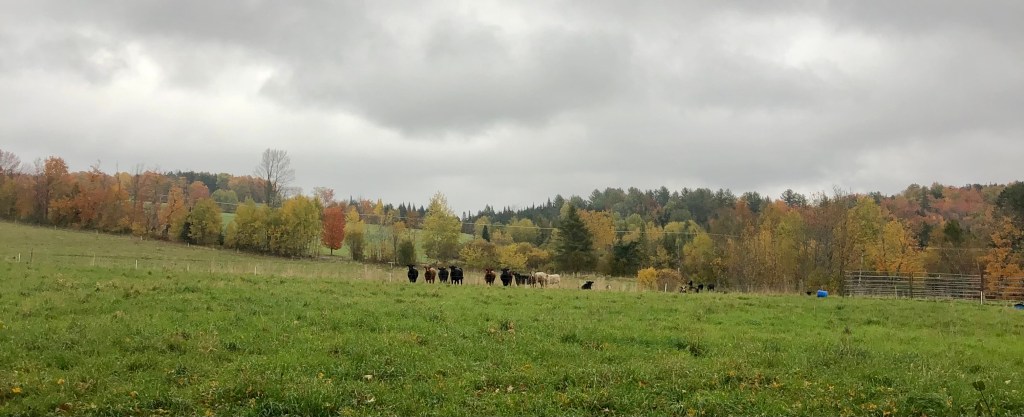
In May, in Vermont, the world is beautiful. Now in the mid-80s, dry, dry, this isn’t our usual wet and damp spring. I pause in the parking lot on my way into work and talk with a young deputy. We swap garden tips. He tells me about his apple trees. He muses aloud about the weather — what will July bring? A freak snowstorm? A frost in August? Or maybe more of the same, beautiful day after beautiful day unfolding. We wave away the black flies. There’s not much point to go further.

Flying at Night

Above us, stars. Beneath us, constellations.
Five billion miles away, a galaxy dies
like a snowflake falling on water. Below us, 
some farmer, feeling the chill of that distant death, 
snaps on his yard light, drawing his sheds and barn
back into the little system of his care.
All night, the cities, like shimmering novas, 
tug with bright streets at lonely lights like his.

Ted Kooser
Published in “Flying at Night”

Where We Are.

Mackville Pond, Vermont

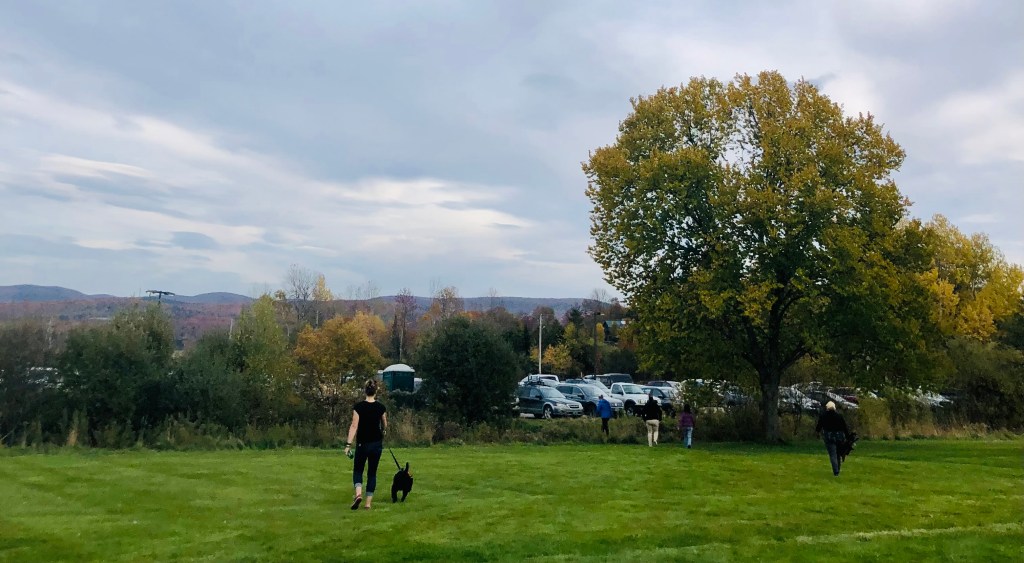
My daughter and I drive around in the evenings. It’s a teen/parent compromise I suppose — a walk in the town forest where I gush over blooming trout lilies and spring beauties and trilliums as if ephemerals have never done this amazing show before. My daughter is cool and tough, utterly on that rugged cusp of childhood and womanhood. It makes my heart ache. It makes my heart swell.

We drive around in what might appear to anyone else as aimless nothingness, checking out geese and listening to the peepers. In our driveway again, I slip off my sandals and lean back in the carseat. Goddamn, I could sleep in her car, that the slip of moon would rise over us, and then we’d just begin again in the morning. Maybe we’d drive to Nebraska. Maybe to her high school. Maybe we’d just keep sitting here, talking, or not.

Meanwhile — spring goes on. Leaves unfurl.

My wrists and eyes and heart are baggy with wrinkles. That is how old I am. Meanwhile, I keep thinking of a line about doubt by Søren Kierkegaard. As a young woman, I thought this doubt thing was for the weak and the foolish. I believed in striking out, holding firm, sucking up the consequences of my actions. Now, it’s a koan that keeps rattling around in my late night, my early morning, my stray driving thoughts: “Doubt is conquered by faith….” I think, take heart from from that. Then, when I look up the line, I realize I’d forgotten the second half: “… just as it is faith which has brought doubt into the world.”

I think, Go listen to the peepers again.

Small, Good Things.

A friend and I drive to a nursery on a back road in Plainfield, VT, through fields that seem impossibly green. The trees have barely begun to bud. I buy a snowdrift crabapple tree there. The tree is so tall that my friend and I spend some time carefully nudging it into the back of my Subaru.

I’ve met the staff on my annual pilgrimage there. They all speak quietly, as if our words might disturb the rows of potted currents and grapes. I ask again for planting advice. As I listen, I suddenly realize I’ve gone at this tree planting and cultivating thing all wrong. Beneath my trees, I should create a forest garden of duff and broken up straw and that humus-y compost that plants must love like chocolate. Daffodils bloom in the gardens beneath their trees.

I expect the staff has told me this before, but for whatever I reason I didn’t listen, or their advice drifted the way of so many words.

All the way home and all afternoon, I keep thinking about these woodland gardens and about a Raymond Carver story, “A Small Good Thing.” Two years plus into the pandemic, in this jumbled world, a small good thing….

That night, my teenager comes home and suggests we get a creemee. Friday night, and there’s no one out. We stand under the moon, licking ice cream cones, the peeper screeching in the swamp behind the pizza joint. A small good thing.

Mudding Nests.

Heavy snow falls this morning. My little cat sits at the back door, staring up at flakes swirling down through the porch light. The snow is dense and sopping wet and won’t last long. It will drive out the green that is already bursting through the tips of branches. Nonetheless, the damp eats into us. I’ve foolishly let the wood stove go dead. When I kindle a fire, the cats return, satisfied again.

Around us, there’s a raging dissatisfaction. The pandemic continues to unwind, and war rages overseas in the most sickening ways. My teenager asks with adolescent scorn what’s up with the human race, anyway, as if I’ve had a major role in shaping eons of stark unfairness. I toss the conversation back to her: you’re a piece of this human pie, too.

I long for heat and beach sand.

In the meantime, the great world spins on. The snow will melt by midday. We keep on.

Nature teaches nothing is lost.

It’s transmuted.

~ Laura Grace Weldon

First Things.

My daughter asks me if I’ve ever almost died — or at least thought I was dying.

She’s lacing her shoes, about to head out for a run. The day has been remarkably warm and beautiful, reaching above fifty degrees.

Three times, I answer: almost drowned when I was a teenager on a canoe trip, your father averted us from a pile up in Seattle, and the anesthesia went awry at your birth.

Later, I walk up to the high school and wait for her. I sit at a picnic table behind the school. It’s the first of all kinds of things again — the first time sitting at a picnic table outside since winter, the first time this spring I’ve seen grass that appears really green. An acquaintance stops to talk, and we swap stories about the school and board, new hires. Her grown son appears, and I can’t help but remember when he was just a little kid, and now he’s all grown up.

When they’re gone, I walk around this building that has meant so many very different things to so many people. Such a long and complicated story, a microcosm of this great big world. At this moment, she and I are both a piece of this story.

My daughter returns. On our drive home, I ask why she wondered about my near-death experiences. She shrugs. Just thought I should know, she answers.

I have the odd feeling she’s gathering intel about me.

Appetite.

Before it’s warm enough, I open the open to our glassed in porch. This porch (nor its upstairs counterpart) isn’t heated. In Vermont’s long winters, we simply close the door and leave the space be. I think of this as a standard New England practice. I store empty canning jars, summer flip-flops, things like old blankets I don’t really want any longer, but nor do I want to cast away.

All day long, doves and cardinals, juncos and chickadees and sparrows, dip and fly around our house. The crocuses struggle upward. I should be cleaning our house, I think, taking a broom to the cobwebby corners before the spring sets in mightily and I’m in the garden as much as possible, happy as I could ever be, the warming soil between my toes.

Now, snow falls intermittently. The robins dig into the earth hungrily.

Consider the tulip,

how it rises every spring

out of the same soil,

which is, of course,

not at all the same soil,

but new.

~ Rosemerry Wahtola Trommer