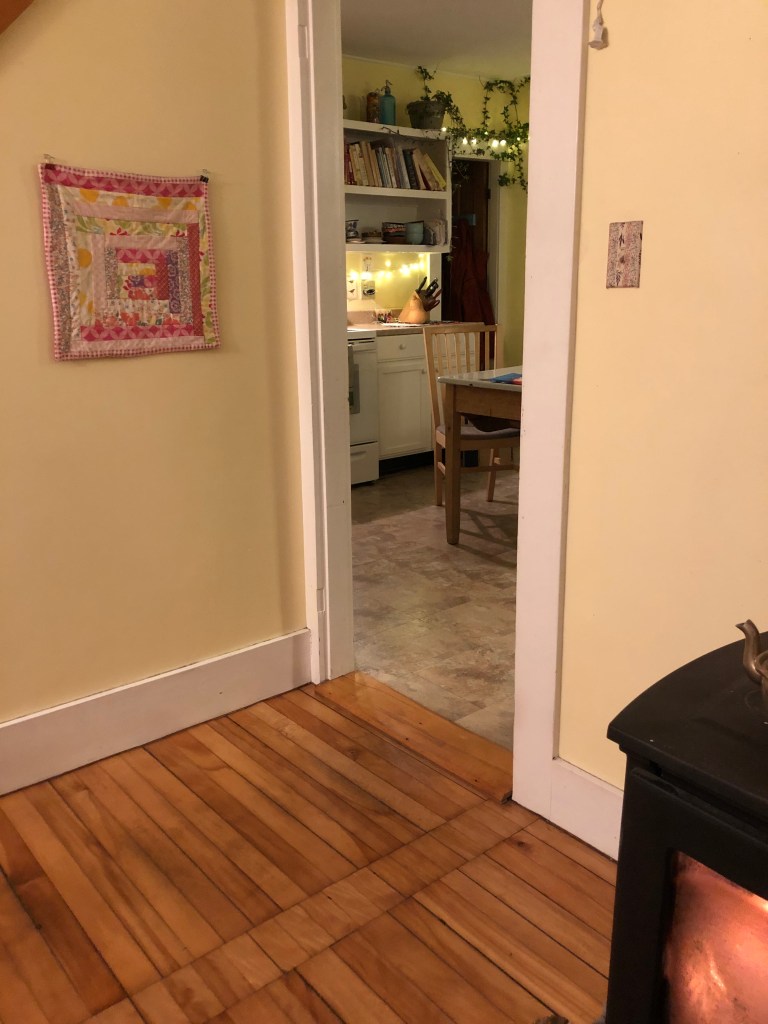
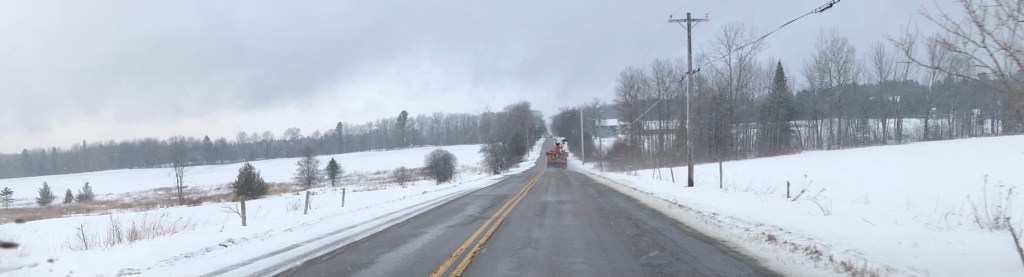
At 86.

I grew up in a family nearly devoid of grown men. No grandfathers, no uncles save one uncle by marriage I met once in California and never saw again. Like any kid, how I grew up seemed just the way of the world.

Every summer, we saw my grandmother and wacky and wonderful aunts and female cousins. In those weeks, the ordinary rules were suspended. We kids lived in our realm, quite happily, while the adults did their endless talking and laughing. In all this, my father headed our rambling crew, whether we were swimming in Maine’s icy Atlantic or visiting a Shaker village. My father taught his three kids to love E. B. White and Shakespeare, to fly a kite and cross country ski. The original YouTuber before YouTube was a thing, my father is a lifelong library aficionado. He taught himself — and so taught us — to paint a house and repair a leaking washing machine, to write a clear sentence, play Hearts, understand mathematics is exquisite, and lean into the happiness of lying on your back under the summer constellations. The list is eternal: use a sharp pencil to solve algebra; chop garlic fine; Plato is sublime; be polite to cashiers; work hard; pay your bills; hike.

If you couldn’t figure out an answer, keep thinking. My god, that’s useful.

I inherited his nose and his utterly irreverent sense of humor. He never indulged his children in the illusion that the world is easy or kind. The summer I was ten, we drove from New Hampshire to Wyoming to Colorado to New Mexico, living out of our green Comanche Jeep and careening back into New England two days before school started. By that time, my sister and I had read his copy of Huck Finn at least twice over and thoroughly kicked around Huck’s aversion to civilization. 86 today, my father is still modeling Thoreau’s behavior of sucking the life’s marrow, grit and all, while savoring espresso.

Sundays too my father got up early
and put his clothes on in the blueblack cold,
then with cracked hands that ached
from labor in the weekday weather made
banked fires blaze. No one ever thanked him.

I’d wake and hear the cold splintering, breaking.
When the rooms were warm, he’d call,
and slowly I would rise and dress,
fearing the chronic angers of that house,

Speaking indifferently to him,
who had driven out the cold
and polished my good shoes as well.
What did I know, what did I know
of love’s austere and lonely offices?
— Robert Hayden, “Those Winter Sundays”

Go Without Sight…

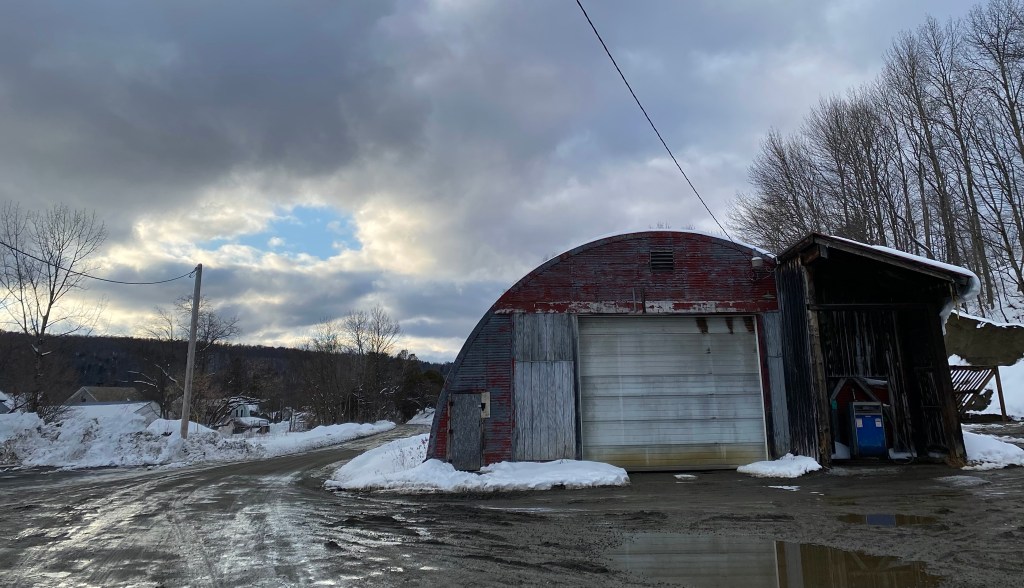
On this day of sunlight and chores, I end the afternoon walking through the back areas of town, behind the town garage and around this year’s dwindling sand pit. I turn around in the neighborhood with the scary unleashed dog, backing up slowly and doing, perhaps, exactly what should not be done.

Out of sheer carelessness, I never got the wood stove heated up to temp this morning, early at my desk, so intent, that I carelessly let the stove smolder low. In the day’s heat, I’ve let the stove dwindle further. That chore awaits me. My carelessness annoys my daughter, who’s afraid of burning the house down (what sane Vermonter isn’t at least slightly afraid of that?) and in love with the stove’s fierce heat. Two things at once. Which sums up March. Winter and spring. Breezy clean and ponderous with the thawing earth’s muck.

I pass hardly a soul on my walk and wonder if I should have made friends, or at least a kind of peace, with that snarling dog. As I walk, the air cools. The puddles are luminous with what remains of the day. I remember that beloved line from Wendell Berry — To know the dark, go dark — the line that’s driven so much of life. When I get home, I look it up.

To go in the dark with a light is to know the light.
To know the dark, go dark. Go without sight,
and find that the dark, too, blooms and sings,
and is traveled by dark feet and dark wings.

Traveler, There is No Road.

The trail where I ski changes every afternoon. The exposed earth eats away at the snow. The icy patches are harder, or the day has warmed and the snow swooshes mealy beneath my skis. In late afternoon, it’s me and the dog walkers, or two women, always deeply engaged in conversation.

The tech center students have half-tapped the sugarbush. The drop lines hang down in the back section of the sugarbush. The students are gone, too, leaving the tramp of their snowshoes, nothing more. The sunlight comes and goes all day, warm or gloomy. Fresh snow is scant this winter, and the trail’s ice is embedded with a scattering of hemlock and cedar greenery, small things that I fear will snag my skis but don’t.

The streams and rivers are running but the season of frogs is a long way off.

Finished, I clean nubbled ice from my skis with my fingers. A splinter is embedded in my thumb from a piece of firewood, stuck and sore. I press my thumb on the ice, listening for spring birdsong. There’s the sweep of wind, my heartbeat; nothing more.

There’s a reason why King Arthur’s knights were instructed to keep off the trails when searching for the grail, the logic being that if they were on the trail then they were following someone else’s path, so that particular path could not be their true path. Their only hope was to forge their own way through the woods. As Spanish poet Antonio Machado writes: “Caminante, no hay camino/ al andar.” Traveler, there is no road. You make the road as you walk.”

— Stephen Cramer

These Days…

Days and nights on the cusp of sugaring season. It’s been years since I made a living sugaring, but I haven’t forgotten the years the kids and I inhabited the sugarhouse for a month and more. Walking at dusk, as the night bites my eyes and the tip of my nose, I remember what close friends the weather and I were in those weeks of sugar and ash. The children were always in sodden snowsuits, or their fingers shivered from lost mittens, or their faces were crimson with heat, cheeks sticky with a maple patina. We ate oatmeal and nachos, drank coffee with syrup, baked pizza in the arch when the fire burned to coals. We were always hungry.

One night, a daughter sleeping against me in bed, I read a Louise Glück poem in the New Yorker while knitting a yellow bunny for that sleeping child’s Easter gift. I gobbled that poem, ripped it from the magazine, thumbtacked it over my desk. Forget it’s still February; the poem must be read.

March

The light stays longer in the sky, but it’s a cold light,
it brings no relief from winter.

My neighbor stares out the window,
talking to her dog. He’s sniffing the garden,
trying to reach a decision about the dead flowers.

It’s a little early for all this.
Everything’s still very bare—
nevertheless, something’s different today from yesterday.

We can see the mountain: the peak’s glittering where the ice catches the light.
But on the sides the snow’s melted, exposing bare rock.

My neighbor’s calling the dog, making her unconvincing doglike sounds.
The dog’s polite; he raises his head when she calls,
but he doesn’t move. So she goes on calling,
her failed bark slowly deteriorating into a human voice.

All her life she dreamed of living by the sea
but fate didn’t put her there.
It laughed at her dreams;
it locked her up in the hills, where no one escapes.

The sun beats down on the earth, the earth flourishes.
And every winter, it’s as though the rock underneath the earth rises
higher and higher and the earth becomes rock, cold and rejecting.

She says hope killed her parents, it killed her grandparents.
It rose up each spring with the wheat
and died between the heat of summer and the raw cold.
In the end, they told her to live near the sea,
as though that would make a difference.

By late spring she’ll be garrulous, but now she’s down to two words,
never and only, to express this sense that life’s cheated her.

Never the cries of the gulls, only, in summer, the crickets, cicadas.
Only the smell of the field, when all she wanted
was the smell of the sea, of disappearance.

The sky above the fields has turned a sort of grayish pink
as the sun sinks. The clouds are silk yarn, magenta and crimson.

And everywhere the earth is rustling, not lying still.
And the dog senses this stirring; his ears twitch.

He walks back and forth, vaguely remembering
from other years this elation. The season of discoveries
is beginning. Always the same discoveries, but to the dog
intoxicating and new, not duplicitous.

I tell my neighbor we’ll be like this
when we lose our memories. I ask her if she’s ever seen the sea
and she says, once, in a movie.
It was a sad story, nothing worked out at all.

The lovers part. The sea hammers the shore, the mark each wave leaves
wiped out by the wave that follows.
Never accumulation, never one wave trying to build on another,
never the promise of shelter—

The sea doesn’t change as the earth changes;
it doesn’t lie.
You ask the sea, what can you promise me
and it speaks the truth; it says erasure.

Finally the dog goes in.
We watch the crescent moon,
very faint at first, then clearer and clearer
as the night grows dark.
Soon it will be the sky of early spring, stretching above the stubborn ferns and
violets.

Nothing can be forced to live.
The earth is like a drug now, like a voice from far away,
a lover or master. In the end, you do what the voice tells you.
It says forget, you forget.
It says begin again, you begin again.

— Louise Glück

Verbal Valentine.

I’m drinking coffee in an empty corner of a coffee shop when two strangers meet up at the counter and strike up a conversation. They’re kidding the young man behind the counter who’s been sitting on the floor behind the counter, talking to a young woman. It’s a quiet morning, and their chatter has been gently full of laughter and wit.

One stranger buys the other a coffee — “and throw a shot of espresso into it” — and then his card jams and won’t work. The barista turns the card reader upside down (I mean, what else can you do with those things?) and then the other stranger pulls out cash. The men talk songwriting and growing up in North Carolina and the price of a cord of wood.

It’s a kind of Valentine’s bit of goodwill on a snowy morning that soon will turn to sun in Northern Vermont….

When the winter chrysanthemums go,
There’s nothing to write about
But radishes.

— Basho

Wet Gloves, Grievances, Blessings.

It’s been awhile since I did a carpool or handoff along the road — once a mainstay of my life. Seems like I spent hours of motherhood waiting at some designated place. I leave early to have this little pocket of time, a few minutes, no more, to watch the sky darken. I bring a book, too, more out of habit than anything else.

Vermont highways are lonely and busy, with stretches of time where you can walk down the center line, and then times when you risk your life (actually) to walk those yellow strips. The girls are laughing when they arrive. I hand over my daughter’s gloves, warm from my car heater as I tried to dry out the wet remains of yesterday’s skiing. I stand talking, shivering in my sweater. I’m sweaty from skiing, and I’ve forgotten my coat. The girls are busy, busy, happy in a plan of their own, my daughter’s hair still in the braids I wove for her this morning.

The girls drive away. I head back to my car, sliding in my plastic-soled ski boots, and someone I’ve known for years pulls over and asks if I need help. Good lord, I laugh. Because our kids played together as toddlers, I feel I can start right in and so I do. I begin with the bathroom sink drain that I need to take apart, and how does anyone endure the college app process, and am I ever going to remember to clean the inside of my windshield, save for when the sun hits it and blinds me?

I’m really laughing by then, and she is, too. I lean against my car — again, shivering, shivering — while we exchange the usual kid and life updates of people who know each other but sometimes go years without talking. The cold air comes down in this sweet-spot crepuscular moment as the night slowly floods in. She leaves, and I stand for a moment, looking up for the first stars. Such little cares I’ve listed, the stuff of living, blessings more than grievances.

And then I’m on my way, too, leaving the river and road, at least for now.