
Don’t Hesitate
If you suddenly and unexpectedly feel joy,
— Mary Oliver
don’t hesitate. Give in to it. There are plenty
of lives and whole towns destroyed or about
to be. We are not wise, and not very often
kind. And much can never be redeemed.
Still, life has some possibility left. Perhaps this
is its way of fighting back, that sometimes
something happens better than all the riches
or power in the world. It could be anything,
but very likely you notice it in the instant
when love begins. Anyway, that’s often the case.
Anyway, whatever it is, don’t be afraid
of its plenty. Joy is not made to be a crumb.
poetry
The Pleasures of Creation.
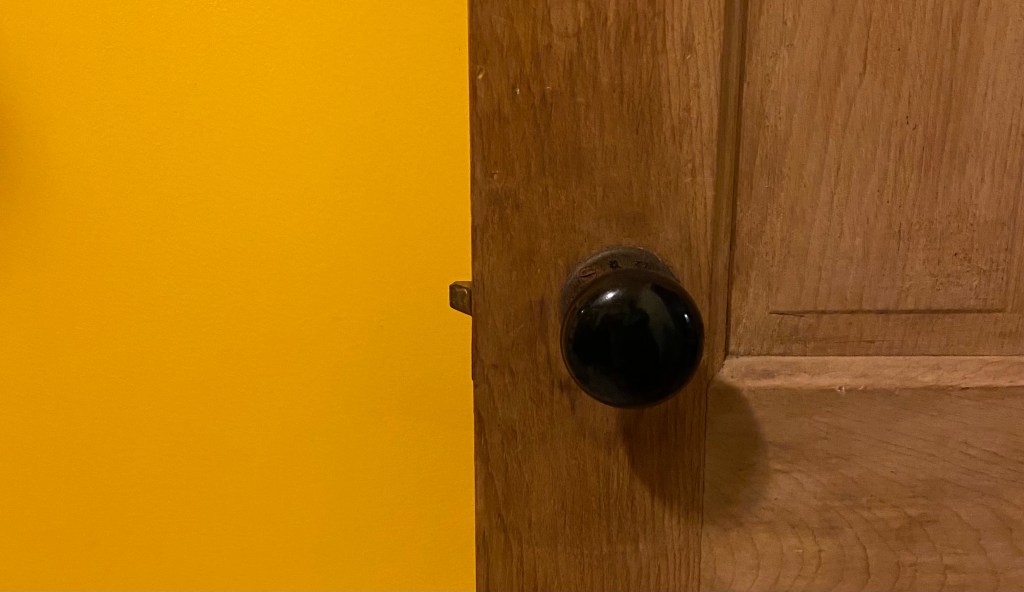
An old friend and I walk through the hilly town forest, sharing the tenor of stories that are manna for my soul: which ways our lives have turned and bent, what are the elements that shape us and our families. A little sleet or maybe rain patters down on what remains of the leaves.
On my way home, I stop at the coffee shop and drink espresso in my damp sweater smelling of sheep — a lovely barnyard smell or a repulsive one, depending on the person I suppose. I carry my laptop and my notebook back home to my wood stove and my cats who remind me their needs are few and the most reasonable constant in this house.
By five, it’s dark as the inside of a pocket. Public radio spins in the greater world. In my tiny dining room, I pull a book from shelf and set it on the table, then another and another. In an hour or so, by then listening to This American Life about rats, I’m in the basement searching for the half-full can of Sunshine paint I used in the bathroom last winter.
Three more walls await me. I’m out of paint and decide a lime-lemon will suffice. I’ll need to drive that half-mile to the hardware store, which annoys me as I have brand-new studs on my snow tires, and why waste those on dry pavement?
All this: it’s that old familiar question, that rub between creation and destruction. Espresso and sunshine-yellow paint have never cured the world’s ills, but a slice of pleasure can’t harm.
In my bookshelves, I find a poem I printed out shortly before the pandemic nailed shut Vermont, still utterly relevant today:
Blackbirds
by Julie Cadwallader StaubI am 52 years old, and have spent
truly the better part
of my life out-of-doors
but yesterday I heard a new sound above my head
a rustling, ruffling quietness in the spring airand when I turned my face upward
I saw a flock of blackbirds
rounding a curve I didn’t know was there
and the sound was simply all those wings,
all those feathers against air, against gravity
and such a beautiful winning:
the whole flock taking a long, wide turn
as if of one body and one mind.How do they do that?
If we lived only in human society
what a puny existence that would bebut instead we live and move and have our being
here, in this curving and soaring world
that is not our own
so when mercy and tenderness triumph in our lives
and when, even more rarely, we unite and move together
toward a common good,we can think to ourselves:
ah yes, this is how it’s meant to be.
Fresh Lilacs, Late October.

My daughter sends me a photo of an apple blossom she discovered in Montpelier, Vermont, just this weekend, end of October. For anyone not a Vermonter, this is odd news that evokes suspicion and distrust. In New Englanders, distrust is a carefully curated character trait. Good lord, don’t be naïve. Naïve people don’t put on snow tires, and those people drive off roads.
Later that same afternoon, we walk through a pasture and then cut through a town cemetery. There, the lilac bushes are sticks, as you’d expect at this time of year. But at the very top of one bush, lavender flowers bloom. My daughter stands on her tiptoes and gently pulls down a branch. My house is surrounded on three sides by lilacs; late May is a joy. But this year, there were hardly any blossoms. Now: lilacs in late October in northern Vermont? Any sane person would look at this askance.
Nonetheless, I stand on tiptoes, too, and breathe in that ineffable scent of fresh lilacs.
Here’s a few lines from poet Amy Lowell:
Even the iris bends
When a butterfly lights upon it.
The Power of Maples.
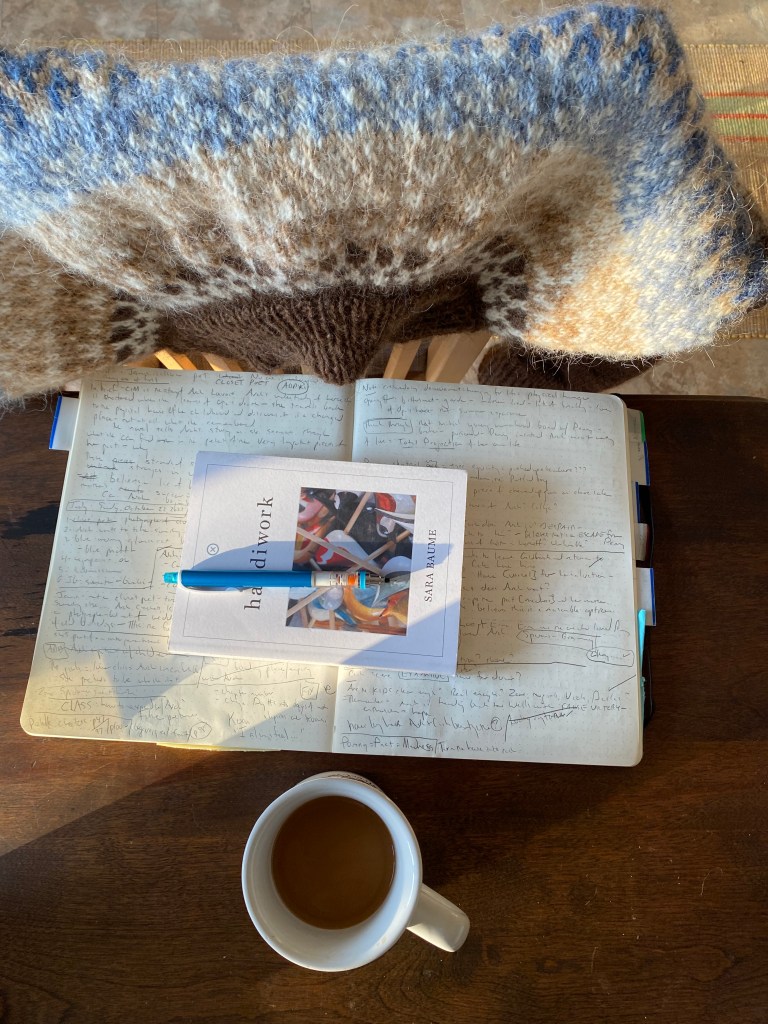
This year, my extended world includes widows, including women mentors I looked to when I was a young mother. These women are all somewhat older than me, with long marriages. It wasn’t that long ago I was in the world of the new babies, the swapping of baby clothes, the intent to get the low-down about cloth diapers versus disposable.
There’s a line from one of my most favorite novels, Red Sky at Morning by Richard Bradford, about a woman widowed in World War II. Like a teacup, she would crack, but not break. Same.
Rain’s washed our world last night, and the sun is radiant this morning. While hanging out the laundry, I think of an acquaintance who says he’s still trying to figure out his life. But aren’t we all as grownup now as we’re ever going to get? The birds and squirrels scavenge in my flower garden, gathering for their families.
Here’s “The Power of Maples” by Gerald Stern which seems apt on myriad levels today:
If you want to live in the country
you have to understand the power of maples.
You have to see them sink their teeth
into the roots of the old locusts.
You have to see them force the sycamores to gasp for air.
You have to see them move their thick hairs into the cellar.
And when you cut your great green shad pole
you have to be ready for it to start sprouting in your hands;
you have to stick it in the ground like a piece of willow;
you have to place your table under its leaves and begin eating.
Impossible Zen.
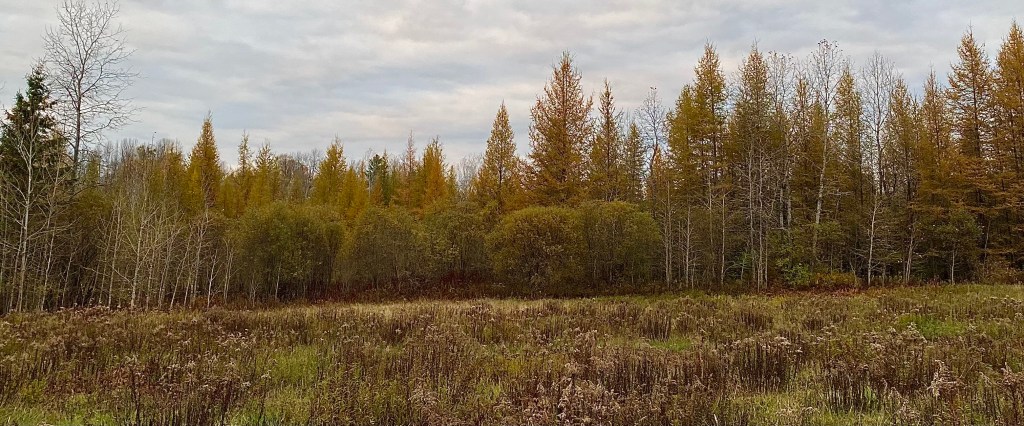
There was a time in my life where I didn’t yet know about the tamaracks. It’s an odd thing to think about: there was a time in my life when I hadn’t yet met my daughters, either, when I hadn’t read a novel, kissed a boy, slept under the constellations.
I head up through the woods to the tamaracks’ marshy place where I’ve never seen anyone else, a swampy patch off a road. In the gray afternoon gloaming, I wander off the path. I’ve forgotten my boots. I trip on a rock and fall on one knee. The twilight settles in silently.
On my way home, I stop in at the co-op. The co-op’s not really a co-op any longer, the handwritten baby announcements and politics scrubbed out in this new business model. In the produce area, an acquaintance is buying peppers. We stand at the wall of produce, kicking around a few thoughts. We agree, this has been a year of unbelievable things; there’s no need to list. I offer my micro philosophy I’ve mulling around, very Zen. As I’m talking, I remember the whole problem with Zen, anyway, is its impossibility.
At the register, the cashier can’t figure out a bag of greens. But what is it? he asks. The man in front of me says he liked the sunflower sprouts, so he’s trying the radish ones now. Micro greens?
Through the wide windows, I realize I’ve been out for much longer than I realized. Darkness is falling quickly now, car headlights sweeping through the village. The man lifts his bag of slender greens, crimson roots, and turns it around and around.
Good luck, I offer.
He nods, and then disappears into the night.
Autumn Mysteries.
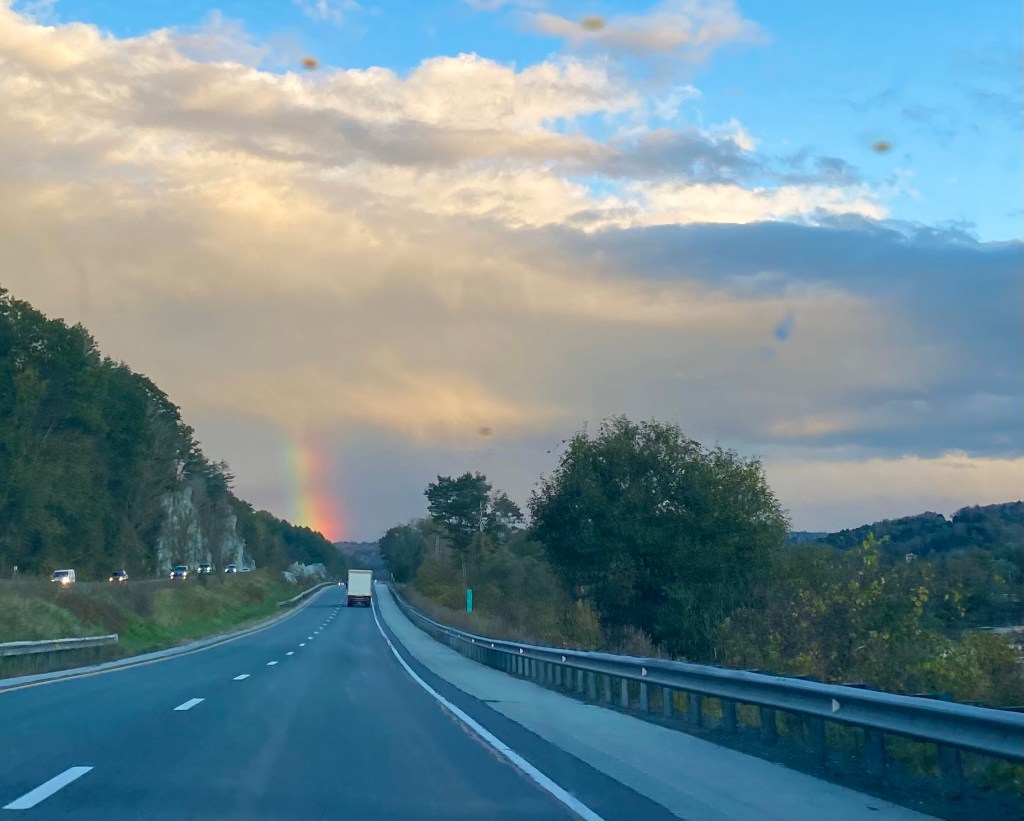
Around a bend in the interstate, a rainbow leg glows. I’ve handed over the keys, and I’m in the passenger seat, knitting forgotten in my lap, as we hurtle along the pavement, rushing over bridges that rise over the Winooski River. Mid-October, dark is not far in the offing. I’m texting my daughter at home who’s feeding the cats and stirring the embers in the wood stove. It’s hopeless to tell my daughters that not so long ago whether someone was home or not was a mystery. Domestic life relied on a vein of faith.
Has the world less mystery now? Surely not. This autumn rainbow beckons us. Around us, an infinity of things we will never understand.
Between us, there’s a bit of discussion about which exit to take, but my driver humors me. There’s those maples before the gold-domed statehouse I want to see, the silver maple beside the library that holds its green longest. By then we’re laughing about a little joke between us — bulk foliage and bulk syrup — tossing those words back and forth for no clear reason at all except for a moment of pleasure.
Autumn: the swinging door between summer’s glory, the myriad folds of winter.
Above the fields,
above the roofs of the village houses,
the brilliance that made all life possible
becomes the cold stars.
Lie still and watch:
they give nothing but ask nothing.
From within the earth’s
bitter disgrace, coldness and barrenness
my friend the moon rises:
she is beautiful tonight, but when is she not beautiful?
— the incomparable Louise Glück, “October”
 Stony Soil Vermont