Dad and Father’s Day.

When I was a kid, in moments of stress or elevated high jinks, my dad’s sense of humor rose. He was prone to things like putting grapes up his nose while my mother wasn’t looking to make us kids laugh. This was the camping trip to the Grand Canyon, when the clutch went on our old Jeep, and my dad was fixing it whatever he might have had at hand — a pliers and a fishing hook , maybe two rocks rubbed together in prayer, for all I know.

That same trip, someone was on the lam who had once also been a Navy Seal. We hiked into the canyon, passing sharp shooters at the rim. Don’t look, my mother said. Sometimes I wonder, Whatever happened to him? Did he have kids?

My parents never hesitated to get out our atlas, the essential road tripping gear. Looking at the map with my youngest recently, I chanced on Medicine Bow, Wyoming. We camped beside a man who lived in his canvas tent. While we were hiking, a lightening storm blew up, and my father hustled us down. As a kid, our sometimes peripatetic life was status quo, all kinds of living mixed in. I could list a 100 things without stopping that my dad taught us, all darn useful — like read Plato and follow water when you’re lost in the wilderness — but the one I keep returning to these days, now that I’m along in my life, is his utter persistence. A parent now myself, I think of him in the Grand Canyon with three young kids and a skeptical wife, with hardly any money and a broken-down Jeep. He patched it together. We kept on with that journey, thousands of miles, all those nights in the desert under the stars. At the wheel, he drove that Jeep for many more years.
Old cheese, new peonies.

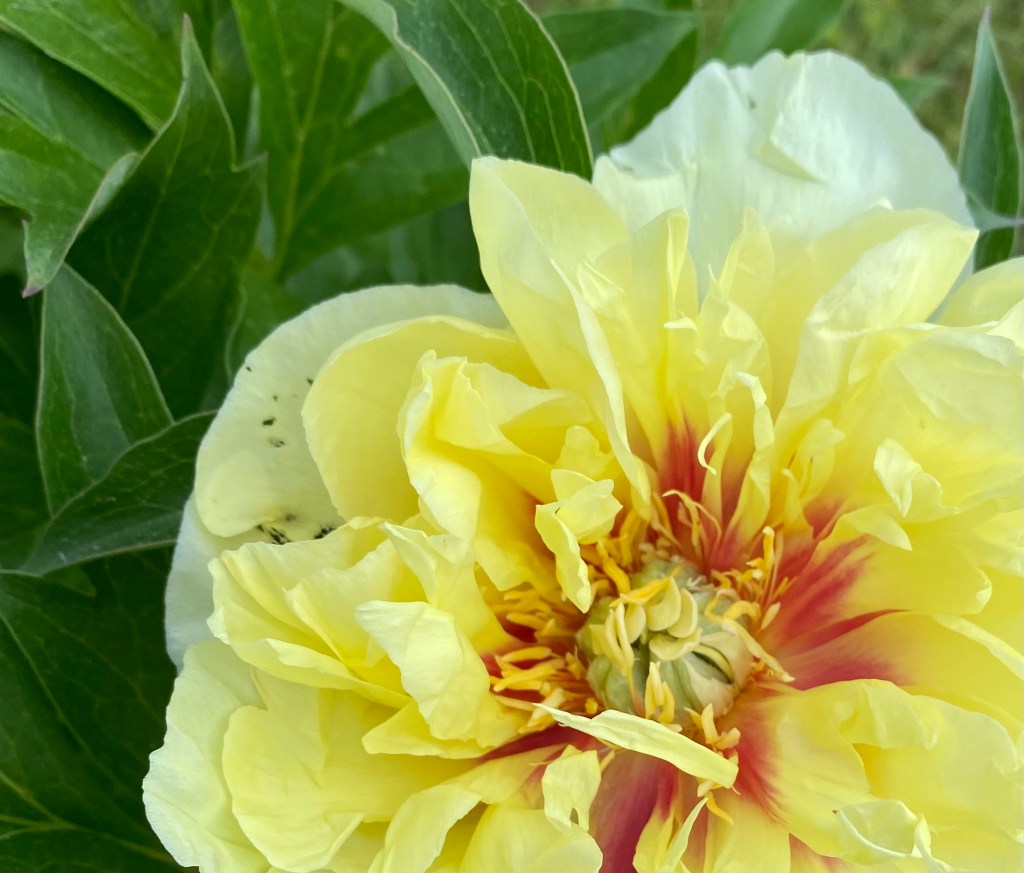
The girls come find me where I’m swimming, the water brackish, strewn with pollen. A blackbird keeps me company. The girls have snagged out-of-date cheese that’s perfectly fine and a tomato that’s sweetly ripe. At home, I dice last year’s garlic. I insist the girls admire the Bartzilla peony that’s blooming now, two blossoms and more fat buds of blossoms. The Bartzilla was a gift a number of autumns ago. My youngest planted the hairy root with me, skeptical. Now, for these few days, this peony’s a marvel.

All day, I’ve been thinking of this Mary Oliver poem. Well worth a share.

Peonies by Mary Oliver

This morning the green fists of the peonies are getting ready
to break my heart
as the sun rises, 
as the sun strokes them with his old, buttery fingers

and they open —
pools of lace, 
white and pink —
and all day the black ants climb over them, 

boring their deep and mysterious holes
into the curls, 
craving the sweet sap, 
taking it away

to their dark, underground cities —
and all day
under the shifty wind, 
as in a dance to the great wedding, 

the flowers bend their bright bodies, 
and tip their fragrance to the air, 
and rise, 
their red stems holding

all that dampness and recklessness 
gladly and lightly, 
and there it is again — 
beauty the brave, the exemplary, 

blazing open. 
Do you love this world? 
Do you cherish your humble and silky life? 
Do you adore the green grass, with its terror beneath? 

Do you also hurry, half-dressed and barefoot, into the garden, 
and softly, 
and exclaiming of their dearness, 
fill your arms with the white and pink flowers, 

with their honeyed heaviness, their lush trembling, 
their eagerness
to be wild and perfect for a moment, before they are
nothing, forever?

Bone Marrow.

The co-op cashier confides to me as she rings up my tomato and a loaf of bread that she loves this weather — brilliant sun interspersed with downpours. “Must be the Irish in me.”

The past few weeks have been a kind of July bonus: great growth in early June. My apple trees brushed out. I’ve placed an old desk and weathered chair on my covered porch. Recently, carrying out my laptop, I saw the desk sprinkled with gold pollen as if magic had swept through in the night. What luck, I thought, sat down and sneezed, worked.

I am of the wary bent, not to crow, don’t reveal a royal flush, a full house, for god’s sake don’t invite in bad fortune. At the little farmstand around Woodbury Lake, I park and walk behind the dilapidated barn towards the greenhouses, in search of a few more flowers for my garden, to fatten out the echinacea the groundhogs ate last year. In the tiny house, a dog barks. The farmer steps out and calls to me, my former library patron. He sings, “I’m saying it! I’m loving this.”

His words, not mine. Mine are this: in this northern realm, take in the sun and the green, store these gems in your marrow.

Don’t confuse hunger with greed.

At breakfast, I mention to my daughter that June 6, today, is D-Day. I’ll write what perhaps she would not want me to write: that she’s standing at the counter making avocado toast and drinking yesterday’s cold coffee. She pours sriracha over the cut avocado. She’s 19, and, lord, a sheer miracle of youth, this gorgeous young woman.

I say, The soldiers were your age. Younger.

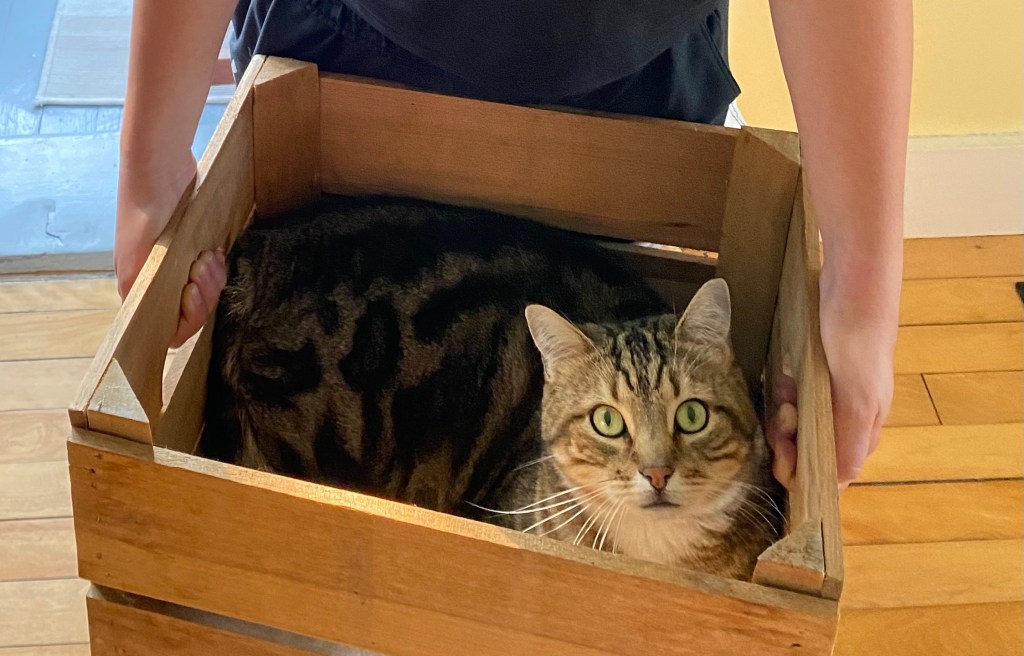
We stand staring at each other in our small kitchen of June sunlight. On our table lies a pile of unopened mail, our tabby cat Acer grooming his whiskers, car keys and lip balm, a hunting knife that could extract a man’s heart.

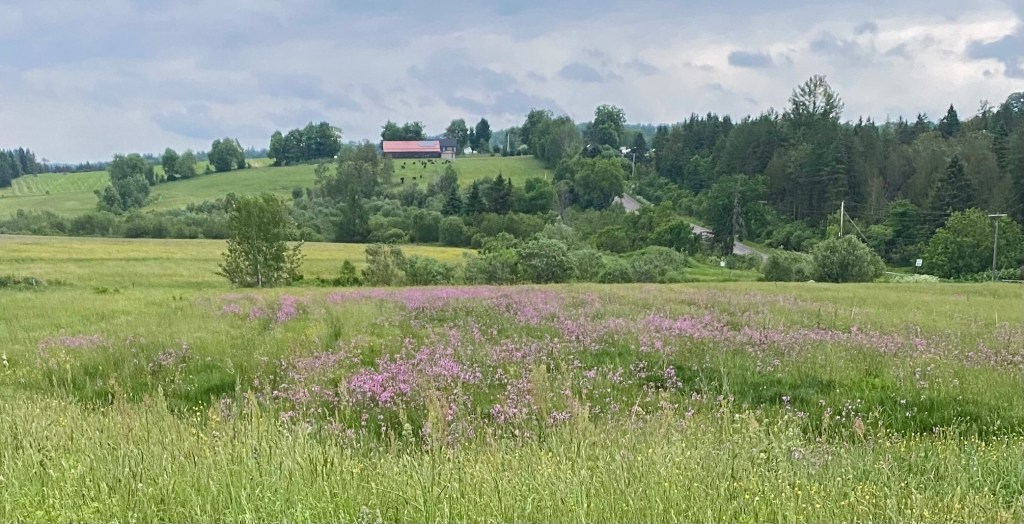
In the evening, I’m at the local arts center to see Nora Jacobson‘s documentary about poet Ruth Stone. The evening is still light when I drive home. I take the long way and pull over beside a field to admire the ragged robin, its pink spreading where the dandelions have gone to seed and green. In my Subaru, it’s me and that box of my mother’s ashes. I once knew a woman who kept her stepfather’s ashes for three years in a Datsun. Impossible, I thought. Now, I think, Sure, possible.

A day of such historical might, such profound sorrow. Yet, our own domestic dramas, the kitchen table stories: how real and meaningful these are, too. As a woman, as a writer, I’ve been thinking for weeks about Ruth Stone’s admonition: “Don’t confuse hunger with greed;/And don’t wait until you are dead.” In my garden, I grab a branch of lilac – the goregous white double blossoms, withering with rot – and breathe in the sweet fragrance.

There is only the wearing away,

The changing of means.

From Ruth Stone’s “Speculation”

Unfathomable fortune.

In the late afternoon, I listen to public radio and move firewood from the outside stacks into the barn, where it will dry again all summer until the autumn nights when I gather my kindling and birchbark. On Monday, the wood delivery guy will come again, with a load of green wood to dry all summer in the open air. Lord, I think as I stack, let the sun shine this summer.

When my daughter appears, I pull off my leather gloves, and we sit on the steps, talking about the Trump verdict. A hummingbird darts between us, onyx and ruby. Later, I’m driving north in the narrow Black River valley to hear GennaRose Nethercott read in the gorgeous old East Craftsbury church. In the parking lot, I join a few friends, talking talking about the verdict, another of these moments with a historic tinge. Crows peck in the farm field behind the church freshly harrowed up. The end-of-May evening is rich with a mixture of cow manure and lilac. Vermont loveliness.

19 years ago, my youngest was born. She fit perfectly in my arm, snuggled from my elbow to fingertips. I kept thinking, How is this possible?

A few days after she was born, the season’s first nubs of corn emerged through farm fields. To bring this child into the world, I had been cut and sewn by strangers. Here we were, our tiny family, a few days later, passing these fields on our way home from the hospital, me marveling at the season already passing from spring into summer, this six-pound baby miraculously given to us. 19 years later, when I return home in the dusky evening, we drink tea and eat almonds, talking talking, this great big world crammed full with so many things…. Enough said. For this day, our immense unfathomable luck.

Garden, fence, lilacs, vultures.

Last spring, a late frost ate the lilacs, death-knelled a young apple tree. Not so, this year. All morning, I work on the back porch, the pollen sifting over my keyboard and laptop screen, the scent of lilacs surrounding our house. May is the brand-new season of pea shoots and asparagus, of peony buds and bleeding hearts.

In the late afternoon, my daughter finds me in garden and salvages the fence from bedstraw and witchgrass. Our garden abuts a town cemetery, fenced by metal and lilacs. On this holiday weekend, the cemetery is busy. As we work, talking, we spy folks wandering through, some tending graves, others gathering handfuls of lilacs or wandering about some other business.

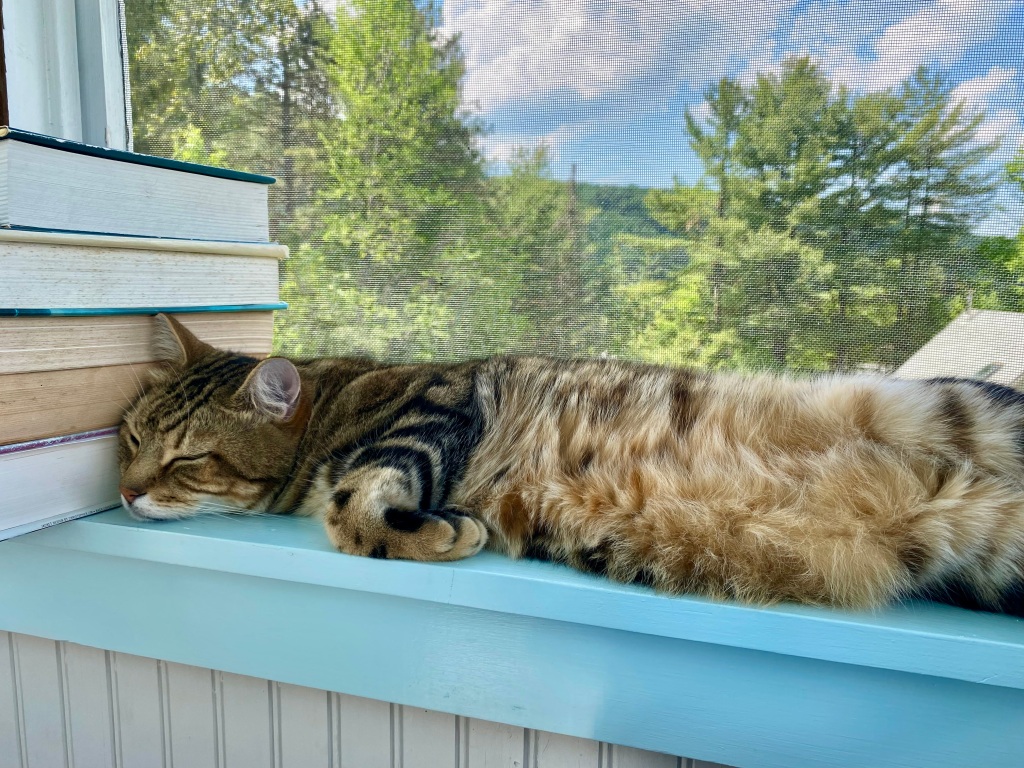
I’m at the early summer gardening place of great good cheer: so much is possible this year. My daughter — a grownup now, but a young grownup — works easily and happily. We’ll share dinner soon, feed our two tabbies, and my daughter will disappear with friends and her swimming suit. I’ll walk into the cemetery and, lured by the scent of lilacs, keep on for a bit. The turkey vultures, maybe a few dozen, will circle low over my head. Then eventually I’ll head down to the village, and the birds and I will part ways.

In these early summer days, I think about my mother all the time. I live in a house that she visited only once. I live a life she did not understand at all. And yet, as I scissor bouquets of lilacs to bring to a friend, as I stand barefoot in my garden deciding to sow sunflowers here, plant basil there, I know these are things my mother loved keenly: the lushness of blossoms, the vim to create a garden.