Cancer, Election.

In 2014, my sister was diagnosed with cancer (now healthily in remission), and I read The Emperor of All Maladies: a biography of cancer by Siddhartha Mukherjee. My marriage also fell apart that year, and I remember reading this fat library book in my car at school pickups, waiting for a job interview in Burlington, on benches waiting for court appearances. It’s a hefty book, with a lot of reading hours.

Three weeks into this flipped-upside-down world, my former life is already receding. I’ve been so surprised and grateful for the effusion of calls and emails, friends stopping by with food and gifts and simply to talk, to share news of their own world and listen to mine. I realize now how carelessly I had ebbed into a cynical place these last few months while the cancer was growing in me, weakening me.

Sure, it’s true that people sometimes give into the uglier strands of lying and cattiness and gossip, of insecurity and strange ways of playing people against each other — and sometimes engage in far worse things. In my Shire of Vermont, I see my decent state struggling with what’s playing out in national politics — and the looming threats. Which made me think, again, as I lay in bed listening to the rain this morning, how our individual lives reflect the greater society. Don’t waste your few days on junk and despair, those adolescent tricks. And thank you, all, for surrounding me with such light.

From Philip Larkin:

What are days for?

Days are where we live.   

They come, they wake us   

Time and time over.

They are to be happy in:   

Where can we live but days?

Lantern Light.

My immense thanks for so much kindness and light sent my way this week…. It’s meant the world to me.

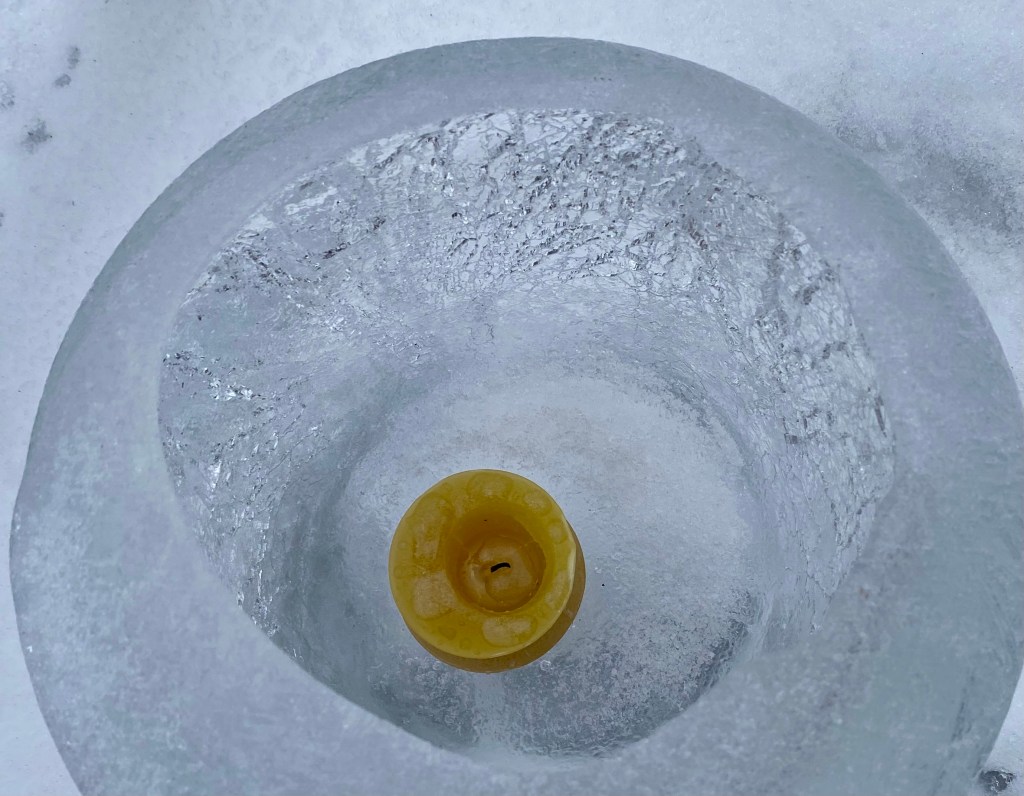
When my daughters were in a sweet little Waldorf nursery school, around this time every year the children made lanterns from canning jars covered with colored tissue paper. The whole school gathered for a vegetable stone soup and then set out for a walk with the lanterns. This is rural Vermont, remember; the nursery school was surrounded by forest and the deep night, and parents carried lighters and matches to relight anyone’s lantern that was snuffed out. In the dark, stumbling a bit, we walked, singing.

Martinmas. I was tugged right into the Waldorf world with its heady folklore and mummers plays, the stories within stories, my natural bent of mind.

A week into the cancer world, veritable novice, walking on November 11, I was thinking of all these powerful layers — Martinmas and Armistice Day and Veterans Day (after WWII and the Korean War) — and the hidden interconnectedness of so many things, String Theory, the magical enchantment of books with stories that seem disconnected and then — whoosh! — are magically revealed at the end.

Maybe this is only my own way of thinking of things, but this uninvited and unwanted cancer that has now joined my body and story could hardly be random. Here I am, on the edge of a journey of indeterminate length, still looking to put these hard pieces together.

And for November, with her lovely gloaming light, a few lines from Adrienne Rich:

… You’re what the autumn knew would happen
after the last collapse
of primary color
once the last absolutes were torn to pieces
you could begin

How you broke open, what sheathed you
until this moment…

Abrupt turn in the story…

Photo credit Jo Dorr

For the past few months, I’ve wondered if I might want to take a different direction with my blog (head to Substack?, become more politically local?), but this blog will change, unbidden by me.

Monday, my daughter took me to the ER for severe abdominal pains. An elevated white blood cell count made the nurse reappear with bottles he filled with my blood and gave me the heads up that I might not be headed home that night. I was wearing my twenty year old Danskos and a wool sweater I’d knit years ago and have worn to felt. Slivers from the firewood I’d brought in were hooked on the sweater. My younger daughter and the older daughter’s boyfriend appeared. My girls texted my brother. The nurse kept coming and going, talking to me and my daughters.

I lay on my back for hours with very kind people around me, who gave me pain meds and noted a soaring fever. The ER doctor returned with the nurse who leaned against the cabinets. It was the briefest thing, but when the nurse walked in he looked deeply at my daughters and then at the floor. I knew then that I was not going to like what the ER doctor was about to tell me about that CT scan.

So, on election night, hospitalized with scepticemia from the cancer, a traveling nurse told me about the beaches in Alabama where he lives while he tidied up needles and tubes in my arm. We followed that up with a long conversation about housing costs. Home again on this frosty and promising-to-be-sunny morning, I’ve been humbled by the gifts of visitors and food and kindness that have poured into our little family house, which made me see what a shadowy unhappiness had been creeping into my being for these past few months.

With the hospital and my brother, a biopsy at Dartmouth was pushed. Things will change rapidly. In the meantime, I’m doing things like putting my electric bill on autopay and arranging immediate work leave. But more profoundly, this: this week centered me right back to who I am — mother/daughter/sister, friend, writer — and conversely narrowed and widened my lens, hammering home that day by day is where we are.

The other afternoon, my daughter Molly ran in the house and told us to hurry out to see a rainbow. November rainbows in Vermont are rare, indeed — rainbows in late fall of this glossiness and color even more so. I saw this as a harbinger.

Last, I was reminded of one of my favorite Jack Gilbert Poems, “A Brief for the Defense.” A few lines read:

… We must admit there will be music despite everything.
We stand at the prow again of a small ship
anchored late at night in the tiny port
looking over to the sleeping island: the waterfront
is three shuttered cafés and one naked light burning.
To hear the faint sound of oars in the silence as a rowboat
comes slowly out and then goes back is truly worth
all the years of sorrow that are to come.

The world, keep on keeping on….

The young barista in my coffee shop muses with me about the small pleasures of November: the summer slam of tourists quieted, the sudden simplicity of stillness. On a balmy afternoon, I head out in search of places where I’ve loved and been loved, the sunny afternoon so warm the crickets have struck up their chorus again.

A few days later, I’m in the diner, eating breakfast with a friend whose mind works along my hard-bitten lines. Our booth’s window looks down into the river where the patched-up cement walls have fallen flat. We are in absolute agreement that this shifting world of thoughts and opinions, all the junk fed by media and social media, come to naught. It’s action that shifts the world. And the world, despite our fears, will keep on keeping on.

I put poetry as action, too. Here’s a few lines from the incomparable Mary Ruefle’s “Glory.”

... I met a psychic who told me my position in the universe
but could not find the candy she hid from her grandkids.
The ordinary fear of losing one’s mind. You rinse the sink,
walk out into the October sunshine, and look for it
by beginning to think. That’s when I saw the autumn aster,
the sedum blooming in a purple field. The psychic said
I must see the word glory emblazoned on my chest. Secretly
I was hoping for a better word. I would have chosen for myself
an ordinary one like orchid or paw...

Vectoring….

Autumn has stretched out in Vermont into days of balminess, the warm air shot-through with the gold that lingers on the trees. It’s so warm, I keep at my makeshift back porch deck, a table I moved out this summer that’s become a place of succor, resting my bare feet on a wooden crate of those onions I pulled from the garden.

I’m taking a class with the unmatchable Lauren Markham about structure in writing, one of the hardest challenges. Online, there’s attendees from California (what? you get sun and ocean?) and Phoenix and Boston. Signing in, I leave my laptop camera on. I throw a chunk of wood in my stove from sheer laziness so I won’t need to rekindle the fire as the colder night creeps in, but I open the back window so my cats can sit on the sill and enjoy this sweet October breeze. When I join, the group is admiring the view of my clapboard house and frost-killed morning glories vines. I tell them my chore which doubtlessly immediately marks me as…. quaint rural.

Late afternoon, I pull out the dead basil plants and then lie down under an apple tree. Her leaves, blacked with frost spots, spiral down, one by one, to the unmown grass. It wasn’t until I had babies and was forced to slow down (all those nursing hours beneath apple trees, milk-sweet baby in my arms) that I realized every leaf takes its own precise trajectory, from spring bud to the autumn dive earthward. Around me, rotting apples, persistent slow-flying wasps.

I might have slept; when I open my eyes, the sky is already draining of blue. Thinking of Markham’s words, I suddenly see the taunt arc of this fourth, yet unfinished book, the map that holds this story, the treasure at the reader’s end far from a Hallmark card. Vector is the word she used. Indeed, all story, all life, is motion. The chill rising up from the earth, I vector myself indoors….

A great many, who have spent their lives in cities, and have never chanced to come into the country at this season, have never seen this, the flower, or rather the ripe fruit, of the year. I remember riding with one such citizen, who, though a fortnight too late for the most brilliant tints, was taken by surprise, and would not believe that there had been any brighter. He had never heard of this phenomenon before. 

— Thoreau

This precise moment… Now.

My daughter and I drink coffee at the kitchen table and talk about the election. Sun pours in through the glass doors. A cat lies on the table between us, purring, utterly blissful.

At 19, it’s her first presidential ballot. At 19, I was a different kind of young woman, holed up in a far-off-the-path cabin with a boyfriend, determined to forge my future in “the smithy of my soul….” My daughter’s generation was shaped in the smithy of the pandemic. Last week, I tore off the New Yorker cover and clipped the illustration of Harris to our kitchen calendar, a white star gleaming on her earlobe. My daughter and I wonder, if Harris, then what? If not, then what? There’s no answers, yet, to any of this, the future yet to be revealed. We fry eggs, butter toast, brew more coffee.

Later, in the night, I’m out in my fat wool sweater and Danskos, holding a cup of hot honey tea, looking for the northern lights. The stars are crystalline, swirled through with white. The wind soughs through the white pines in the ravine behind my house, and a creamy half-moon, like a luscious unworldly melon slice — so tantalizing I’d like to hold it with both hands — hangs over my house.

I’m at the edge of my garden, that familiar place where, if I smoked cigarettes or drank scotch, I’d linger, contemplating the sunflower stalks and the village lights below. The night pretties up the village, wraps it up, so I can see how small this place really is. In the night, my heart opens toward the village; in the daylight, not so much.

The light from my house illuminates stray leaves sailing through the darkness, the great shift of autumn. Like so many of my friends, I’m at that place in life, kids growing and grown, where creative possibilities unfurl. I’m doing the things I’ve done nearly all my life: drinking tea, staring up at the wonder of the night firmament, contemplating which way I’ll jump. In the meantime, I’ve been housekeeping: edge away from that negative snarl, lean into what and who I know is true, the wind and the stars, the moving moon, this swallow of tea, this precise moment. Now.

“Problems that remain persistently insoluble should always be suspected as questions asked in the wrong way.”

— Alan Watts