Household chores and world events.

The last day of 2023, I let the fire in my wood stove extinguish, and I take my stove apart. The stove has been spitting ash and spark through a damper, a chore I’m driven to by sheer necessity.

I unscrew the stovepipe and the back heat shield and plate, and carefully remove the two honeycomb metal filters that are choked with fine ash. It’s a messy job, and I’m a messy woman. My curious cat walks through the cinders and leaves dirty paw prints on my white enamel kitchen sink.

When I’ve put the stove together again, I find the driest kindling I can in my barn and build a small fire and slowly heat the stove again, kneeling before the glass where the flames ripple, listening to public radio hash over the year. I add wood, study the flames, murmur to my cat who is seriously invested in this warmth and the doubtless impending feline nap.

I’d once torn a photograph from a New Yorker issue and thumbtacked it near my desk of Marina Oswald, taken the morning after her husband Lee Harvey Oswald was arrested for assassinating President Kennedy. Her face twisted unhappily, she’s pinning cloth diapers on a line. So it goes: the necessity of domestic life as the great events of the world unfold.

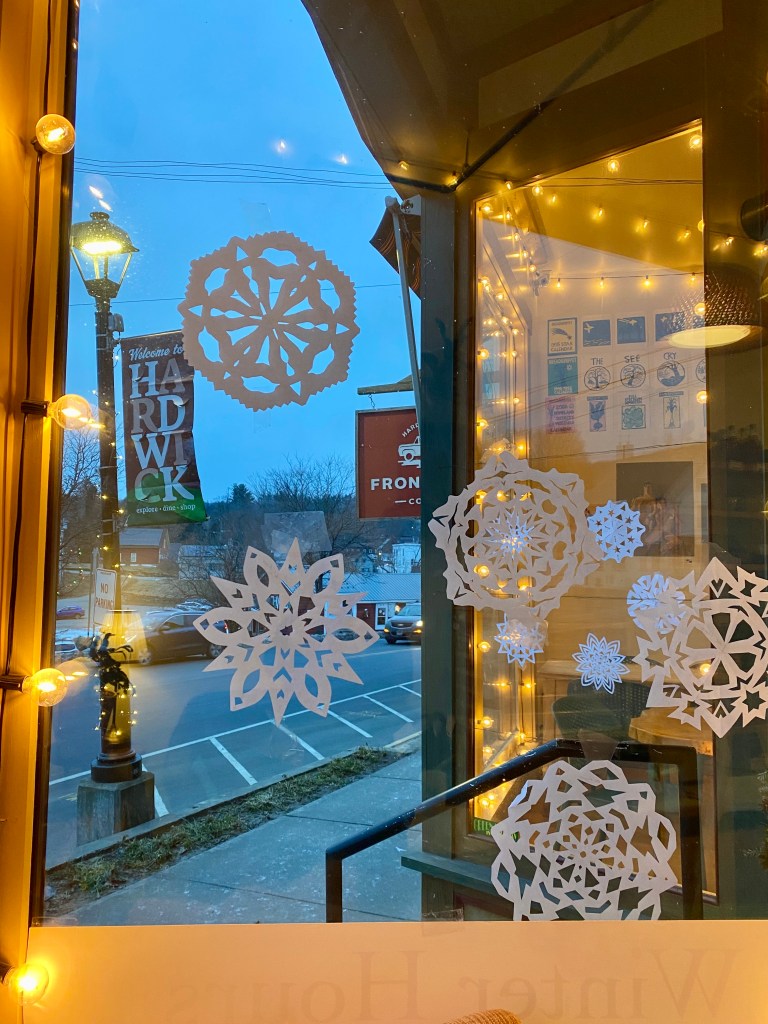
My stove burns merrily. I bake spanakopita and invite a few dear ones who bring chocolate. This morning, January. A drift of snowflakes. The lean winter light.

The snow is melting
and the village is flooded
with children.

— Issa

Last Moments.

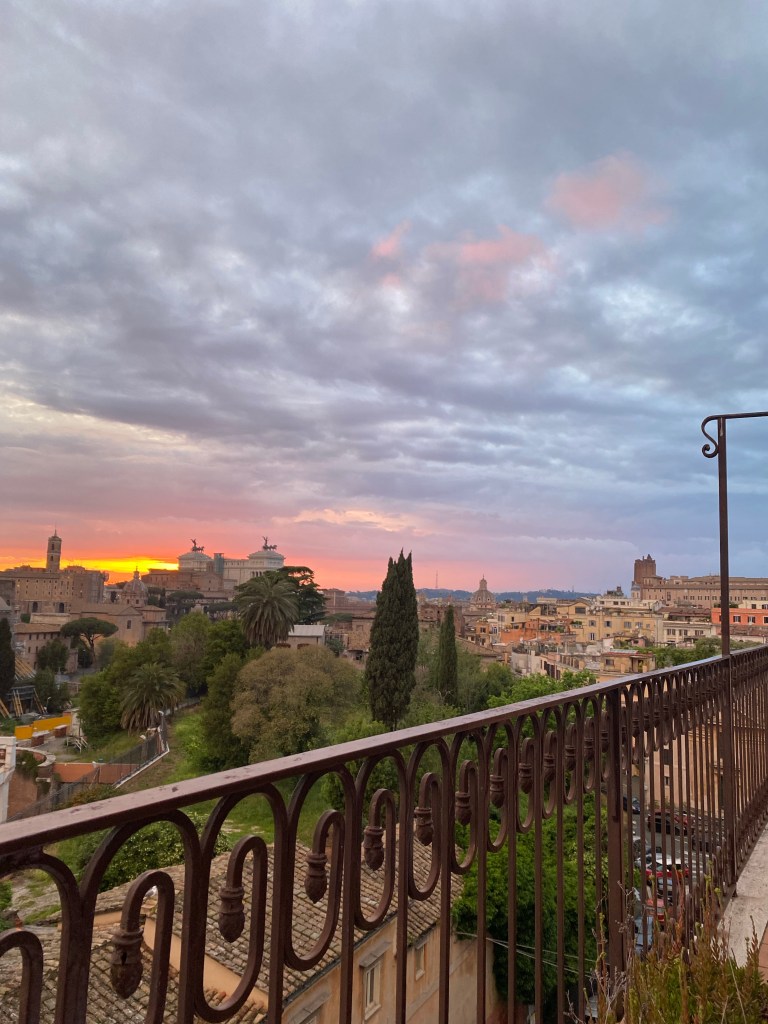
4 a.m., I’m drinking espresso on a balcony in Rome. Our tickets home have been cancelled. (Hello, strikers.) After a scramble, I’m hoping my patch-up fix will hold.

The morning is cool with a promise of sultry heat. Birds serenade in treetops and fly among ruins from an ancient world.

At the metro, my daughter and I are separated on opposite sides of a turnstile. I throw her my wallet over the gate. Her ticket won’t work, nor the second. A man appears, opens the gate on my end, and speaks to me in Italian. My daughter hurries through. I say thank you, thank you, thank you, to the stranger disappearing into the crowd.

Espresso.

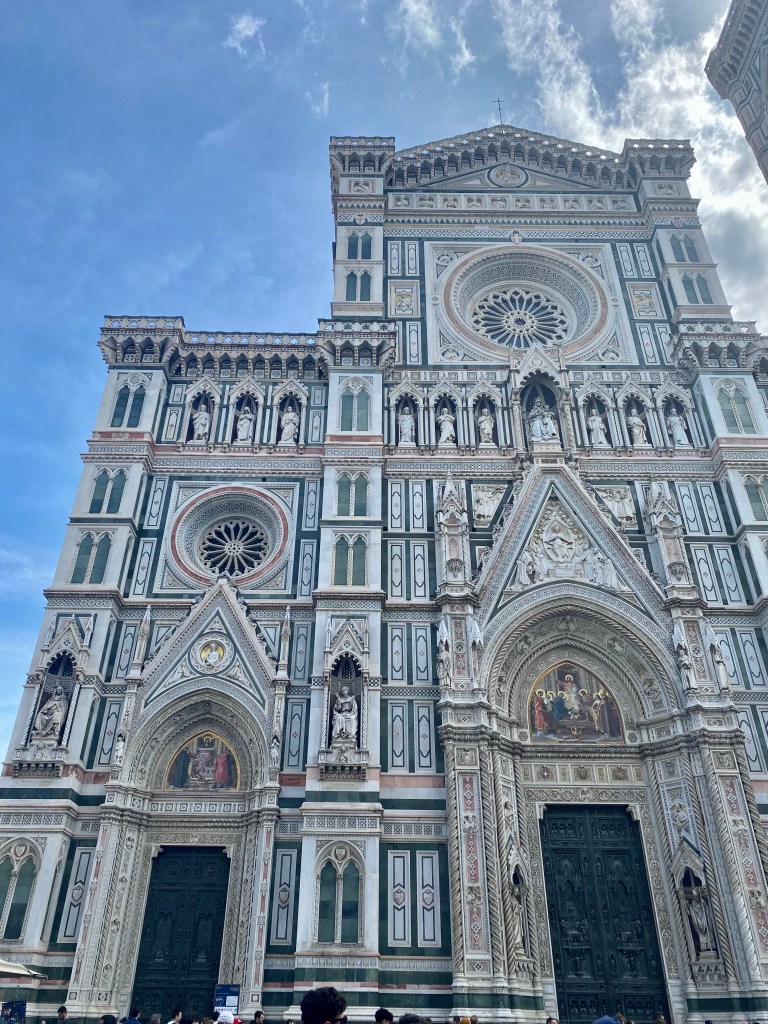
Florence is crammed with tourists. My daughter and I sit on a stone bench in the shade and watch pigeons and people. Midday, we climb stone stairs into the duomo while the organ plays. I’ve never been in a structure like this, such an awesome concert of art and size, art and music. My daughter whispers, You’re going to keep talking about the organ, aren’t you?

Later, we eat pizza. At our table, strangers strike up a conversation with us, give my daughter wine, offer shopping and college advice, and an espresso appears before me. I lift the tiny white cup and drink the brew.

The Horizon’s Edge.

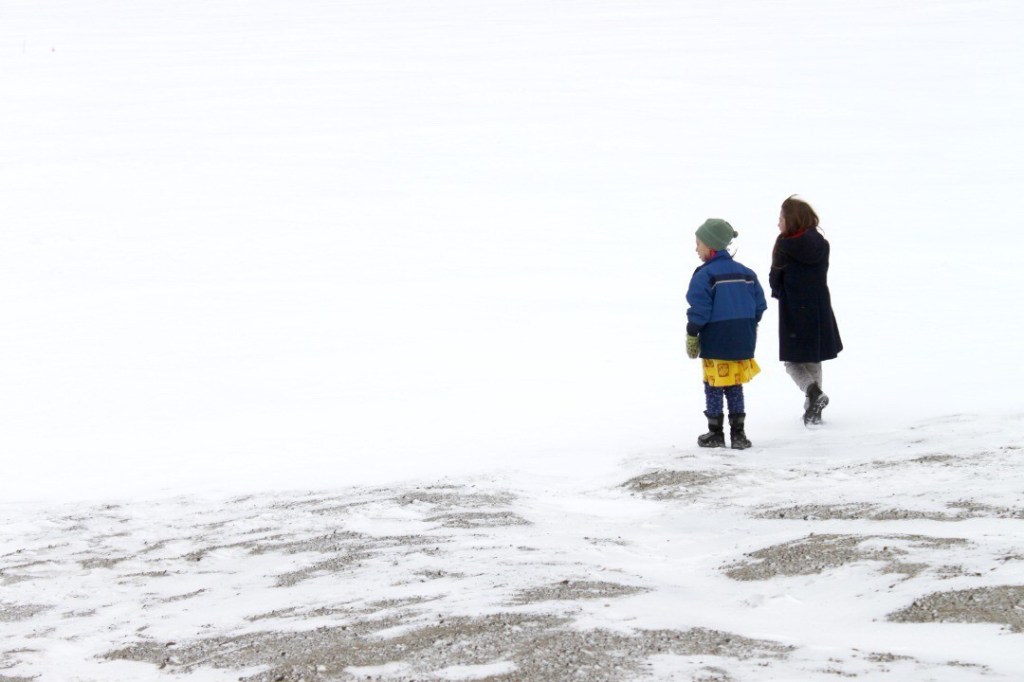
Photo by Diane Grenkow

Many years ago, one of my daughters’ playmates wandered through our sugarhouse with a huge pine branch over her shoulder. My then-husband and I were working in the kind of frantic way we often did in those days, sap-turning-to-syrup boiling fiercely in the pans. The playmate was a slight and quiet child. She moved through us and then disappeared outside again, enmeshed in whatever imaginative world.

On this below zero morning, heading towards my oldest daughter’s birthday, this photo taken by my friend comes into my email, which reminded me how much of my approach to parenting little kids was let them wander around the world. More than a few times, that seemed to have evolved into a kind of what the heck is happening now sense from the kids.

Just for the record, we swam a great deal at this beach, too, although never in the frozen months.

The horizon’s edge, the flying seacrow, the fragrance of saltmarsh and shoremud;
These became part of that child who went forth every day, and who now goes and will always go forth every day,
And these become of him or her that peruses them now.

— Walt Whitman

Sugar. Salt. Stars.

The air has turned this morning when I step outside in the dark with my bucket of hot stove ashes. Even without my coat, I’m not immediately shivering, and the cold doesn’t come at me with daggers on my face.

Beneath the starry sky, I gazed up at Ursa Major, a single gauzy cloud suspended overhead, as if in water. I’m reminded of frog’s eggs, those cushiony pillows I sought with my daughters when they were little. Every spring, we found clusters in ponds and in the ditches along our dirt road. We’d visit these clusters every day on our wanders. Sometimes the eggs hatched. Sometimes the clustered disappeared.

On this early February morning, beneath the stars, I stood for a few more quiet moments, thinking about stars and frogs’ eggs. Snow’s expected to move in soon, too.

As water given sugar sweetens, given salt grows salty, 

we become our choices.

~ Jane Hirshfield

A Little Meal

A 13-year-old or so boy is fishing at the edge of the pond when my friend and I walk down in the evening to swim. He nicely shuffles to one side, and then we’re off.

The evening sky this summer has been especially enchanting — muted in color, pale peach sky with gentle blue.When we’re finished swimming and laughing, we stand for a moment on the weedy shore, and I point out a luna moth dipping and rising — part of the evening charm, like an Impressionist painting. Suddenly, a bird pursues the moth, then swallows it. A ragged wing falls.

And so much for the make-believe world.