Demian. Hermann Hesse.

This afternoon, I tore through my bookshelves searching for a paperback copy of Hermann Hesse’s Demian, a book I first read in high school. The book above — brand-new, Harley Rustad’s Lost in the Valley of Death — reminds me of Demian. Like so many other people, in some ways reading Hesse as a young woman shaped my life, every one of my years off the well-trod path. Demian has reappeared at certain keys points in my life, always rising with a strangely mysterious power. At the end of a very long winter, that book returns to me like a breath of spring air.

Fittingly, perhaps, I’m unable to find my copy. Maybe that hardly matters. For the first time in months, I take a long hatless walk, listening to the singing birds, remembering the unstoppable power of spring, and that the world wraps around us in ways we understand, and in ways we’ll never comprehend.

On this sunny Sunday in Vermont, here’s a few lines from the incomparable W. H. Auden on the nature of war. For more about this poem, the New York Times has an essay today.

About suffering they were never wrong,

The Old Masters: how well they understood

Its human position; how it takes place

While someone else is eating or opening a window or just

walking dully along…
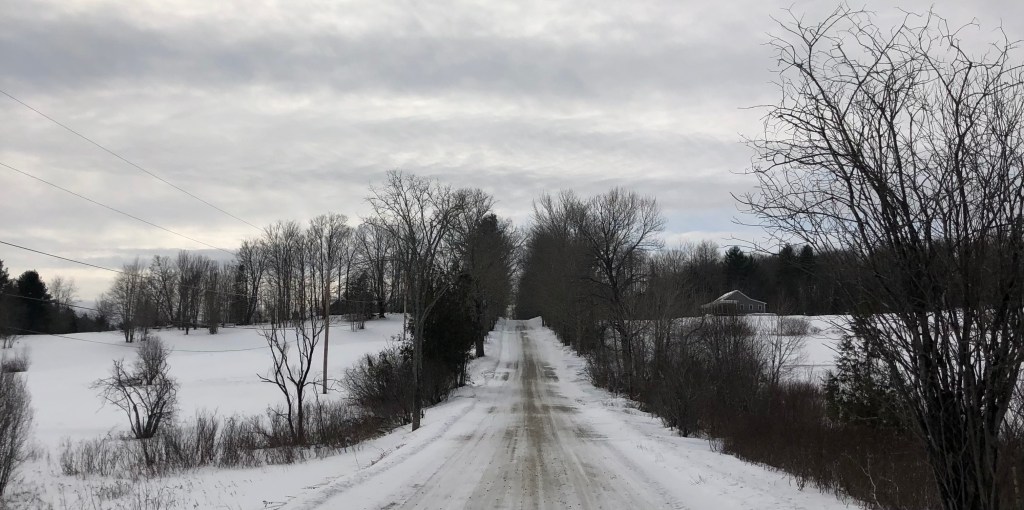
Somewhere in February. Dirt Road Land.

Kents Corners, Calais, Vermont

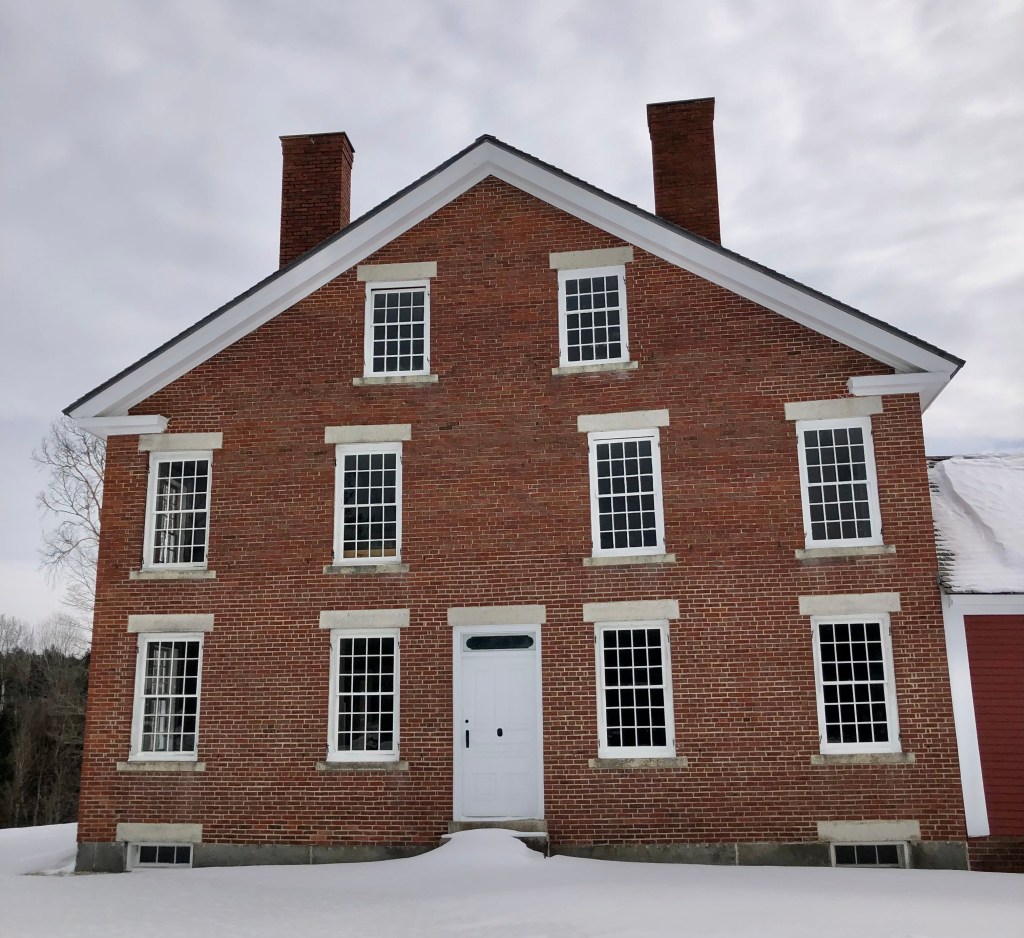
Every so often, a friend and I make plans to meet at a rural crossroads, at a brick inn that was once a stagecoach stop. I imagine in those days the crossroads was populated with chickens and horses, with people coming and going, not Priuses, but in wagons and on foot. My friend and I began this habit in the summer of 2020, and so the inn has been shuttered to the public all this time.

Walking, we pass a few other Sunday walkers bundled in coats and hats. But few people are out, and there’s scant traffic. In contrast, our conversation is packed — about raising kids and planning spring gardens, about relationships, about navigating the working world as a female in a patriarchy (why are these conversations still necessary, anyway??)

The thing about Vermont in midwinter is the stillness and what breaks that quiet. Icicles drip, freeze, and then thaw and drip again. Birds appear at our feeder in increasing numbers, then whisk away again. A rouge wind blows in a squall, soon chased away by the emerging sun.

Pandemic notwithstanding, robins return to our crabapple trees.

“Things are as they are. Looking out into the universe at night, we make no comparisons between right and wrong stars, nor between well and badly arranged constellations.” 

— Alan Watts

(And many thanks for Erika Nichols-Frazer for a review of Unstitched in the Valley Reporter.)

Snowfall.

We’ve had so little snow this winter in Vermont that this morning’s deep snowfall comes almost as a kind of surprise. The day before, a cold rain fell all morning. As I bent into work, I kept glancing through the windows, glad of the indoor work that morning.

This snow is the classic, pillowy powder of the most magical childhood memories. Sure, spring is far in the offing on a day like this, but the billows and mounds embody winter’s profound silent beauty.

A decade ago in my life, this kind of storm would have whooshed in with a number of worries — will the sugarhouse collapse before the roof is raked? How long can I endure cooped-upness with small children? Will our firewood hold out? These days, my worries are different, as my life is in another place. But I’ve changed, too. We’ll do what needs to be done. What doesn’t get done, perhaps doesn’t need to be done. And some sun is in the forecast for this weekend, too.

[The 1800s opium epidemic in China] was once widely interpreted as a story of a once noble society destroyed by a powerful drug, but more recent scholarship has argued that this simplistic explanation overlooks the turmoil, poverty, and widespread dislocation caused by the wars themselves which in turn exacerbated the epidemic.

Carl Erick Fisher, The Urge

Soul’s Migration.

Lake Eligo, Vermont

At the end of the afternoon, I’m out with my skis, insufficiently dressed against the zero degree temps, hoping the movement will warm me even as I caution my youngest every day — bring enough clothes.

I warm.

I ski on the former railroad bed, behind a daycare. Earlier this winter, a new playground was built for the kids, of wood and ramps, and I wonder if some of the federal coronavirus money made its way here. The daycare itself is in the basement of an old building, and so the playground has a kind of bittersweetness, too, a bandaid of a much larger problem.

On the bridge over the river, I pause. Snowmobiles and a groomer have driven through here, and so the skiing is easy. Animal tracks mark the snow down the center of the frozen river. On the bank I ate wild grapes in the late fall. For now, it’s just me and the fresh snow and the sunlight while it lasts, the woodland creatures, the river flowing deep beneath that ice.

Birds migrate and caribou circle the cold top of the world. Perhaps we migrate between love and suffering, making our wounded-joyous cries: alone, then together, alone, then together. Oh praise the soul’s migration.

Mark Nepro

Order. Gratitude. And Other Things.

Sunrise, Hardwick, Vermont

January — the time of year when ash from the wood stove has settled into the crannies of our house — beneath the couches and along the woodwork. I listen to The Daily about FBI files released about the insurrection a year ago and take a soapy rag to my house.

I tell my daughters I’ll paint the walls of the upstairs hall spring grass green and stencil dandelions around the doors. What are you doing? they ask.

Some people are drawn to chaos. I crave order, a schedule, neatly pencilled lists to guide me through my days. To write, I travel to hard places, and I want to return to order. All around us now, chaos streams in, as the pandemic turns our world inside out. In the midst of this, I rearrange my woodpile. In the evening, while my daughter writes a school paper, I take the compost out to the bin. A light snow falls, sparkling in the light through our house windows. There’s no one out, and I keep walking. I head down the road and stand on the sidewalk. These neighbors have fully decked out their crab apple trees with twinkling colored lights. In my younger years, I would have scoffed at the use of electricity, much as I once hated paper plates.

Now, in the dazzling bits of snowflakes, I stand there for the longest time, thinking of nothing at all, just taking it in.

On a different note, Dr. Mark Levine, Vermont State Health Commissioner, read and blurbed Unstitched. I am among the many, many Vermonters who look to Dr. Levine as a beacon of calm, rationality, hope, and decency, as he’s guided our state through two years of a pandemic. In the mist of this, he took the time to read my book and called it a “tour de force.” Endless thanks, Dr. Levine.

Unstitched “…is both a page-turner and a primer in understanding the many complex dimensions of the opioid crisis in a rural state, where the reader accompanies the author in her own recovery and process of discovery. Ultimately, it is impossible for any of us to be totally disconnected from the impact opioid use disorder has on our communities, and it is through reading Stanciu’s skillful, compassionate and thoughtful rendering of personal stories that we can all gain valuable insight, diminish harmful stigma, and foster true healing.” — Dr. Mark Levine, Vermont State Health Commissioner

Mud. Snow. Ice. What Next?

I met a friend yesterday, and we took a walk we’ve journeyed in various seasons — in bright green spring, in the summer when we admired flower gardens along houses. Yesterday, we walked through frozen mud ruts and sprinkles of rain, the jumbled up season and time of where we are.

On this New Year’s Day, I’m passing along a VTDigger story written by Kevin O’Connor about a Vermont couple’s 4,000 World War II letters. A history lesson and a love story — isn’t that what we need right now?

Kent’s Corners, Calais, Vermont