Hard, Sweet Pears.

The couple who owned this house before me planted two pear trees in the front yard. The runt leans into the lilac hedge, as if hiding its crown. The taller has expanded into a pear tree version of pirouetting ballerina. Late afternoon, after pulling out withered lily leaves from the flowerbeds, I pluck two hard sweet pears and head over to the neighbor.

She’s created an unusual little garden with little pools of running water, so the delight is for your ears, too. I hadn’t realized it was the anniversary of her husband’s passing. We sit in her garden while the sun sinks down, talking about random things — work and the school board and gardens. The little boys across the street bike into her driveway. She’s parked as far back as possible to give the children a little more space on our tiny street.

When chilly shadows cover the garden, I stand, throw my pear core into her weeds, say goodnight. The boys have been called in for the night. As the cold edges in, mist thickens in the valley below. I watch how those cloud layers drift, cushioning the village, layered work just for the night. Then I pick another pear for breakfast.

Some days I find myself wondering how I’ve landed in this town, what random circumstances drove me here. There’s that trite old phase that the only constant is change, but of course that’s not true, either. All around us flow the steadiness of children, of loss, of those ripening pears.

September: such a pretty, sweet month.

Blackberry Eating

By Galway Kinnell

I love to go out in late September
among the fat, overripe, icy, black blackberries
to eat blackberries for breakfast,
the stalks very prickly, a penalty
they earn for knowing the black art
of blackberry-making; and as I stand among them
lifting the stalks to my mouth, the ripest berries
fall almost unbidden to my tongue,
as words sometimes do, certain peculiar words
like strengths or squinched,
many-lettered, one-syllabled lumps,
which I squeeze, squinch open, and splurge well
in the silent, startled, icy, black language
of blackberry-eating in late September.

Awe.

Photo courtesy Molly S.

Just about a year ago, my daughter and I climbed multiple stone steps in the Cathedral of Santa Maria del Fiore in Florence, the stunning cathedral finished before Columbus set sail on a journey that changed the fate of the globe. As we climbed, the organ played. The windows were holes in the stone, and wind washed in. Suddenly, we stepped out onto a narrow ledge where we could see down into the giant cathedral. I knew myself part of this ancient building — alive in the most beautiful structure, in a time that flew back to medieval Europe.

Awe. I’ve participated in so many radiant experiences, but peak awe? It’s a rarity. Right? We couldn’t live if we were always in awe: the Florence Duomo, childbirth, a night of the constellations and some psychedelics….

For those of you not in the know, northern Vermont has been amping up anticipation for the total eclipse. For once, the weather cooperated absolutely perfectly. The state shut down. Go home! Enjoy! We sprawled over the wet grass with neighbors. As the moon and sun began to cross, traffic sounds ceased. Did the wind pick up, or could we simply hear better? I had expected a few moments of the lovely night sky in the middle of the afternoon. But no, no. Instead, a radiant world abruptly glowed. Along the mountains where the sun rises scarlet these mornings, the sky was heavenly blue, rimmed with the purest gold. There were no three minutes of totality. No time at all. It was simply us — all of us — breathing and gasping with great joy.

How to Reconcile Contradictions?

The November days end in early darkness. Late afternoon, I close my laptop, comfort the cats with a handful of kibble, and pull on my jacket. The village lights glow: the few restaurants, a garage, a laundromat, the library. When I’ve reach the high school, the darkness spreads ubiquitously through the town forest that spreads up the hillside. Nearly all my life I’ve lived in New England, and yet the profoundness of this late autumn darkness always amazes me.

Later, I’m in the neighbors’ house who need some aid. As we stand talking in the well-lit rooms, I feel the house around us, the century-old vessel of wood and nails, a metal roof. Around us, the wind stirs through the evergreens. I walk back in the dark, my head bent against the cold channeling through the valley. All night, wind howls, the inexorable thrust of our world into winter.

While I read on the floor beside the wood stove, the cats keep me company, thinking their feline thoughts. Eventually, I turn off the lamp, and we three beings watch the fire’s flames through the stove’s glass door. Encompassing us, this profound darkness I will never comprehend. In it, our hearts beat on.

Here’s a few lines from David Truer’s “The Americas They Left Me” I read last night, in The Best American Essays, 2023.

This country is a terrible country, and this country is not…. There is a great ugliness on the land and also a great beauty. This country would and will do its worst at the same time it embodies the most nurturing habits our civilization has to offer. There is no reconciling these contradictions; they cannot be reduced or done away with. I must, we must, find a way to contain both.

Talking.

Old friends/neighbors appear on the other side of the cemetery fence. She’s wearing shoes with a hole in one heel and steps carefully through the patchy snow that remains. In the thin late afternoon sunlight, I’m in the brown garden, searching for nubs of green, an elbow of garlic, a toe of daffodil. It’s been so long since I’ve seen these people, in that long ago time known forever now to us as pre-pandemic, that I need a moment to determine, yes, yes.

We are all three of us worse for wear, but they dive right in, talking about my house and the wood piles, the forsythia I planted that’s sprung crazy, the picnic table beside the apple tree. Things have happened here. Life has gone on.

He leans on the fence where my youngest tied a pink strip of old t-shirt years ago, marking where she and a friend planted a time capsule. What’s in there I can no longer recall, and likely she can’t, either.

Six years ago, in April, I decided to move into this house. No one was living here then. I leaped over the fence and tore a hole in the back of my leggings. I headed to work afterwards, and the kids teased me. What have you been doing? That April was a warm one, too. I leaned against the house and studied the declination of sunlight as I guessed it would rise.

As we talk, the wind picks up. The robins are ecstatic in the neighbors’ maples, really belting out their songs. Overhead, the turkey vultures float, eyeing us. We keep talking, tossing at each other, “remember this? remember this?” Oh laughter….

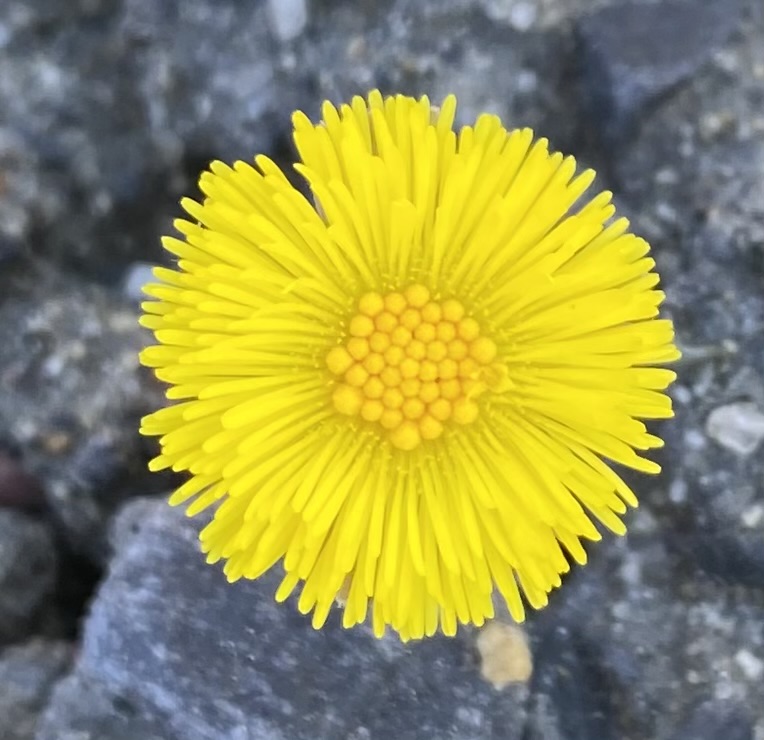
The bud
stands for all things,
even for those things that don’t flower,
for everything flowers, from within, of self-blessing…
— Galway Kinnell

Neighbors

I’m listening to a friend I like very much describe her neighbors’ extensive political signs — sizable banners and flags decorate this rural Vermont property. I’m tallying up my book purchase bills for my library when I suddenly pause, listening harder as my friend says she doesn’t think she can walk across the dirt road and be friendly anymore.

A variation of the conversation surface again at dinner, when my oldest says her Instagram posts have been criticized as not political enough, not making a vocal stand against injustice. We’re eating tomatoes and sweet onions my youngest picked from the garden.

Our conversation winds around to the late and great John Lewis, and I remind my daughter of the challenge Lewis posed:

When historians pick up their pens to write the story of the 21st century, let them say that it was your generation who laid down the heavy burdens of hate at last and that peace finally triumphed over violence, aggression and war. So I say to you, walk with the wind, brothers and sisters, and let the spirit of peace and the power of everlasting love be your guide.

My daughter, worn out from a long week at work, struggles — what am I supposed to do? Like anyone, she desires to walk the path of justice and goodness. Then she tells her sister and me the heartbreaking story she witnessed that day at work of a Black woman, white men, and fear. What could I have done? she asks me.

I don’t have the answer for her. Listening, I suddenly think, Fuck Instagram and our human — or perhaps American — compulsion to sum up the story of justice and injustice in a few brief sentences. My daughter leaves for a run, utterly dissatisfied and miserable.

I sympathize with my friend who didn’t want to cross that road to her neighbors’ porch again. I’m as guilty as anyone else of barricading my heart to those I don’t understand. But the world, surely, changes through compassion. There’s nothing glitzy or flashy about compassion — it’s messy and painful. But isn’t that the challenge?

IMG_8165

Photo by Gabriela S.

Hey? Where’d I Park the Honda?

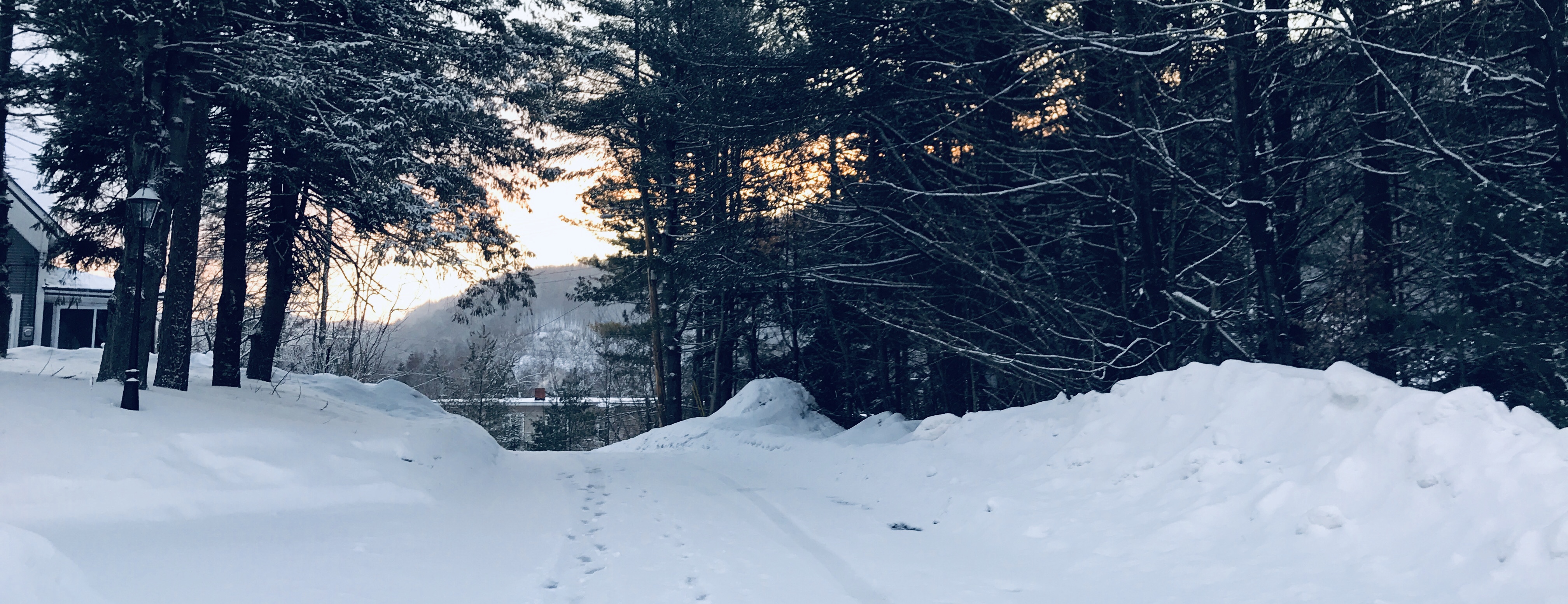
Not far from our house, a few months ago the neighbors parked an old Honda, circa 1990s, right along the road beside their house, and after the last storm, the Honda completely disappeared in the snow. Between the roof shedding snow and the work of the town plows, only a massive snow bank remained.

This week, the upper edge of the car’s roof returned. I noticed a window in the backseat had been left unrolled, just an inch.

In a weird kind of way, I’m keeping my tabs on the Honda, just out of sheer curiosity or what my kids would call nosiness. I’m pretty darn sure I’m not the only one in the neighborhood who’s interested to see how this story evolves. What’s the plan?

This week, we’ve had a mighty snowfall, a full day of rain, freezing rain, miserable cold, t-shirt balminess. Yesterday morning, I worked at our sunny kitchen table all morning while the cats slept on chairs beside me; in the afternoon, snow squalls surrounded the kids walking home from school.

In our domestic life, we’ve tears, laughter, and rage.

Yesterday afternoon, while the 13-year-olds baked chocolate chip cookies, their snowy clothes hung up to dry, I walked in the blue-hued twilight. And there it was — millions of snowflakes falling, utterly silent, from an origin unknown, steadily going about the work and beauty of winter.

img_4531