Loons, Wiser Than Us.

Back when my girls were in the early sand bucket age, loons were a rare sight on the lake. The grownups would knock off whatever chat we had going when we spied those distinctive birds — spotted backs, red-eyed. I grew up in New Hampshire and never saw a loon as a girl.

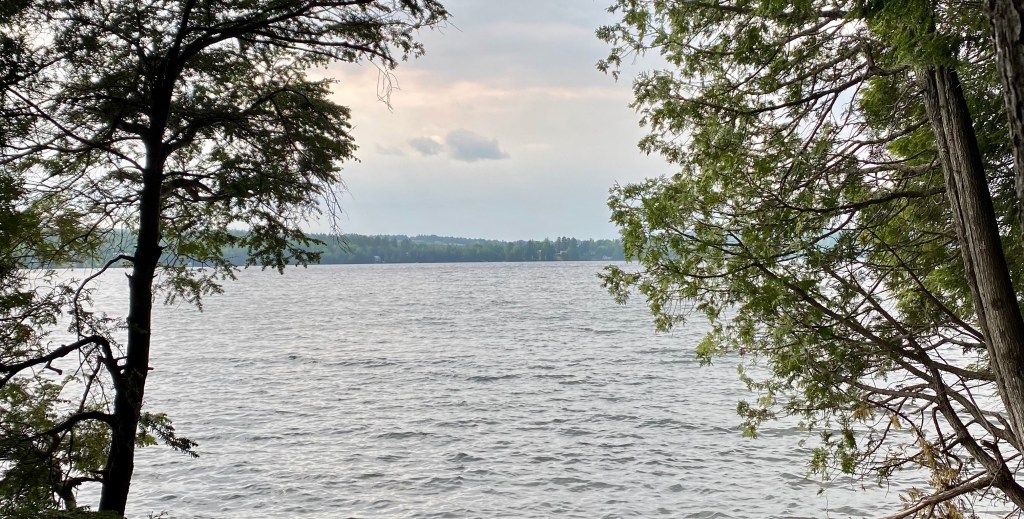
But even now, those calls — how eerie, how utterly mesmerizing, how definitively not of the human world. This afternoon, before a planning commission meeting and just as a little light rain begins, I walk over to that beach where we drank so much coffee. There’s two cars in the parking lot, people staring at the lake and the sky that’s bruised with storm. The loons holler across the rippling water. Vacation in Vermont and you might think summer is all sweetness and ice cream — but here’s a slice of cold rain, those two black-necked beauties, and an infinity of sky.

Conversation in the Moonlight.

At the open hatch of my car, I’m writing a mental grocery list, when something — what it is I don’t immediately know — happens. I’m fucked, I think. I’ve broken my hand.

A pneumatic hatch strut has broken, and is pinned between the hatch and taillight, the plastic light smashed. I turn my hand around and around. My hand suddenly seems very small, utterly familiar, a thing easily ruined.

People walk around me, going in and out of the co-op. Weirdly, I remember a car crash from my twenties when a Subaru Justy ran into my gold Rabbit. My Rabbit was knocked off the road. I got out and ran. The Justy had spun around and around and came to a stop, the wrong way in the middle of the road. No one was around. The Justy’s driver was crying, her window rolled down, saying, “I’ve killed you.” I begged her to get out of the car, leaning towards the Justy in the falling snow but not touching it, saying, “But I’m alive. I’m here.”

In a twist of great good fortune, my hand isn’t broken, only bruised. I go in the co-op and buy scallions and yogurt. The hatch and the strut are an irritation, another thing to sort out and solve, a fixable occurrence.

Later that week, after the dinner guests have left and it’s just me and my daughters and their friends, the five of us pull our chairs around the fire. The neighbors have taken their little kids into bed. The band in the village has quit by then, too, and the frogs are signing again, snippets of frog melodies.

In the darkness, we talk about relationships and marriage, what holds people together, what makes people endure. What makes people split. I toss another chunk of wood on the fire. A glistening half moon hangs over my house. Listening, I turn my hands around and around. So often, my hands are full and busy. Now, the moonlight falls in my open palms.

We keep talking and talking and talking. The moonlight is endless.
Birds are a Kind of Souls.

I’m sitting at the kitchen table talking with my daughter about past, present, future — one or all of those mixed in together; it’s late adolescent talk; the future hovers around us all the time, all day long — when I see a robin swoop up to our porch beam, its beak full of limp weed.

For the first time in the half dozen years we’ve lived here, robins are building a nest a few feet from our kitchen door.

In our other house, robins crafted fat nests in our sugarhouse and under our balcony. We witnessed baby beak feedings and collected blue ragged shells. Twice, a hawk ate fledglings — the course of nature, but sorrowful.

Rain has fallen all day. There’s an underlying promise of deepening green with the rain, but the hours have been cheerless and cold, filled not with any bad news but the accrual of petty things that drag at all our lives.

A robin stands on the porch railing, eyeing us through the glass door. Its mate flies in quickly, busy busy in the nest. Time is of the essence in bird movement. The robins are a little story come to stay with us for a short while.

Build and thrive, I think. Thrive.

“I was convinced that birds were kinds of souls. Not the souls of people but of previous birds whose mystery and beauty were so necessary on earth that God would not allow them to be anything in their second life but birds again.” 

— Howard Norman

Vermont’s Foundation: Freedom and Bread

A possum circles in the highway, no doubt startled by my headlights. It’s past midnight, and no soul’s around. I drift into the other lane and let the possum do what it wants to do.

I’m listening to the radio playing the Rolling Stones and thinking of a David Budbill poem I read that afternoon, about Vermont’s colonists and centuries of following folks, seeking freedom and bread. The possum is definitely seeking her or his own version of possum bread, but freedom…? The question looms large. I haven’t far to drive this night, but the words stick with me — bread and freedom — surely two of the main drivers in my life, likely in yours, too.

The peepers are lusty along the Lamoille. The air reeks of wet mud, of that sweet fecundity of spring.

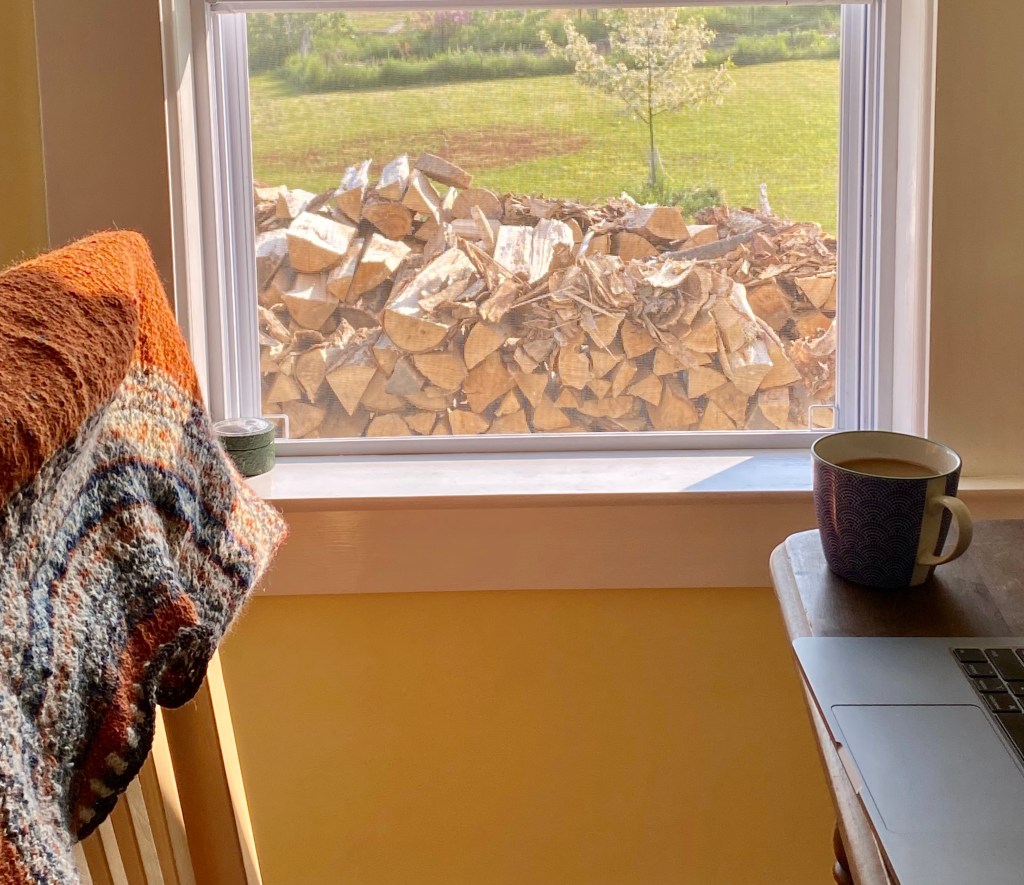
At home again, we lie down with the windows open. I hear the teenagers talking and laughing before they slip into the thickness of young sleep. To ward off the night’s gloom and cold, I’d started a small fire in the wood stove. Through the open window now drifts smoke. In these May days — both hot and chilly — I’ve moved my wood piles, again, as I tend to do, raking the bark and broken bits to dry in the sun. Foolish, perhaps, to keep a fire smoldering while the bedroom windows are open. Or maybe simply a kind of freedom.

What Is June Anyway?

After three weeks of hot weather and drought,

           we’ve had a week of cold and rain,

just the way it ought to be here in the north,

            in June, a fire going in the woodstove

all day long, so you can go outside in the cold

            and rain anytime and smell

the wood smoke in the air.

This is the way I love it. This is why

           I came here almost

fifty years ago. What is June anyway

          without cold and rain

and a fire going in the stove all day?

— David Budbill

Our Moon Shone on Helen of Troy, Too.

Rain falls in the night, a pattering through the open window on the mock orange bush. The rain winds through my half-asleep dreams of different places I’ve lived with open windows and falling rain. I’ve often thought of the moon as my constant, my anchor in the arc of the universe. Moonbeams fell on Helen of Troy’s face, too. But spring’s gentle rainfall? Such a sweet sound.

A rouge frost browned pieces of our May world, and the rain promises deeper green. The morning after the frost, a man in line at the post office told me he’d lived in Vermont all his 63 years and had seen frost in July. I detailed the frost damage to my daffodils; he shared his apple blossom woes.

July? I asked, are you sure?

He laughed, quite sure indeed.

As I lay listening, the morning songbirds began, a snippet, then a rising thread of song, pushing away the night.

Snapper.

On the way to my oldest daughter’s apartment for dinner, cars stop in the highway. A woman waves frantically for us to slow, slow. A few years back, on a Monday morning, I had pulled over at nearly this precise place. A car was flipped upside down in a roadside ditch. A passing motorcyclist stopped, too, and we walked around the car, then up and down the road.

This afternoon, a man walks behind a snapping turtle, guarding it safely across the pavement.

I’ve been in Woodbury all afternoon, back at the school and the library where I once spent so many hours, so much of my life for a few years. Seeing the turtle, my daughter laughs. So much has happened to us in these past few weeks, these past few years. For now, though, this return to May and spring and turtles on the move. Merry month of May…

History says, Don’t hope
On this side of the grave,
But then, once in a lifetime
The longed-for tidal wave
Of justice can rise up,
And hope and history rhyme…

— Seamus Heaney