Our Moon Shone on Helen of Troy, Too.

Rain falls in the night, a pattering through the open window on the mock orange bush. The rain winds through my half-asleep dreams of different places I’ve lived with open windows and falling rain. I’ve often thought of the moon as my constant, my anchor in the arc of the universe. Moonbeams fell on Helen of Troy’s face, too. But spring’s gentle rainfall? Such a sweet sound.

A rouge frost browned pieces of our May world, and the rain promises deeper green. The morning after the frost, a man in line at the post office told me he’d lived in Vermont all his 63 years and had seen frost in July. I detailed the frost damage to my daffodils; he shared his apple blossom woes.

July? I asked, are you sure?

He laughed, quite sure indeed.

As I lay listening, the morning songbirds began, a snippet, then a rising thread of song, pushing away the night.

Snapper.

On the way to my oldest daughter’s apartment for dinner, cars stop in the highway. A woman waves frantically for us to slow, slow. A few years back, on a Monday morning, I had pulled over at nearly this precise place. A car was flipped upside down in a roadside ditch. A passing motorcyclist stopped, too, and we walked around the car, then up and down the road.

This afternoon, a man walks behind a snapping turtle, guarding it safely across the pavement.

I’ve been in Woodbury all afternoon, back at the school and the library where I once spent so many hours, so much of my life for a few years. Seeing the turtle, my daughter laughs. So much has happened to us in these past few weeks, these past few years. For now, though, this return to May and spring and turtles on the move. Merry month of May…

History says, Don’t hope
On this side of the grave,
But then, once in a lifetime
The longed-for tidal wave
Of justice can rise up,
And hope and history rhyme…

— Seamus Heaney

Small Things.

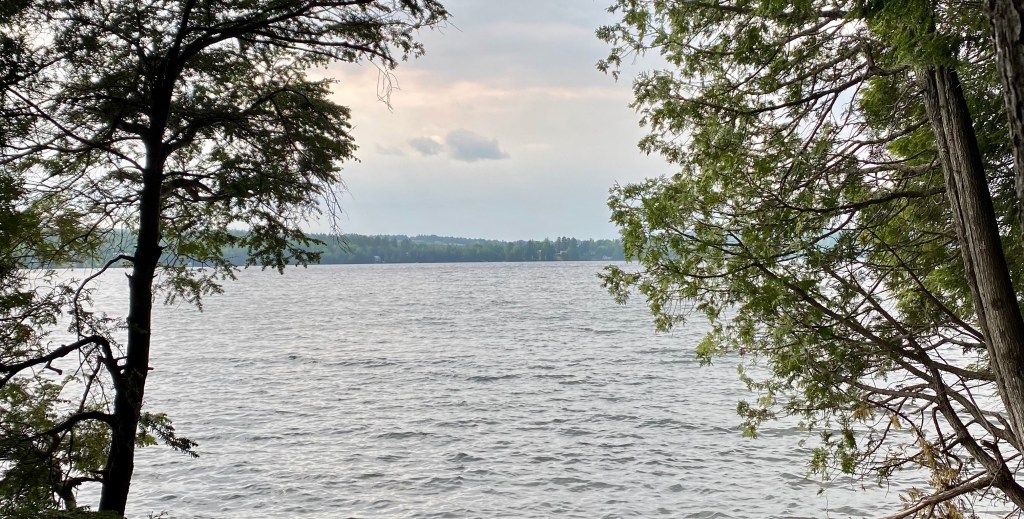
Early April, hot midday sun, I spy a Mourning Cloak butterfly darting over frozen Caspian Lake. The water has thawed blue holes in sporadic places around the shore, but the snow still crumbles into my boots as I follow the butterfly. The butterfly darts into a stand of cedars and disappears. On this afternoon, how lovely the lake lies, just me and the boarded-up summer cottages, the rusting can used for worms or smokes emerging from its wintering over beside a porch post. The ice spreads out in varying ribbons of pale blue and pearl.

On my back through town, my boot avoids the first of miniature grape hyacinths, tiny buds and furled leaves emerging from gravel.

This spring day, Van Gogh is on my mind, his immense talent, troubled mind, these words: “Great things are not done by impulse, but by a series of small things brought together. And great things are not something accidental, but must certainly be willed.”

Monday.

Reasons…

Rainy afternoon. I wander through the neighborhood where I once considered buying a house. Someone else lives there now. With new paint and two rocking chairs on the front porch, I need a moment to recognize the house, to remember the kitchen door I went through, envisioning in those days how my life might bend.

These years, walking by, I’ve watched the vehicles’ license plates change from Maine to Vermont, a tricycle appear, a front step break, two hydrangeas expand in the front yard.

April: season of mud and rain, snow and patience. Some reasons are obvious. Snow vanishes first on south-facing slopes, but other patches around us aren’t so readily knowable. Why does snow cling to some fields and not others? Quickly running water beneath, perhaps, the softening of what our human eyes can’t see, the knowledge gained only by years of our wandering footsteps.

So it goes. April, thaw, brown to pea green.

The world begins at a kitchen table. No matter what, we must eat to live.

The gifts of earth are brought and prepared, set on the table. So it has been since creation, and it will go on.

We chase chickens or dogs away from it. Babies teethe at the corners. They scrape their knees under it.

It is here that children are given instructions on what it means to be human. We make men at it, we make women.

At this table we gossip, recall enemies and the ghosts of lovers.

Our dreams drink coffee with us as they put their arms around our children. They laugh with us at our poor falling-down selves and as we put ourselves back together once again at the table.

This table has been a house in the rain, an umbrella in the sun…

From Joy Harjo’s “Perhaps the World Ends Here”

Buzzards. Robins. Writing.

Turkey buzzards have returned. On this first day of spring, these birds fly broad-winged over the river, slow, slow, fixated. Late afternoon, I have a few minutes before I’m expected home again for daughter time, daughter chat. I keep walking and discover robins are singing in a tree behind the train station. A slight thing? No way. I stand there, listening, looking up at the treetops where the branches are still barren, months yet away from leaves. I can’t see them, but it’s robins, definitely.

The Sunlight Press was kind enough to run a short pandemic piece I wrote.

Greet the unknown. Much later that night, you’re reading Hunter Thompson’s Fear and Loathing in your bedroom when your daughter runs in, alarmed, and opens your window….

Wood.

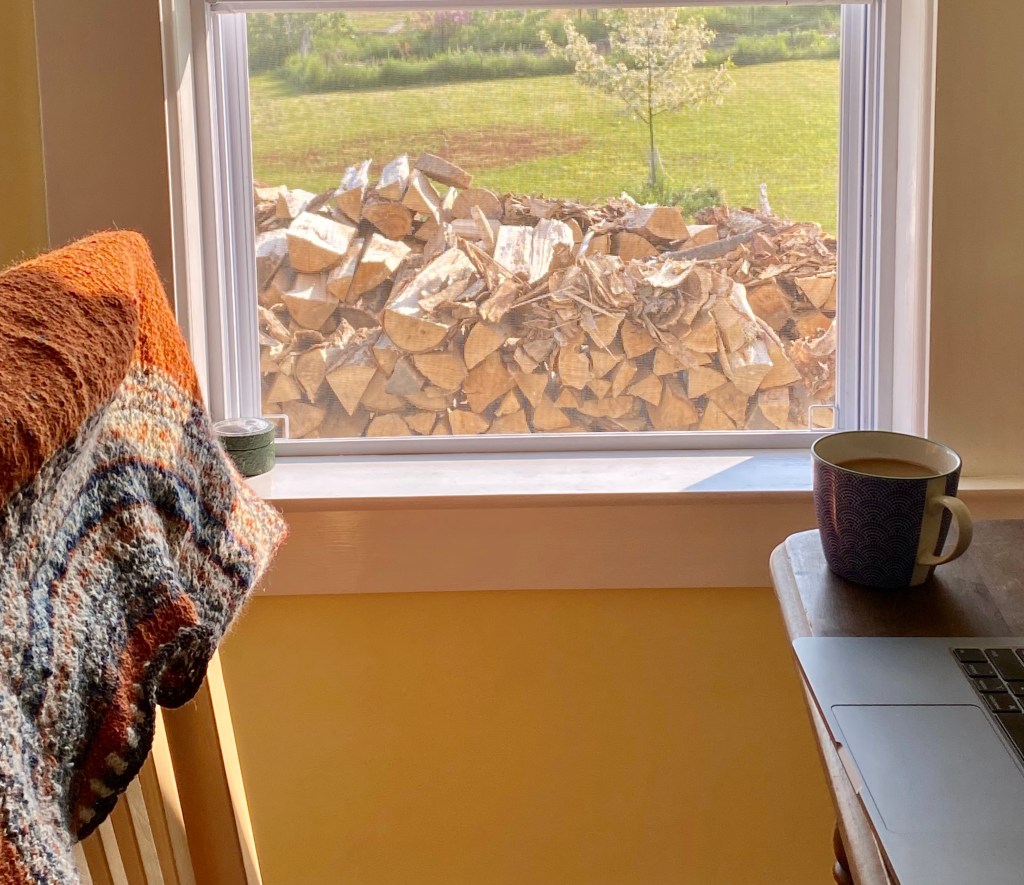
Friday, the fire in the wood stove gone cold, I shovel out the ash and discover two honeycomb boxes. I’ve been cleaning this stove for three years now, but I’ve never taken these pieces apart. The manual cautions me to be gentle. So I’m gentle.

The first essay I had published in a slick magazine, Taproot, was for their Wood issue. In those days, we burned countless cords of wood every year, for the few cords in our house to the many more to make maple syrup. Wood was far more verb than noun in our house; we did wood.

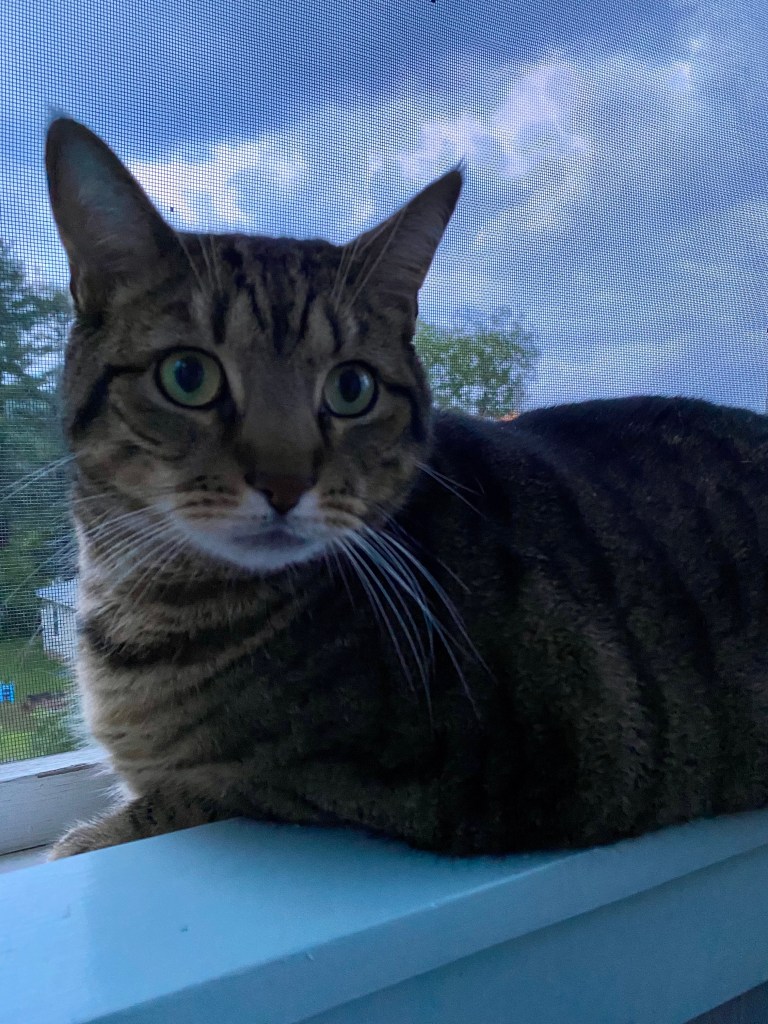
In my wooden house, whose floor joists in the basement still have ribbons of bark, on my maple floor, I empty ash and soot and creosote into a metal sap bucket. I kindle the fire with crumpled newsprint and ripped cardboard. The cats sprawl on the rug, satisfied as the heat suffuses our house again.

The late afternoon is raw and damp. So much snow has buried us in. I ski on a section of former railroad bed where I’ve never gone before, up a long slope fenced in by a cedar forest. There’s no one around, not a dog walker, not a snowmobiler, just me and the crows. At a crest, the valley below opens. I’m above a large dairy farm dug deeply by barns and fields and family generations into what had once been forest.

The sun has melted a section of trail to slush here. A cold wind blows down from the north. I stand here for a bit, stamping slush from a ski, then I turn, too, and head back through the forest.