Water. Sky. Lilies.

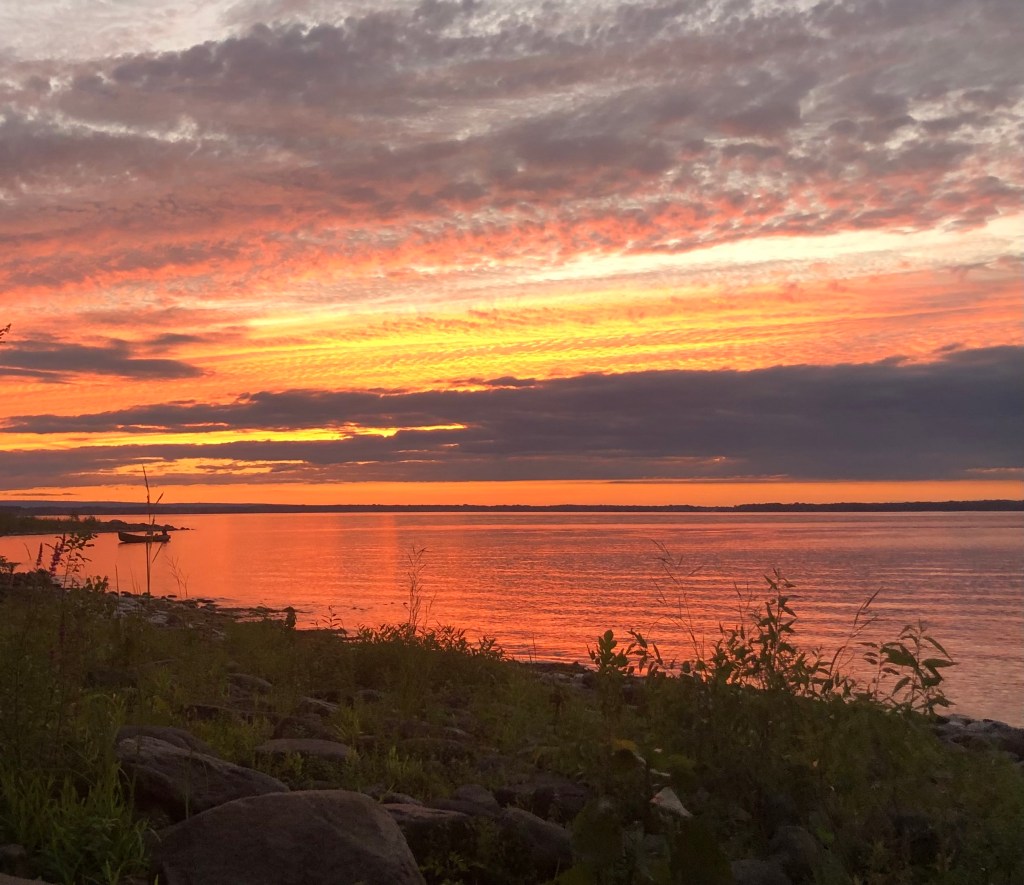
Sunday morning begins hot and out-of-sorts in our house. As antidote, we load the kayaks on the car. We paddle through a passage between floes of waterlilies in a breathtaking landscape — clouds reflected in water and all those perfect flowers. We’re not far from home, but the kayakers and canoeists we pass are all strangers who raise hands in quiet hellos.

In no rush at all, we paddle to the pond’s far end, where we drift for a long while, talking and handing a box of crackers between us. A loon and a single chick bob nearby. The other loon parent appears with a string of lunch in her or his mouth.

Later, we pull our kayaks on a shore and swim out to a raft where we lie in the sun and talk about where we might be five years, ten years, down the line. A man swims out with his two daughters, and we talk a little with him about the raft and the sun and the waterlilies that cover the pond.

I’m reminded of William Blake’s line about seeing the world in a grain of sand as we slowly paddle back to where we began. I’ve walked across sections of this pond in the midwinter around ice fishing holes. A number of years ago, a teenager drowned here, a boy I knew as a baby. His parents were vendors in the same farmers market where my husband and I sold maple syrup and ice cream. We all had little ones in those days. On those hot afternoons, we shared stories while swaying with babies on our backs.

The pond this July day reflects only sweetness and beauty. At the shore, my daughters load our kayaks back on our car. I rinse off my bare feet at the water’s edge. A little boy runs to the end of the dock. His father stands waist deep in the water. He raises his arms and says, Jump. I’ll catch you.

The Wild.

Barr Hill, Greensboro, Vermont

I take a hurried walk on Nature Conservancy land in a slot of time between working hours and a planning commission meeting. I duck beneath the electric fence and wander up an old farm road and discover the most enchanting sight I’ve seen in a long time.

Bright blue forget-me-nots sprinkle the unmown road. Heifers graze in pasture on the other side of enormous sugar maples. The pasture glows amber in the late afternoon, humid light. It’s cool enough this afternoon that I’ve pulled on jeans beneath my dress, and my sandals have been switched for hiking boots. The woods are deep and lush.

This is Wallace Stegner land. He loved this Vermont town and lies buried in a town cemetery on the other side of the lake. As I walk, I’m reminded of his famous lines.

“We simply need that wild country available to us…. For it can be a means of reassuring ourselves of our sanity as creatures, a part of the geography of hope.”

~ Wallace Stegner


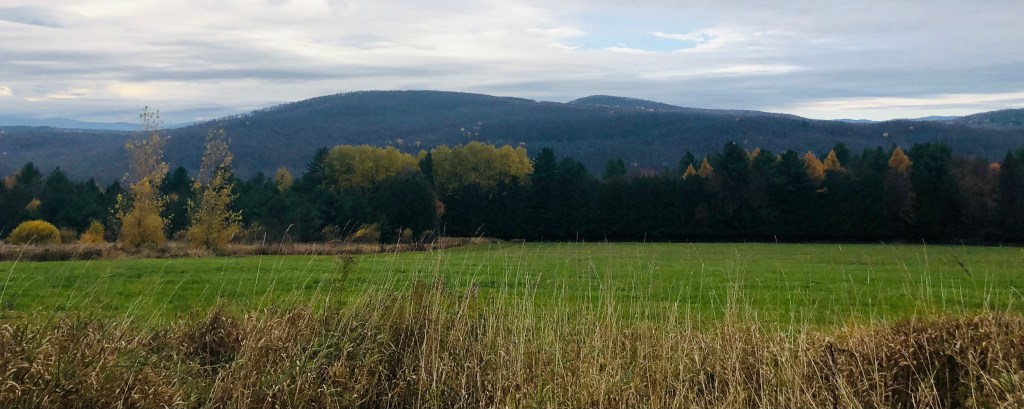
This space of wildness wraps all around where I live, winding in and around these Vermont towns. Mighty — these trees and fields — but just as dear are these tiny blossoms, sprinkled all through the forest, far up in the woods where they disappear from sight.

4th on the 2nd.

In the town’s Funky Fourth parade on July 2, tractors joined with antique cars. A man stood on a tractor with a red I Dissent shirt. I stood at the edge of the town green, watching, filled with my own kind of dissent. And yet… the morning unfolded into an afternoon of free ice cream and cookies, an auction to raise funds for Ukrainian children, and hours of chatting outside.

That, perhaps, sums up where we are now. At the end of the day, I came home with local cheese — gratis — and a fresh list of stories.

Happy Independence Day weekend, for whatever that means these days…

Words and Stale Bread.

Where I am these days…

I’m standing in front of the town office where I work when a Subaru swings in, and the driver pulls up beside me. I’d been eating the stale focaccia and watching a swiftly moving rainstorm moving across the lake. The driver is someone I’ve know off and on for years, through school board and select board meetings, through the connections that unite people in Vermont towns.

We share a conversation about a resident who’s using his parcel of land hard, hard, so unnecessarily. Rain spits a bit. I gnaw at the side of the focaccia, worried about stressing my tooth with its repeated root canal work.

Of all the many things I’ve learned or observed in the pandemic, our collective need for these small moments has surfaced repeatedly. We’ll come to no plan of action, no change, but for this moment in a breezy June midday, there’s one more stitch in my life, tugging me back in the community life.

On my drive home, a deer leaps before my own Subaru — all long legs, glancing over its shoulder as it disappears into the woods. I take the long way home on the ridge above the Black River valley that twists along Route 14. The two-lane blue highway passes a highway that flows two ways — north and south.

… Today the fields are rich in grass, 
And buttercups in thousands grow; 
I’ll show the world where I have been– 
With gold-dust seen on either shoe. 

Till to my garden back I come, 
Where bumble-bees for hours and hours 
Sit on their soft, fat, velvet bums, 
To wriggle out of hollow flowers….

~ William Henry Davies

Foxes. Friends.

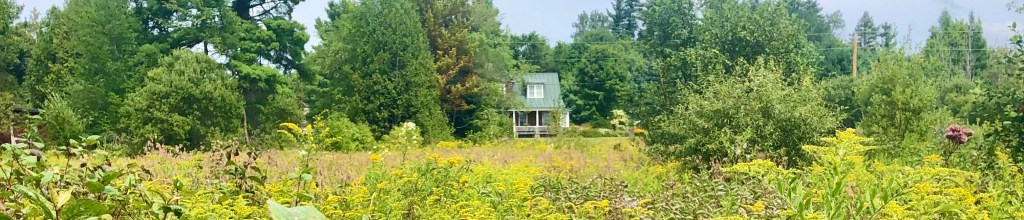
June, and I work in the garden or the outside tables as much as possible, countering my indoors job and the pandemic years that have thrown me (and humankind) off-balance. Despite the unusual cold and wind, I often read outside in the evenings while the neighbors’ boys bike on our dead-end road, calling out my name.

Just beyond the pin cherry trees, the foxes come and go, reddish-brown, their front legs black. They’re not disturbed in the least by the man who walks his leashed dog in the cemetery, both man and dog head down, preoccupied with what, I have no guess. Across the milkweed and lupine, the foxes and I stare at each other, before I silently head my way, or they head theirs.

They go about their lives of hunting and playing, their ears and eyes alert to the world around them. I go about my human life of language and thought — a life that sometimes seems fixated on lists and transactions. For these moments, coming and going like the sun through clouds, this relationship feels like one of the realest in my life, devoid of our human tendencies towards deceit and self-absorption. I’m not about to become a fox, but I might become a slightly better human for these true friends.

The gods, we are taught, created humankind in their own image. Everyone has an urge to create. Its expression may flow through many channels: through writing, art, or music or through the inventiveness of work or in any number of ways unique to all of us, whether it be cooking, gardening, or the art of social discourse. The point is to honor the urge. To do so is healing for ourselves and for others; not to do so deadens our bodies and our spirits.

~ Dr. Gabor Maté, In the Realm of Hungry Ghosts

Acquaintance. Full Moon.

In an evening walk, I meet a woman I haven’t seen in years. We stop and talk for a few moments. She’s hardly been anywhere for the past two years, and we talk about how that feels. In the balmy evening, little bits of tree pollen float through the sunlight.

Never tall, she’s about my height now, and I’m really short, and I’ve gotten shorter in the past two years. But here we are, talking about lupines, happy to be alive. We exchange a hug — something that seemed forbidden, utterly scary, not that long ago.

Later, as I close up the house for the night, I walk across the dark lawn to my garden. The round moon, like a perfect drop of cream, rises. Frogs chirp.

Here’s one thing: the pandemic has made me think of each day as each day. A whole day — filled sometimes with hard things, or dull things, sweetness, or all kinds of things. But what does a day mean? A night? Nothing more, perhaps, than this: full and frogs and a moment to revel in this.