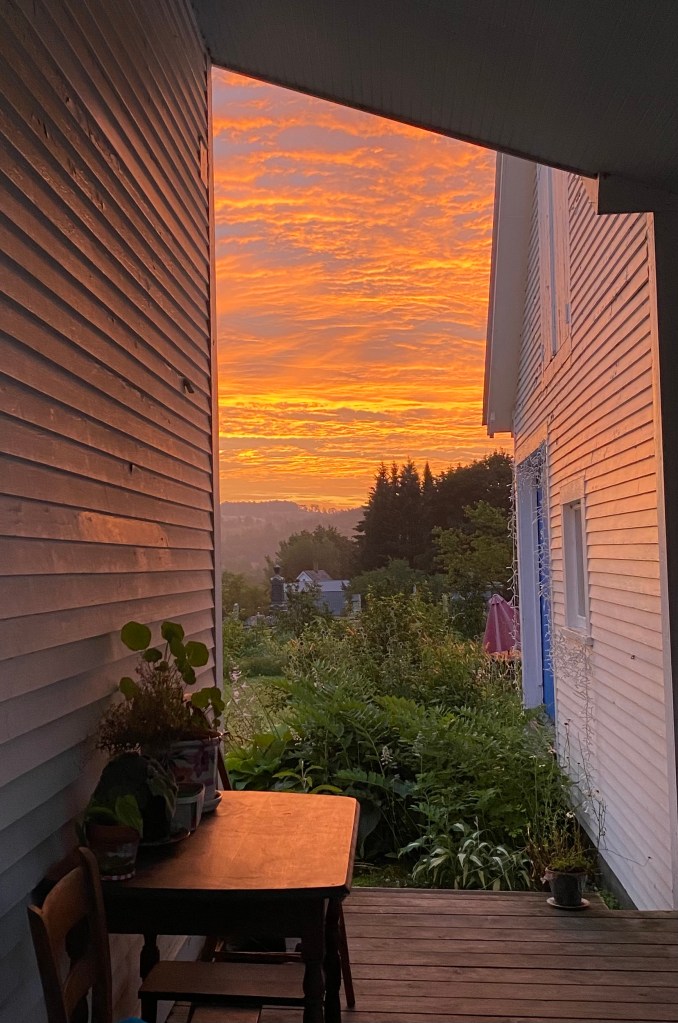
Saving…. Who?

One recent morning, on the lawn of the former schoolhouse where I work, signs appeared on the triangle green: Save Town Hall. Shortly afterward, with black spray paint, someone altered the signs to: Save Town.

This building has been around since before Archduke Ferdinand was assassinated in 1914. The entire top floor is a gymnasium, the middle floor four classrooms, the basement originally must have housed a coal furnace. After a $14k heading bill one winter for a building largely empty, I urged the Selectboard to consider other options. Oh, the furor that suggestion has now caused.

All summer, walking into the basement, I kept saying, I smell mold, I can’t work in a basement, I can’t think straight, can’t breathe, in a repetition that was doubtlessly whiny and certainly dull. But like the people arguing around this building, the building isn’t stagnant, either. I take my laptop upstairs to the empty rooms, where it’s me and the dusty windows, the paint shedding from the pressed tin walls and ceilings, the beadboard molding higher than my head.

In this wet, wet summer, mold blooms, and I rally the tiny office staff. Let’s move! I grab my jade plant. In a few hours, we’ve moved upstairs into the empty rooms, opening the windows and letting in the sunlight and breeze. I prop open the doors and sweep up cobwebs. Behind us, we leave so much. In our rouge occupation, we women set up housekeeping. I take off my shoes and walk barefoot over the maple floors .

We hire a crew to move the heavy things, and the men walk around remembering when they went to school in these rooms. Art classroom here, lunch there. All day long, with the doors open, the public wanders in and offers suggestions and stories.

A woman asks what we need. I’d like a pair of kittens here, frankly, or maybe a small old dog who wouldn’t mind sleeping on the rug in the sunlight.

Save Town? A question that opens up into a Jacob’s Ladder of questions….. in the meantime, we’re at least moving up into the light….

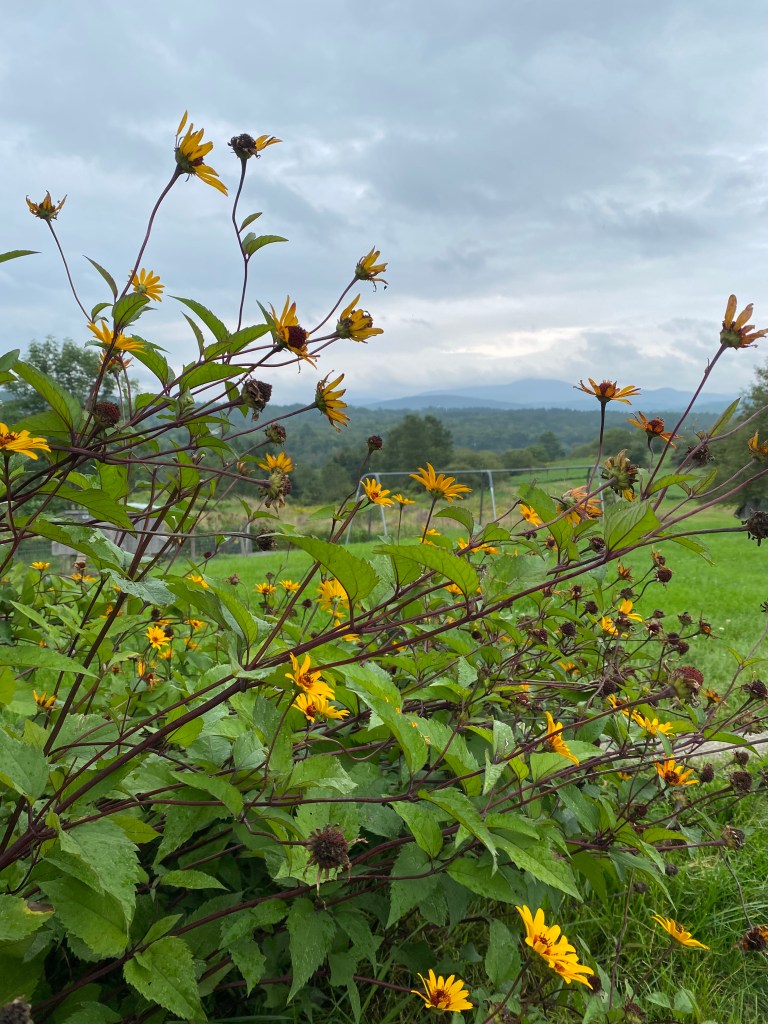
Imagining a fox, two strangers in a canoe…

A fox runs out in front of me as I leave the library, so quick the creature might have been my imaginings in the night. Upstairs, people are still talking and laughing, remnants from the Selectboard meeting. Behind me, the man who lives down the road, with neither water nor electricity and is often at the library at night, his phone plugged into an outlet in the foyer that’s left unlocked, perhaps for this reason, says, “Saw it, huh? Fox.”

The sunset has simmered down to a liquified gold spill in the darkness. I pull into the beach. I’m alone here, and I get out of my Subaru and lie down on the wet sand. I can feel the damp sand clump into my hair. The waves lap. The spill of light shrinks. The crickets are doing their sizzling thing, and goddamn, here it is again, end of August, a goodbye to the sunflowers not far in the offing.

I spent so many hours of my mothering life at this beach, and now this summer has slipped by without a single visit to this particular beach. The sun goes down. And here’s the weird thing: while I’m lying there, dampening, dampening, wondering what’s up with the universe anyway? Why does it always feel like loss, loss, loss, a canoe paddles by. In a funk, I don’t bother to sit up and chat with strangers, but the couple steers their craft right onto the shore and asks what’s up with me….

So, I sit up and talk.

Turns out, even strangers, we have strangely similar intersecting points. In the dark, the lake lapping at their canoe, we stand talking while the stars blink on, just a few, in the cloudy night. Then, instinctively, as if in some kind of pact, we reach out and shake hands. Then I’m off to my home and my hungry cats, and the couple paddles on…. maybe an imagining, maybe not….

The repair of the world might, indeed, be impossible…

In a gray drizzle/not quite drizzle, I stop outside the co-op to talk, my hands full with peaches, mozzarella, and Clif bars for my daughter’s hike the next day. The prediction is for temps at high elevation in the thirties.

My conversation companion is a woman I run into randomly, usually on the sidewalk, and inevitably we jump right into talking. It’s August and dreary with wildfire smoke and a sudden cold rain. My hands are full with those peaches and sweets, so I’m blinking in the misting rain. I’m laughing a little, because why not? but I sharpened up quickly as she’s not laughing at all. The strange thing is she’s listing some things that have been rattling around in my mind for months now – the collective frustration that bends dialogue to anger or sarcasm, the way the town’s Center Road is so unkempt grass grows through its middle, and the recent property tax bills that are are you kidding me?

And even though my daughter is at home waiting for the cheese for that pizza we’ll make from onions and basil and tomatoes I’ll snag from the garden, I leave my few groceries in my Subaru and follow my companion through the damp woody patch behind the co-op. We stand at the river’s edge. She leans far out over the water. Look, she says.

It’s drizzling, and even though I’d gone running just before stopping in for what I thought would be a few minutes’ worth of shopping I’m starting to shiver a little. But I have this sudden vision of what’s happening with this town where I live, how the river threatens to wash away this downtown of brick and granite and asphalt, trees and roses. Years ago I realized that brokenness is never one thing; all these unfixable things – climate swings and decades (centuries?) of ill-use and reliance on the Feds to fund these fixes, when that amorphous federal government… well, why say more there?

A few years back, I interviewed a well-known writer who advised me that a writer should always acknowledge her time and place. The rain’s fattening. The repair of the world might, indeed, be impossible. At home, our kitchen is warm and bright, and the cats are half-sleeping as cats do on the rug before the kitchen sink. I’ve always believed in domesticity as the antidote to the world’s inevitable callousness. Later, I wander over to the neighbor’s house and lean in her doorway for a bit. We talk randomly about nothing much at all, catbirds and rose thorns, no repair, but a strengthening of heart, surely.

Late August, given heavy rain and sun
For a full week, the blackberries would ripen.
At first, just one, a glossy purple clot
Among others, red, green, hard as a knot.
You ate that first one and its flesh was sweet
Like thickened wine: summer’s blood was in it….

“Blackberry-Picking” by Seamus Heaney

Keeping On….

I drive home from a Selectboard meeting with my friend the moon who hangs over the dark mountain ridge, a creamy misshapen teardrop shot-through with crimson. It’s me and her. The clouds have scrimmed low enough that the Milky Way does not join our duet.

My house glows when I return home. The girls have chopped up the cherry tomatoes I left on the table and added these sweet chunks to couscous they bought in Santa Fe and cooked on their camping trip (and why do I never cook couscous, anyway?) The girls are familiar with the town and the people where I work. I tell stories about who’s there and what’s happening — the nuts-and-bolts of local truckers who’ve appeared for the bid openings, hoping to score more work — a man who lives nearby, has no electricity, comes to use the internet, and wanders in and out, curious, offering a few comments. People are angry about all kinds of things, the sheriff’s there and then not-there, a man yells, the chair regains control, decisions are made, bids are granted, that FEMA word with its trailing uncertainties rises and falls. There’s a pause about a bridge washed out in last year’s flood with a replacement price tag that’s beyond comprehension. A board member and I whisper commiseratingly about the days when we shared homemade cookies at meetings while kicking around decisions. He’s heading fishing this week.

The girls eat up my stories, share their own stories of their day. In the humid night, we stand on the back deck, listening to the foxes bark in the ravine, the crickets sizzle away these final summer days. The girls head out for a walk, in search of the moon and some adventure. My cat follows me as I walk around the house picking up dropped socks and empty bowls, clattering forks in the kitchen sink. Forget about national politics for a bit. It’s the same human stories: the mixture of ego and thrumming anger, a knight-like determination to serve others, the uncertainties of how do we get along?

The foxes keep at it. Eventually, I sleep, too, wake in the murky darkness, fed my cats, and then I keep on, too….

The natural course of things.

Dawn, I’m barefoot in the dewy garden, gathering peas, the world ignited. By the time my daughter and I meet in the kitchen, a little after five as she drinks coffee and heads to work, gray has skimmed over the sky, rain rain rain pushing in. (Side note: Red Sky at Morning, Richard Bradford’s novel, is a terrific classic novel, the former husband of my very long ago nursery school teacher, somewhere in Santa Fe….)

A year ago, heavy rains flooded much of my state. As I left Greensboro yesterday afternoon, I passed a village resident digging a trench with a shovel, some preventative channeling. About this time last year, I realized I knew a number of people who were driving around with shovels in their cars or pickups.

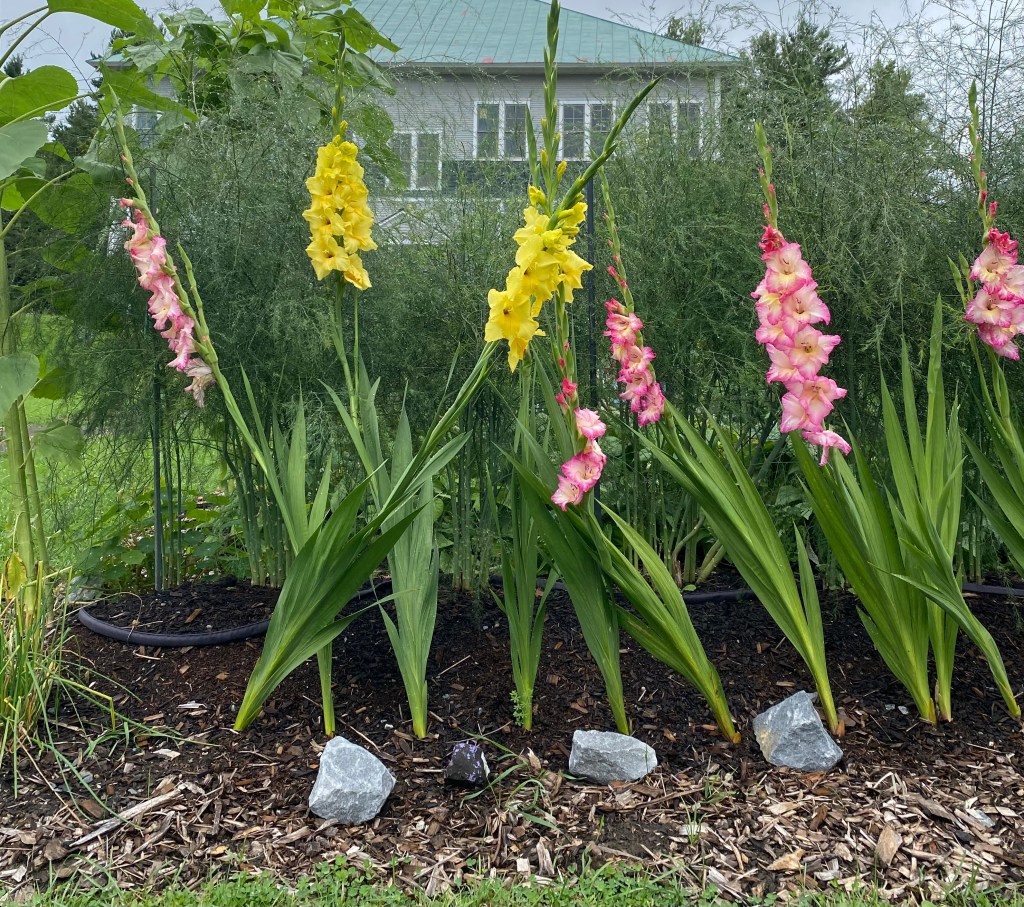
We are now in midsummer. Around two sides of our house, my garden grows — cottage roses and cup plant and phlox — and the wild rallies on the other two sides — jewel weed and box elder and goldenrod twine around porch railings, brush against the clapboard. Snip snip must be done, and yet somehow hasn’t yet. The groundhogs multiply, run beneath our chairs on the deck. I wonder about those foxes, about the natural course of things, wonder again, Well, what do I know? What will happen will happen….

A stranger appears at our house…

A stranger appears at our house while I’m watering one night, the little drink I offer my tomato plants on hot days. Her grandmother lived in this house, an old woman widowed now in another part of Vermont. I let the stranger in. She’s mystified that a tiny pantry in the kitchen was removed. I can answer some of her questions — that the four tiny bedrooms were changed to two tiny rooms and one larger one, that the downstairs walls were painted yellow by me.

Someday, I say, someone will knock down a wall and change this, too.

Outside, in the evening light that’s storybook shades of peach and lemon and lime, I tell her the soil is sand. She remembers the ants who bit her as a tiny child, and she remembers the lilacs. We stand talking a little about our lives — how I came to live here, where she’s now. I ask, Who planted the roses, but she doesn’t know.

Just before she leaves, she looks at the foot-wide strip of cement that surrounds the house. “My sister and I used to dress up in my mother’s old clothes and high heels. Everything was too big for us, so we scuffed the heels around the house.”

She gets back in that rusty mini-van, waves, and heads off. A few days later, she sends me photos, 1960s-style, of kids in what’s now my living room. And the wallpaper? She remembered it indelibly and wanted me to see it, based on some notion that pineapples and giant leaves were a fine addition to the walls of a small Vermont living room.

There’s one last thing, though. She even wanted to see the basement. As we stood looking at the stone walls and the rough-hewn floor joists, we wondered about the housewrights. How well-built this house is, tucked on a hillside in a place that seems both part of the village and not. My days, too, are numbered here. I’ll die here, or I’ll move elsewhere. All these stories are pieces of this house — these little girls, sixty years ago, in too-big shoes, hands pressed against this house for balance, giggling.

July, it’s worth noting again, July July July, month of growth, today own parents’ anniversary. Each of these July days…. Savor in some kind of way.