Small Journey

My younger daughter drives the two of us on a cold January afternoon to Montpelier. I can’t remember the last time I’ve been to the state capital, although (pre-pandemic) I was in Montpelier at least once a week.

We’re in search of a birthday present for my oldest daughter — a single present, that’s all I’m looking for — and we go into only one store. At the register, the owner tells me how happy she is to see people; the city has been a ghost town for the last week.

In the downtown’s heart, we pass empty storefronts. I’ve never seen so many vacancies in Montpelier before. On one main corner, my daughter notices the bakery where I once bought her chocolate chip cookies is locked, too.

Where I can’t bear to pass by is the library, the beautiful stone building where a year ago I often spread out my laptop and papers and worked for hours. In the large reading room, the well-heeled snapped on lamps and read and wrote. There was a couple who always appeared who seemed to be gambling online. The homeless and college students filled chairs. After school, children ran through.

At my daughter’s request, we walk through Hubbard Park in the cold and up the stone tower to see the city surrounded by mountains.

When we walk down the snowy steps, a mother and her daughter are sitting on the tower’s stone floor. There’s only openings for windows and doors, and the girl is crying with cold. The mother struggles to tie an icy lace on the girl’s ski boot.

Been there, I think, done that.

I no longer have the keys to my own car. My daughter drives past the state house where no one is out. Not a single person on the granite steps. Driving home, she suddenly says, The good thing about living in Vermont is spring. Even if winter seems forever, there’s always spring.

[Kintsugi], the Japanese method of repairing broken pottery [uses] gold to bind the pieces together. In this way, the break becomes what is beautiful, what is valued. It is a way to embrace the flaw, the imperfect. In place of the break, there is now a vein of gold.

— Nick Flynn, This is the Night Our House Will Catch Fire

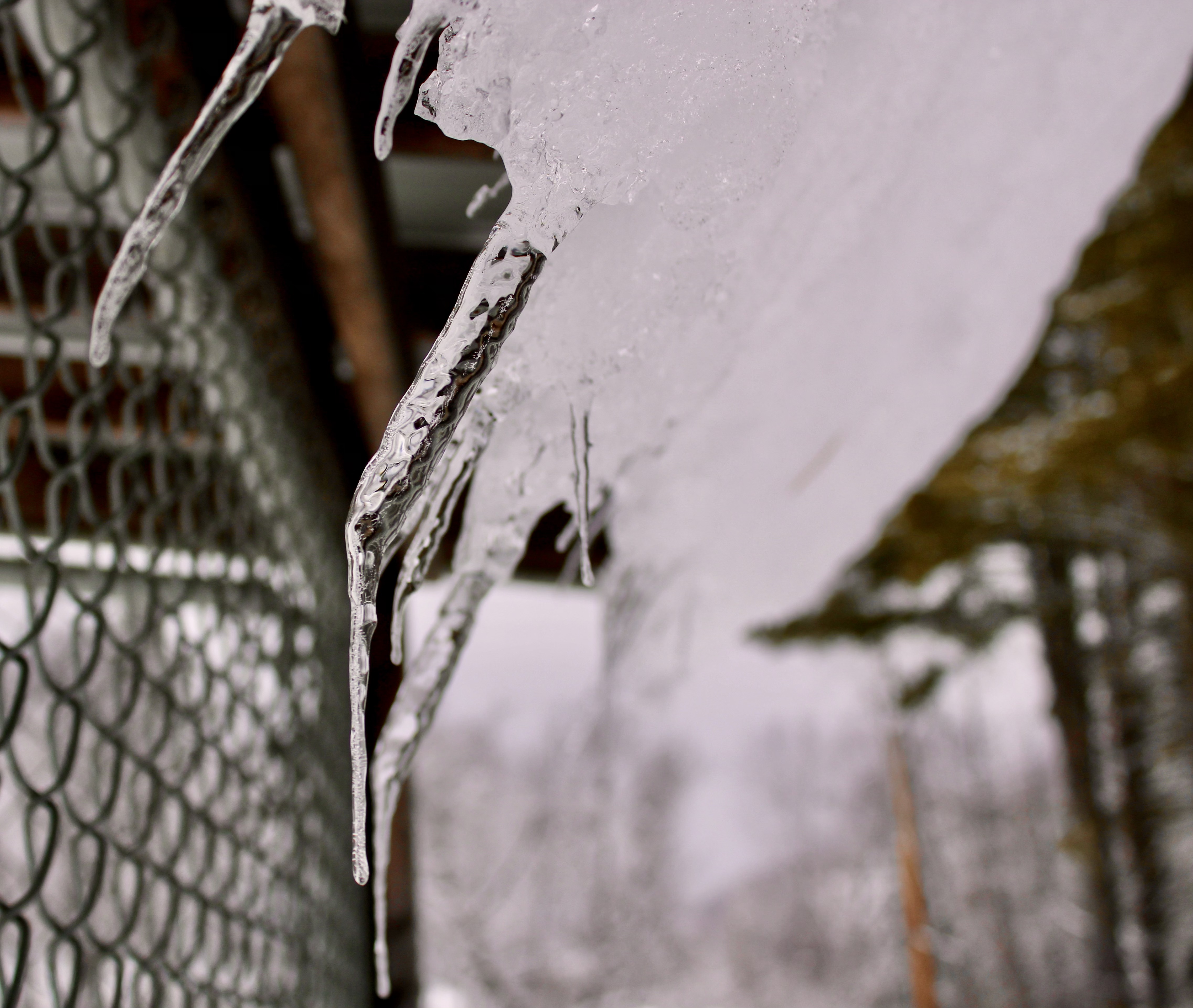
Photo by Gabriela S.

Border Crossings

On inauguration eve, I dream of wandering through my childhood hometown and wake thinking of the November morning four years when I woke early and realized I would have to tell my daughters that Donald Trump won the presidency.

Four years seems so long ago — far longer ago than my own childhood of the 1970s when not all that much seemed to happen.

As I lie in bed reading about the Vikings — these ancient, fascinating people — snow drifts down outside, twinkling in my neighbor’s porch light. She’s up, too, as are my neighbors across the street, all three of our houses awake this morning long before dawn. In a different world, I’d pull on my coat and slip into my boots, walk through those unshoveled inches of fresh snow, and offer a piece of coffee cake my daughter baked.

In my own family life, we’ve slipped through so many borders and changes in these four years, one tiny ripple in the endless ripples of human life. Today, January 20, yet another change. May this be for civility and decency.

The Viking Age was very much a time of borders—between cultures and ways of life, between different views of reality, and between individuals, including at the level of liberty itself.

— Neil Price, Children of Ash and Elm: A History of the Vikings

Photo by Gabriela S.

In a Darkened Theater

This week, I interviewed an author who had written what seemed to me the odd choice of a childhood memoir-in-verse, but she explained she chose that form because memory comes and goes in bits, not separated into blocky and linear chapters and paragraphs.

I kept thinking of her words yesterday, separated from a sunlight-sparkling autumn day in a second-floor opera house theater, as I listened to trains whistling through town. The warning calls punctuated a very adult conference about children’s literature, and my attention kept straying to those mournful sounds as the trains chugged their slowed way through town. Like a fishing hook, the notes pulled up my memories, reminding me that the last time I had been in White River Junction was three years ago, myself and my family riding through on Amtrak, looking through the windows at this brick-building Main Street and wondering who lived here.

At the conference’s end, impatient to leave and return to my own life, to hurry home along the interstate flanked by maples turning red, a woman read aloud a children’s book I had heard as very young child. I put down the sweater I was knitting and just listened to the words, familiar from long ago. The train whistles kept calling: a collage of memory.

You think your pain and your heartbreak are unprecedented in the history of the world, but then you read. It was books that taught me that the things that tormented me most were the very things that connected me with all the people who were alive, who had ever been alive.

– James Baldwin

Classic Reprint


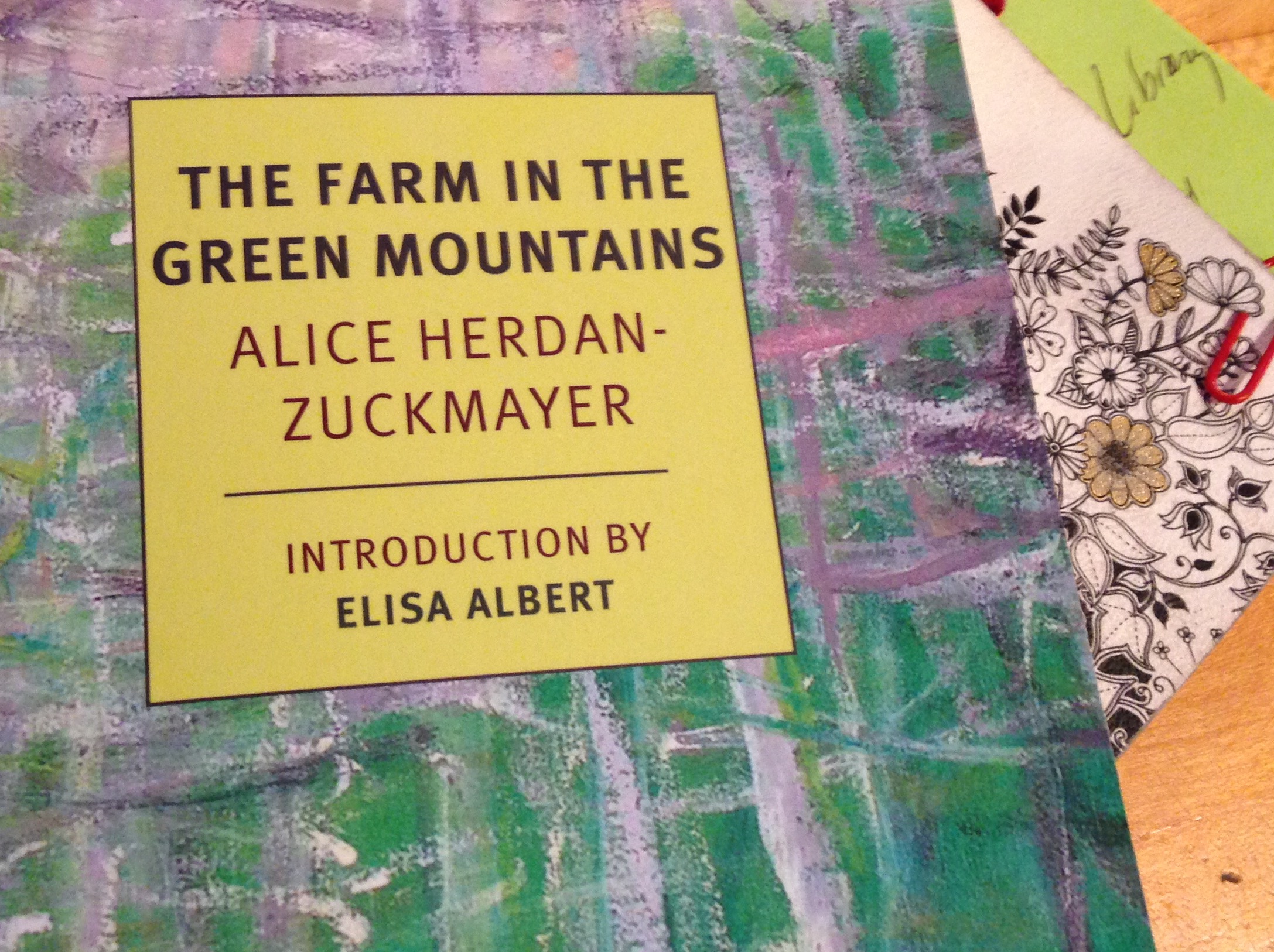
By chance, I’ve discovered a reprint of The Farm in the Green Mountains by Alice Herdan-Zuckmayer, published originally in 1968, about a German family who sought succor in my state during the terrible years of World War II. Herdan-Zuckmayer’s writing flows clear as water, pragmatic and thoughtful. How I wished she lived down my road today, and I might ask her to take a walk.

Among the states they (Vermonters) are a relatively poor state, but they are not afraid of their poverty; they don’t love wealth, they have little to gain and not much to lose. This modesty and moderation give them an independence from uncertain times and arm them with pride and fearlessness.

FullSizeRender