Mother Noise.

Summer study…

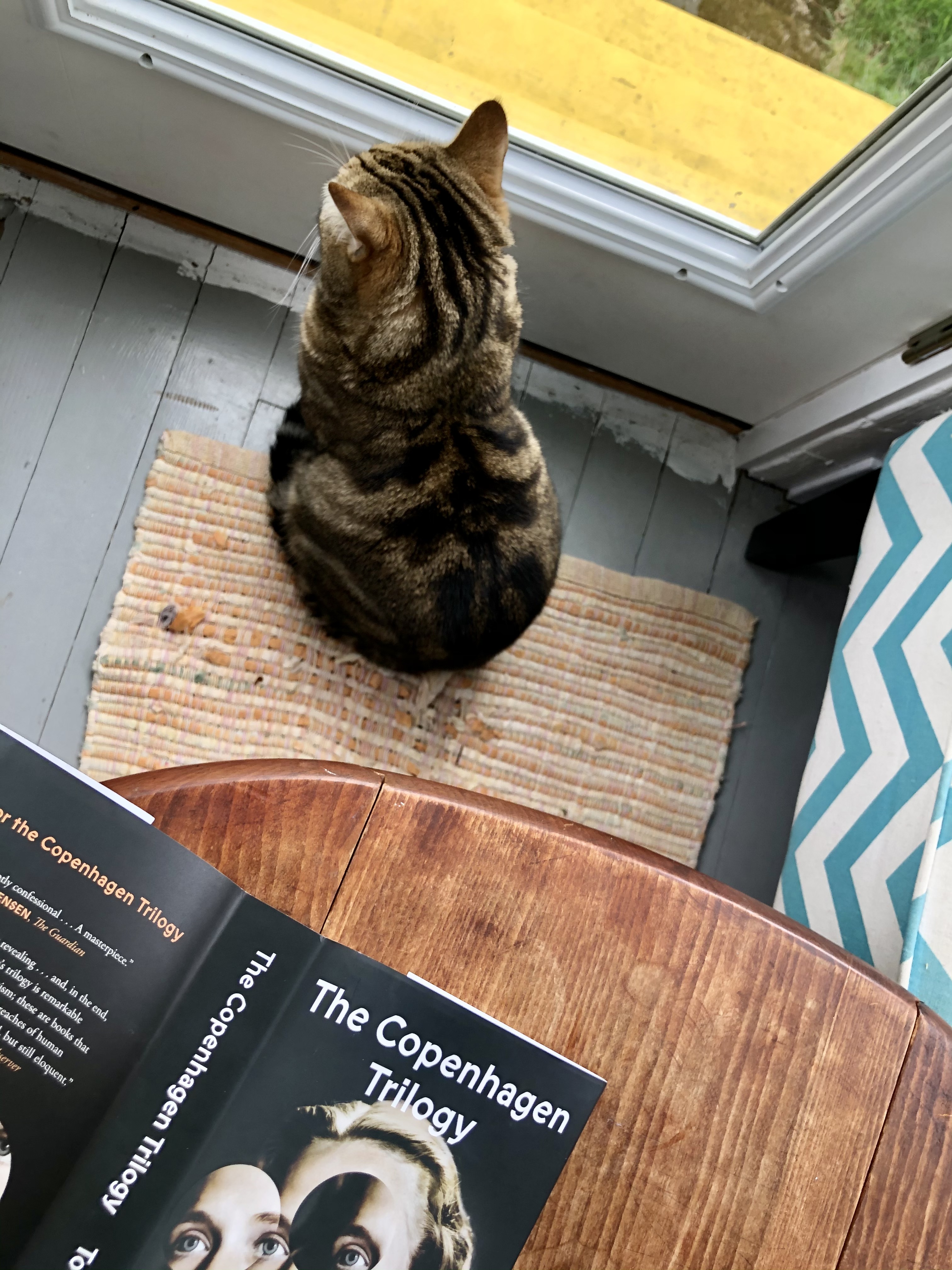
In the middle of the night, I read Cindy House’s memoir Mother Noise. House struggled with a heroin addiction. Eventually, I turned off the light and lay awake, listening to the cricket song through the open window. It was the deepest, loneliest part of the night, somewhere in the stretch from midnight to four a.m. Four a.m. is the hour that seems reasonable to rise and get the coffee brewing. For years, I dreaded this time of night. One of the great pleasures of sobriety is that the nether world of dreaming has returned to me.

For days, the trifecta of my daughter’s 17th birthday, her junior prom, and the anniversary date I was married 28 years ago has soured my mood. Here’s the thing about being a solo parent: you’re forever cut in half, wondering why the hell the other parenting half of the children is attending a party elsewhere.

But in those hours, thinking of Cindy Noise, I began wondering about what else might have happened rather than the story I keep telling myself of a father still parenting his daughters. The thing is, my life — like anyone’s — might have turned out entirely differently. I became sober. But I could have become a heroin addict. Given a different set of circumstances, sure, why not? I loved inebriation, as long as it was good. For the first time, the real possibility of this looms before me.

The crickets chirp on. I begin to sense my life shifting, just a little, just the smallest way out of sour.

Later that afternoon, I’m driving with my daughter. She parks at an empty storefront beside the run-down laundromat in town. On the granite steps of that former bank building, a little girl, about five or so, is sitting beside a large stuffed giraffe. The giraffe is hard-worn, well-loved. The little girl holds a picture book between the two of them, her lips moving. She stops when she sees me standing on the sidewalk. I glance down at her pink sandals, her purse open with a memo notebook inside. Then I nod and hurry along, leaving this child to what she’s doing.

Oh, sweet world. So much harshness. So much to cherish.
Self Portrait.

My daughter turns 17. On our way home from dinner in Montpelier, she drives my car with her friend in the passenger seat. The girls have known each other since they were eight-years-old and their legs dangled from chairs. The girls take the long way home, passing an estate on a dirt road with a stunning view of the mountains and sky. Cows graze in the fields. One girl plans to be a lawyer, the other a doctor, and they scheme to buy a house like this. In their pretty sundresses, the girls are laughing.

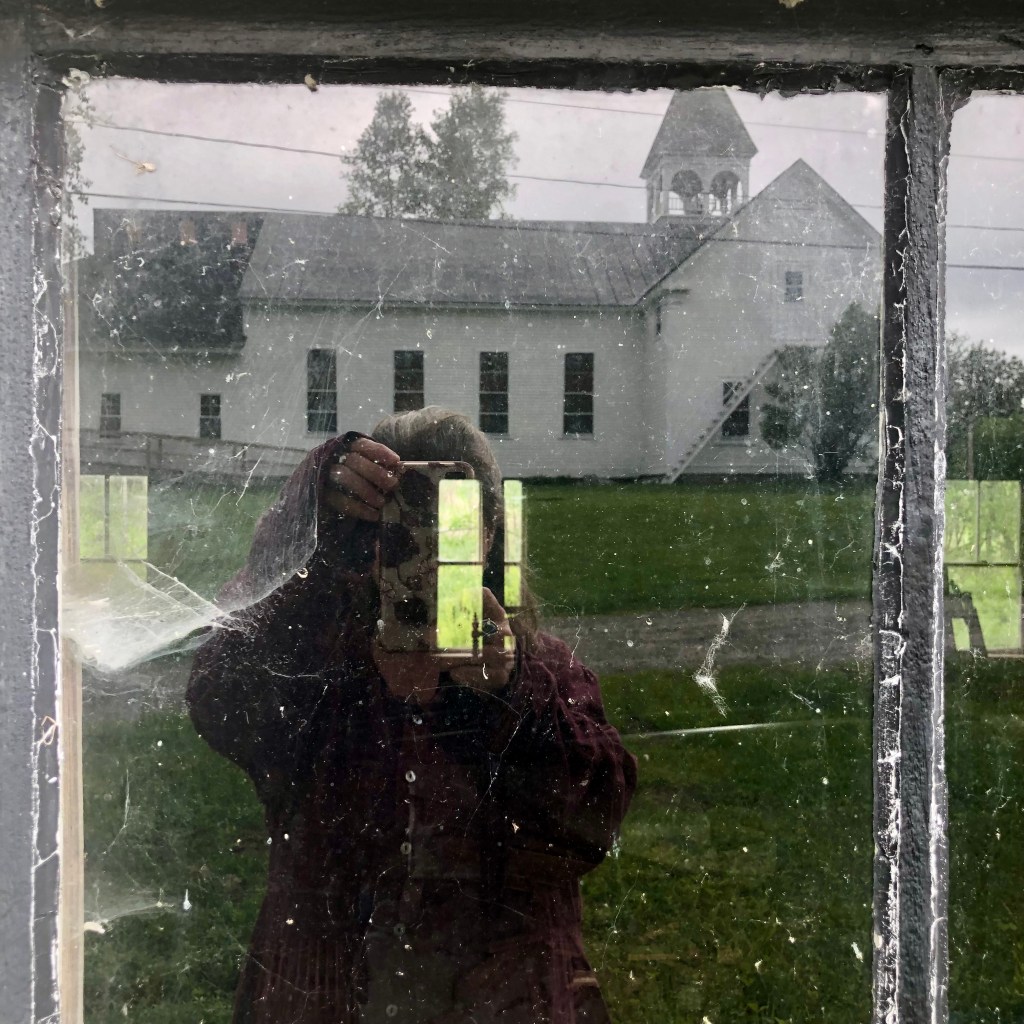
At dinner, the server spilled a Shirley Temple on my daughter, splashing her with cranberry juice and ice. Both girls have stickiness up and down their bare legs. Someday, years away maybe, they’ll still laugh about that birthday drink and splash. Meanwhile, I keep looking through windows, seeking stories, seeing pieces of myself.

Here’s a review of Unstitched that made my heart sing.

Odd Call.

My phone rings with a number I don’t recognize. On the other end, the caller and I begin to piece together a message I may or may not have left, tracing an odd connection between two people with the same common name.

It’s late afternoon. I’m home from work, bacon sizzling in the oven, my daughter washing her hands at the sink. The cats are pawing their bowls, finishing their early dinner, wondering what might be next.

For a moment, I’m suspended in this interesting conversation with a pleasant voice, remarking on the strange coincidences in our small town world.

It seems to be nothing more. Afterwards, when I’ve hung up and headed out to my garden to cover against possible frost, I keep thinking about that call. In an odd way, the pandemic suspended the once normal world. There’s plenty of just lousy stuff that’s happening and still happening in our world (and likely always will). Then, this: random bits of politeness. Sunshine in May. Blossoms.

Travels through Time. Along the River.

Write a novel and, at some point, you’ll start henscratching or typing notes about when the protagonist moves from reaction to action. Why not think of your life as a novel you’re writing?

I drove down the long center of my Green Mountain State yesterday to return to Brattleboro, where I lived for years as a college student (so long ago). I bought my first car for $500 in Brattleboro.

For the drive, I had one rule: stay off the interstate. I began through the chain of towns I know, Montpelier and down through Northfield and Brookfield, along the Dog River. I headed up through a pass where the snow returned in clots along the road, and where trailers were surrounded by old cars and pickups, the kind of stuff that someday might be used. The forest flattened and gave way to fields where barns were built nearly in the fields. I drove through upscale Woodstock and the burned-out industrial buildings of Springfield.

Southern Vermont was like a magical dream — sunlight streamed over blooming daffodils, forsythia spread bright yellow, emerald green paired with black earth.

I met an old college friend who works at Everyone’s Books on Elliot Street. Thirty years ago, I lived right near that bookstore, and I spent a lot of time there. We exchanged thumbnail stories about our lives and kids and work and exhusbands and books of course. My book was in the front window of the bookstore, and she told me it “had been selling like hotcakes” — utterly gratifying.

In a park, I pulled out my laptop and wrote up a few notes. As I headed back to my Subaru, my friend Sean Prentiss walked towards me. He lives just a handful of minutes from me and was meeting his lovely family for a few days in Brattleboro.

I went to Brattleboro to meet friends from my past, and I met a friend from my present. Put that in as an interesting plot point.

On the way home, I listened to This American Life about babies switched at birth. I’m an TAL devotee, and this episode is especially fascinating.

Somewhere in March.

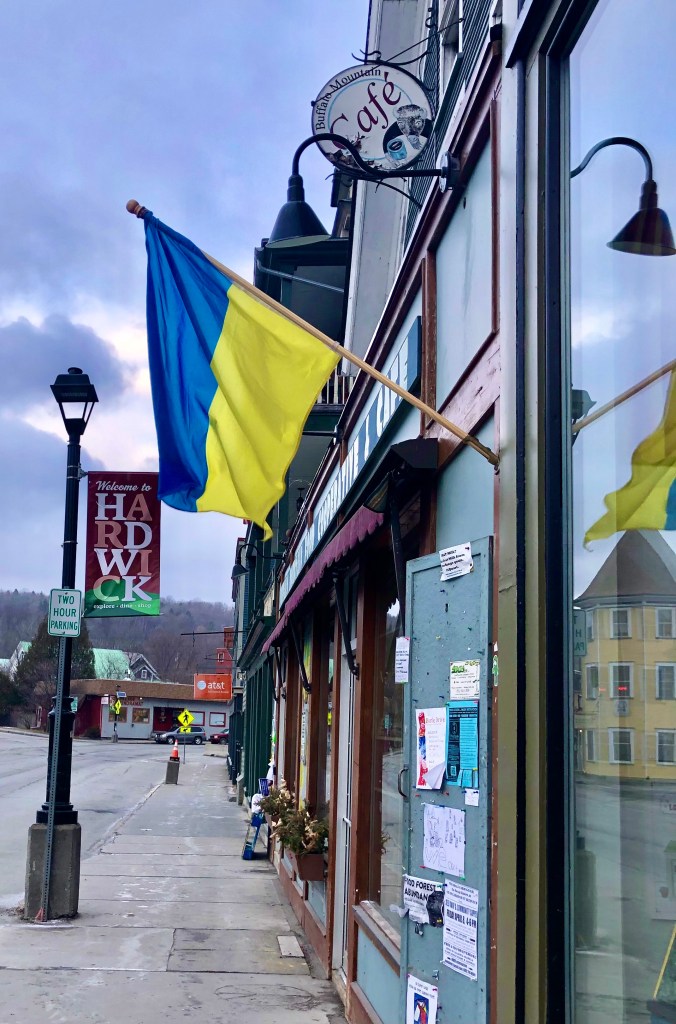
Hardwick, Vermont

Mud season is fierce this year. The school busses cease running on some roads. Families share photos of kids waist deep in mud ruts. Time, more than all the gravel in the state, is more likely to true up the roads than anything else.

Mud season is the odd shoulder season in Vermont. The skiing winds down. There’s no good biking. The tourists are all in sunnier southern locations, and Vermonters muddle along.

All day long, the prettiest and lightest snow falls — nothing serious, nothing much at all — just a scattering of the purest white and enough of a chill that the wood stove is welcoming when I come in with cold cheeks and armfuls of wood. I put a quiche in the oven and head out for a walk. The snow has (mostly) melted here now, and so my paths through the fields and woods have opened up again. Behind the elementary school, the turkey vultures circle over my head. They’ve just returned from their winter sojourn, to their long-time nest in a stand of white pines. I know what they want; there’s no secret here.

I hurry down the hill and along Main Street. A woman stands outside the laundromat, hands in overall pockets, staring up at the drifting snow. She raises one hand to me. I do the same, round the corner, and head home.

A Few Words

My daughter drives through a thunderstorm while, in the passenger seat, I try to conjure all the terrible things she might drive through — sleet and squalls — as if my imagination can create a charm against bad luck for her.

It’s idiotic, I know, but I keep talking until she tells me I’m wasting my words. You keep using up words, she tells me, and you only have so many words to use.

I start laughing. Since when, I ask, is there a limit on words? Hello? As a writer, I believe words are limitless.

No, she says. You only have so many.

And then what? I ask.

Then, you die.

As she drives northward, the rain lessens, and eventually the pavement is dry. We wind through the loveliest landscape of apple trees bent under white blossoms, as if we’ve entered into a watercolorist’s landscape.

I had no idea, I say.

Well, she says, her eyes merry. Now you do.