The limits of what we do.

Friday night, driving home along a familiar road from visiting friends, I stop by the elementary school. Solstice, the Strawberry Moon, the daylight lingers, and the dusk is long, multiple hues of blue. No one’s there, of course. I follow the path along the wetlands. Shimmering with lilypads and twilight, the water chirrups, sings, buzzes. Fish leap and splash. I loiter, and the dusk closes in. Still, I keep walking, following the path through the brushy woods up a slight hill, so I can get to the other side.

In my twenties, I had a tendency to get lost in the night woods, stumbling off the path. Years before cell phones, we were always searching for flashlights with working batteries, to visit somebody in a remote cabin. But I’m in familiar territory, and I take my time, in this bowl of evening, letting the cacophony of the wild chorus diminish my stringy thoughts.

I haven’t been back here for a good long while, but this school and the town and the library where I worked was a warm place, with its own complicated stories, sure. Those were the years when my life fell apart. I pause, hoping to see the quicksilver flash of a fish. Across the wetlands, a single vehicle rolls along the road. Maybe it’s the passage of time, or the evening’s mellifuous beauty, but I see suddenly that I was following two strands of my story in those years. I was leaving my husband (and for months, I wasn’t at all certain how to do that), and I was also recreating my life (and how exhilarating and hard that was, too.) I’ve written about my struggle with addiction; when I began to lift that veil, my fierce hunger quickened for what I had wanted all along — to pursue my own creative and often dicey life. In this throbbing evening, I sense the limits of language, that words fail here, that to divide creation and destruction into two words, held in two hands, is illusory.

The fish I didn’t see smacked through the water. Fireflies winked around me as I threaded my way back to civilization in the dark.

“Train Ride”

All things come to an end;
small calves in Arkansas,
the bend of the muddy river.
Do all things come to an end?
No, they go on forever.
They go on forever, the swamp,
the vine-choked cypress, the oaks
rattling last year’s leaves,
the thump of the rails, the kite,
the still white stilted heron.
All things come to an end.
The red clay bank, the spread hawk,
the bodies riding this train,
the stalled truck, pale sunlight, the talk;
the talk goes on forever,
the wide dry field of geese,
a man stopped near his porch
to watch. Release, release;
between cold death and a fever,
send what you will, I will listen.
All things come to an end.
No, they go on forever.

— RUTH STONE

Somewhere In December…

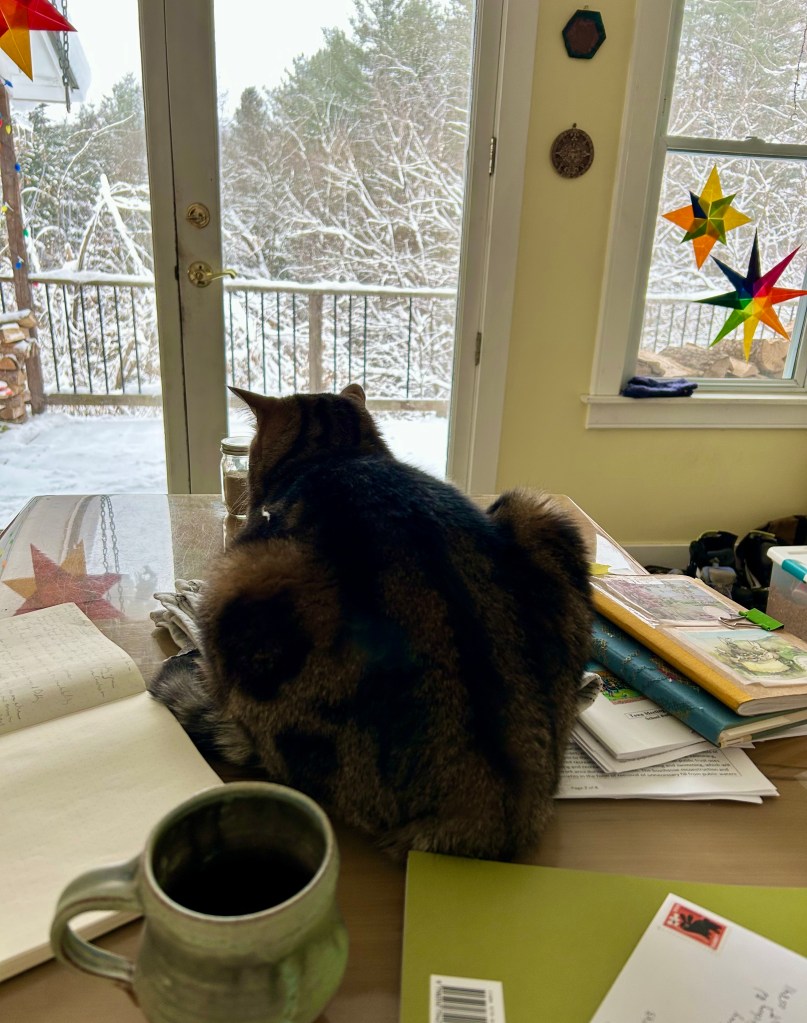
We’re all home at 3, the youngest just home from school, the oldest finished with exams and lying on the couch with her cat who eyes me warily. What now? that cat seems to say. As if the cat himself is out of sorts with the weather.

Are any of us made to live so far north? I insist we pull on boots, go outside. The sun slips down over the mountain before four.

Then — here’s the thing — we’re talking about not much at all, and the younger daughter says something about the cat that’s not shall I say kid appropriate, and I just laugh. I mean, I really laugh. I’m not entirely sure she knows why I’m laughing. The other day she asked if I was intended to hang little white Christmas lights in the “residential quarters.” I did, and I do.

But just thinking about it makes me laugh again. Why not?

Like a wheat grain that breaks open in
the ground, then grows, then gets
harvested, then crushed in the mill for
flour, then baked, then crushed again
between teeth to become a person’s
deepest understanding…

There is no end to any of this.

— Rumi

IMG_6956.jpg

Mooncrazed

Walking beneath the full moon last night, my younger daughter remarks how quickly the moon rises. Our conversation winds into the complexities of the moon phases, and I finally I admit I just don’t know the answer, but my father would.

Although we’re wearing jackets and jeans, the evening’s particularly warm for fall, the moon creamy and luscious. In the dark, flying geese overhead honk.

I mention something about “heavenly bodies,” and — despite my vehemence that this is, indeed, legitimate, these heavenly bodies — my daughters insist that’s too weird.

I don’t use my past reply about common knowledge, because my kids now have this kind of common language that might as well be from some remote Amazonian tribe to my ears. Apparently, I’m one of the last humans in their world to know this term “VSCO girl,” although the subtext beneath the so-called VSCOing activities and accessories remains a little vague to me. Likewise, when I shared some historical lore about the preppy movement (I notice Amazon has helpfully described the official handbook as facetious in case anyone missed that), I’m met with disinterest until I mention the flipped-up collar trend.

That’s just bad taste, both daughters immediately agree.

In 30 years, the full moon will grace Friday the 13 again. Walking along a dirt road in a light breeze, the girls mention how old each of us will be in 30 years. 30 years, I say, is a long time. And then: I was 30 when I became a mother.

Few lights shine in houses along the road. There’s no one else around. Back at our house, the moon is barely creeping over the horizon. We sit on the back porch while the moon rises, quickly. A luminous, heavenly globe.

IMG_6520

Wandering, Mid-August

Three boys loop in circles on their bikes, eating popsicles and talking. Walking by, I note one boy rides an old banana-seat bike, not unlike my brother’s when he was a kid.

Monday evening, the neighborhood I walk through is unusually busy with people — a woman yanking yellowing pea vines from her garden, a young man powerwashing his deck, two women deep in conversation walking tiny dogs.

I pause at a woodshed where friends have built a tiny house to raffle for the local library addition project. The raffle’s this weekend, and we speculate about who might win. Kids, we hope. Not simply a cute toolshed.

We’ve hit mid-August when the cricket songs have shifted to a longer, slower sizzle, that gradual unwinding of their energy until the singing simply dwindles away in the fall. August is the season of gardens gone rogue — this year my enthusiastic nasturtiums have nearly eclipsed my peppers. The mornings are dim now; the mist moves back into the valley for the cool night hours.

In the rose bed, whose flowers have long fallen, a single trumpet lily blossoms, and I wonder whose hands planted this beauty? Walking by, its fragrance pulls not only the pollinators but myself.

Here’s a line from a fascinating book I found in Maine — Don Kulick’s A Death in the Rainforest: How a Language and a Way of Life Came to an End in Papua New Guinea.

A language dies by contracting, by having its layers of complexity peeled off like an onion skin, getting smaller and smaller until there is finally nothing left.

IMG_6286

Onamonapia

This afternoon, my 11-year-old daughter walked around the house saying 0namonapia,  over and over, desperately trying to drive her sister nuts, by repeating this beautiful word, richly rolling off her tongue.

Years ago I used to nurse this child at the farmers market where my then-husband and I sold maple syrup. One afternoon, I nursed my baby on the grass behind our tent, leaning up against a pole. A couple sat down somewhat near me, in the shade beneath a poplar tree. Eating, they casually spoke in a slavic language I didn’t recognize. I generally knew they were talking about the day, but I couldn’t really piece together much more than that.

My baby fell sleep, and I pulled a blanket over her soft little limbs, then leaned my head back against the pole and closed my eyes. While the couple kept eating and talking, I listened to their words, this beautiful language I couldn’t precisely understand, but I knew the language tied them together.

Surely, 0namonapia relays much more than cluck or moo. This is a word whose meaning can stretch to entire languages: an audible beauty that makes us human.


The Bells

Hear the sledges with the bells—
Silver bells!
What a world of merriment their melody foretells!
How they tinkle, tinkle, tinkle,
In the icy air of night!

– Edgar Allen Poe

FullSizeRender

sweater weather in June Vermont


Private v. Public

This morning, after driving through a surprisingly thick snowstorm, I found myself in a tiny room in the radio studio of WDEV in Waterbury. Hester Fuller, the host, had kindly read my book and interviewed me for a bit, then Gary Miller (author of the fine collection Museum of the Americas) came in, too, with Joe Citro on the phone line.

We were literally knee-to-knee in a tiny room, talking about the intimacy of writing. Writing is that curious mixture of intense privacy – literally, the stuff of our own experiences – spun into shared stories. John Steinbeck’s East of Eden wound into my life when I was fifteen, lodging deeply in my blood cells, its influence surfacing in my own writing. Over and over, I have hammered myself against Steinbeck’s anvil that insists on seizing human choice despite the chaotic happenstance of human life. How will I understand my life? The lives of those I dearly love?

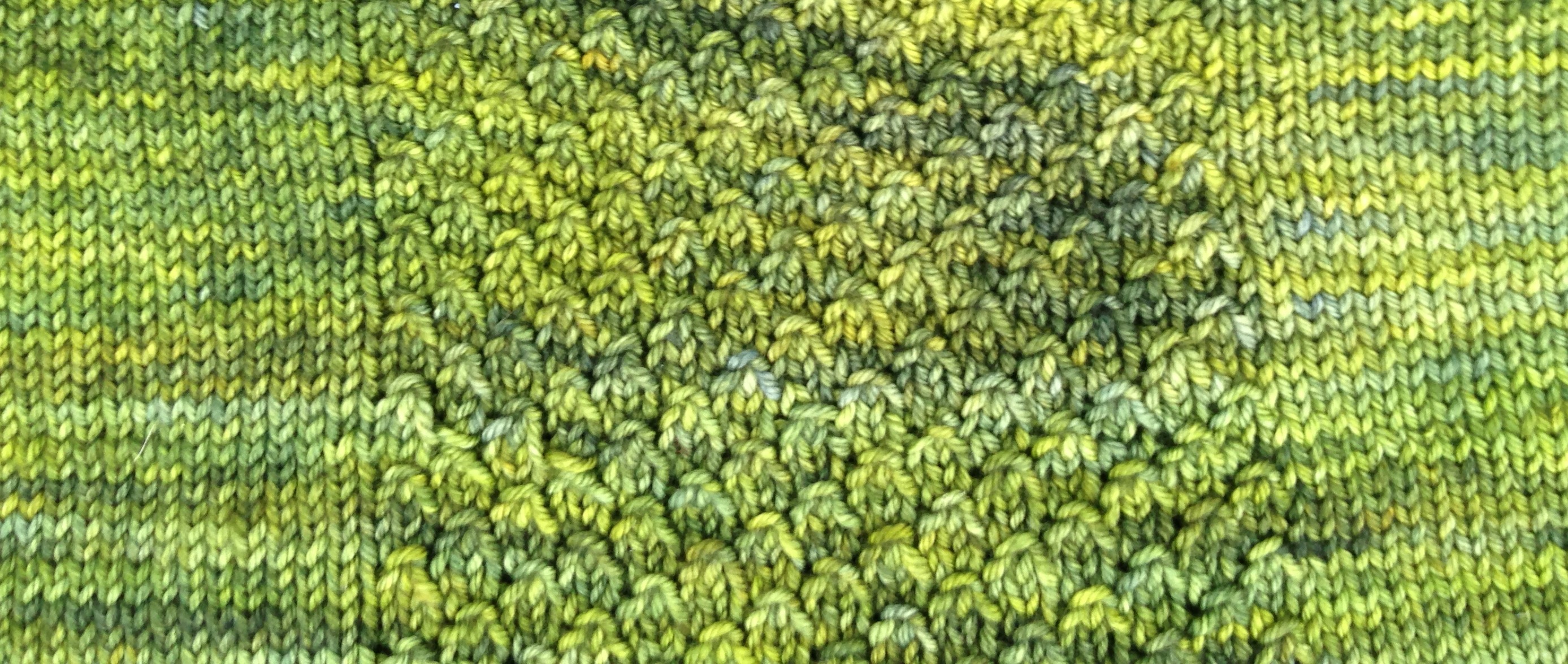
Driving home in the dark tonight, I realized my character, Fern, understood her life like this: finding an abandoned sweater in a library’s free box, she washed and then unravelled the yarn, discarding what was ruined beyond repair, saving what she could. Then she knitted, by trial and error, a sweater patterned with trees and mountains and Lady Moon, creating a work of beauty – and practicality.

Only after a writer lets literature shape her can she perhaps shape literature. In working-class France, when an apprentice got hurt, or when he got tired, the experienced workers said, “It is the trade entering his body.” The art must enter the body, too.

– Annie Dillard, The Writing Life

FullSizeRender

Burlington, Vermont, March 2016