Journey of many layers.

One of the best journeys of my life was when I was 19 and had long hair I rarely brushed. My then-boyfriend and I were hitchhiking (don’t hitchhike any more, folks) at the Greenfield, MA, I-91 exit, heading north, home to Brattleboro. A man driving an old convertible Cadillac, a great white Moby Dick beast, picked us up. In my memory, he’s smoking a cigar and grinning. While he and the BF sat in the front, shooting the shit, I sprawled in a backseat so enormous it could host a family. I surely wore no seatbelt. My god, on that July evening, I felt like I was flying.

This week, a grad school friend of mine invited me to spend a morning as a visiting writer with his students. All the layers of this trip—the journey south, the first solo I’ve taken since the cancer (my girls urging me to drive carefully, have fun), the stop in Brattleboro where I’d lived in my twenties and was happy, the visit with my dear friend and his wife who I immediately feel is a kindred soul, in their inviting house with a backyard vernal pool and singing peepers, a night of rainstorms, the morning’s magnolia blossoms gleaming pearly—all these layers folded into these writing students who arrived with questions and notebooks, hungry. In this breaking world, what a joy to swim for a bit with others in the passionate stream of loving literature, in all its myriad forms.

On my way home, I stop at a café near Dartmouth-Hitchcock Medical Center. By then, early afternoon, I’m worn down. The café was a favorite of my daughters, in all those months I was treated. Last June, when I was finally well enough to join them, no longer sequestered in a hospital room, they bought me a plain croissant, and I ate a few bites of its inner softness. This afternoon, on the sunny patio, I devour pickled vegetables, soaked in vinegar—something I could not eat last year. Delicious.

April, mud season, it’s just me and a young woman with an infant cradled on her chest. I read for a bit, and then as I’m gathering my things, a car pulls up with two young women. They run to the woman and the baby, laughing and shouting, gleeful.

Midafternoon, I have a ways to drive yet, along the wide river and over the mountains. I take a small walk first through the pine forest behind the café. Warm sunlight filters through the canopy. No ephemerals emerge yet, but soon, soon, as the trout lily leaves spread over the earth. My mother would have noticed the young mother, her sleeping babe, the joyous friends meeting this new life. Such satisfaction she would have taken. One more element folded into this journey. Then I head north.

…. And for folks around me, Helen Whybrow will read from her fantastic The Salt Stones and Jody Gladding from her translation of Jean Giono’s The Serpent of Stars at Greensboro’s Highland Center for the Arts, Saturday, followed an artists’ reception for a stunning group exhibition celebrating Vermont’s pastoral life. I was lucky to write about this for Seven Days.

I am beginning to understand that healing is not about returning to what was, but about accepting the change and adapting to the brokenness. This is happening all around us, for people, for the land. People have done damage to the earth and to each other that can’t be undone. We can lament what was, but that won’t help us take care of what we still have. In fact, it might just hold us back. ~ Helen Whybrow

Plot Point, Soul Journey.

My older daughter relays that she stopped for brand-new greasy donuts at 3 a.m. with her sister and a carful of teenagers headed to the airport. She parked beside a car with a man, she says, who must have lived through better moments.

We’re waiting for coffee on a Sunday morning jammed with people getting the Sunday vibe going. I make a vague comment about the soulful journey. Despite the eyerolling of my companion, I’m serious. Maybe the man was simply heading from home to work, or vice versa, but 3 a.m. in rural Vermont often means staring at a lonely emptiness where the way down leads to a few single dismal plot points, and the way up — imagination has plenty of material there. I don’t mean this in any jest, having hit a multitude of my own 3 a.m. moments; there’s a sizable respect between me and 3 a.m. Laughter and donuts, of course, are my preferred side of those moments.

April is the Vermont season of patience, of cold and thaw, and cold and more cold, of rain and the remembrance of November, the splendiferous muscle of crocuses. April is the long haul of spring, of faith in the green that tantalizes. Vonnegut writes, “The primary benefit of practicing any art, whether well or badly, is that it enables one’s soul to grow.”

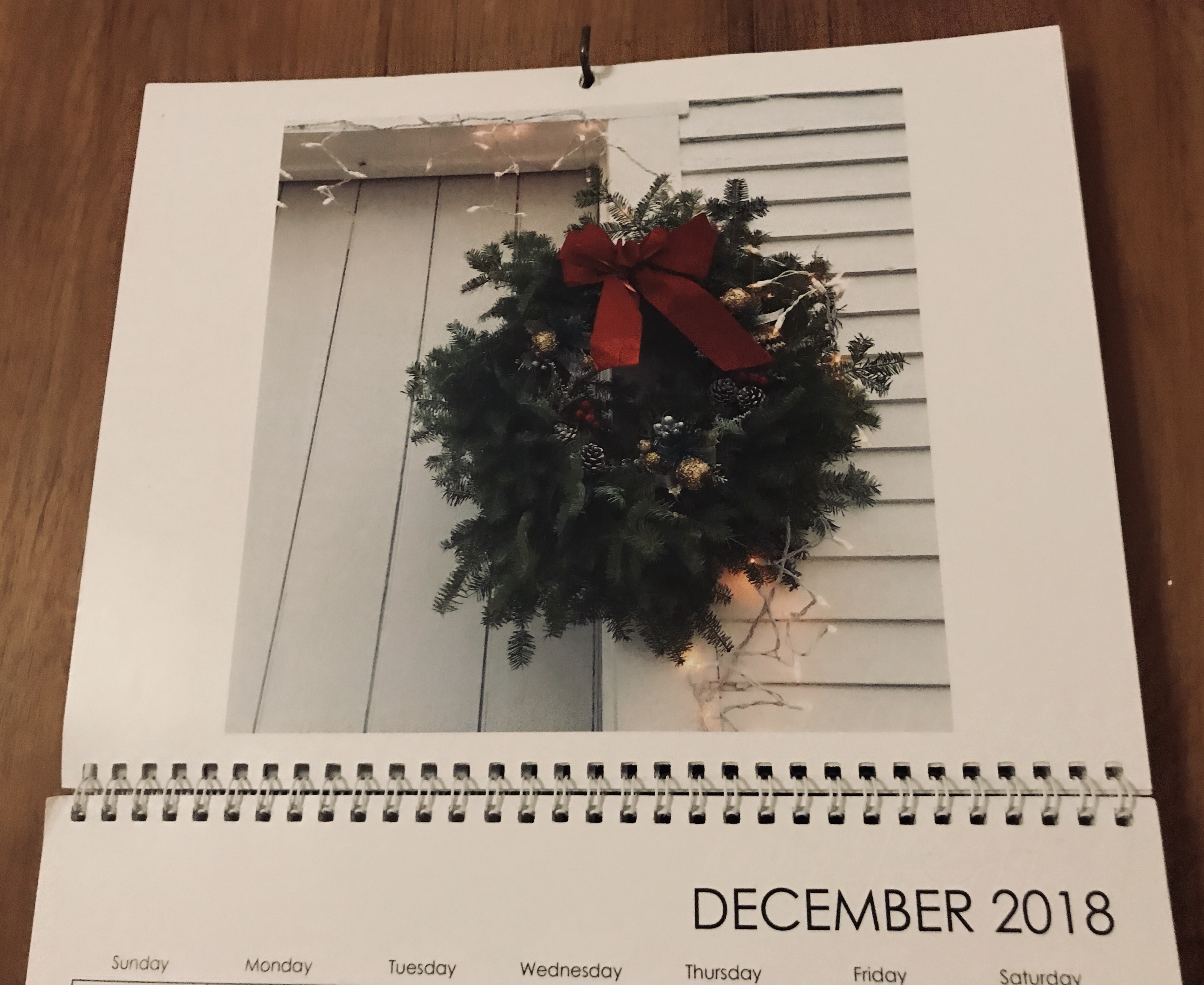
Twelfth Month.

A woman steps out of Positive Pie on Main Street with a stack of pizza boxes and nearly bumps into me. Late afternoon, and a rainy twilight has gradually thickened all day. I’m walking home from a reading at the town Memorial building by an author who’s published a historical novel about Hardwick. Decades ago, when this town shifted from broke-back subsistence farming to the granite boom, the town fiercely debated the railroad construction (why let in the outside world?) and the economics of electricity and streetlights. Now, not so many years later, the tracks are torn up, the roads paved, the granite empire crumbled.

This afternoon, the streetlights are on early, the colored lights glowing at this junction of routes 14 and 15.

The woman with the pizzas asks me to open to her car door. I step off the sidewalk curb, breathing in the scent of garlic and bacon. Before she gets in the driver’s seat, she stands for a moment overlooking the colored lights and river. “December,” she remarks — that’s all — and then gets in and drives away.

In the brick courtyard, the kitchen staff is getting high, wearing t-shirts in the strangely balmy air. December: this descent into the amorphous darkness with no clear edges. Long after the stranger has disappeared, I stand beneath the building’s overhang while rain falls and light ripples across the wet world.

IcyHot

These days are nearly feverish — too hot or bordering cold.

Driving home from soccer, my daughter sets her feet on the dashboard and rubs IcyHot on her shin. The car fills with the medicinal scent of mint. She and her sister laugh and laugh, the older daughter sharing stories of work: You can’t make this up, it’s so crazy….

Nearly a year ago, the younger daughter was plagued with nosebleeds. One evening, frightened, I called the ER and spoke to a nurse, who thought nosebleeds were no particular big deal. Chastened, I took his word. The nosebleeds stopped.

Autumn is the season of trees, green turning to gold. Walking home in the dark last night, I cut up through the trailer park where the Milky Way sprawled over the sky, then turned into the woods where I could hardly see my way. The scent of wet soil rose up through the leaves, and I pushed on.

Many things of the past
Are brought to my mind,
As I stand in the garden
Staring at a cherry tree.

— Basho

Here’s the piece I wrote for State 14 about the Youth Climate Strike.

Parenting

On a Philip Larkin jag, I think of his lines as I’ve driving with my 19-year-old up the switchbacks climbing the mountainside from the Connecticut River to Danville.

They fuck you up, your mum and dad.
    They may not mean to, but they do.
 
We’ve been to see an old man — a doctor and a Zen Buddhist — whom I’ve convinced has answers, actual answers damn it, to the riddle of her and me and her father. My daughter hates the old man. Actually hates him.
 
It’s December and cold as hell. The sun sparks from ice at the edges of the river where the wide current is just beginning to freeze. The sun is nothing but cold comfort, so low in the sky warmth is merely a memory.
 
Driving, talking, we pass a particular bend in Route 2 where, decades ago and years before she was born, the Volkswagen bus my daughter’s father was driving broke down on the edge of the road. He had downshifted, stalled, and in that moment, the engine froze and refused to start. For years, the bus was parked behind his sister’s village house.
 
I stop in Danville for gas and wash the salt and road dust from the windshield, remembering the ugly tan color of that Volkswagen. From here, the road home is familiar all the way. I’m always writing about roads, always writing about journeys, sometimes just down to the post office to open the mailbox to see what’s there — or not. 
 
Staring at the keys in my mitten, I remind myself my daughter’s journey is her own. Or, back off. Then I hold out my hand to her and ask, You want to drive home?
 
IMG_4172.jpg

Those Necessary Tire Wrench Skills

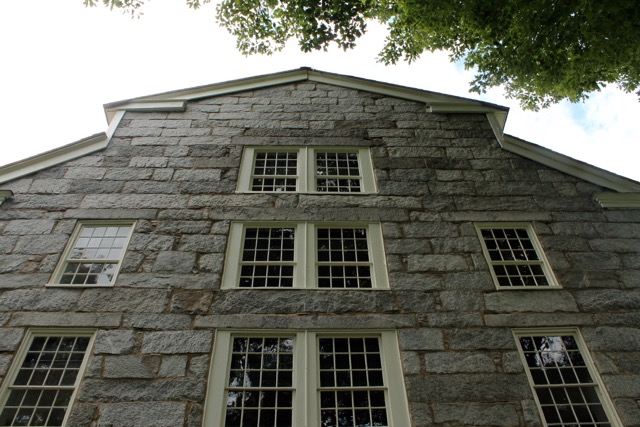
The kids and I ended up outside a gas station today in Orleans, Vermont, loitering under a No Loitering sign. We’d changed a flat tire on my sister’s car and needed air for the (also flattish) replacement. Earlier, we’d absorbed history, in a stunning old four-story schoolhouse in Brownington, where the kids admired rooms chockfull of nifty antiques and gadgets, and I kept wandering around somewhat idiotically marveling to the guide, This building is so incredibly well-built, as if she’d never noticed that before.

My older daughter, newly sixteen-and-a-half, took charge of the tire change, then drove the car home through yet more rain and sun, commanding her cousins to stop horsing around in the backseat. When I left again, she baked and frosted a cake for her aunt’s birthday, oversaw the younger kids decorating the house, worked on her summer homework Salinger essay, and emailed me photos.

No doubt, the Brownington students in the 1800s must have been capable farm kids, but as a mother, it’s darn satisfying to see your leggy 21st century daughter tackle a tire wrench, a kitchen aide and camera with equal gusto.

While the kids were eating false maple donuts under the No Loitering sign, and my sister and I drank a thermos of coffee, we laughed at our planned day all jumbled up. It’s all in the journey, I said, thinking how trite that phase sounded to me just a few years back, so phony as Holden Caulfield would have kvetched. That doesn’t mean sometimes I’m not unbearably crabby along the way, but surely wielding a tire wrench, capably and well, sweetens your slice of cake.

…My wife is at her work,
There behind yellow windows. Supper
Will be soon. I crunch the icy snow
And tilt my head to study the last

Silvery light of the western sky
In the pine boughs. I smile. Then
I smile again, just because I can.
I am not an old man. Not yet.

–– Hayden Carruth, from “Twilight Comes”

Old Stone House Brownington, Vermont Photo by Molly S.

Old Stone House
Brownington, Vermont
Photo by Molly S.