Zeke, the New Friend

My 12-year-old returns from the southwest with the story of a bobcat who slept in the raingutter in her grandparents’ roof. She’s worried about the wild cat, who she thinks is too thin, unlike her own glossy, well-fed kittens.

The cat is my daughter’s main story of her faraway trip — this wild beast who seems remarkably tame and drinks from her grandmother’s bird bath.

Driving home in the dark, I’m listening to my two daughters’ disparate conversations about enchiladas and pueblo ruins and a stranger’s delayed flight. My daughter in the backseat keeps mentioning Zeke.

Who’s Zeke? I ask.

She answers, We named the bobcat Zeke.

IMG_1767.JPG

Playing

When I was in college, one of the houses I cleaned was for an older woman who usually had me set up a square table for mahjong. Three of her also-elderly friends arrived around that time — one hobbling in with a walker — and they were always so darn excited about this game. I laid out a wooden box of tiles, coasters, a cut glass bowl of cashews while one of the husbands made drinks.

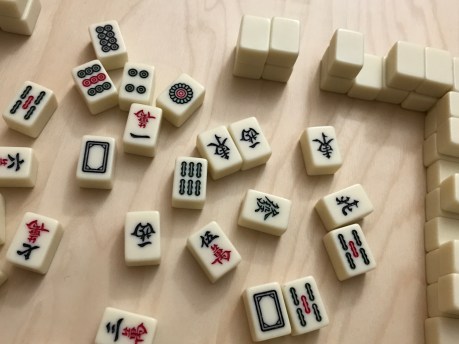
My 12-year-old, lover of games and puzzles, studies instructions with our tiles, piecing together patterns, possibilities, in what can only be described as our unique version of play. Need four players? We’ve bastardized that, too, and make do with the two of us.

Across the table, the bridge of her nose sparkly gold from a friend’s shared paint, her eyes glow mischievously.

Do the best that you can in the place where you are, and be kind.

— Scott Nearing

IMG_1223.jpg

Hardwick Postcard #7: Middle School

At the middle school concert’s intermission, my merry-eyed daughter sat behind me with a girl I didn’t know, so I turned around and introduced myself. Being 12, the girls laughed at this weirdly formal introduction, and then the couple beside me began laughing, too. I had been sitting beside the girl’s parents.

It’s a little world we live in.

I chatted with the new friend’s parents. Quickly, the girl’s mother and I realized we had both served on an elementary school board. The lights dimmed just as we started a conversation that could have launched into a very long conversation about school consolidation.

For all its myriad faults, public education — at least in Vermont — is still all about the local community. Chances are, at a middle school concert, you’ll sit beside people you like, and, equally possibly, besides people you don’t.

But you’re all still there.

My father sent me this Wendell Berry essay. Read it.

In 1936, moreover, only a handful of people were thinking about sustainability. Now, reasonably, many of us are thinking about it. The problem of sustainability is simple enough to state. It requires that the fertility cycle of birth, growth, maturity, death, and decay—what Albert Howard called “the Wheel of Life”—should turn continuously in place, so that the law of return is kept and nothing is wasted. For this to happen in the stewardship of humans, there must be a cultural cycle, in harmony with the fertility cycle, also continuously turning in place. The cultural cycle is an unending conversation between old people and young people, assuring the survival of local memory, which has, as long as it remains local, the greatest practical urgency and value. This is what is meant, and is all that is meant, by “sustainability.” The fertility cycle turns by the law of nature. The cultural cycle turns on affection.

Wendell Berry

IMG_0622.jpg

Main Street, Hardwick, Vermont

Imagine This

The other misty autumn afternoon I was standing in front of the Woodbury general store recreating the library’s sign when an acquaintance came out of the store with a gallon of milk and two quarts of Ben & Jerry’s. Naturally, I offered to relieve him of the weight of that ice cream. With the foliage burning an orange hue in the clouds, he and I talked about kids and our own childhoods, and how mightily imagination can work through a life, propelling people in all kinds of different ways – or not, if imagination is lacking.

I thought of a short piece I’d written for Kids VT about a 9-year-old boy who, hanging out in his dad’s East L.A. auto parts store with time on his hands, no kid companions, and piles of empty boxes, constructed an elaborate arcade from cardboard. By chance, filmmaker Nirvan Mullick appeared to buy a door handle for his Toyota corolla, and this short flick and a greater story evolved from their meeting. Caine is a smart and inherently likable kid, but the filmmaker equally interested me – in a story behind the story kind of way. Who was this adult who took such an interest in this lonely boy? Doubtlessly, the story widens….

Lovers and madmen have such seething brains,
Such shaping fantasies, that apprehend
More than cool reason ever comprehends.
The lunatic, the lover and the poet
Are of imagination all compact…

– William Shakespeare, A Midsummer Night’s Dream

fullsizerender

Greensboro, Vermont

Imagination

Yesterday at dusk, while my daughter in her snowsuit gathered icicles and arranged them in an order known only to her, I walked in the cold along our road, the fresh snow recently plowed and sprinkled with brown dirt. How is it the sky can hold that lightest and palest of blues, complementing the frosty earth? Across the valley, Mt. Mansfield’s ridge gleamed with snow and sunlight.

Walking along the road, I imagined myself a wild creature, a woman around a wolf’s rangy body, my pelt matted with balls of ice, my lungs pulling greedily at the air, eyes keen and cunning, utterly watchful, without fear. Imagination is a word used too mundanely, like a child’s activity we toy with and too often cast away. I used the force of imagination today, descending into the bowels of bureaucracy, through windowless rooms with numbered forms and lengthy procedures and strangers weeping; I carried with me the hoary scent of wet fur, the wildness of snow and open skies, the singleminded hunger for survival.

Around our kitchen door, my child’s icicles glowed in the light through the windows tonight, widening the circle of the world she created.

Reading fiction not only develops our imagination and creativity, it gives us the skills to be alone. It gives us the ability to feel empathy for people we’ve never met, living lives we couldn’t possibly experience for ourselves, because the book puts us inside the character’s skin.

– Ann Patchett

FullSizeRender

Barre, Vermont

Vermont Landscape of Imaginary Birds

The other day, my younger daughter asked me what I would choose if I could I pick two talents. Talents? I thought, wondering at the unusual use of the word. She told me, What I would choose is to make clouds and to fly. I want to be a bird, she said.

I love this in my child: she didn’t stop where I would have – imagining a bird’s flight. In the book I’m writing, turkey vultures come and go, and I’ve spent a considerable amount of time metaphorically transporting myself into that wide wingspanned flight. But never have I imagined making the clouds, creating the literal landscape of sky around those creatures. In so many ways, I see my child’s life as fuller than mine, not diminished by the pieces I’ve outlined: chores and work and writing and pleasure. For this child, her life is still all one unfolding tapestry of landscape, and her longing to fly is just one woven element of the mystery’s enchantment.

… we’re forced to begin
in the midst of the hardest movement…
At most we’re allowed a few months
of simply listening to the simple line
of a woman’s voice singing a child
against her heart. Everything else is too soon,
too sudden, the wrenching apart, that woman’s heartbeat
heard ever after from a distance,
the loss of that ground-note echoing
whenever we are happy, or in despair.

Adrienne Rich, “Transcendental Etude”

DSCF9650

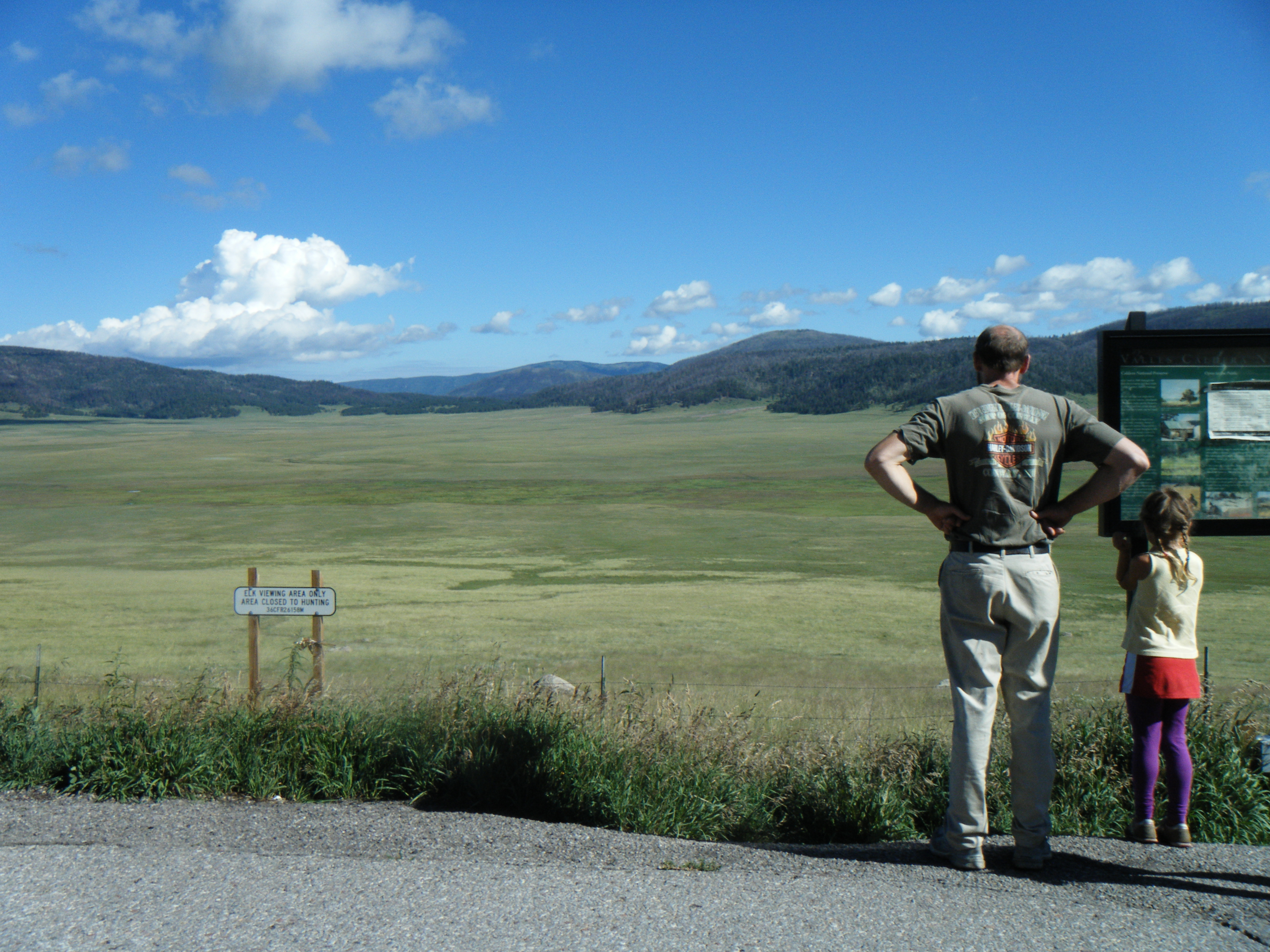
Landscape Not-Vermont….