Fresh Lilacs, Late October.

My daughter sends me a photo of an apple blossom she discovered in Montpelier, Vermont, just this weekend, end of October. For anyone not a Vermonter, this is odd news that evokes suspicion and distrust. In New Englanders, distrust is a carefully curated character trait. Good lord, don’t be naïve. Naïve people don’t put on snow tires, and those people drive off roads.

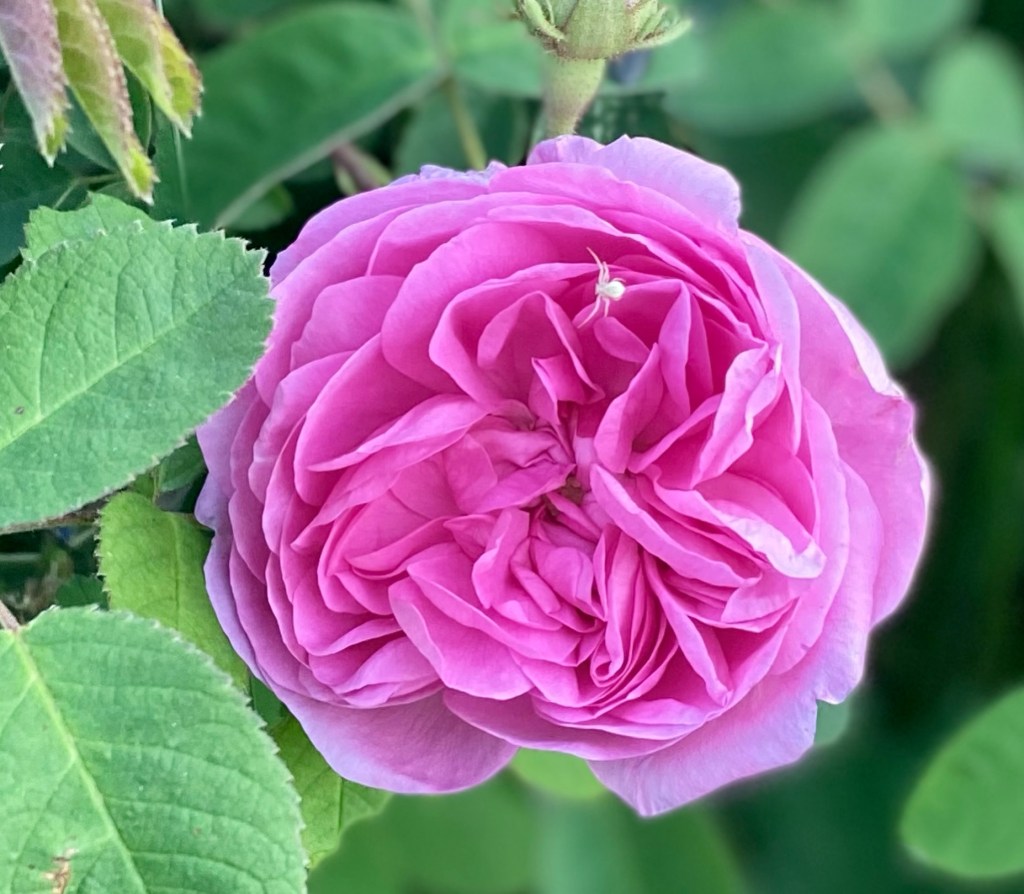
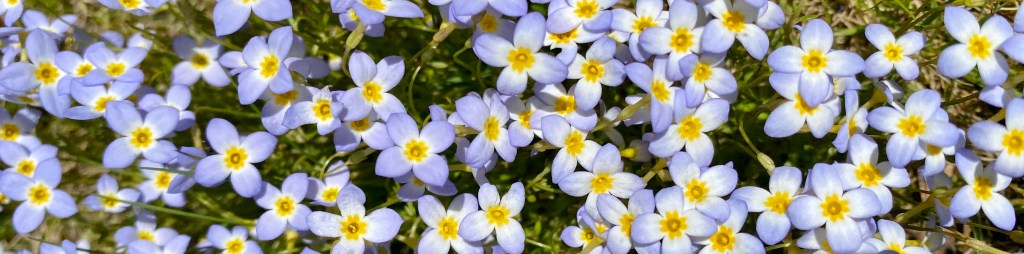
Later that same afternoon, we walk through a pasture and then cut through a town cemetery. There, the lilac bushes are sticks, as you’d expect at this time of year. But at the very top of one bush, lavender flowers bloom. My daughter stands on her tiptoes and gently pulls down a branch. My house is surrounded on three sides by lilacs; late May is a joy. But this year, there were hardly any blossoms. Now: lilacs in late October in northern Vermont? Any sane person would look at this askance.

Nonetheless, I stand on tiptoes, too, and breathe in that ineffable scent of fresh lilacs.

Here’s a few lines from poet Amy Lowell:

Even the iris bends

When a butterfly lights upon it.

A Mixed Delight.

All week, we say to each other, This might be the last nice day or Only a few good days left, as if our Shire-ish Vermont realm teeters on the brink of disappearance. Not so, of course.

I leave work early and disappear into the town forest, stepping off the main trails which suddenly seem populated, and hurry down the narrow bike paths, picking up speed and running in my shoes that I’ve meant to replace with their torn toes and worn soles. Add that chore to the list of the mundane: clean the upstairs closet, shake out the living room rug, replace the burned-out lightbulb over the bathroom sink.

October is a hard reckoning month in Vermont, the sizing up of the summer (not enough swimming, surely not enough sunlight) and the letting go of gardening as winter edges in, steadily, inexorably. I rake leaves, mulch the garden, put away my shovel and hoe.

For years, I canned crazily, hundreds of jars of beans and tomatoes and apples. This year, the mainstay of my garden is flowers. Months ago, the flowers gained the upper hand, and I can scarcely pick my way through the tangle of vine and petal: a patch of succor for pollinators, slow moving now, and birds.

My mother asks what’s new, what’s happening: skeins of geese fly over our house. Like the skeins of yarn I unwind and then rewind into fat balls. Sprawled on the windowsill beside my desk, my cat studies a gray squirrel fattening its cheeks with sunflower seeds. Red, gold, green: autumn.

We must risk delight. We can do without pleasure,
but not delight. Not enjoyment. We must have
the stubbornness to accept our gladness in the ruthless
furnace of this world. 

— Jack Gilbert

The 10,000 Things.

The last night I am in New Mexico, I can’t sleep, so I slip on my sandals and walk. The moon hangs over my parents’ house, luminescent as a giant drop from a sun-shot waterfall. It’s dark yet, a cool-nearly-cold breeze stirring the desert. No human wanders at this early hour. It’s just me and the singing crickets and birds, the sun pushing a golden curve over the black mountains, the desert stirring in a language I have no words for: the rush of lizards and hustle of rabbits, the sharp-eyed coyote and fox, the wild sunflowers silently bending towards the rising light.

So many pieces to this journey — from the shuttle driver who happily counsels a passenger not to rush as “we’re in the Land of Mañana,” to the flight to Chicago where the Brandeis student beside me whispers about her fear of flying, to the stunningly beautiful flight over the Great Lakes through voluminous white clouds. I keep thinking how unworldly, but that word is ill-chosen. Better said would be of this world. Then the brilliance ends as we fly into the soot of the Canadian wildfires. All through this day, I read Lily Brooks-Dalton’s The Light Pirate (the novel Ben Hewitt told me read), this novel about a family and the collapse of our world, and the brutal irony doesn’t escape me for one moment that as I’m mourning and fearing those sooty clouds I’m entirely part of this 21st century….

In Vermont, my daughters greet me with their 10,000 stories and cheerfully announce I’ve missed the two good kayak days through the lily pads. The humid night air stinks of diesel exhaust. In the parking garage, I strip off my leggings. My youngest drives out of Burlington, along the river through the Winooski Valley, and through the state capital. The girls tell me sunflowers are blooming around the statehouse, and my daughter’s dog fell off a dock into a lake (what clumsy dog does that?) and the swimming has been stunning in Caspian, the water perfectly clear.

My youngest tells me about exploring Burlington with her sister. She says she can’t believe how lucky she is to move there this fall.

In this dew-soaked morning, I realize I haven’t missed the hollyhocks’ bloom. Lucky.

…. Seriously, can’t recommend The Light Pirate enough.

Because everything is changing…. We should all be curious about it, because the way we live has to change, too.

— Lily Brooks-Dalton

Wildfire Smoke, Vermont.

Smoke from Canadian wildfires suffuses our world, the briefest intimation of so much happening so far away. Sunday afternoon, I crouch in my garden, weeding, while talking on the phone to my brother. When I stand, the sun is a pool, the hue of fresh blood.

Later, before twilight, we swim with a friend, the smoke like a mist. On our way home, my daughter and I drive up the hill across our town, to the hillside where we often walk and look for the sunset. It’s after eight, but these are the longest days of our Vermont year. The sun is utterly absent, swallowed up in smoke and humidity, the light meager as November.

This, she says, is not good.

The following morning, our air clears. At dinner on our porch, a light rain patters. We keep eating, talking a bit here and there, lacing together our days. As for the humidity, I keep thinking…. bring it on. The myriad leaves and blossoms reach out, sucking it up, summer in all its messy intensity.

Ordinary Contentment.

Standing on the street in Greensboro Village, a pickup truck with a trailer full of hay slowly passes by, creaking through the tight curve. In the sultry sunlight, I wait, a shower of chaff drifting over my face, blinding me for just a moment. As I close my eyes, I see one sunburned arm waving through the open pickup window at me.

June. There’s plenty adversity that happens in this month, I’m sure, but the roses are blooming, the fields freshly shorn and growing again, the fledgling robins already swooping from the nest.

Some lines from the incomparable Jane Kenyon this Friday afternoon:

High on Nardil and June light 
I wake at four, 
waiting greedily for the first
note of the wood thrush. Easeful air 
presses through the screen 
with the wild, complex song 
of the bird, and I am overcome

by ordinary contentment. 
What hurt me so terribly 
all my life until this moment? 
How I love the small, swiftly 
beating heart of the bird 
singing in the great maples; 
its bright, unequivocal eye.

Our Moon Shone on Helen of Troy, Too.

Rain falls in the night, a pattering through the open window on the mock orange bush. The rain winds through my half-asleep dreams of different places I’ve lived with open windows and falling rain. I’ve often thought of the moon as my constant, my anchor in the arc of the universe. Moonbeams fell on Helen of Troy’s face, too. But spring’s gentle rainfall? Such a sweet sound.

A rouge frost browned pieces of our May world, and the rain promises deeper green. The morning after the frost, a man in line at the post office told me he’d lived in Vermont all his 63 years and had seen frost in July. I detailed the frost damage to my daffodils; he shared his apple blossom woes.

July? I asked, are you sure?

He laughed, quite sure indeed.

As I lay listening, the morning songbirds began, a snippet, then a rising thread of song, pushing away the night.