The true religion, the religion of snow…

I stand at my kitchen’s glass door devouring blood oranges and watching the sifting snow. Blood oranges — could I choose a less local delight? I open the door and cast out the peels for the birds.

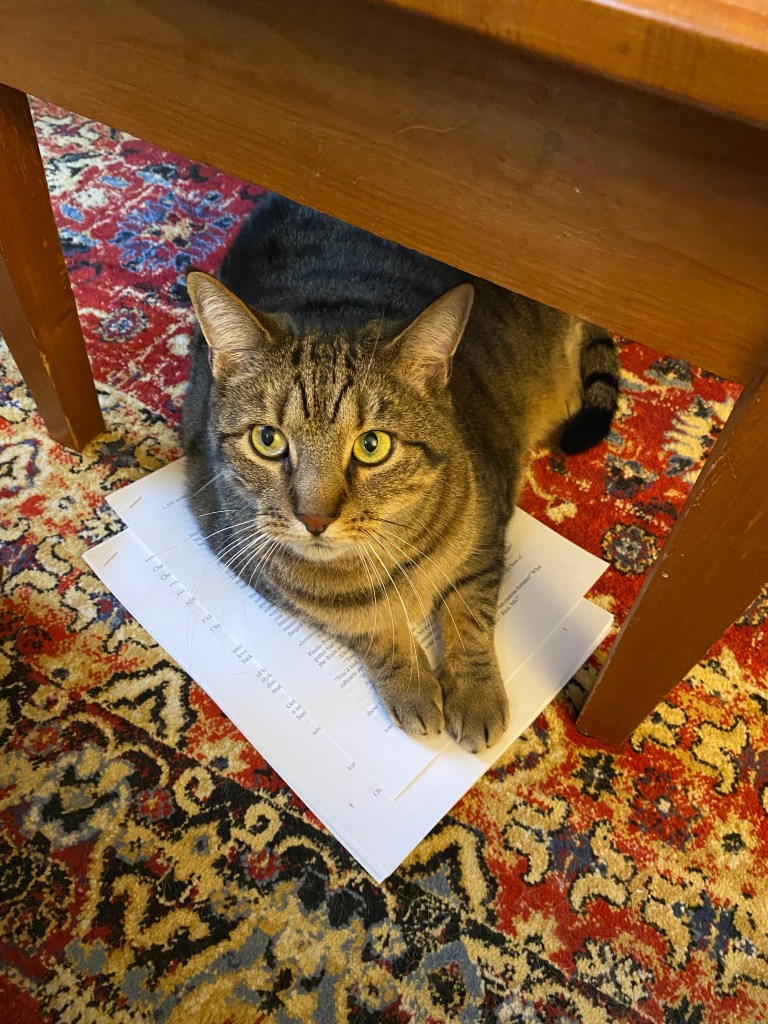
The cat Acer sits on my feet, listening to the morning radio news, too. Just over the river, my home state New Hampshire revels in the Presidential primary. Meanwhile, Vermont prepares for its March Town Meeting Day, with the calculations and passion of budgets and petitions. Close an elementary school? Pledge to become a pollinator-friendly town? So much of January in my state is devoted to public meetings and discussion/debate, to a reckoning of the way forward, a jostling for who’s running for what seat — and what seats might remain empty.

Meanwhile, snowy winter has finally arrived, spare and elegant. Fearsome and enchanting. As the days deepen in cold, the light hours increase: no stasis in this world.

A fan of local chicken, bacon, milk, my cat stares at my orange-sticky fingers with disdain. I crunch the orange seeds, too, devouring this sunlight sweet.

Here’s Billy Collins’ poem about shoveling snow with the Buddha:

[Shoveling snow] is so much better than a sermon in church,
I say out loud, but Buddha keeps on shoveling.
This is the true religion, the religion of snow,
and sunlight and winter geese barking in the sky,
I say, but he is too busy to hear me.

What we can’t know.

The cold hammers down around us in the way we’ve known Januarys before — nothing fierce, but sharp. January is a season that draws us up against our own mortality. Stumble and you’ll break a bone. Sleep outside, ill-prepared, seriously down on your luck, and you could perish.

Wednesday morning on the early side, I’m drinking coffee and staring at the snowflakes that have appeared in the downtown again, a memory for an absent person. News has wound my way of the death of a person distant from me by numerous steps, the fate we’ll all meet, one way or another, the great leveler. In the afternoon, when I return from work, the window washers are carefully removing the lacy paper, setting the delicate flakes to one side, and then re-taping them on the windows. A gentle, wordless act of care. A piece of our human puzzle.

These winter days, I’m devouring Paul Lynch, about as good as anything can be.

“I believe it is worth writing to remind ourselves of what we can’t know. To remind ourselves that certainty is dangerous. That factual knowledge of the world casts only a small light. Fiction is necessary because it seems to me that only fiction can accommodate the total strangeness that is life. To remind us that truth is actually impossible.”

Mark a Line in a Forest.

The farmhouse is built on a cliff above a glacial lake. It’s been years since anyone lived there, although the roof and windows are intact yet. I walk around the house and then stand for a moment at the steep hillside that tumbles down to the lake. Someone lives down below, and I spy a flash of silver roof in the sunlight. Beyond it, the lake.

The road is exceptionally narrow, winding uphill more steeply than most Vermont roads. Whoever built here, I’m guessing, chose this place for the sheer beauty of the view. A foolhardy choice, perhaps, as the house and farm have long since turned over and over in ownership.

I’m here to look at survey marks, line up orange and blue blazes with paper, and read deeper down into the stories of people, of friends and enemies, of what land means to various people. Surveys, roads, grudges, loyalties, all the barriers we erect between ourselves.

Inadvertently, I take the slow road home, stuck in construction on the highway that winds along the lake. A duck flies overhead. At home, I meet my daughter who has just returned from soccer practice. We sit in her car, talking, talking, about olive bread and cheese, sautéing mushrooms with garlic. Around our house and my garden the foliage is simultaneously luminescent and gone by, the leaves dropped dead to the ground, the trees uncloaked. For these moments, the sky is suffused pink. My daughter says, “Not bad.” Around us, an infinity of stories held just for a moment in my hand.

“Nevertheless, something will come of all this.”

– John Gardner

Emerging From Quarantine

When my youngest was just over a year old and not yet walking, I was at a child’s birthday party around a pond. I sat her to play on a blanket. Her back was to me, and, after a while, a little girl ran over to me and said something was wrong with my baby.

My baby’s eyes were watering terribly. Before long, she seemed to have trouble breathing. A woman I had just met drove me and the baby to the ER. I sat in the backseat, talking to my littlest, hearing my voice speaking quietly, as if I was dividing in two. I knew I was terribly afraid, because I wasn’t panicking.

By the time we had reached the ER, whatever bothered her had passed. Although I had her tested for multiple allergies, this event never occurred. But for the rest of the summer, I felt as though a knife had sliced over me, shearing off some essential part of me.

The pandemic has changed all of us — both over a year, and in smaller, sharper pieces, as in my family’s recent case. The New York Times shares stories today of new lives emerging, reshaping and reforming. Of lives going on.

Hardwick, Vermont

Hey, Kid!

The other evening I walked by a kid in shorts and a t-shirt crouched down in the mess of road construction on Main Street. What the heck? He was about seven-years-old or so, his hands on a thick stake with a blue triangle flag hammered into the bulldozed dirt.

The little boy was so serious that I stopped and looked back at him. Evening, the workers had long since quit, and no one was around except for cars and pickups on the road. The boy snapped off the stake, immediately put it over his shoulder, and walked down the road quickly.

Slow-thinking perhaps, I didn’t realize what the child was up to, until I saw his yet-serious face glance over his shoulder at the blue flag, and then his fingers came back and brushed the triangle, lightly, without lessening his speed.

The kid was working, doing serious stuff, holding up the veritable imaginative life of the village. So intent he never smiled, he hurried across the street and disappeared around a building, out of my sight.

When we are mired in the relative world, never lifting our gaze to the mystery, our life is stunted, incomplete; we are filled with yearning for that paradise that is lost when, as young children, we replace it with words and ideas and abstractions – such as merit, such as past, present, and future – our direct, spontaneous experience of the thing itself, in the beauty and precision of this present moment.

– Peter Matthiessen

FullSizeRender.jpg

Summer girl

Sunday

Growing up in southern New Hampshire, the summer sky often skimmed over with smeary white humidity, and I spent a lot of my childhood summers reading library books on the cool front porch behind the trumpet vine. Our box fan in a green metal cage was missing a screw and rattled until my mother jammed it somewhat quiet with a folded-over piece of cardboard.

These days, it’s often just the 12-year-old and me. Yesterday, I found her, hidden on the back porch, reading. While the summer to me seems to be soaring by in a few heartbeats, for a child I often forget a day is yet a day.

Good book? I asked.

Her eyes came to me slowly, returning from this fictional land with people I’ve never met. She nodded. Yeah.

Walked and walked
Here still to go—
Summer fields

– Buson

FullSizeRender.jpg

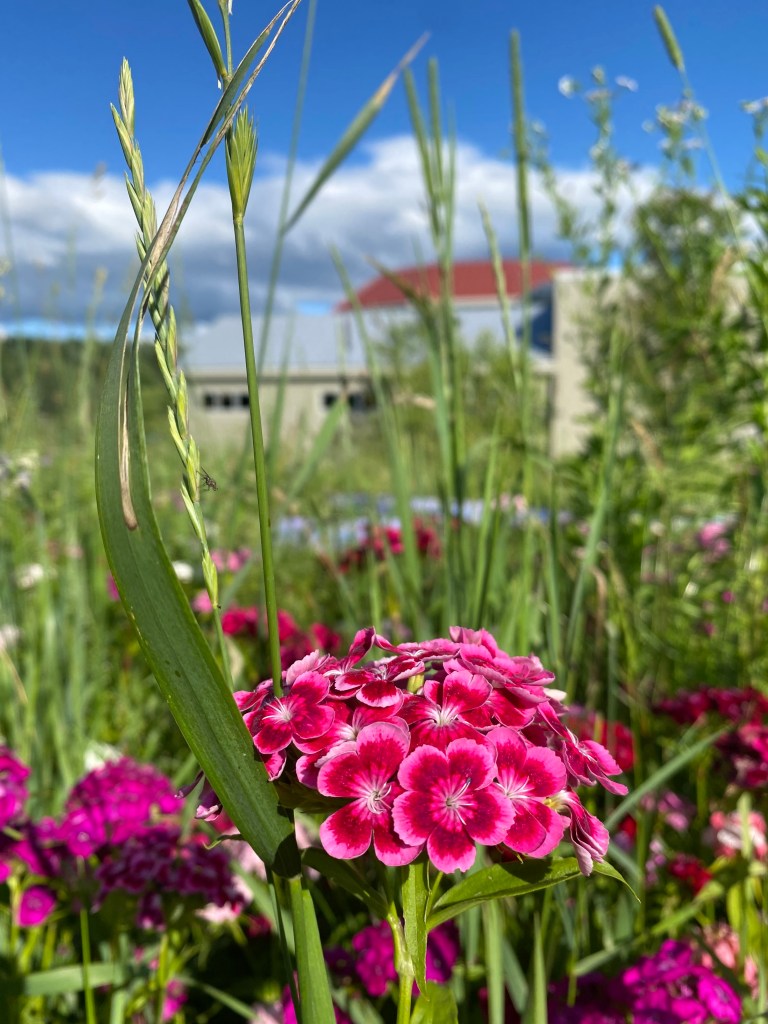
Hardwick, Vermont, community garden