Specificity in Writing

Like many people I know, I cut my early reading teeth on Little House on the Prairie, and reading the new fictionalized version of Ma (er… Caroline) brings back the days when reading a chapter in a real, fat book was a very big deal.

The book is an interesting take beyond the troupes linked with each character – blue calico and blonde hair with Mary, a red dress and brown braids with Laura, Ma and the china shepherdess, Pa with the gun, baby Carrie and her beads, even loyal Jack warning his growl – into the grownup terrain of a woman in labor.

At the end, I remembered Jacqueline Woodson saying that she insists her writing students know all stories have a specific place and a time. Not long after the Osage left their land, here’s sometimes naughty, sometimes sweet little Laura taking one last final look at the cabin her father built in a sea of virgin grass, as their wagon rolled away.

The wagon lurched as Charles jumped down, then shuddered with the loosening of the rope at the back so that Laura and Mary could peep out through the wagon cover. For a long moment it was still. The Caroline heard Charles’s footsteps, receding instead of approaching. She did not trust herself to look forward again if she looked back, but she turned. Laura and Mary crowded the small keyhole Charles had made in the canvas. Past their heads, a narrow swath of the cabin was visible.

– Caroline, Little House, Revisited, by Sarah Miller

Sissies

Years ago, my friend and I started this saying between the two of us – Are you in your spot? Generally, our given spots were the kitchen sink in those days, which pretty much sums up why we spent so much time laughing about what might appear to be a lame joke.

These days, our spots have widened – portable now, thanks to MacBooks.

My younger daughter’s spot in those days was with her sister. Even as an infant, strapped on my chest, her little brown eyes always tracked to her sibling. When she was two, her older sister toted her on her back. Like anyone else, they bicker; they fight. Sometimes they make each other cry. But when the teenager’s now-ex-boyfriend said they spent too much time together, the teenager said simply, We’re sisters. I consider this an incredible stroke of good luck, an amelioration of some of my parenting mishaps.

I remembered all this today when I read this sweet children’s book, The Big Wet Balloon, about the complexity of sisterhood, even as very young children.

I want to thank
my sister for loving me, which taught me
to love. I’m not sure what she loved in me,
besides my love for her—maybe
that I was a copy of her, half-size—
then three-quarters, then size. In the snapshots, you see her
keeping an eye on me, I was a little wild
and I said silly things, and she would laugh her serious
laugh. My sister knew things,
sometimes she knew everything,
as if she’d been born knowing….

From Sharon Olds’ “Ode to My Sister”

FullSizeRender.jpg

Anti-Complexity

At a book discussion for Banned Books Week, a woman mentions Harry Potter was censored as “anti-family.” What does that mean? MacBeth offers no honeyed view of family. Should we not read Shakespeare? I walk home in the dark, the air balmy and the crickets singing, a crescent moon shining like yellow gold over our house’s metal roof, then listen to my daughters’ laughter floating on that oddly warm September air through the open screens in the living room.

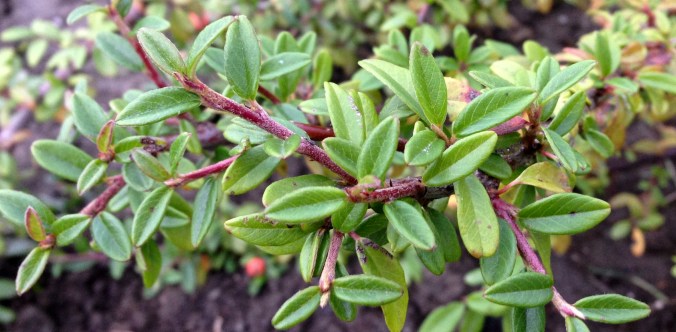
I slip off my sandals and stand on grass, still wet from where I watered the cotoneaster bush I planted a few weeks ago. Every evening in this dry weather, I water this bush. I planted it because the house I grew up in had a cotoneaster outside my father’s study window. My brother, when he learned to ride a bike, plowed through that bush, numerous times. I picked the berries and strung them on thread for necklaces. My sister and I fed them to our dolls. My mother admired the sprawling bush’s resilience.

I think of Harry Potter, the boy who longed for his dead parents. Anti-family? As if family has ever been simple.

We raise children and tell them other things about who they can be and what they are worth: to us, everything. We love each other fiercely, while we live and after we die. We survive; we are savages.

– Jessmyn Ward, Men We Reaped

FullSizeRender


Memorable Days

27 years ago, my oldest nephew was born. I was visiting his great-grandparents on that day. I had recently entered that family, and I was on my very best, most sparkling, ready-to-please behavior. His great-grandfather walked me around his property, pointing with pride to the peach trees. Elderly and ill, a minister by trade, he remarked he wouldn’t be around long to savor that fruit, but someone else would.

I was 22 then, fresh out of college, naive and deeply in love. I’ve thought back often over these years to his comment about those peach trees, and how much those words summed up that man’s life. Even then, hardly beyond childhood myself, I wanted that equanimity.

A few years later, after his death, and his wife was moved to Vermont to live nearer her two daughters, someone else bought the house and cut down those fruit trees. That, I suppose, is a whole different philosophy. It’s not mine to suppose what he would have made of that action, but it’s a question I’ve pondered, whose answer I’ll never receive.

A little girl under a peach tree,
Whose blossoms fall into the entrails
Of the earth.

– Basho

FullSizeRender.jpg

Womanly Arts

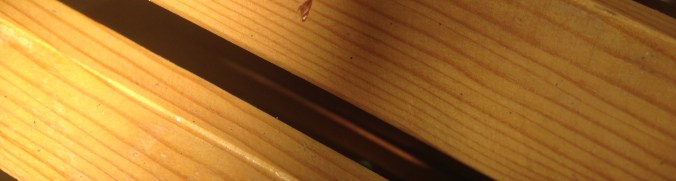
Cleaning out a storage room in our sugarhouse, my daughters found two large wooden shelves, intricately crafted from small pieces of wood hammered together. Who made these? the girls wanted to know. Decades ago, their grandmother scavenged slender strips of wood from a mill, and created these shelves, and also an entire ceiling in a kitchen she remade.

The girls washed dust from the shelves and set them to dry in the sun. Later, a friend of mine stopped by and asked about the shelves again. She ran her thumb over the wood still smoothly polished after decades and said, Nice work.

Without thinking, I began a list of my mother’s skills: besides her handiness with a hammer, my mother redid an old farmhouse; she sewed quilts, knitted aran sweaters, opened a children’s store in the ’70s, cooked about a million meals, planned extensive cross-country camping trips. An R.N., she dressed in my childhood evenings in a white uniform and nylons and drove off in the dark to a hospital, returning at breakfast with stories, and, one Fourth of July, an orange kitten who had been abandoned by the side of the road.

There’s a story from Elizabeth Gilbert about her aunt, who cut up her prized clothes and resewed them into baby outfits. It’s the same old story of women chopping up the finer parts of themselves and handing those gems right over their children. Unacknowledged and, doubtlessly, unthanked. The raw truth is that gender is not a label, that the pulsing lives of mother and father are inherently different, in a way that’s neither good nor ill: simply different.

In my own all-female household right now, one morning I found a word from a magnet set we had used on the refrigerator. I must have vacuumed the piece and then emptied the dusty bag on my woodstove ash heap. The word was woman. I pulled the word from the dirt, shined it up with my spit, and laid it on the center of my kitchen table.

The cold ugly fact is that marriage does not benefit women as much as it benefits men. From studies, married men perform dazzingly better in life, live longer, accumulate more, excel at careers, report to be happier, less likely to die from a violent death, suffer less from alcoholism, drug abuse, and depression than a single man…The reverse is not true. In fact, every fact is reverse, single women fare much better than married women. On average, married women take a 7% pay cut. All of this adds up to what Sociologists called the “Marriage Benefit Imbalance”…It is important to pause here and inspect why so women long for it (marriage) so deeply.

– Elizabeth Gilbert, Committed

fullsizerender