The Earth Curves, of course

After a day of downtown Portland’s busy scene – art and wharf and walking, and my brother crashed a bachelorette party while my daughters ate gelato, and my older daughter bought the younger a miniature ship in a bottle – we drove over a drawbridge in search of the wide open ocean.

At the beach, we left our shoes by the car and spread out, one daughter gathering shells and sea glass, the other carrying her camera. Away from the city’s hurdy-gurdy, the ocean  – sky, sand, stone, gull, the steady and infinitely changing waves – churned, at once noisy and calming, a place we had never been and yet was familiar, expansively glorious.

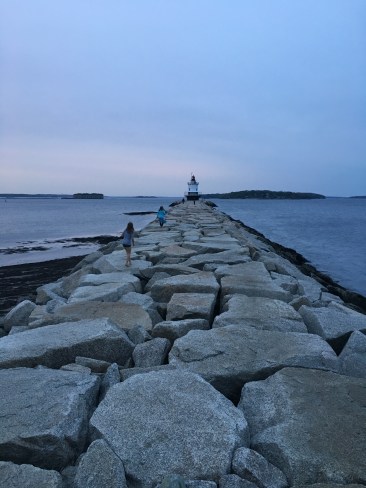
We leapt over enormous chunks of pink granite to an old lighthouse while the sun tugged the daylight over the horizon. Afterwards, all of us laughing while I drove through the dark, I told the children we would stop in Pierre, South Dakota, for gas. With our three drivers, we’d switch off until we hit the north California coast. Even when we returned to my brother’s New Hampshire house, late, the little girl tired and nearly asleep, we were still laughing, the world wide-open and full of possibilities, as if my little car with its two bright headlights could trek all around the the globe and ferry us back to home.

…where we choose to be–we have the power to determine that in our lives. We cannot reel time backward or forward, but we can take ourselves to the place that defines our being.

Sena Jeter Naslund, Ahab’s Wife, or The Star-Gazer

IMG_3134

Cape Elizabeth, Maine/Photo by Molly S.


The Undertow

Deep in the night, I woke thinking of a Raymond Carver story I had been reading, “Will You Please Be Quiet, Please?” My children had found this title infinitely amusing, riffing on it as a joke between the two of them.

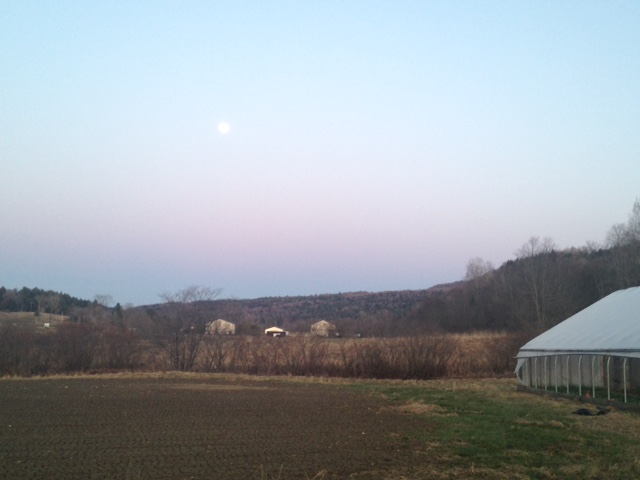
All night long, while the girls and I had been sleeping, cumulus clouds floated over our house, the full moon shining through like a light at the bottom of an ocean turned upside down. I opened the door and stood on the balcony, imaging myself a clipper ship surrounded by this sea of luminescence. In the distant east, just over Woodbury Mountain’s black ridge, shone a single star. In the moonlight, I saw through the sparse woods the edge of the town’s tiny cemetery, where the slatted fence peels white paint.

The Carver story, simply, is about marriage, and it’s not a funny story at all. It’s about conundrums and paradox, about the mysterious, hidden parts of our lives. And yet, standing beneath that marvelous night sky, I watched the moonlight rush cloud shadows over the earth. I was glad to be awake.

…We could have some arrangement
By which I’d bind myself to keep hands off
Anything special you’re a-mind to name.
Though I don’t like such things ’twixt those that love.
Two that don’t love can’t live together without them.
But two that do can’t live together with them….

From “Home Burial” by Robert Frost

IMG_1037

Hardwick, Vermont


Travels Around the Globe & Through the Centuries

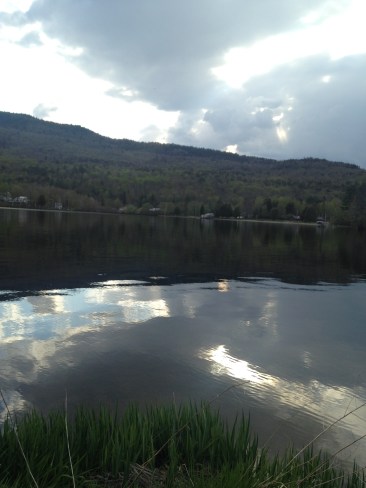
Late into last night and early this morning – two periods of darkness – I read Caroline Alexander’s The Bounty, the travels of Captain William Bligh and his misfortunes. She writes of the exquisite natural beauty of Tahiti, and about the chaos of Western men sailing on their rampage for vengeance, men sailing the seven seas, the seven deadly sins rioting through this story.

This evening, walking with my daughter in the early spring evening, the robins singing, I imagined how divine that virgin land must have been, with its contrasts of color and elevation, its welcoming inhabitants, the plethora of food. As a writer, I can’t help but admire the endless metaphorical possibilities….

Reading about the great strife and literal journeys of others deepens the geography of my own domestic Vermont life, reflecting my black sandy beaches. Greater misery of others doesn’t diminish the suffering of those in my world, but widens the landscape, per se, of what it means to be human.

… under cloudless skies and mild breezes…. the lush, dramatic peaks of Tahiti. Closer in, and the mountain cascades, the graceful palms, and the sparkling volcanic black beaches could be seen beyond thundering breakers and surf. The few ships that had anchored here had all attempted to describe the vision like beauty of the first sight of this island rising into view from the blue Pacific. Bligh had called Tahiti “the Paradise of the World.”

– Caroline Alexander, The Bounty: the True Story of the Mutiny on the Bounty

FullSizeRender.jpg

Woodbury, Vermont


Surprise

On a lark, my daughters and their friend found a lacy fern today, pressed it over a hard-boiled egg, wrapped it in a piece of tights one of the girls had worn to ballet class, and buried the egg in a nest of red cabbage leaves in a pot. I added vinegar and water. When it had boiled and cooled, the older daughter pushed away the soft cabbage leaves.

She held the wrapped egg in her hands for a moment while we guessed what would happen.

The egg was a beautiful shade of blue, the fern hazy enough to be clouds in a summer sky.

Could this be the appeal of egg hunts, beyond the chocolate? A wholly unexpected bit of beauty, sized to fit your hand? At the time of year in Vermont when all is variations of mud, scattershot with slushy snow?

…Nothing is so beautiful as spring —
When weeds, in wheels, shoot long and lovely and lush…

Gerard Manley Hopkins

FullSizeRender.jpg

Before Dawn, Children Sleeping

In On the Banks of Plum Creek, Laura’s beloved rag doll, Charlotte, is given to a spoiled neighbor’s baby. Charlotte had been a Christmas gift Laura’s mother had made her, and the girl sorely misses her doll. Later, she discovers her beloved doll, discarded and frozen in an iced-over puddle, and fiercely reclaims her. This all takes place in the chapter “The Darkest Hour is Just Before Dawn,” when Laura, her sisters, and mother are without Pa, and in need.

This morning, in my own pre-dawn house, while everyone was yet sleeping, I thought of Charlotte again, and how I’ve returned to that image all through the varied years of my life, looking for treasures to mend in frozen puddles. Sometimes I wonder where my own daughters will be, years from now, all grown up, enmeshed in families of their own. What have I made or given them that they would rescue from sleeting rain and mud? Something dear, I hope. Something beloved.

Darling Charlotte lay in her box under the eaves, smiling with her red yarn mouth and her shoe-button eyes. Laura lifted her carefully and smoothed her wavy black-yarn hair and her skirts. Charlotte had no feet, and her hands were only stitched on the flat ends of her arms, because she was a rag doll. But Laura loved her dearly.

–– Laura Ingalls Wilder, On the Banks of Plum Creek

IMG_0711


Gnomon

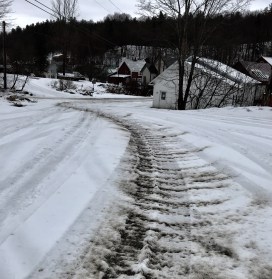
When I was in high school, my father, sister, and I read Joyce’s short story, “The Sisters.” I was thinking of that story again today, in this kind of chilly and drab weather that intimates how I imagine Ireland. The opening paragraph is one of my most favorite in all literature. In the story’s opening lines are three words – paralysis, gnomon, simony – that are keys to understanding the story.

With my daughters today, we were talking about family, and patterns of behavior, and I began to wonder myself, What are the keys to understanding each of us? For one of my daughters, at the age of three, I would have used tricycle and rabbit as her own particular talisman; for my other child, the word sister.

We use language so easily, so freely, that we’re often careless with its power, misunderstanding and underestimating its capability, both for destruction and redemption – or as a key to see into deeper recesses of our inner lives.

THERE was no hope for him this time: it was the third stroke. Night after night I had passed the house (it was vacation time) and studied the lighted square of window: and night after night I had found it lighted in the same way, faintly and evenly. If he was dead, I thought, I would see the reflection of candles on the darkened blind for I knew that two candles must be set at the head of a corpse. He had often said to me: “I am not long for this world,” and I had thought his words idle. Now I knew they were true. Every night as I gazed up at the window I said softly to myself the word paralysis. It had always sounded strangely in my ears, like the word gnomon in the Euclid and the word simony in the Catechism. But now it sounded to me like the name of some maleficent and sinful being. It filled me with fear, and yet I longed to be nearer to it and to look upon its deadly work.

– James Joyce

IMG_9725

Photo by Molly S./North Bennington, Vermont