Wet Wool Memory

I buy my daughter a pomegranate, because she loves the fruit, because of the red it brings to our snowy Vermont landscape, and because Saroyan wrote about pomegranates. My parents did not buy pomegranates. As a kid growing up in New Hampshire, I wondered about that mysterious fruit — much like I wondered about Turkish Delight, the Narina sweet my father found in Ann Arbor and bought for us with great joy.

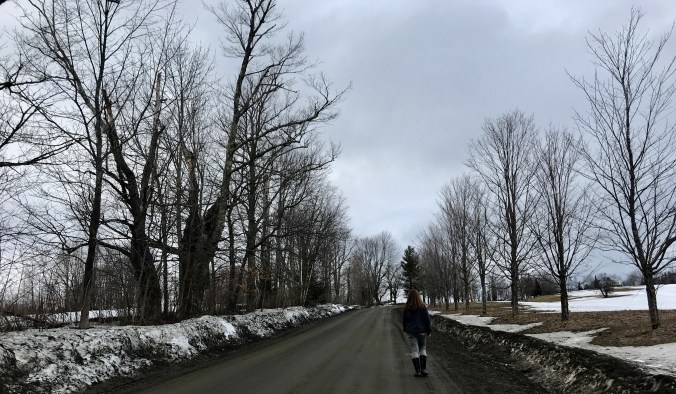
On a snowy day, the girls discover a coolant leak in my car. The mechanic who fixes the leak explains to my teenage daughter what the level of coolant should be in a car, when to add coolant, and when to worry. Standing between the two of them, I study his unzipped Carhartt jacket, stained with motor oil. Like Proust’s madeleine, so much of my past was redolent with wet and snowy clothes, work and words twined together.

Like that, then, the past’s gone. The girls and I stand outside the garage in a snowstorm again. I tell my older daughter as I always do, drive carefully. Laughing, they’re off again.

From one of my mentors, poet Ruth Stone:

Yes, we are everything, every experience we’ve ever had, and in some of us, a lot of it translates and makes patterns, poems. But, my God, we don’t even began to touch upon it. There’s an enormous amount, but we can touch such a little.

56866259260__FF99E9DB-165C-44FD-8B7C-9130B1EBFA24.jpg


When In Doubt, Do Handwork

My 19-year-old, pondering what to do with her life, buys fat skeins of yarn and begins knitting a blanket. The metaphor of comfort consoles me, too.

I just read David Grann’s The White Darkness, about Henry Worsley, descendant of Frank Worsley, of the Shackleton Endurance expedition. It’s hard to imagine a more manly man than Henry Worsley, who ultimately perished from complications of his solo South Pole trek. Yet Worsley sewed to calm his nerves. He was skilled at needlepoint. He volunteered to teach tatting — yes, tatting — to London prison inmates. How cool is that?

Shackleton… sought recruits with the qualities that he deemed essential for polar exploration: “First, optimism; second, patience; third, physical endurance; fourth, idealism; fifth and last, courage.”

State 14 ran the first of my monthly Postcards From Hardwick. Check out terrific Vermont voices here.

IMG_3837

#10 Pond

June 4

Here’s the story of June: I walk behind the barn this morning and the tree branches grab for me. Just the day before, mere branches with fresh leaves — this morning, fierce growth.

May is delicate, fragrant. By July, Vermont’s wildness will be tempestuous, crazy with green. By August, we’ll be picking blackberries surrounded by wild apples, a profusion of fruit on vine and branch.

This year, I’m determined savor the summer, come what may — brutal humidity, a woodchuck with an appetite, or, what’s far more likely, what I haven’t imagined.

Nonetheless….. that’s my mantra. Snow will return, soon enough.

You got to understand: here
Winter stays six months a year—
Mean, mean winters and too long.
Ninety days is what we get, just

Ninety days of frost free weather….

— David Budbill

IMG_2115

Running Away

James Joyce’s “The Dead” is one of my favorite short stories, with that remarkable line about falling snow general all over Ireland. In my corner of Vermont, these days, the sentiment generally is enough with the snow for this year. April: season of rain, of snow and ice and, somewhere, beneath all that, struggling green.

I stopped in at the Woodbury school, leaning against the foyer wall while a man who grew up on a farm in the area told me the red-winged blackbirds reminded him of childhood. When he snuck away from farm chores, he headed down to the creek where those dark birds with their signature crimson mark sang.

Ridiculously visually inclined, I rely too heavily on my vision: really, as all my photos attest, the landscape here is yet the monochrome of winter. I’m wrong about this, of course, although I won’t point to any sign of spring at my friend’s request. Too cruel, she says, when sleet falls.

And yet — dumping coffee grounds around blueberry plants, fingering their branches and imagining small, perfect white blossoms, I then close my eyes and listen to the birdsong all around, their rising, sweet melodies.

I watched the first shoots
like wings tearing the soil…

— Louise Glück

IMG_1616.jpg

Woodbury, Vermont

Imagine Me Gone

Here’s one reason to read: very late last night, I read through a twistingly wry scene between a sister and a brother. Then, at the very end of the chapter, a few lines tilted the scene into an entirely different perspective. All day, I’ve been thinking over this novel, how those lines are like ones in my own life, rare and yet terribly real. Our everyday realm is bona fide, too, but imagine literature – or life, for that matter – without the raw pulse of emotion, a literal opening of the heart in a world suddenly listening?

He had ceased his fidgeting… The house had gone quiet around us.

“I love you,” he said. “For whatever it’s worth.”

– Adam Haslett, Imagine Me Gone

IMG_1224

Elmore, Vermont

Unwinding the Rope of Writing

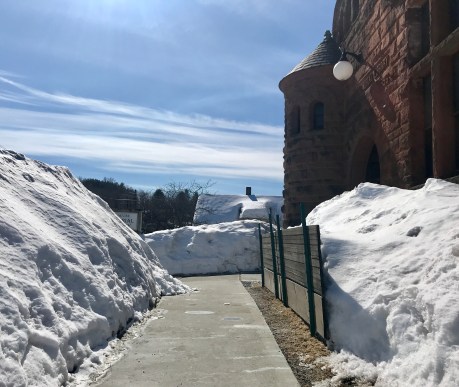
Not long ago, I was at the county courthouse in Barre, Vermont, waiting for the final hearing of my divorce. That courthouse contains the ebb of human life, chock-full of misery and grief, and every time I’ve entered that immense building I’ve witnessed adult women and men crying. I stood alone in a large room whose windows looked into a courtyard where trees were in bloom, and the sunlight shone bright and full of promise. What I was thinking about was a terrible illness in a family member, and how mortality’s knife lies in all of us. Dormant or not, at any moment that knife might turn and slash fatally.

Standing there, I vowed not to let my particular cup of sorrow raise so high that I couldn’t see beyond the vessel of my own brew. Lose a husband, a family life, an occupation, beloved friends: but lose my soul to bitterness, too?

Thoreau’s desire to live as fully as possible, to suck out life’s marrow, to know it as fully as possible is yet my own, despite the bile I naively never expected. Deep in the unlit realms of faith, I know writing is a rope out of that courthouse’s sludge, that art – and making art, like living a human life – holds the potential to burn our hearts in its kiln and emerge with deeper compassion. The sun rose and set on that day in my life, as it’s risen and set for centuries. Even when I was in the windowless courtroom, working through legal litany, I knew the sun would shine in the courtyard when I emerged.

If you stand right fronting and face to face to a fact, you will see the sun glimmer on both its surfaces, as if it were a cimeter, and feel its sweet edge dividing you through the heart and marrow, and so you will happily conclude your mortal career. Be it life or death, we crave only reality. If we are really dying, let us hear the rattle in our throats and feel cold in the extremities; if we are alive, let us go about our business.

Henry David Thoreau, Walden, or Life in the Woods

FullSizeRender.jpg

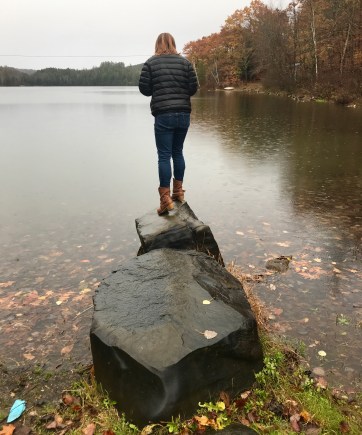
Crawford Notch, New Hampshire