Crossroads.

I park at a dirt crossroads this weekend beside a former tavern and walk up the hill to the Old West Church. The sunny afternoon speckles through the roadside maples, and I meet others doing what I am, in pairs or singly, and we greet each other, cheerily. At the Old West Church, I hear two terrific poets, but on my walk back to the tavern the line that runs through my head is from a Franz Wright poem, There is but one heart in my body, have mercy/on me, an incantation.

I keep thinking of my dead mother on this radiant Sunday, my mother who pulled her last breath a year and a half ago, hardly a hopscotch jump ago. In my mind, I’m building the architecture of what I’ve tagged as this Cancer Atlas I’m writing, scaffolding this book’s bones. The book is about the here-and-now, about living (at least for now) through a terrible disease, about walking along Vermont’s autumn-gold back roads, about pulling up this summer’s frost-killed pepper plants that produced so bountifully this summer. And my mother? As I work, I think so often of her, this woman both generous and mercurial, the double blade I harbor in my own heart. Gracious, how much she’d enjoy this picturesque walk. She was a woman who loved old churches, was fascinated by adjacent cemeteries, who would have relished the art in the tavern.

At the tavern, I linger in an open doorway, talking with a curator, drinking iced tea from a half-pint jar. My mother would have drunk the wine, feasted on the cured meat and seeded crackers. Dust kicks up in the road. Old friends appear, and we joke about winter’s ferocity. It’s always a crossroads, isn’t it?

“We are created by being destroyed.”
― Franz Wright

This Glorious Autumn Light.

My sister, a caner survivor, once told me that a cancer diagnosis was a great leveler. This was years before my own cancer experience, and, sure, I had an intellectual understanding of this. Lymphoma schooled me in many ways, among these that I live in my body. Such a simple, profound thing. I had never lived in a body that couldn’t walk up the stairs in my own house, not just because of a sprained ankle or a new baby in arms, but because of weakness in my bones and flesh. I had never considered that I might never be able to enter the bedroom whose walls I painted, where I have slept for so many years.

These days, after a summer devoted to learning how to eat and sleep again and to walk those stairs, outside as much as possible in this gloriously sunny, perishingly dry Vermont summer, I no longer embody the near-translucence of cancer-and-chemo patient. Such pleasure I have when people ask why I’ve cut my hair, and I can reply that I didn’t snip, I lost. The hair I’ve lost is now returning in a metaphor that I can’t ignore: softer but with my childhood cowlick.

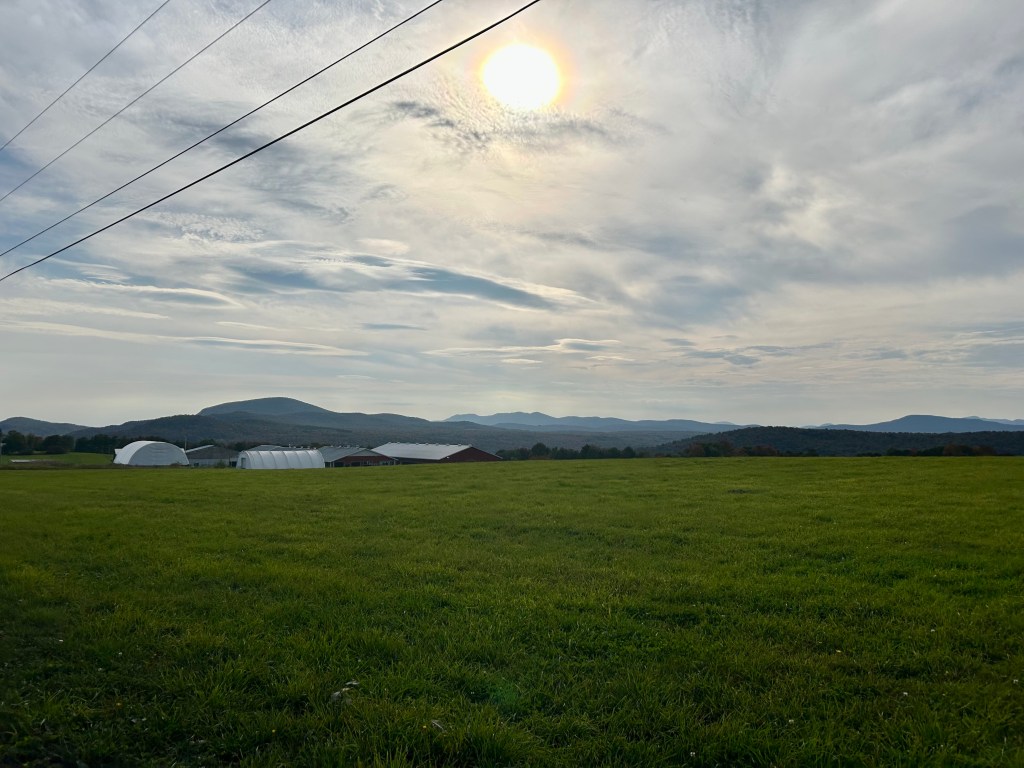
Disease hasn’t magically transformed me; if anything, my thorns have proliferated. But here’s a thing: the world where I live is descending into spectacular autumn. Sure, some years the fall foliage bursts brighter than other years, but always, always, heartstopping in beauty. Autumn’s a reminder of my mortality, your mortality, the dearness of this fleeting world. A reminder to pause in our gardens, on our house steps, the sidewalk, whatever trail we may be following. Take a moment. Breathe in, out, in….

From Stephen Jay Gould’s essay “The Median Isn’t the Message”:

Of course I agree with the preacher of Ecclesiastes that there is a time to love and a time to die—and when my skein runs out I hope to face the end calmly and in my own way. For most situations, however, I prefer the more martial view that death is the ultimate enemy—and I find nothing reproachable in those who rage mightily against the dying of the light.

The Might of Flowers.

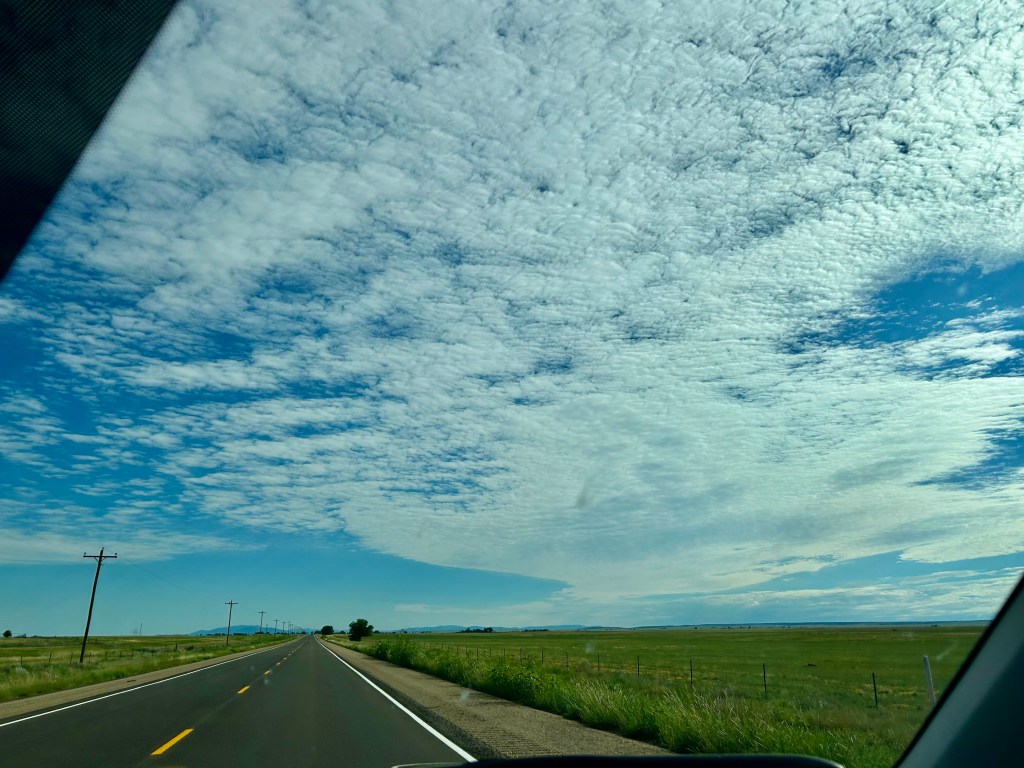
My daughter suggests I get coffee before driving home. It’s midnight, balmy. Sprinklers water the grass outside the airport. After the New Mexican desert, the air is redolent with growth. Thinking gas station coffee will be sour, I pass, and buy lemonade instead.

In Burlington, the streetlights blink red, and I drive quickly through town. My daughter lives in a neighborhood where gardens and yards spread into the sidewalks. Hollyhocks lean out from the neighbors’ front porch. I’m reminded of my graduate school days in Bellingham, Washington, when the world seemed chockfull of flowers whose names I had yet to learn.

Then, it’s a long drive home through the darkness, with no traffic and the Daily podcast about The Great Gatsby. In this week, my garden has grown wildly, the hydrangeas pale globes in the dark. For a moment, I stand in the driveway, suitcase in my hand, staring up at the sky and breathing in the wet air. There’s that line in Gatsby about the impossibility of repeating the past — or Gatsby’s wager that, indeed, the past can be salvaged. Returning from New Mexico is always this complicated mixture of past and present. My birthplace, Northern New Mexico holds my earliest memories, of listening to the wind and squeezing red mud between my bare toes. Northern Vermont, where I’ve lived for decades now, is suffused with my bad past of a marriage gone awry, a story I can’t shake.

Yesterday afternoon, talking with a friend, I felt myself slipping into the past again, that sinkhole. But don’t we all have that? Heading into this summer, I believed that nurturing the flower gardens around my house would sweeten my life, balm the ravages of the cancer world. A few years back, I planted compass flowers, the six-foot high plants I wrote into the ending of my last book. The plants are now blooming their sunshiny joy. This morning, goldfinches layered in the leaves and petals. I crouched on the dewy grass, in the here and now, nowhere else.

“The need is not really for more brains, the need is now for a gentler, a more tolerant people than those who won for us against the ice, the tiger and the bear. The hand that hefted the ax, out of some old blind allegiance to the past fondles the machine gun as lovingly. It is a habit man will have to break to survive, but the roots go very deep.”
― Loren Eiseley

Blue Dress, Loving the Liminal.

I stopped by a friend’s house where I’d not been in over a year. A friend who visited on my worst days, the first hours after chemo when, drugged and miserable, I could barely voice a request, Please, pick up my library books to get me through these days. I leave with my heart full as a flower bouquet, thinking of her mixture of domestic gardens and where the wild slips in…

Now, midsummer, the days as long as anyone could wish for. The cats and I are up with the sun spilling over the horizon, for kibble and coffee and more coffee. My daughters and I meet to do humdrum things, buy cat food and toothpaste. Walking on Vermont Land Trust property where we’d never been, we discover a children’s garden and wander through tunnels of grapevines to a toddler-sized table where we kneel, surrounded by walls of mammoth sunflowers.

It’s an ordinary day. We eat lunch, and my oldest buys chocolate cake, and we keep talking about the things that are unique to Family Us and the things that aren’t, like the news of Stephen Colbert’s imminence disappearance and the mad mad world.

In the sunlight, moving neither quickly nor slowly, we wander into a thrift store. As we wander around, I remember that this is a place where, last fall, I thought I would never return, that these ordinary days that seem so inconsequential would cease with my life.

I buy a summer dress for six one-dollar bills and nod a thank you to the young clerk who wishes me Enjoy!

I hug my daughters, hug them again, and in my own town again I pick up my library books and lie on the couch reading Jane Hirshfield’s words about liminality and poetry. Liminal, liminal, echoes in my mind. I close the book and walk my four-mile route along the river, the water murky and yet sparkling with sunlight shards as the current bends through curves and around rocks. I keep pondering liminal, that threshold between two realms, how I’d been in that thrift store numberless times, sometimes cheery, others frustrated with how the world wears you down, through parenting and worrying and hardship.

Today, I left that store with a folded piece of blue and white cotton, my body and soul electrified as if I had quaffed sunlight. Liminal. My daughter reminded me recently of that long April day that I broke, the day I cried all day long in the Dartmouth emergency room, and she kept going outside to call her sister. In a windowless room, I was desperate for spring sunlight. Hirshfield writes, “The threshold brings its riches, but its barrenness contributes as well.” Liminal.

“On Climbing the Sierra Mountains again after 31 years”

Range after range of mountains
Year after year after year.
I am still in love.

~ Gary Synder

… send what you will, I will listen.

This winter, I joined a Dartmouth Writing Circle for cancer patients. At that time, my waking hours were pretty much confined to the couch, endeavoring to stay alive, and I thought why not? I’ve kept on with this Circle. Compulsively, I keep writing about disease, but others write about aging parents, children and memories, picking strawberries — the necessary pieces of our everyday lives. Their poems and short essays amaze me. Maybe the lesson is this: suffer from a disease, pay attention, unfold your heart.

So yesterday, another trip to Dartmouth, but this time not to the door of the ER or 3K — the cancer center. My youngest daughter had signed up to walk in The Prouty, a weekend of fundraising. The four of us drove together, my daughters drinking coffee and laughing in the front seat, the boyfriend and I in the back. In the thousands of participants and volunteers, I met a few of my Writing friends as if kismet.

My family ate doughnuts and drank chocolate milk. We walked and ate watermelon and the sandwiches that appeared on tables as if by magic. At a long table, we lingered beneath a white tent, admiring babies and small dogs. It was at once a family event (my family, who pulled me through this winter) and a community embrace. When my daughter signed up (and a HUGE thanks to those who donated to her team), I didn’t, as I could hardly stand two months ago. Walk a few miles? Forget that. Now, my legs gaining muscle, my body healing, I walked between my daughters, so full of youth and quickness, of wit and curiosity. So profoundly of this world.

We live lives of forgetting, but I have not forgotten those long days in 3K’s infusion center, the chemo drugs dripping into my veins while I stared through the window at cardinals in the snow, or that night in the ER when the MDs in scrubs posed the possibility that I couldn’t finish the chemo treatment, that enough was enough for my body which was now, I noticed, described in my chart as frail. An adjective I immediately hated. Fuck frail. By that time, my flesh and my blood was suffused with zofran and dilaudid, lactated ringer’s, with the mighty rituximab…. But even though my bones and my flesh are my domain, my life is not. There’s a tendency in my circle of leftish rural Vermont to look at the medical world askance — an indulgence that immediately dried up for me when I first arrived in the ER. All along, I’ve asked for the data and facts; what am living through now and what might this mean? Beyond this, I was encouraged to embrace the mysterious complexity of disease, data, determination, the universe’s toss of the dice. When I said, go ahead, make me more frail, I’ll endure, the Good Doctor made that possible.

I have not forgotten that I am alive by the grace of medicine and strangers, by my family, by illusive fate itself. I carry this knowledge as all day long I go about my life of writing and working, of watering the flowering nasturtiums, eating peaches, reading novels and poetry and cancer research beneath the apple tree, as I walk through the sultry July twilights, that this will someday — this year, or 30 years from now — change for me, too, as it changes for everyone.

But for now, luscious watermelon. Later, a family dinner on the back porch, summer sweet.

From Ruth Stone:

… send what you will, I will listen.
All things come to an end.
No, they go on forever.

Living in the Edge.

As part of my heal-from-cancer and keep-the-cancer-from-returning approach, I borrow my daughter’s yoga map on Thursday mornings and walk through the cemetery and along Little League field to the village. The studio is above the town’s coffee shop. The windows frame the town’s main intersection of routes 14 and 15, the Lamoille River, flanked by July’s burgeoning green.

As I lie on the polished maple floor, the sound of the traffic comes and goes. This calmness reminds me of those years I lived in Brattleboro, pre-internet, when the main source of my twenties’ activities was walking to the public library or a favorite bar, hiking, or hanging out with my roommates in the house we rented, running our mouths about the state of the world. There was a lot of laughter, a whole lot of discussion about morals and relativity.

This particular Thursday is the anniversary of the floods in 2023 and 2024, exactly a year apart. The class leader repeats a theme of in the edge, that fertile and sticky place between terrains. I think of this summer’s profuse wildflowers – trefoil and asters and Canada lilies – that spread between the river and the fields. Afterwards, I spread out my notebooks and papers and laptop in the coffee shop, plunge into a hard piece of work. I’ve no illusions that yoga will set me floating down any peaceful river. The edge, that complicated habitat, has long been my domain. Friends appear and tell me they’ve sold their house, are pulling up stakes and heading overseas. Around me, people come and go, talking and eating, figuring out or not figuring out parts of their lives.

Later, at home, the catbirds screech. A robin perches on the porch railing and studies me. The woodchucks scurry under the steps from den to woodpile, or have they slowed to a who-gives-a-damn saunter?

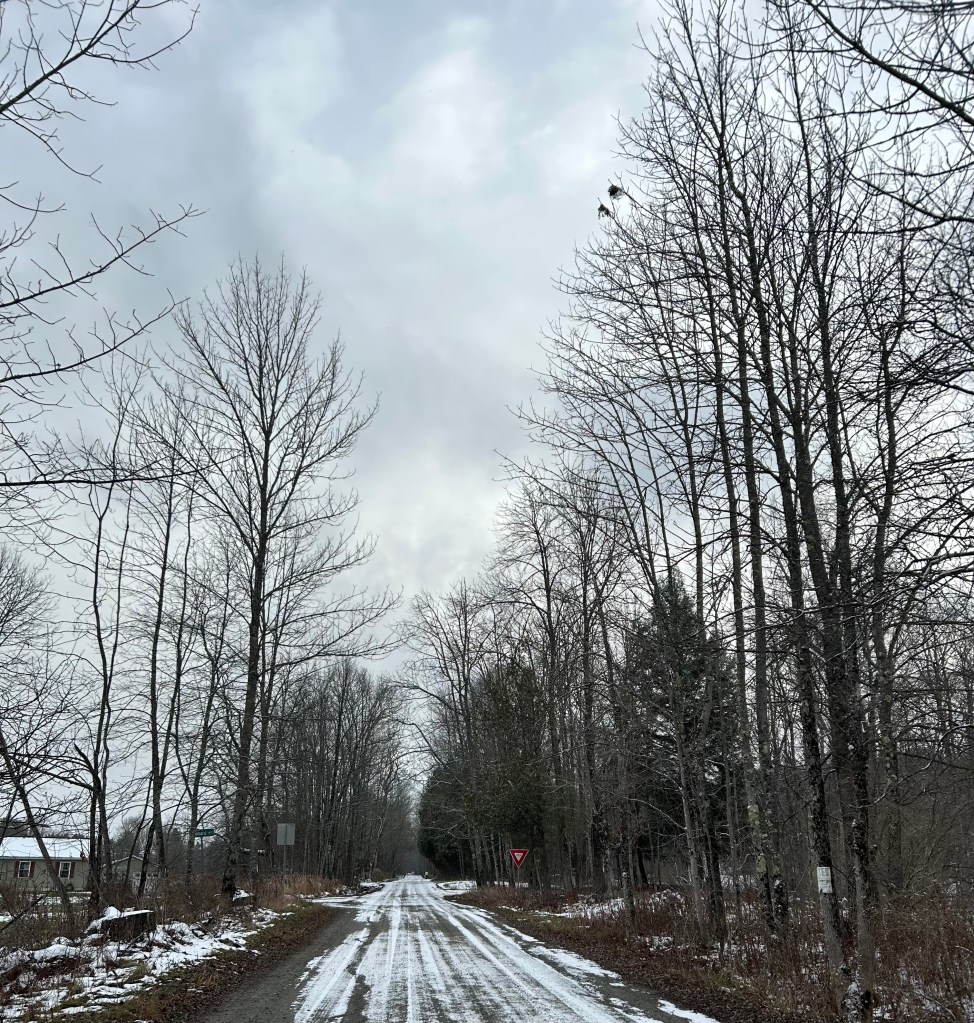
Winter, the edge terrain is a cold beast. July, I’m all in…

“Not so much a game
as a sphere,
a mystery.
Held up to light,
a small hole
into another dimension.” ~ Ruth Stone