Days of Little Light.

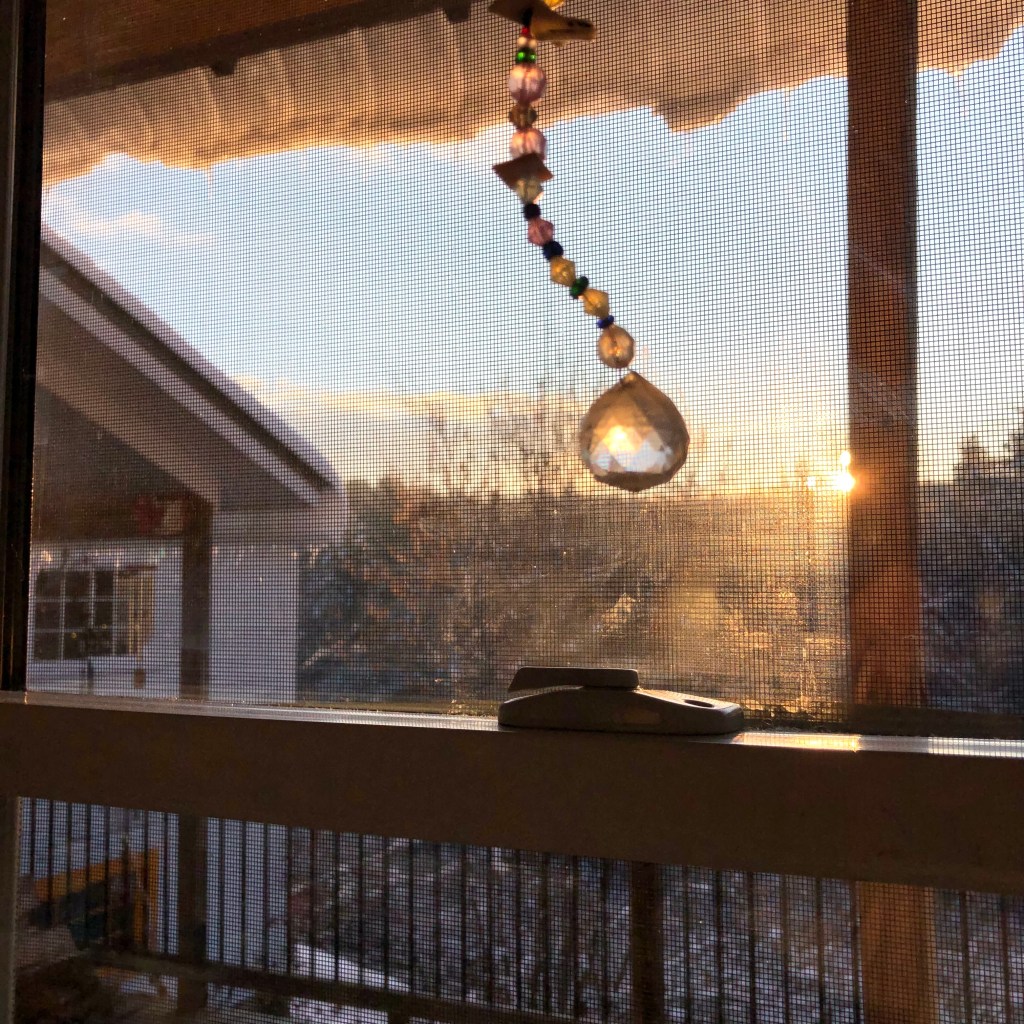
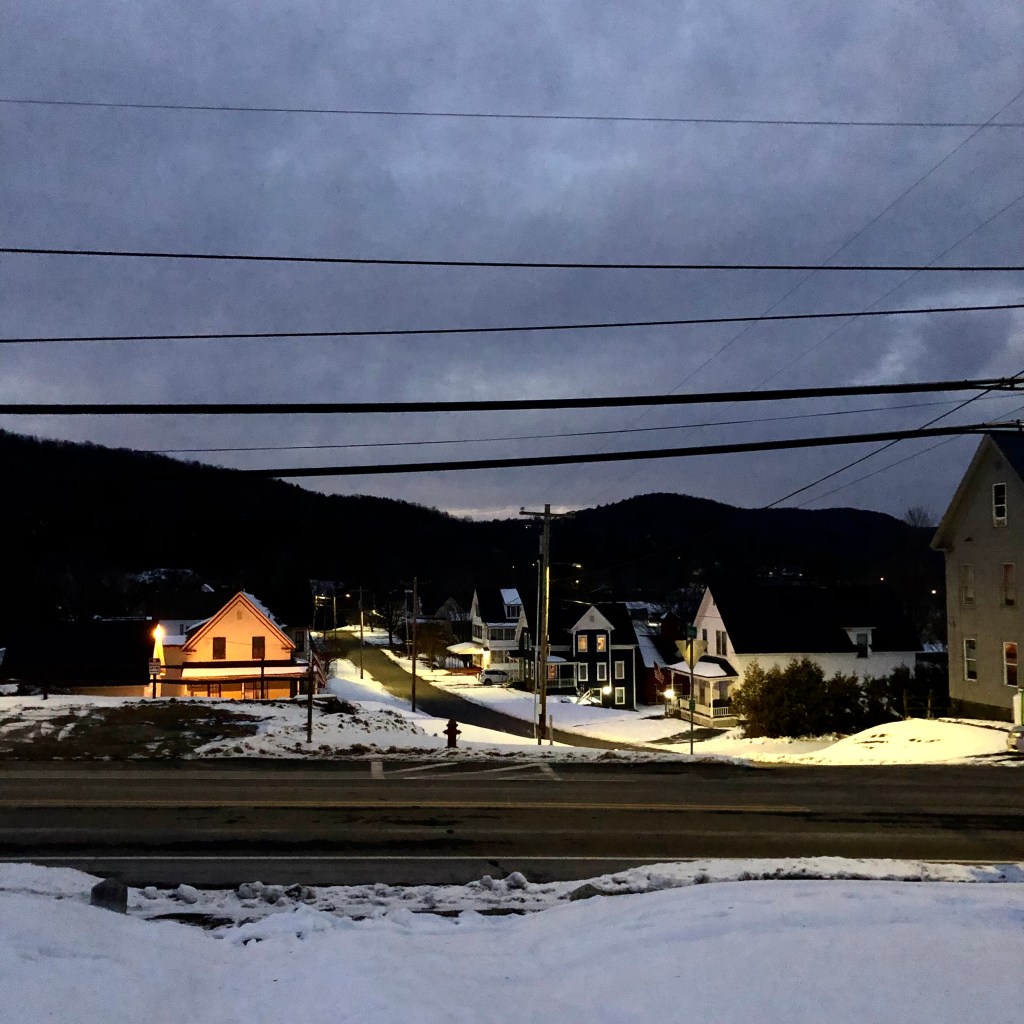
Night has fallen down all the way by the time I leave work. Just below freezing, the wind cuts up with a taste of wet — the feel of sugaring season but the light is all wrong. It’s a month before the solstice, and now I’ve given into the darkness utterly. The truth is, much as I rail against the scantness of light at this annual time, I relish it, too. This time of year entices us to go deep, soul-search, spread out the cards and see what’s there.

Dark to dark, our days go. My daughter phones on her way to work, two stray cats yowling in her car. She’s bathed these hungry creatures and found a home for them, a tiny bit of kindness in the midst of a complicated world. Ever in her blur, she hands off these cats to a new home, blessing them in her own way, and moves on into her day.

“What does it mean to grow rich?… Is it to retain a capacity for awe and astonishment in our lives, to continue to hunger after what is genuine and worthy? Is it to live at moral peace with the universe?” 

— Barry Lopez

Snapshot. Vermont Thursday.

In Newport, at the Vermont/Canadian border, a woman in a bubble-gum pink blazer strikes up a conversation with me in a parking lot about the snow falling into Lake Memphremagog. Mid-morning, dense clouds, fat snowflakes disappearing into the gray lake. I’ve never been around the Canadian edges of this lake.

In Newport, I stopped first to visit my new acquaintance Lila Bennett to check out the work she and her colleagues are doing at the Journey to Recovery Community Center. The center is suffused with natural light, alive with plants and colors, and it’s immediately obvious that they’re engaged in that old-fashioned phrase, “the good fight,” work that saves and salvages lives. Lila shows me the stack of my books, too, that the center is giving away for free, to anyone who wants to read it. I thank her profusely.

I’m in Newport, too, to find my way into a state building, up through a reverse rabbit warren into a large and light-filled room where the state’s staff tells Selectboard members and volunteers from Vermont’s tiny Northeast Kingdom towns about the chunks of federal money in the state’s coffers and asks how to get that money to the needy and broken places in our rural communities.

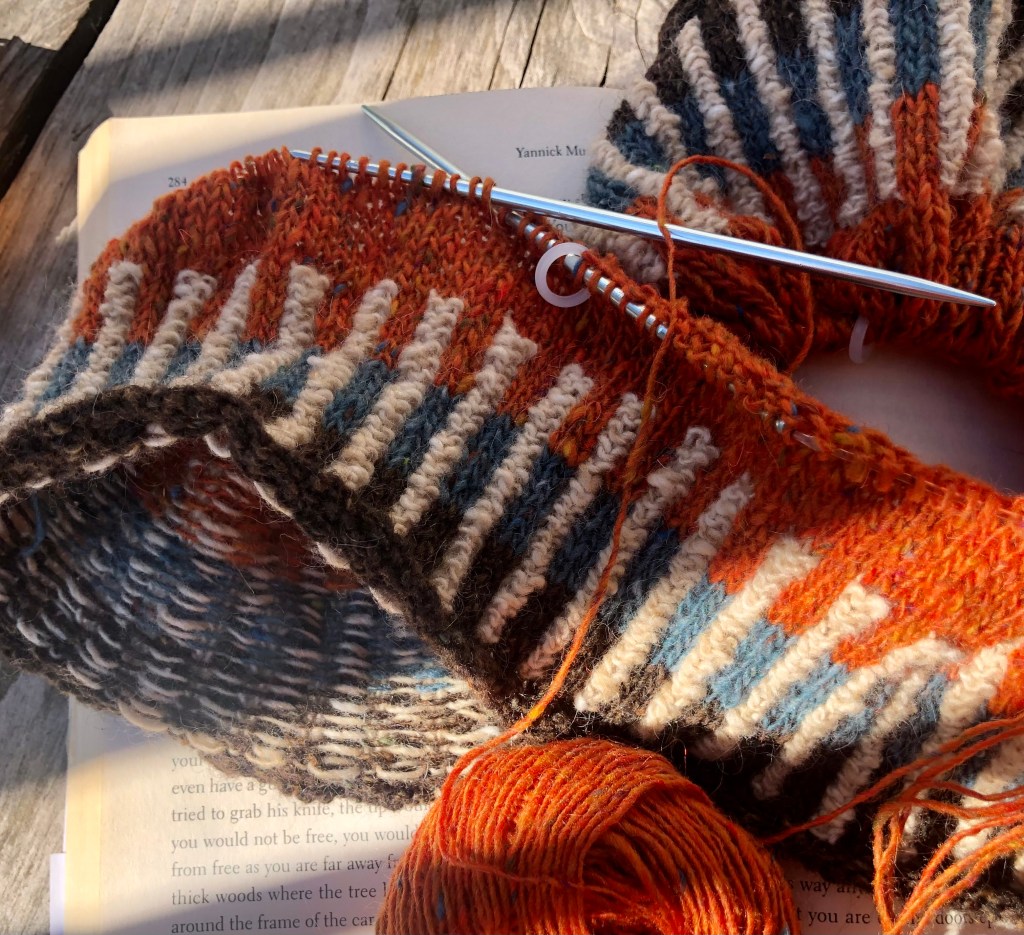
The room is packed. I sit in the back beside a state senator who offers me advice while I knit a sweater cuff. My blue and orange balls of fingerling yarn roll beneath a stranger’s chair.

The snow falls all morning. A woman I knew 25 years ago comes up and reintroduces herself and launches into her enthusiasm for the rail trail. I chat with the Department of Libraries staff member who reads my blog.

Finished, I hurry down to the lake’s boardwalk before I leave, to breathe in some of that cold wet air. Years ago, my little girl lost a flipflop in this lake. I was talking to someone from the farmers market where I worked, and I turned around when my daughter cried out. She had stuck her foot through the railings and lost her shoe. My friend tried to save her shoe with a stick, but the pink- and purple-flowered flipflop bobbed away, headed northward.

I can’t see my future clearly…

The road becomes itself

single stone after single stone

made of limitless possibility,

endless awe.

— Jacqueline Suskin

Election Day.

On this election day, I hang out the laundry in a bitter wind, sharply turned from the weekend’s balminess. Pinning up t-shirts and dresses, I think of Henry David Thoreau’s famous words:

“Take long walks in stormy weather or through deep snows in the fields and woods, if you would keep your spirits up. Deal with brute nature. Be cold and hungry and weary.” 

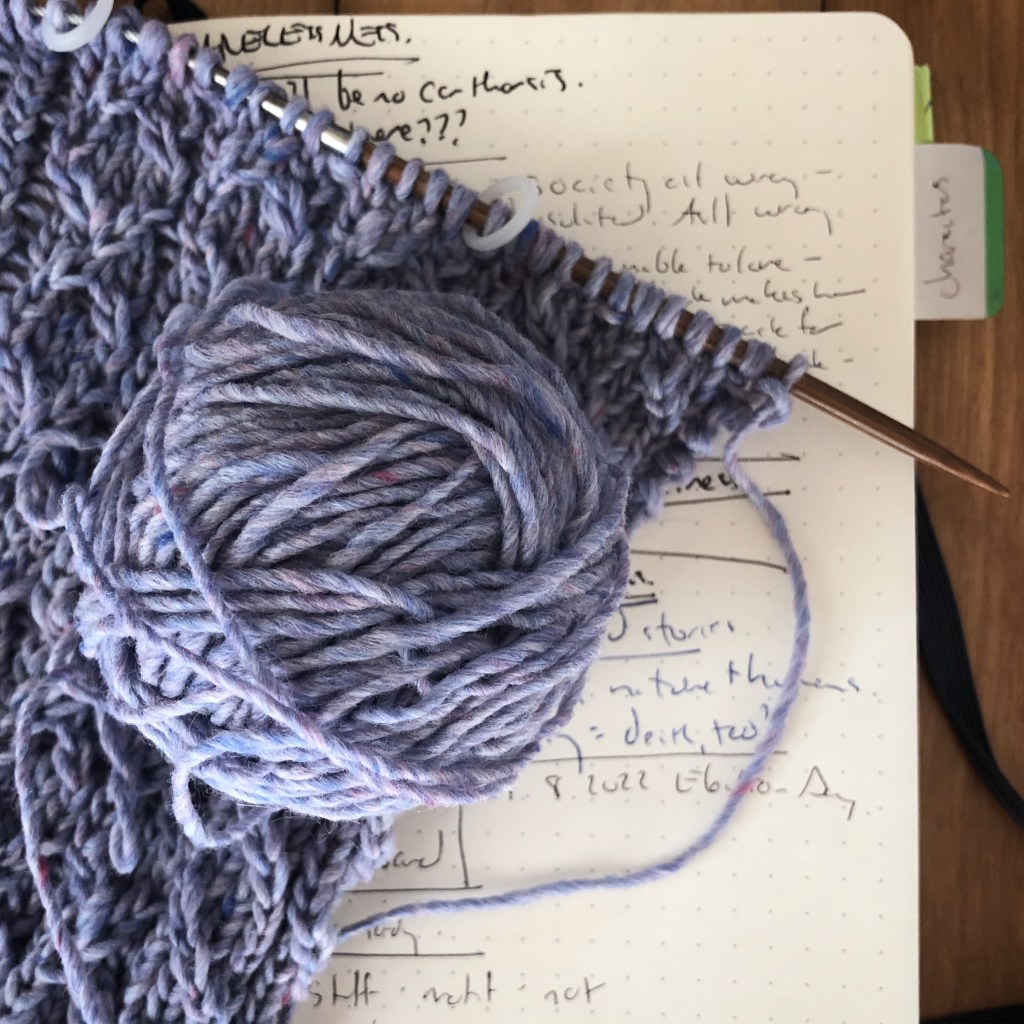
I read in Walden in high school and took that copy with me when I moved to Vermont. I simply never returned it, and imagined Thoreau wouldn’t have been particularly opposed to my theft. On this windy day, the laundry won’t need long to dry, which is perhaps just as well as the dark moves in now by suppertime. Last night, in the passenger seat of my daughter’s car, the early night pressed around us — enchanting or foreboding? I could have leaned either way. As I pin up the last of the kitchen towels, I keep thinking of the line There will be no catharsis. These words came in a conversation about a recent death in our town. How much we all seem to long for a revelation, the loaves and fishes thing, the who’s in the know and has the real scoop about the true and genuine causes of this or that unhappiness. History, of course, prevails upon all of us, pushing down our small lives, our dear dramas.

Like Thoreau, I am a New Englander, and November leans in with her force.We all might be the wiser for being out in her wind today.

Stitch, Stitch.

As the days shorten, I appraise my woodpile. Borrow knitting needles. Read outside in my coat, the sun on my face. Our cats sprawl before the wood stove, savoring radiant feline bliss.

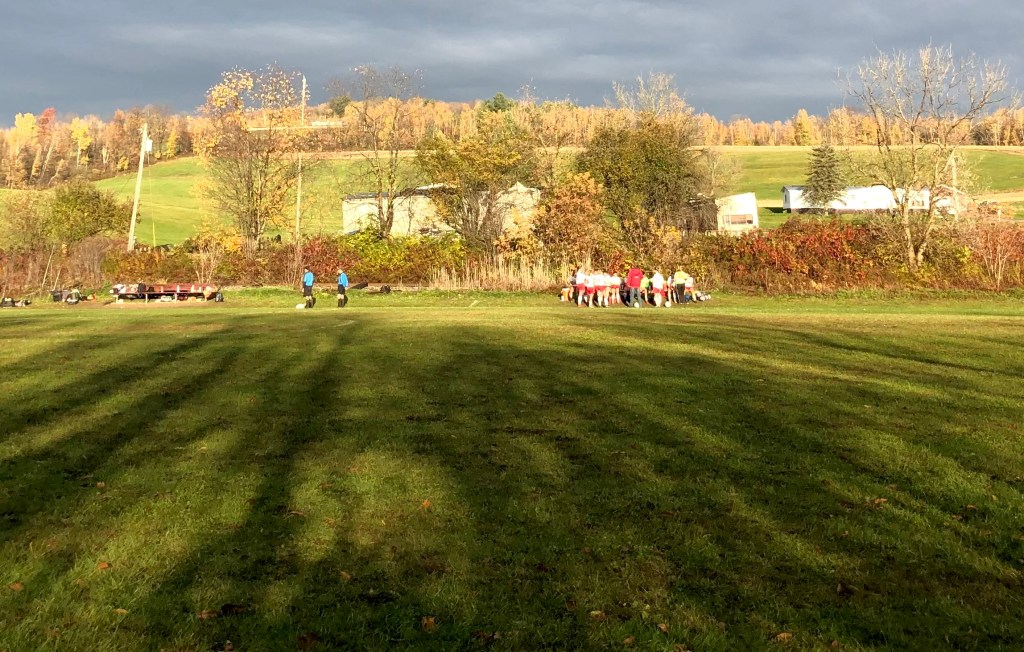
My brother comes to visit for my daughter’s final soccer game. Nine years of games and uniform washing, and I still don’t understand fully the rules of the game. Vs of geese cross the sky. As we idle afterwards, talking, a flock of starlings sweeps low over our heads and disappears around the school.

Back at our house, I gather my things from the car — my jacket, her gifts of balloons and chocolates, the signs her sister made. Photographs. Near sunset, the sky is a luminescent pink that will endure for a few minutes, no more. Their coach, son of glassblowers, made each of the senior girls a glass. In our kitchen, we admire my daughter’s beautiful gift. I wonder how she will fill it.

“Great things are not done by impulse, but by a series of small things brought together.” 

― Vincent Van Gogh

Peony Roots.

Nearing the end of soccer season, my daughter’s high school community suffers a second tragic death in just a few years. In this little rural school, the news seems almost unbelievable, except it’s not.

The loss is not my own personal grief, and so I keep on, of course. On a Tuesday, I leave work early and drive to a game in a northern town where I’ve never been. All morning, a cold rain had fallen. The school is in a town where a Blue Seal Feed plant dominates the shabby downtown. I appear with my knitting needles and a ball of yarn. I’ve forgotten a chair, and another mother takes pity on me and walks back through the mud to her car to retrieve an extra. I end up at the end of the row of spectators. A black cat with white paws wanders by and jumps into my lap. Beside me is a high school boy whose name I never asked who christens the cat Mittens and tells me about his cat named Turkey who was born on Thanksgiving. He speaks slowly and calmly about ordinary things like the railroad workers driving along the tracks in their trucks at the end of the workday. Cigarette smoke streams through their opened windows.

I drive home alone, missing my friend who is no longer my friend because of some certainly unforgivable thing that passed between us. Nonetheless, I miss her as I drive through the long autumn twilight. In this unfamiliar territory, I pass through farm fields where tractors are silhouetted against the sunset, through fields harrowed up black or still emerald green from the year’s final hay cutting. Mist floats over still ponds. The forests are a mixture of gold and russet, gray where branches emerge. Shot through with the day’s final sunlight, the landscape might be an 18th century oil painting.

The darkness catches up with me. At home, the cats will be hungry, the fire in the wood stove gone down to embers. I pass through a village where I haven’t been in twenty years. I had visited with a young woman both baked cakes for a living and built bridges.

As I drive through the forests and over mountains a few other vehicles pass my way — a milk truck, scattered cars. This American Life tells me stories as I live through my own American Life. Both times when Covid entered my house I felt the thinness of my life. Beneath a red-neon GAS sign, I stop for gas. My jeans are mud-splattered. Despite the drive and my car’s heat, I’m shivering although the air here, away from the sodden field and the river, feels almost balmy against my face.

I screw on the gas cap and step away from the pumps where it’s only my car, anyway, with the cardboard box of peony roots someone salvaged from their garden and passed along to me. The evening star gleams over Elmore Mountain. For some inexplicable reason, I remember stepping out into the New Mexico night the last time I visited with my brother, relishing the night’s splendor. We talked about those numberless nights camping as children, sometimes humid, sometimes frosty, in good times and bad. The night is an ancient, ubiquitous realm. Red and white lights of traffic glide along the road. I get back in my car and place my hands over the heater’s blowing vents.

Gifts.

Before I leave for the North Danville Library on Tuesday, I sit for a moment with my daughter at our kitchen table. She eats a quesadilla, and we talk about things that matter — who’s behaving in what way and why that might be. The rain has knocked off for a bit, and I drive the way I often knit, more by feel and memory than anything else.

At this time of year, the farm fields are their deepest green. Sunflowers appear in gardens and along houses, their yellow leaves weathered by cold nights. I passed the house where my former sister-in-law lived when her four children were little. In the backyard, we built a playhouse. Her oldest daughter slept in the upstairs bedroom, and milk trucks rumbled down the road in the very early mornings.

The Brainerd library is housed in a former schoolhouse. I parked and stood for a moment in the lot shared by the library and a church. Cows ambled in the field behind the parking lot. Across the street, children pushed each other in a swing hung in an enormous tree. I imagined these were a few after-dinner moments gleaned in the falling twilight before bedtime.

I had been generously invited to talk and read a little about my book Unstitched. Driving over, I remembered the two years I spent writing this book, much of these hours at my kitchen table. Writing a book can be such a long and lonely process. So these moments of connection and resonance, of meeting readers and other writers, are manna to my soul. The library was well-cared for and had a real sense of so much living that had happened in those walls.

Unstitched is about hard things — addiction and guilt, poverty and illness. But I left that night and drove back home along the roads that had no traffic with my heart full of happiness kindled by an evening of literature and discussion and homemade cookies in a beautiful library with kind people. At home, the stars sprinkled over the sky, and the night was still warm enough that I could pretend winter was not in the near offing. Inside, my daughter and I picked up our conversation where we had left off.