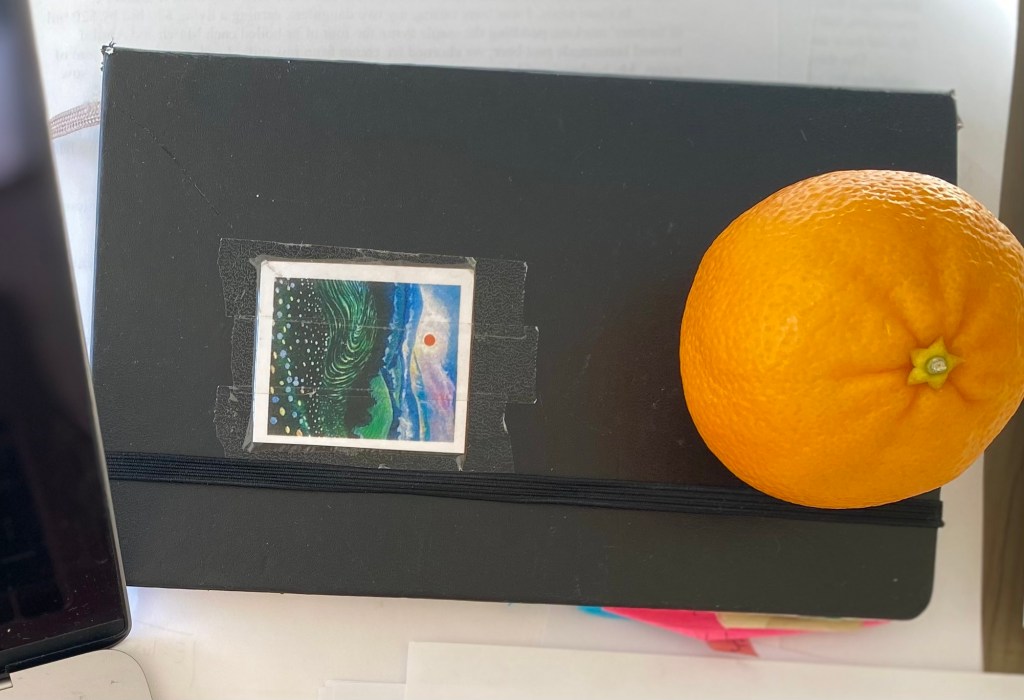
Music = flowers = courage.

Nearly a decade ago, my then-husband and I attended an improv poetry reading and concert in a church in Cabot, Vermont — an afternoon I later remembered as the last good thing we did together as a couple. Later that afternoon, news arrived of illness in our family. Although there was no way I could have predicted it at the time, the stress of disease further fractured our fragile marriage.

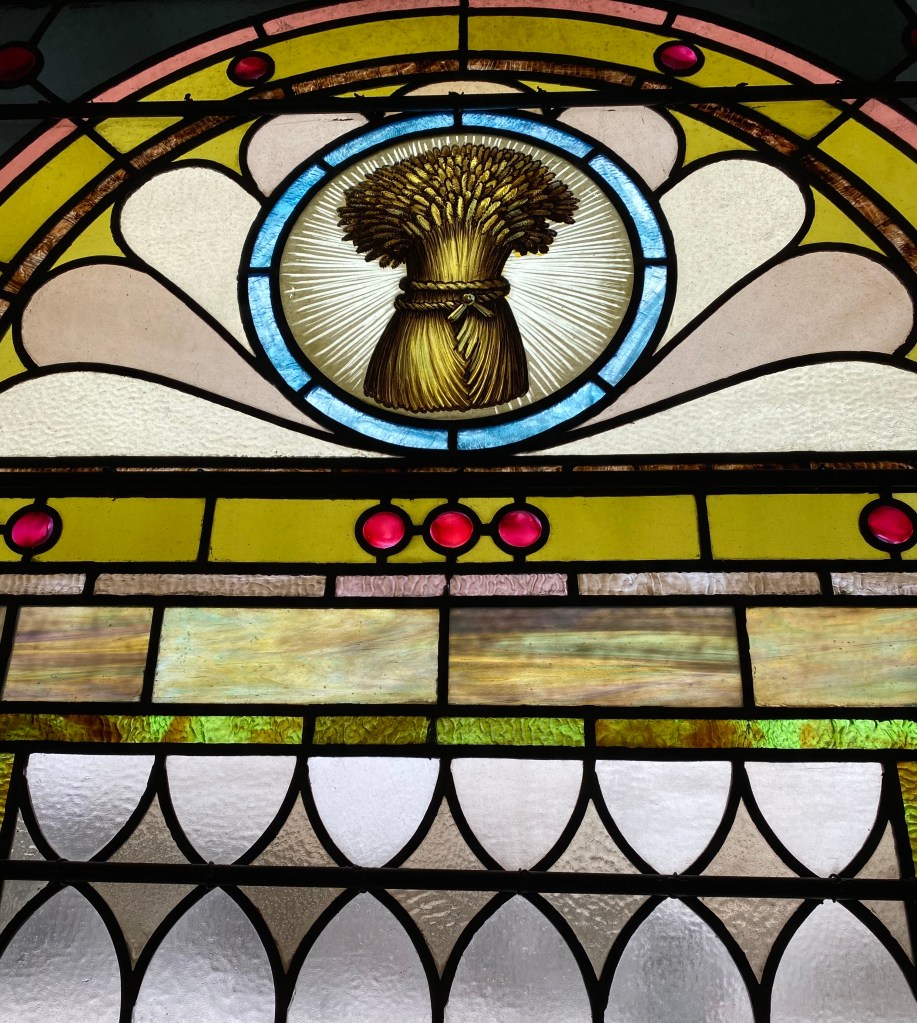
This weekend, I returned to that church with its high-ceilinged rough beams and unadorned crucifix for a performance with native flutes and storytelling as part of the town’s Twelfth Night celebration. Before the performance, the storyteller remarked about a flute, tens of thousands of years old, made from the rib of a cave bear. Flute music, like the drum which mirrors our mothers’ heartbeats, is bound into our DNA. With a rattle of shells, he began with the Chippewa’s creation story of the flute and expanded into a meditation about music as auditory flowers. Not Hallmark’s pastels: flowers are the rugged beauty that propagate our world. The music poured my heart full with courage.

Outside, a light snow sprinkled. Somewhere in the pandemic, my youngest played spring soccer in this town. In that time, no one was carpooling, and so I always drove. While she played, I walked along the river, early enough in spring that the peepers were singing but the black flies hadn’t hatched.

I had left my hat on the pew. When I walked back in, I met the poet’s wife. The poet, who was once so kind to me, has passed on now. His wife and I spoke for a few minutes, and then I went out, hat in my hand, snowflakes falling into my hair.

“… the need is now for a gentler, a more tolerant people than those who won for us against the ice, the tiger and the bear. The hand that hefted the ax, out of some old blind allegiance to the past fondles the machine gun as lovingly. It is a habit man will have to break to survive, but the roots go very deep.”

— Loren Eiseley

Vermont.

VTDigger‘s reporting about Burlington, Vermont.

Everything Is Made Of Labor 

The inchworm’s trajectory: 

pulse of impulse. The worm 

is tender. It won’t live 

long. Its green glows. 

It found a place to go. 

Arrange us with meaning,

the words plead. Find the thread 

through the dark.

Farnaz Fatemi

What’s in the News, What’s Not.

No fooling here — no glossing over — in the past month there’s been two homicide/suicides, neither a domestic, all gunshot wounds, (that’s a total of four souls), right around where I live, then an early morning drug raid a few minutes’ walk from my house. I live in a middle class town, shabby around the edges, a little more spiffed up on some streets. In the evenings, I sometimes walk by the house my daughter’s friend bought. In the dark, he’s often on the roof, hammering or sometimes lying on his back, staring up at the stars. We talk for a bit, and I urge him, be careful.

I write this not out of salaciousness, but more to mark where I am, what’s happening in my state. Malcolm Gladwell wrote that planes never crash because of one reason. Likewise, there’s not one word, one single reason, one sole cause for any of this. These deaths and this raid isn’t my story, but it’s a piece of my story as our lives are all interconnected, the net that holds us together only as reliable as the weakest knots. Yet, as a whole — as a town, a state, a country, as the human story — we keep on.

On this balmy November afternoon, the elementary school kids run on the grass in their t-shirts. Magical insects hover — what my daughters called blue-glass bugs. Later, I stand talking with a friend in the grocery store. I’ve run out of the house, sockless in my Danskos, to replenish the coffee I finished that morning. I met this woman when I was writing Unstitched, so whenever I run into her, we keep talking and talking. What a joy it is to see her glowing and alive, this woman who had a life harder than anyone should ever endure. When I come out, darkness has fallen. The crescent moon hangs over the town, luminous.

Words: Tragedy, Unfairness, Fortune.

Word comes into my email inbox at the end of the day that the literary journal Alice Says Go Fuck Yourself has accepted an essay of mine for their Bad-Ass Mothers theme. This delights me immeasurably. My silliness aside, there’s nothing light about this essay.

My small concerns asides, it’s a week not to be flippant. Acquaintances in our world here have suffered a tragedy, in a house with small children. A friend of mine who knows the family rails at the unfairness of the world. I remind her of what she knows well, that unfairness is a human construct. I’ve never seen evidence that the laws of universe pay any heed to that notion.

After dark, I wander through the neighborhood where cats sometimes appear and brush up against your ankle, purring. The clouds rub away, and a crescent moon gleams, buffed up and shiny, as if newly minted. All my life, I’ve been following this moon, Lady Moon, acquainted with her numberless faces, as she has shed her silvery light on mine. The streets are nearly empty tonight. Ursa Major hangs over a house where a blown-up pumpkin glows in the front yard. These days, I imagine Lady Moon charming my long-ago relatives, in a time so long ago we humans hadn’t yet divided the earth into countries.

On this walk, I remember a favorite line from Ann Patchett: “There can be something cruel about people who have had good fortune. They equate it with personal goodness.” That, perhaps, is its own koan.

FEMA Folks and Us.

Last week, when the FEMA folks make their initial appearance in our town office, I step out and chat with a woman from Georgia. I intend to skip the meeting that’s about to transpire, but I’m interested to hear what these people are seeing around my state and how this whole FEMA thing works anyway. My new acquaintance tells me immediately that she’s exhausted. They’ve visited multiple towns, driving through rural Vermont.

She’s quite concerned about the impending cold, and I assure her that snow is (probably) not going to appear in October, almost certainly not accumulate. The FEMA folks are apparently working on the state’s natural deadline, putting as much of the state back together before the snow sets in.

By the time she heads up to the meeting about the FEMA portal and so much talk about culverts and more culverts, we’ve swapped stories about working and parenting and she’s shared her love of Atlanta.

On her way out, she leans in my door and says goodbye. It’s a moment: the handful of Vermonters and a few FEMA people — politeness all around — brought together by enormously complex events. A selectboard member says, We’re hoping for a nice fall so you can see Vermont at its best…

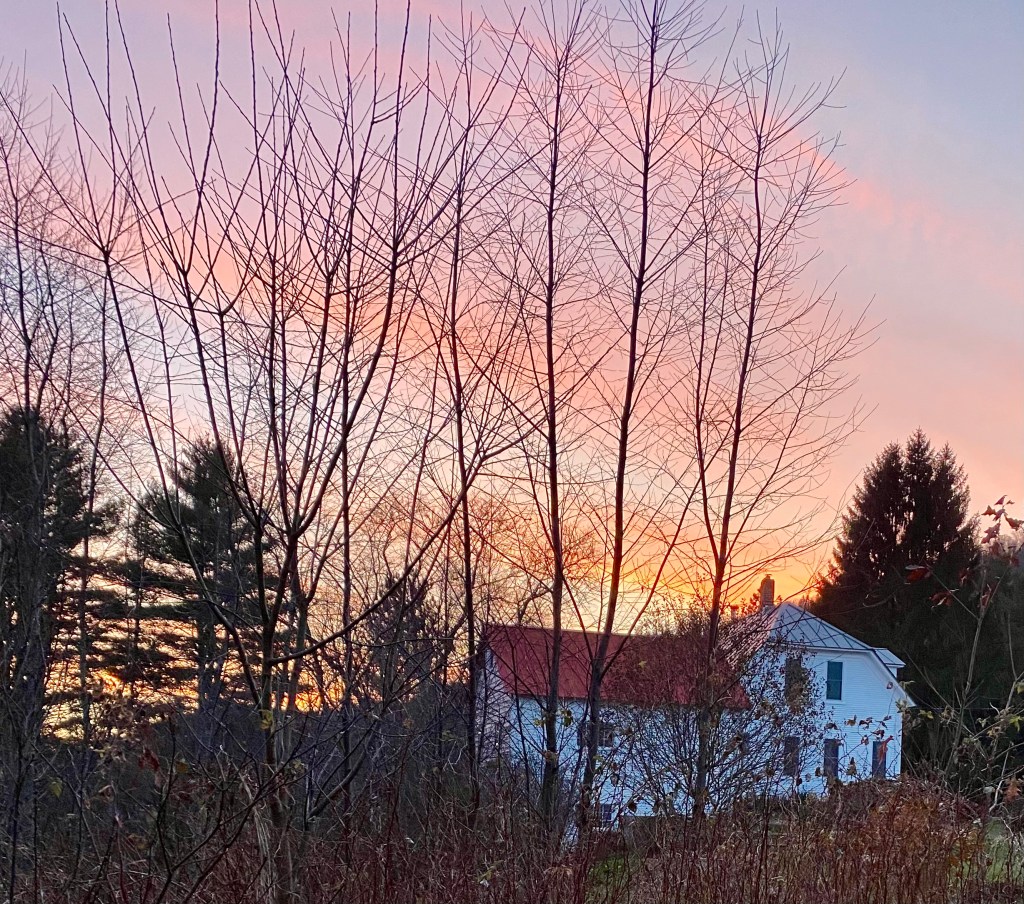
Last evening, I’m talking to my parents on the phone, standing on my porch and leaning against my house’s corner board, looking across the little valley that holds the town where I live, when I realize the world around me is pink. The light isn’t the streaming crimson of sunset. A soft pinkness suffuses our world: sky, valley, village, right down to my bare toes. September that feels like August, but is still definitely September. That’s where we are.

Putting the World Back Together, Again.

By Thursday, I’ve lost track of days. A kind man stops by the town office with plates of cookies, still warm from the oven. I’ve been up for hours and hours by then, some working, some staring out the window at the dawn pushing up over the mountain, a spill of pink that widens into gold.

I haven’t been flooded. I know no one who’s injured. Yet, all around, the torn-up world, the folks who are seeking dry shelter, clean clothing, the next meal. The roads are our arteries, and slowly, gravel load by excavator sweep, the world is being put back together.

Thunderstorms and flash floods are in the forecast. Through all this, there’s the subtle underlying sense of how quickly the world turns.

Stores warn of early closings. We’re in this place I recognize immediately, almost giddy, slightly horrified, where people let down their guard, laugh at things that maybe aren’t that funny. Slowly, wrapping order around chaos.

“Water symbolizes the whole of potentiality – the source of all possible existence.”

— Mircea Eliade