❤️

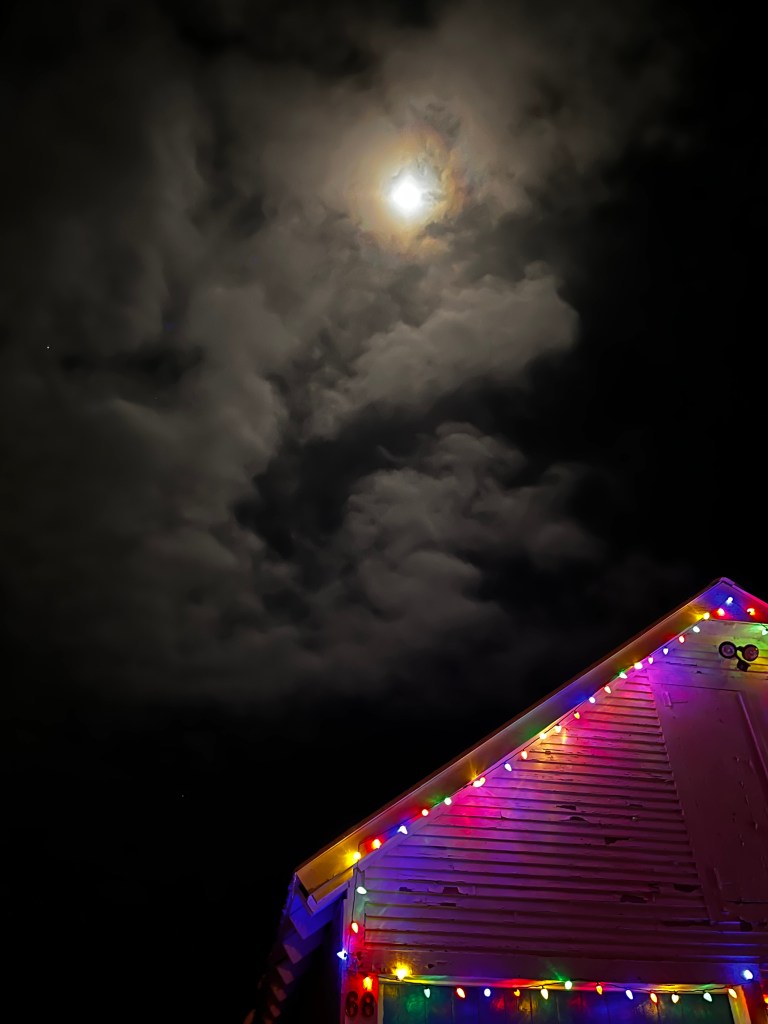
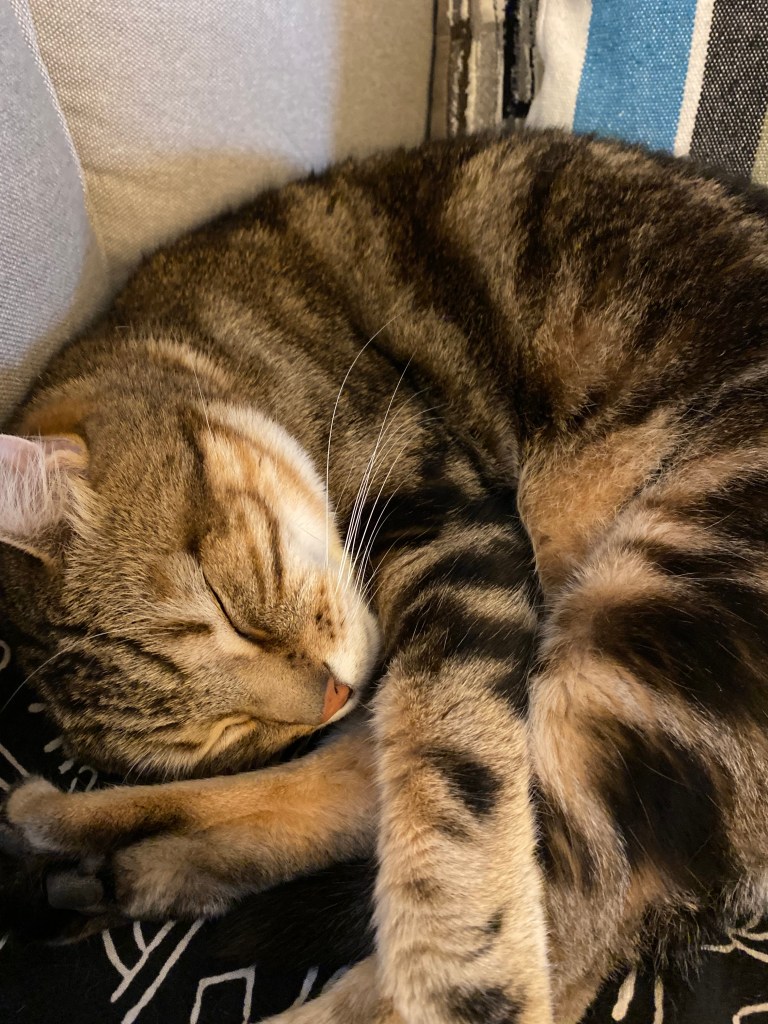
In the night, snow. My youngest ventures downstairs from her second-floor lair and feeds the wood stove, asks if I’m still reading, and don’t I think I should be getting some sleep… Around my knees, the cats yawn at her, nestling into their cat-dreams for a winter’s sleep. Outside, the town plow rumbles up our road, backs around, beeping, and disappears into the falling snow.

2024, a year that’s meant so much to so many. In our house, the year my mother died, the year I almost died, too. The inside-out year of reversal. In these quiet December days, getting better, getting stronger, getting weaker, moving along that jagged zigzag towards health, I’ve been lucky to read and think, to be warm and tended, to savor small sweets. Games of gin rummy. Poems Jo reads in her clear strong voice and sends every day. Brad’s photos of wintry Lake Champlain, luminescent portals of ice and drooping snow and runny sunsets. For so many of you, some whom I know well and have gone in and out of the depths of friendship and family, and some whom I hardly know, the circle around me has made all the difference.

When I first knew I had cancer, an acquaintance who had survived breast cancer told me it was the loneliest experience of her life. Like anyone, I’m well-acquainted with loneliness, have battled this shackled companion through divorce and betrayal. Where now has fate sent me? Illness was a forbidding shore where I never wanted to land my kayak, bend down in the cold murky waters and hoist my flimsy craft to safety. But illness is our common terrain, and those who dwell here – through happenstance or vocation – welcomed me in with compassion. As The Good Doctor told me, We are all patients. More plainly, perhaps, we are all mortal, conjoined.

Wishing you all some radiance from Vermont, prettied up this early morning beneath a downy snowfall….

“The Verge”

Reason is a fine thing, but remember there are other ways
to live: by instinct or passion, or even,
maybe, by revelation. Try it. Come around again to the verge –
that place of about-to-open, near where we comprehend
and laugh and see. Why shouldn’t something marvelous
happen to you? Take even an occasion like this:
A man reading at night looked up at the window to find
a moose looking in, interested and unafraid
with quiet dark eyes. He reports he has never been the same;
he finds the ungainly and miraculous everywhere.
He said it started the next night in the empty window
as he watched his reflection looking right back through.
He said he saw his own beauty, how even in his same old face
the quiet eyes were curious and ready to be true.

– Annie Lighthart

A smidgen of writing.

The clocks cease meaning for me. To gird myself for an appointment, a call, I set an alarm, ask a daughter for a reminder. Counting backwards proves stupidly difficult: what hour to we need to leave? Write this on a sticky, please.

The flip side: I wake early one morning, kibble the cats, open my notebook and begin writing the pieces of this book I’m rewriting in my head. Daunted, I copy my draft into a folder. Someday whole sections might become another book, an essay, trash. Weeks before I heard the cancer diagnosis, I took a class with the remarkable Lauren Markham. All these weeks, these endless hours sleeping and half-dreaming, reading hungrily, much of this solitary but never lonely, much surrounded by skilled strangers who spill snippets of their own remarkable lives in the wee hours of the night, syringe in hand.

Now, aided perhaps by exhaustion, I envision the skeleton of this revised book, the joints that hold these stories together, beginning in a moldy basement, rising to a glass complex, surely, the endless firmament.

Neuropathy comes and goes, reappears in my fingertips. The knobby bones of my wrists and knees expand beyond my dwindling muscle mass. The prednisone prescription reappears for five chemo days, beginning next week. I try not to think of that, of the force these mighty drugs will weld over my body, how I will yield, pray for their power, try to keep to my feet at least marginally, moving my body, keeping in the everyday realm.

Like anyone, I’ve hard used this woman’s body I’ve been gifted, through pregnancies and nursing, decades of sugaring and the countless cords of firewood I lifted and burned each year, churning ice cream to sell with a baby on my back, fourteen years of peddling syrup spring to snowy autumn at farmers markets. The bleeding fissures on my fingers from washing wool filters. But so much pleasure, too, the ineffable joy of cuddling a daughter in my lap, of mountain climbing, intimacy, of lying on the dewy grass under the creamy rising moon. Women my age often complain about the indignity of hot flashes, but the real indignity for me has always been when the flush of my changing body courses through me in a male-centered meeting in my difficult work of budgeting for a town.

A rambly post here….. a variation of my inside-out world where the former rules are revealed as trite. Patience, patience. An hour of work. Half a cup of tea. Another half hour. December sunlight.

Pig farm, glass buildings, moss.

Photo by Molly S.

The man who swept and cleaned my room at Dartmouth-Hitchcock lives in a nearby farmhouse where he grew up. All this complex here, all these buildings, he says, unrolling trash bags, was once a pig farm. Marooned in bed, IV-ed with multiple lines, I ask questions. His family raised beef, milked, had sheep, their own pigs, a chicken-and-egg empire run by the family women.

We talk food – garden canning, slaughtering and freezing, how his mother’s cookstove had a can of grease they used for eggs, steaks, day-old biscuits. That stuff in a box we eat now, with too many ingredients, that’s not food.

We get to gravy recipes, boiling water and how much flour to paste in. Then we wish each other well. Done for the day, he trundles his cart down the hall.

Home, I’m less cloudy for a few morning hours. By afternoon, the cats and I retreat to lying down, reading, slipping in and out of sleep, where I dream of an enormous pig farm where those tall glass buildings now tower over the surrounding woods. I dream myself back to early girlhood, sick, sick, playing paper dolls in bed. I weld my paring knife, skinning a Chioggia beet. For one long piercing moment, I ache to pull on my jacket and boots, slip wordlessly out the door and along the brambly path – a solitary walk to clear my mind. How I’d relish stepping from frosty twilight into my warm house. Patience, patience: my lesson now.

Friends text photos of sunsets, lakes, moss, running streams. Cell phone photos once so common to me, I study these, proof of a winter day. Mail arrives. Half insurance bills, half gorgeous cards – flowers, a paper wreath, snowy mountains – and so many welcome words. Late afternoon, I cook a pot of rice, my first contribution to a meal in weeks, save setting out forks and spoons like a toddler.

I like the juicy stem of grass that grows

within the coarser leaf folded round,

and the butteryellow glow

in the narrow flute from which the morning-glory   

opens blue and cool on a hot morning.

– Denise Levertov

Small Soup Bowls. Quarantine. Icicles.

My brother returns home, and I immediately slip up, ignore a morphine dose, am unable to eat. A lesson in my own laziness or foolishness learned: keep to the path.

For days, he sets small bowls of heated soup on my kitchen table – chicken and dumplings, our childhood favorite of pea soup, lentils with savory carrots. One night, my daughter bakes biscuits, opens a gift jar of raspberry jam (July!), and we revel at a nameless soup from a woman we’ve never met. Potatoes with the skins left on, chicken and maybe tarragon, celery, onion. There is nothing we could imagine adding.

Like these soup bowls, my physical life has narrowed to these warm rooms with cats, hours unfurling patiently as I stop counting days and treatments. Each day unfolds. On Saturday, I sit on the couch and return a friend’s call. Sunday, I return another call, listening to my laughter, their laughter, these friends who have been down their own stony journeys.

Quarantined, I’m connected to the world in ways I didn’t anticipate – emails and calls, books, prayers– a rosy swaddling aura. An acquaintance phones me with her cancer story and describes her year so straightforwardly she buoys me with courage. A friend offers to plow our driveway all winter; perpetually on the skimp, I’ve shoveled for years, but it’s a great gift to my people who are anyways busily feeding my wood stove and picking up morphine and antibiotics and driving me to bloodwork and The Good Doctor — not to mention, working their own jobs and walking their dogs and generally going about their lives.

So much kindness has come my way. The night the sainted nurse sat with me for an hour and a half while the final chemo infusion ebbed, ebbed, into my chest beside my heart, she counseled me to cultivate patience, that I will be able to give again, that the world spins and shifts.

In a wind gust, the robins’ nest falls from our porch beam. Icicles hang from the roof, radiant swords of sunlight.

…. A few lines from Louise Dickinson Rich, courtesy of my sister-in-law:

“All ordinary people like us, everywhere, are trying to find the same things. It makes no difference whether they are New Englanders or Texans or Malayans or Finns. They all want to be left alone to conduct their own private search for a personal peace, a reasonable security, a little love, a chance to attain happiness through achievement.”

December, Holy/Unholy/Holy Season

Anyone who lives in a northern climate must inevitably come to some reckoning with the descent into this month’s darkness, the steady whittling away of daylight at either end, noontime oftentimes scrubbed to a soapy haze.

To my surprise, this month began on an ascent for me, an elevator rise at the end of November, crammed into a silver metal box on a gurney with my weeping daughters and brother, and an anesthesiologist who might have drawn the short straw to collect the patient in the otherwise sleeping hospital. He was actually assured me he was a much better anesthesiologist than a gurney driver. Bring me back safely to these people, I pleaded.

Here at Dartmouth, I’m in a major medical facility (of which I’ll someday write much more). There’s no illusion that this is giant Health Care. Within this, my tiny 4’8″ body and the fraughtness of grave disease and uncertainty, and so so many patients. Yet all these interwoven days and nights, I’m surrounded by an arch of kindness, by skilled and unskilled staff who labor so patiently. I’m humbled by this secular holiness. The respect is repeated among colleagues here, aiding each other (and all us needy patients) with their own thank you, thank you as they work together.

A friend, driving home to Vermont from family Thanksgiving, leaves me Time of the Child by Niall Williams. Late into the night I read, taking these hours to relearn the slow joy of novel immersion. Sleep, sleep, I urge myself, and yet Williams’ world entrances me. Here’s line from this novel that an elderly Irish country doctor remembers from his doctor father: “The sick are ourselves, was a thing his father had said. When you stop understanding that, take your name off the wall and throw your bag in the river.“

…. Whatever way this month transpires — for rise or for misery — and it’s all holy, isn’t it, this sacred and profane mixture of spirit and blood and bowel. The journey itself we take together is the gem.

Although I will say, I was ineffably joyous to return from that dismal night and see my curved-to-exhaustion people. After all, I am in the only one in our household who devours the cold leftover French fries with gusto. Why would we waste cold potatoes?

Thank you again, all.

Hay strands for sheep, purring cat, Harry Potter chocolates for neighbors.

Now in my fifties, I’d lulled myself into believing my risk-taking days were sewed up: those early 20s of getting in the old Volkswagen for journeys of thousands of miles, buy a decrepit hunting shack and convert it into a home, severe a marriage soured terribly and fear he might take your life in retribution — all that time of selling the maple sugaring equipment (who to trust, how to cut a hard deal?). So jaywalking suited me just fine. Waking long before dawn to feed the cats and drink milky coffee, write and watch the sun rise, that streaming beet juice.

As if I held all the cards in the risk-taking plans, anyway. Now that thread of riskiness has spread to those beloved around me, too. More and more, I understand my learning to craft a honed a sentence or the deep pleasure of watching a cardinal pause on a branch, are my steadying rituals of rooting me meaningfully in this world. I have friends whose lives center around sheep and chores and woolly affection, in ways that transformed their lives. Chicken and horse lovers. My sister-in-law with her two goats.

As I write from Room 101, I haven’t forgotten that the world spins on. Last night, I listened to VTDigger’s Dave Goodman’s follow-up conversation with Elizabeth Price, mother of Hisahm Awartani, one of the three young Palestinian men who was shot in Burlington, Vermont, a year ago. The Gaza war reigns. The American presidency shifts.

In Room 101, so many stories of people come my way — the night nurse who studied for two years in England, near the beach, transcontinental; how transport folks and nurses made their to live in New Hamsphire and Vermont, often from places around the country. What do you like here? What have you found? I keep asking, curious to know what roots people in their lives.

The smaller world spins on, too, with its things both miserable, joyous, and pleasurably mundane. Your own rituals of offering hay to sheep, fingertips to a cat’s purring head.

Last day of November, the month of cancer in my world. A year ago I bought Harry Potter chocolates for the neighbors’ boys and waited in the dusk for the three laughing boys to appear around my woodpile. The Good Doctor tells me I will go down, down, soon, and then rise to where I once felt well. What would that mean? I’m hanging on to this unrealized promise.

I repeat. When I go down, I will re-emerge.