Hardwick Postcard #5: Wear a Hat

Mexican hero Emiliano Zapata insisted, The land belongs to those who work it with their hands. With the snow here to stay, I’m already dreaming of star-shaped potato blossoms, the first tender snips of garlic shoots, rain-drenched rows of glossy greens.

Meanwhile, my daughter – far more interested in eating than agriculture or politics – claims her territorial lines. At 12, she walks. A few years from now, like all the other rural Vermont kids, she’ll finagle a vehicle or rides from friends – opening up an entirely different landscape for her – but for now, she learns her path to middle school footfall by footfall, first over the cemetery fence. She turns to wave goodbye to me and hurries off to meet her friend.

To reach the school, she and her friend walk down the hill into the valley where Hardwick village lies along the Lamoille River, then up the hillside where the standard brick middle/high school sprawls. The entire walk – past the dead, the elementary school with its crossing guard, two auto parts stores, a busy diner, a few storefronts, a laundromat and a library – takes less than 20 minutes.

December’s lesson: wear a hat and mittens. The walk is cold.

At the risk of seeming ridiculous, let me say that the true revolutionary is guided by a great feeling of love. It is impossible to think of a genuine revolutionary lacking this quality.

– Ernesto Che Guevara
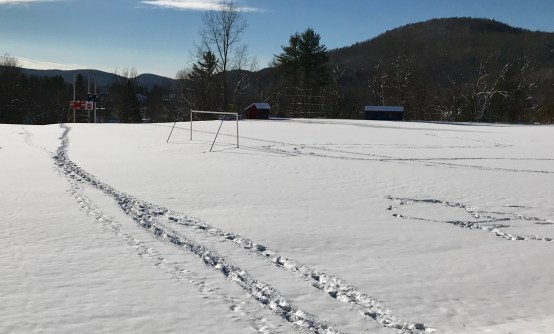
 

IMG_0576.jpg

Hazen Union, Hardwick, Vermont


Hardwick Postcard #4: Jumble of Stuff

December’s New England sings monochromatic variations of gray, white, and conifer dark green – except for us, who live here.

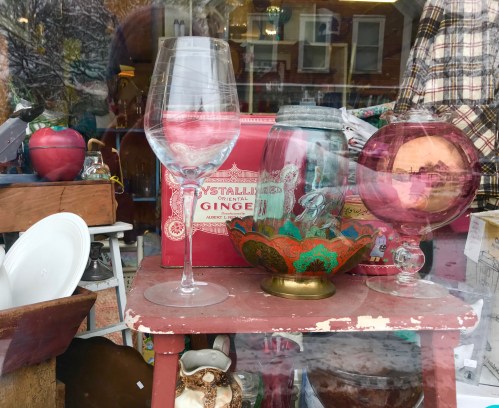
Like a jigsaw puzzle, this Hardwick storefront window of used things perpetually enchants my girls. Years ago, I raided a treasure trove on the back shelves, of used anthropology books.

Never depend upon institutions or government to solve any problem. All social movements are founded by, guided by, motivated and seen through by the passion of individuals.

– Margaret Mead

Here’s an essay of mine recently picked up that begins, When my daughter was 17, she smashed her fist through her dad’s car window in a fit of anger….

IMG_0563

Hardwick, Vermont

Hardwick Postcard #3: Snowy Day, Slower Day

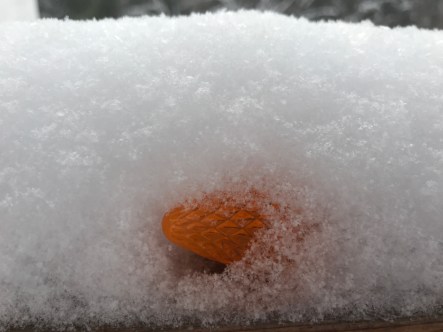
In the dark, I open my daughter’s curtain to see snow falling in the streetlamp between our house and the neighbors’, and I wake my daughter as I usually do, talking quietly and setting a purring cat beside her. The cat burrows under the covers.

In the steady snow last night, we visited the library and the librarian, where my daughter opened a box of tinsel and spread a glittery rope over a bookcase and the mantel. Outside, damp flakes fell on our cheeks.

Everything’s slowed down a little, with slush on boots.

In variations of emotion, the conversation repeats, Winter’s here.

For the great doesn’t happen through impulse alone, and is a succession of little things that are brought together.

– Vincent van Gogh

IMG_0562.JPG

Hardwick Postcard #2: Community Notices

Outside Hardwick’s food co-op are two boards thumb-tacked with wind-tattered signs, the cultural postings of this small town – free community postings of library and school events, classes offered, a deadbeat father’s rambling missive to his family. I stand in the cold reading the jumble of those scrawled words, thinking how much more his children would have appreciated a loaf of bread.

It may be that when we no longer know which way to go that we have come to our real journey. The mind that is not baffled is not employed. The impeded stream is the one that sings.

– Wendell Berry

IMG_0552.jpg

Hardwick Postcard #1: Start Here

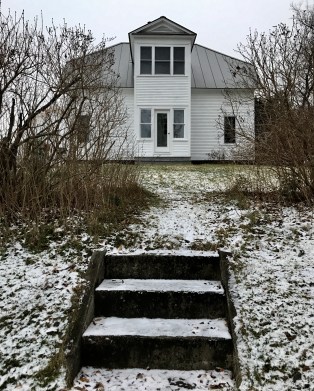
The front steps from our yard to the street reflect a time when people walked more. These days, the walkers in town are mainly kids and adults who, for one reason or another, don’t drive.

When I closed on the house, my older daughter was a high school senior who hardly seemed to attend school, so she came, too, on a hot and sunny June day. We’d known the sellers for years, and, as the closing was slightly delayed, we had some time to laugh. The electric company was switching out the poles in front of the attorney’s office, and the power was going to be shut off. We had a back-up plan to move across town, as modern closings need electricity, and  we tossed around the idea of using the library’s wifi on their front stone steps.

Afterwards, my daughter and I walked around the empty and freshly-painted house. Roses bloomed under the front windows that somehow, in all my examination, I had failed to see.

We hadn’t moved one thing in, still walking around barefoot in the sunny rooms, when a car pulled into the driveway. The woman, who was about my age, had grown up in the house. She was with her husband and their teenage daughter, and they had driven a very far distance for a relative’s graduation from the local high school. When she was a teenager, she told me, her future husband came and sat on the front steps with her, courting. From those steps, there’s a view down into the valley of the village and a trapezoid of the reservoir between the curves of mountains.

We walked through the house. She took pictures and told me stories. They live now in the middle of this huge country, and they wouldn’t return to Hardwick for many years. In the driveway, we shook hands, and then they drove away.

Sometimes the stars align. What a piece of luck to begin living in this house with the stories of a family who had lived here for over thirty years and loved this house and this place. In the few minutes I spent with this couple, I knew they had their own share of misfortune – and love and goodwill.

For a writer – and maybe for everyone, really – stories are manna. That afternoon, my daughter and I were no rush to move in. We opened all the windows and let in the June breeze, suffused with the scent of roses.

We shall not cease from exploration, and the end of all our exploring will be to arrive where we started and know the place for the first time.

– T. S. Eliot

IMG_0526.jpg

Vermont Postcard

A few years ago, an enormous storm dumped gravel on local farmers’ fields and generally wrecked significant agricultural damage. Farmers around here are small, small-scale, no one ever gets adequate insurance compensation, and the storm hurt.

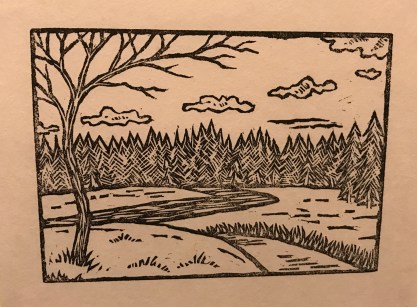
I bought this sketch below at a community fundraiser for local farmers at the Woodbury Town Hall, where the people from the surrounding towns came together for a dinner and live music, and many folks donated all kinds of beautiful handmade things that switched from hand to hand with some cash.

Some money, no doubt, was raised. The night was a goodwill, community gesture after a bad event. This is the better, more generous, gracious element of Vermont. We are not always so kind.

Walking around this small town where I live – Hardwick – whether to the post office, or crawling under broken boards with my visiting nephews to get into the  empty granite sheds for an “historic” tour, I keep returning to the notion that more deeply understanding all the variations of this small town, I would gain some tenor of illumination.

Just to mix things up in the little-light month of December, I’ll aim to share a few snips of life within walking distance.

Whether the recollection is of fascist Italy in the 1920s, of Nazi Germany in the 1930s, of the Soviet Union during the Great Terror of 1937-38, or of the purges in communist eastern Europe in the 1940s and ’50s, people who were living in fear of repression remembered how their neighbors treated them. A smile, a handshake, or a word of greeting – banal gestures in a normal situation – took on great significance. When friends, colleagues, and acquaintances looked away or crossed the street to avoid contact, fear grew.

–Timothy Snyder, On Tyranny: Twenty Lessons From the Twentieth Century

IMG_0520.jpg