Color.

We’re nearly at midwinter, the turning-around point of early February. The ice is hard; there’s snow; the light returns, an extra dipperful of it each day.

There’s that Currier & Ives vision of midwinter, nestled deep in fluffy snow that I’ve experienced in a few flashes. This year, unease eats us all around the edges, in strange kinds of ways. A shortage of kitty litter in the supermarket. What does that mean? Maybe nothing worth thinking about at all.

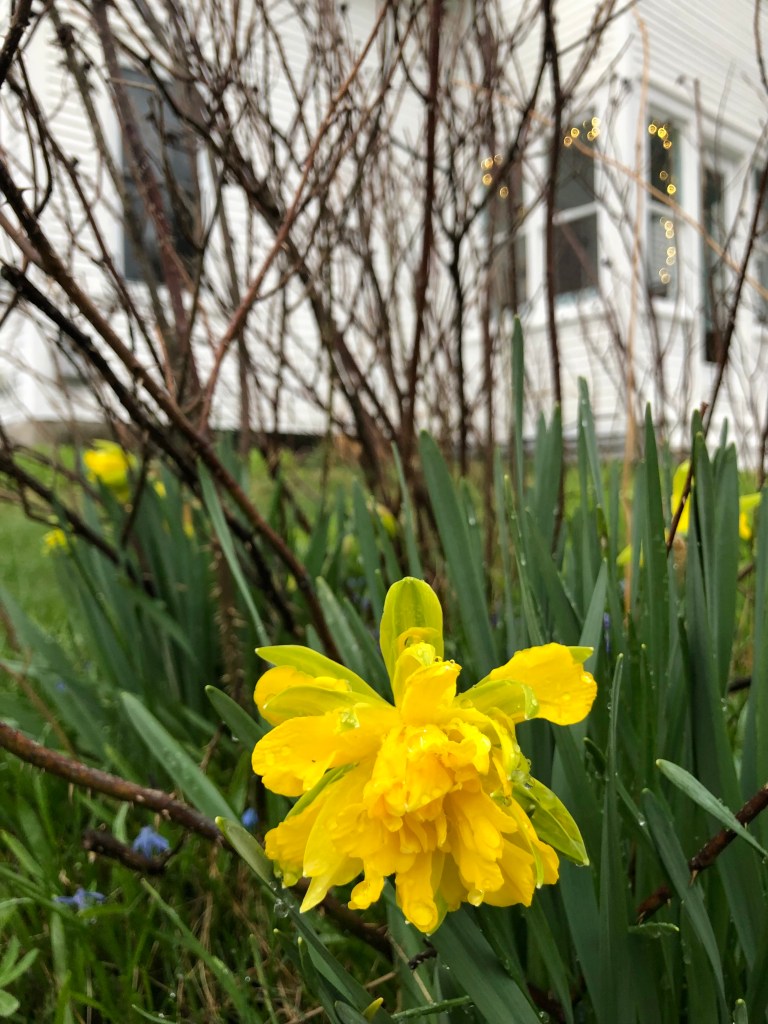
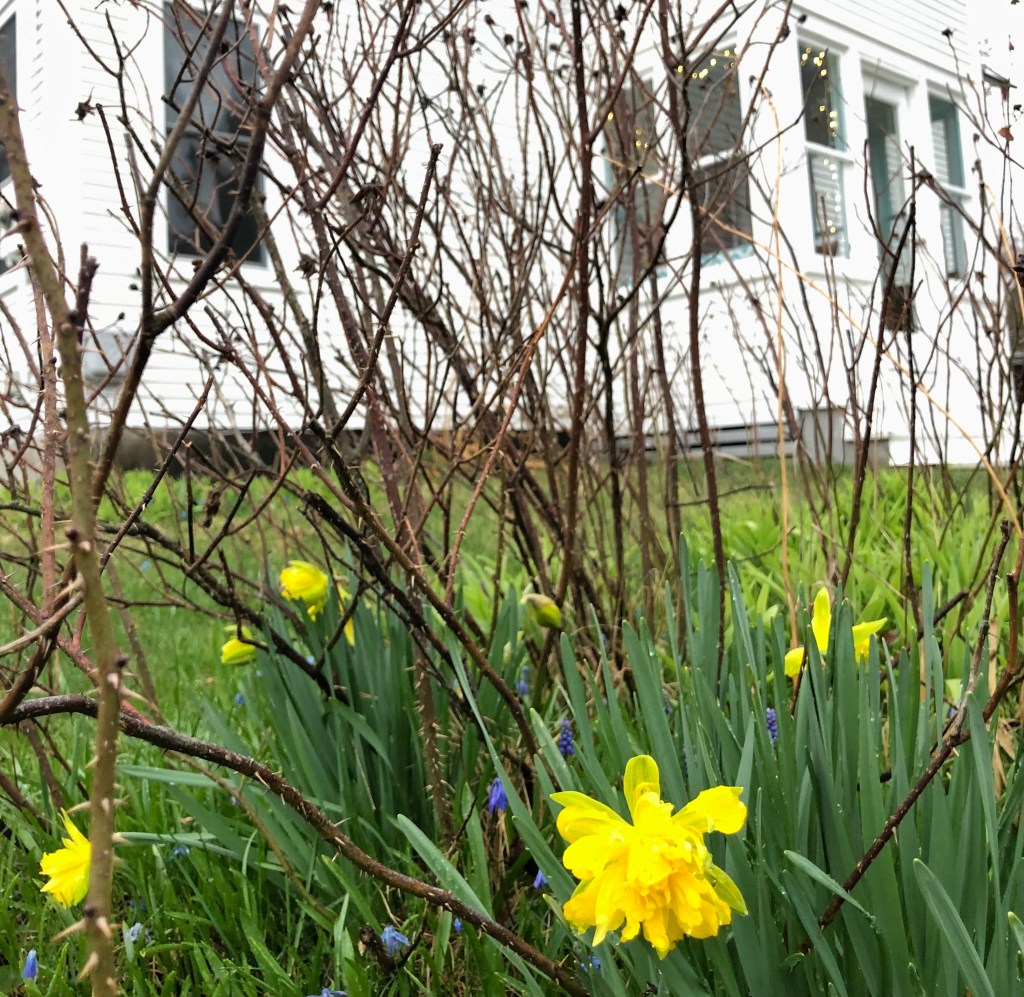
I buy a gallon of paint at the local hardware store. The young man who mixes it went to high school with my daughter. He puts the paint to shake, and I wait and wait in my winter coat and my knitted hat. I remember the first summer I canned so much from my garden and the endless jars I bought here — invested in, really — so many mason jars. High on a storage shelf above my head are those boxes of Ball jars, waiting for tomatoes and green beans and chutney.

He reappears, his face mostly hidden behind his mask. With a key, he opens the can of newly mixed paint. For a moment, he stands there, studying it. Then he asks if that yellow is the right color. I tell him, Yes. He hammers back on the lid, then pushes the can towards me. Good luck, he says.

As I walk out, I wonder if he means good luck with the color, or the painting, or just generally. But what’s the point, really? We all could use a little good luck.

Lovely review of Unstitched in Carved Spines. Thank you!

January Dreaming.

The cats and I write in the mornings, ski in the late afternoons. In the middle part of the day, on these cold weekends, I paint the downstairs walls yellow. The yellow approximates the hue and consistently of vanilla cake batter. If this is my way of keeping sane in a pandemic winter, I suppose it’s holding firm enough.

While I paint, I listen to stories about Sidney Poitier, about the teachers’ union strike in Chicago, about Ginni Thomas — spouse of Clarence Thomas. If nothing else, the words remind me that the world goes on. The first room I ever painted by myself was a room I rented in a house on High Street in Brattleboro, Vermont. I was 21. It was July, and the windows were open. I was drinking gin and tonics. Now, water has replaced the G&Ts. I have two daughters, two books, and I’m imagining a little orchard I’m going to plant this spring. Maybe it’s just the yellow paint (or the fumes) but more and more, I dig down into my imagination, into its deep reserves.

Our cats dream of good cat things: cardinals and tuna on a little flowered plates and sunlight before the wood stove. A loving hand on their furry heads.

Words from Thich Nhat Hanh:

“We have the tendency to run away from suffering and to look for happiness. But, in fact, if you have not suffered, you have no chance to experience real happiness.”

Soul’s Migration.

Lake Eligo, Vermont

At the end of the afternoon, I’m out with my skis, insufficiently dressed against the zero degree temps, hoping the movement will warm me even as I caution my youngest every day — bring enough clothes.

I warm.

I ski on the former railroad bed, behind a daycare. Earlier this winter, a new playground was built for the kids, of wood and ramps, and I wonder if some of the federal coronavirus money made its way here. The daycare itself is in the basement of an old building, and so the playground has a kind of bittersweetness, too, a bandaid of a much larger problem.

On the bridge over the river, I pause. Snowmobiles and a groomer have driven through here, and so the skiing is easy. Animal tracks mark the snow down the center of the frozen river. On the bank I ate wild grapes in the late fall. For now, it’s just me and the fresh snow and the sunlight while it lasts, the woodland creatures, the river flowing deep beneath that ice.

Birds migrate and caribou circle the cold top of the world. Perhaps we migrate between love and suffering, making our wounded-joyous cries: alone, then together, alone, then together. Oh praise the soul’s migration.

Mark Nepro

Ordinary Mystery.

The moon shines brilliantly tonight as I walk down the street to the co-op for cheese and cauliflower. Lady Moon: round as a dime and luminescent like no earthly thing.

In the best of times, January can rage like a shrieking stranger, a visitor who’s arrived with too many needs.

This year, time has slowed to incomprehensible. We wake; we do our things. Work and email. I paint a room. I endeavor to write another book. I keep Unstitched moving along.

The ordinary happens: snow falls. All day and into the night. When I wake in the morning, there’s inches and inches of fresh, sparkling snow. It’s not a blizzard, not feet upon feet. I have little trouble finding my Subaru in the morning. But the snow sugars our world for this day in utter beauty.

The rest of everything is still there — the pandemic, the crumbling American Empire, the chaos of human relationships in my house and all around — but walking home, the cold is so sharp that the snow squeaks beneath my boots. For a moment, I’m a child again, mystified that fluffy snow can yield a squeak. But there you go. A mystery incarnate.

Here’s an interesting essay emailed in by a reader about growing saffron in Vermont — yes, saffron & Vermont.

Eh, Winter.

18 below zero this morning.

The cold comes at my face like a knife when I take out the wood stove ashes. The early morning is perfectly still, full of sunlight. This is not the songbird season.

I’ve now lived through a few dozen Vermont Januaries, beginning as a young woman when I spent so many January nights walking around beneath the winter sky, amazed at all those stars in the deep country dark. Januaries of nursing babies, of a long driving commute, of sledding and baking bread, and enduring the beginnings of cabin fever’s madness.

Always, there’s the cold that reminds us immediately of our own fragile mortality and an inevitable thaw. By the end of the month, daylight returns in a rush. In these chopped-up days of uncertainty, I remind myself of these constants.

We forget about the spaciousness
above the clouds

but it’s up there. The sun’s up there too.

~Naomi Shihab Nye

‘Ask Me.’

Twilight drags out again — not a sign of spring by any means but a hopeful sign. The light’s returning to us. After work, I rush through my outside chores, then keep walking and walking. I’ve somehow slightly twinged my knee, and so I walk with the faintest of limps, which amuses my athletic daughter no end. Why wouldn’t your body hurt? she asks me.

We live in such a crazy, mixed-up time. Some of this is just us — a high school student, a grown daughter, four jobs between us, an EMT class, a recently published book and another I’m writing, an absent father, my single motherless — and then a world where the Expected Everydayness is suddenly flipped inside out. The rules have all changed, or at least it’s worth rethinking all the rules.

No phones, ever, at dinner. But then my youngest asks why? and we call my brother. He’s working at his brewery and steps into a quiet place. My daughter and I eat calzones and talk skiing and Covid. We talk bread making. And that is really darn nice.

“’Ask Me’

Some time when the river is ice ask me
mistakes I have made. Ask me whether
what I have done is my life. Others
have come in their slow way into
my thought, and some have tried to help
or to hurt: ask me what difference
their strongest love or hate has made.

I will listen to what you say.
You and I can turn and look
at the silent river and wait. We know
the current is there, hidden; and there
are comings and goings from miles away
that hold the stillness exactly before us.
What the river says, that is what I say.” 

— William Stafford