Gathering Kindling

My daughters and I watch New York Times clips of Dr. Ford, my 13-year-old’s eyes wide, her hand paused over her algebra homework at the kitchen table. My 19-year-old and I talk and talk, and then she replays Kavanaugh’s testimony. The 13-year-old says, in wonder, Someone is lying. She ponders this, then says, Why would someone lie?

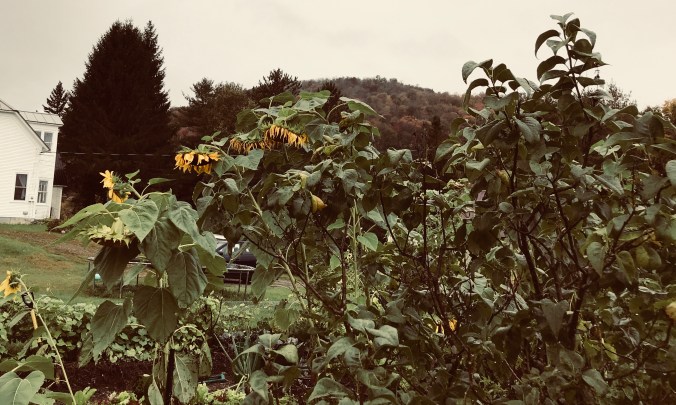
Tomato vine by cauliflower plant, I empty the garden, exposing black earth, finishing the final coat of white paint on a few patches of clapboards, eyeing the porch windows and gauging when I’ll plastic those for the winter’s duration.

In the dark this morning, my daughter and I talk briefly in her room, rain beating on the roof. Cold October rain illuminates foliage colors, tugs out the very best. I mention I’m going to paint the dining room a sunflower color this weekend, the window trim Santa Fe blue. Cool beans, she says.

What concerns me even more, though, is the loss of those values the (communal) fire precipitates and reinforces… How will the affirmation by others of one’s own necessity in the world be validated? What will be the opportunities for profound courtesy and for ceremony, of which there is such a dearth in the modern world?

We can lose the communal hearth and survive, but survival without the values of the hearth… seems a brutish prospect, a retreat into intolerance.

From Barry Lopez in Hearth: A Global Conversation on Community, Identity, and Place
IMG_3523.jpg

Z39.50

On a rainy day, I’m at a cataloging class at the state library. Through the open window, rain pours from the roof. I admire the library world for its insistence on precision and order, its intensely democratic approach, the unapologetic quest for knowledge and creativity.

In Vermont, numerous tiny one-woman libraries like my own hold the same democratic importance as the large city libraries. Such a complicated network laces this system together — like Z39.50, the mysterious (for me) way library systems speak to each other and exchange information.

Later in the morning, the rain stills. Through the open window, robin sing. The teacher pauses, says, Spring’s here, and waits for just a moment, a subtle acknowledgment of the beauty of communication.

The only thing that you absolutely have to know, is the location of the library.

— Albert Einstein

IMG_1677.jpg


Imagination

My brother is standing on a ladder shoveling off our back porch roof when a sheet of snow from the house roof creaks loose and cascades over him. With my daughter’s help, he empties little chunks of ice and powdery snow from his pockets. Rain falls a little.

After we clear the snow, the three of us stand on the back porch — scene of summer hanging out — and I mention the sweet William that grew last summer, and will presumably again this summer, in the wild patch below the railings. I can imagine the tiny, frilly flowers in three hues of pink, laced with white.

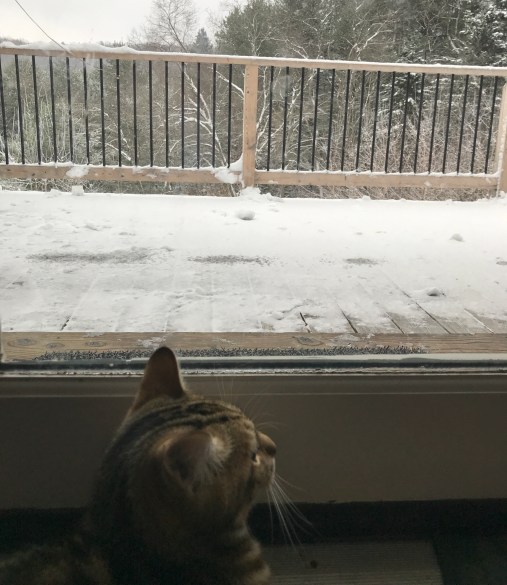
All around us, the world is painted in hues of green pine, brown bark, and all that snow, on branches, over the garden, the trampoline frame nearly buried. It takes imagination to envision the lushness of spring — singing frogs, mating birds, tender green, and all those wildflowers, unstoppably unfolding from the earth — but we imagine it. February.

‘This is Just to Say’

I have eaten
the plums
that were in
the icebox

and which
you were probably
saving
for breakfast

Forgive me
they were delicious
so sweet
and so cold

— William Carlos Williams

IMG_1115.jpg

Weighty Reading

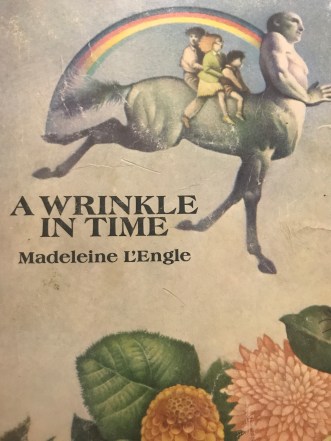
A 8-year-old boy appears in my library and asks for a copy of the wrinkle book. He’s looking for Madeline L’Engle. When I place the book in his hands, he holds it, staring at the cover. It’s an old hardback copy, the dust jacket long since disappeared, so the cover is a plain turquoise, the corners worn down.

This book’s too hard for him to read. I know it, and he knows it, too. I ask if his parents ever read to him at night, and he says, No.

I was a little younger than this boy when my father read this book to my sister and me, and even now, I have to think a little about a tesseract: what is this odd, strange wrinkle in time?

This child isn’t shy, but he stands there, holding this book in two hands. Gently, I suggest he take a second book, too, one I know he can read and will likely love, but he takes the L’Engle, too, pushing the books deep into his backpack without a word.

Life, with its rules, its obligations, and its freedoms, is like a sonnet: You’re given the form, but you have to write the sonnet yourself.

— Madeline L’Engle, A Wrinkle In Time

IMG_1007

21º Below Zero

January.

I’m naturally a sweater knitter — not a sock creator like my sister. Likewise, I’m inclined to the lengthiness of novels, but more and more I admire the uses of brevity. Such as…

January 2.

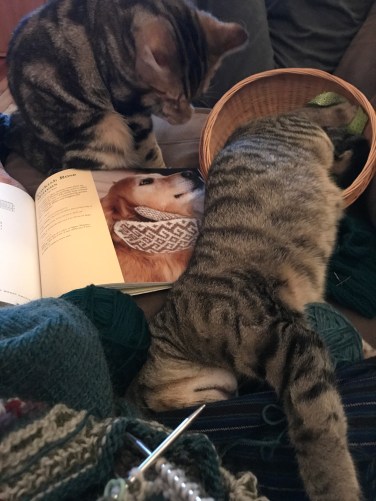
Kittens, yarn. Piles of work. Stacks of library books. Friends on the calendar. Winter, Vermont-wise, has barely commenced.

When the winter chrysanthemums go,
there’s nothing to write about
but radishes.

— Matsuo Bashō

IMG_0799.JPG

Good and Evil

When the holiday is finished, the dishes washed and floor swept, guests departed, the teenager headed to her nursing home job, the 12-year-old and I walk down to the post office in the dark, to drop a letter in the mailbox.

Everything but the empty laundromat and the diner with not a single soul visible is closed. Although dark, the evening is warmer than our walk that morning; a few cars rush through the village, but that’s about it. The laundromat glows overly florescent bright, empty.

We stop where we often do, at the thrift store window, and peer into the shadowy space.

As we walk, I’m thinking of a line my brother said, sprawled on our couch with two sleeping kittens – that the universe may hold good and the absence of good, and what we name evil might merely be that absence. Knitting a hat for my daughter, I paused and asked if he believed that possibility. What, really, would that mean?

We let my question lie between us. Finally, my daughter lifted a card and asked if we might try to answer a question about salamanders.

State 14 generously ran a rewrite of one of my posts. Check out their Vermont writers and photographers.

When I was a boy, when there were wolves in Wales, and birds the color of red-flannel petticoats whisked past the harp-shaped hills, when we sang and wallowed all night and day in caves that smelt like Sunday afternoons in damp front farmhouse parlors, and we chased, with the jawbones of deacons, the English and the bears, before the motor car, before the wheel, before the duchess-faced horse, when we rode the daft and happy hills bareback, it snowed and it snowed.

– Dylan Thomas

IMG_0397.jpg

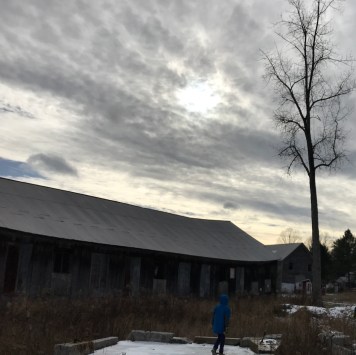
Hardwick, Vermont, Thanksgiving morning