Scars, Somewhere in November, 2020

Every morning, a hard frost sugarcoats our world.

Before the snow falls in earnest, my daughter drives, logging in hours and experience with her driver’s permit. We head out one way and take a different road back home.

Inadvertently, wandering, we end up on a road in Elmore that I haven’t traveled in years. While she and her sister talk, I remember the last time I had traveled that road was with my mother and the girls, who were so much younger then. The forest drops away on either side of the backroad. Farm fields, shaved down to corn stubble, surround us.

The girls’ father was away then, visiting his father who was recovering from a heart attack. When he returned, I believed we had a new beginning, a jumpstart to what we were doing as a family. Now, with my youngest in the driver’s seat of our Subaru, I have a sudden realization that there’s never any beginning, never any fresh start, the world always unfolding and transforming — from harrowed up fields to spring shoots to the fatness of August’s harvest.

This girl — all of her, stoic and disciplined and sometimes radiantly joyful — is becoming a young adult in these strange pandemic days. I imagine she’ll carry these months (maybe years?) forever with her, sewn into her soul like a scar.

The road winds around the rural hospital where both my daughters were born by caesarian, leaving my own body with indelible scars. I wouldn’t trade those scars for the world.

Photo of Teapot by Diane Grenkow

Sunset, Skunk, State Police

Before I leave work yesterday afternoon, I stack piles of papers labeled with stickies in my scrawled handwriting — a roadmap for myself for the next day’s work.

Outside, the sunset is crazy beautiful.

I drive home, listening to VPR. The governor has sent the state police to lodging establishments, in an attempt to crack down on quarantine requirements. My brother, in New Hampshire, appears to be sealed off from us, in a sea of Covid.

At home, my 15-year-old dreads the thought of another lock-down, like last spring. But it’s not April 2020 in Hardwick, Vermont. In November, unlike in April, Covid is among us, in the schools, among people we know.

In the evening, my friend and I walk around town in the dark. The long bar in Positive Pie is empty, save for the barkeep at the far end, his head bent over his phone. At the high school, we walk down a wooden flight of stairs to the soccer field that a group of volunteers recently built. In the field’s center, we gaze up at all those stars, the Milky Way arched over the firmament.

Back at my house, we stand in the driveway, talking, talking, in the unusually warm November evening. A skunk ambles around the neighbors’ house — a normality I can embrace — although, after a few moments, I back up and head into my house for the night, where my daughters are planning to make tiramisu for Thanksgiving.

I wish I could invite all of you…..

“When I face the desolate impossibility of writing five hundred pages, a sick sense of failure falls on me, and I know I can never do it. Then gradually, I write one page and then another. One day’s work is all I can permit myself to contemplate.” 


― John Steinbeck

Photo by Gabriela

The Right Thing

On a walk my daughters and I often take in the evening, we pass a house where a little black cat trots out to meet us. The cat’s tail is bony, its nose white as if dipped into a saucer of cream.

We always turn down that particular street, saying, Let’s go see the cat, and stop and pet this friendly creature.

In the dark last night, a car followed us, then stopped, as the cat sat in the street. When the cat didn’t move, my daughters and I turned and walked back, to encourage the cat to head along now. The driver pulled up and rolled down the window.

I didn’t recognize this curly-haired woman. She asked me if the cat was mine. When I said no, she wondered aloud why she had kept sitting in the car. I didn’t know what to do, she told me. The cat didn’t move.

I laughed and told her, You did the right thing.

She raised her hands from the steering wheel and began laughing. I did the right thing! she exclaimed.

Walking home in the dark, I kept thinking of what looks to be a long winter ahead. But for a radiant moment, Saturday showed us our VP-elect proudly acknowledging the history and labor of so many nameless others. It’s a historic moment my daughters relish.

“So often in life, things that you regard as an impediment turn out to be great, good fortune.”

— Ruth Bader Ginsburg

The Long Haul

After work, it’s too dark to go running, and I’m home in a foul mood while my daughters cook dinner. While cleaning out a closet that afternoon, they discovered a box of photographs and claimed the photos were evidence there was little adult supervision in their early childhood.

I insist there was plenty, but I had always seen wildness as more of a virtue than a vice.

The three of us are wise enough to let that lie, and dinner conversation winds into the details of the day. After, the girls wash the dishes and I carry in firewood. Then my oldest and I walk through town. There’s no one out these days. It’s dark; the cold is beginning to staple down around us.

Coming home, we stand on the knoll outside our house, watching the creamy, waning moon rise. As we stand there talking about hard deep things — how we carry the past around with us — I remember myself as a brand-new mother, believing that the wildness of imagination shapes our lives. I no longer believe that; I know that, but I also know what a long hard haul this life can be.

I call into the house for my youngest to come out and see the moon. She walks barefoot through the snow. We stand there, the moonlight on our faces, soaking up that ethereal light, before we head back in.

Once in a Blue Moon

Saturday, we were at a jack o’ lantern walk at the elementary school where my youngest graduated a few years ago.

Because it’s rural Vermont, it was dark, and everyone was spread out. I slipped away from the few kids and walked further along the woods path. I know this path well, and it veers down to the wetlands. There, I leaned against a white pine. The moon was nearly full, and the silvery light skipped over the rippled water.

For the longest time, I stood there, knowing my daughter was happily wandering around in the dark with her friends. In the darkness, I remembered the countless times I had admired this lovely lady moon — over fresh snow and icy backroads, in the muggy heat of summer.

At the beginning of this election week, I woke thinking of our beautiful moon, silently orbiting the globe.

The old man of the temple,
Splitting wood
In the winter moonlight.

— Buson

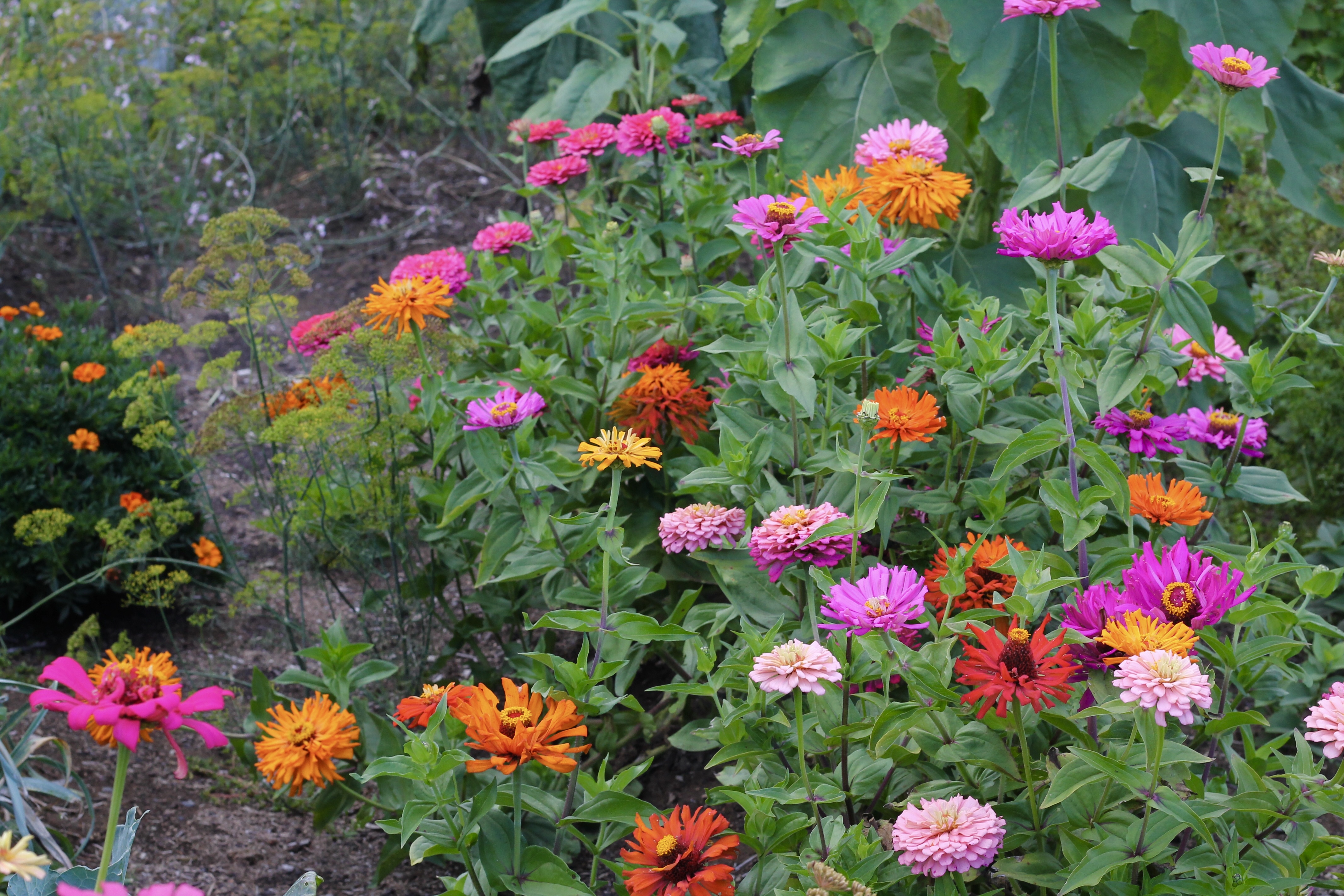
August flowers

Asking for Good News

Every few days or so, a friend and I email back and forth, asking for good news. Occasionally, it’s utterly knock-it-out-of-the-park news — I finished this revision of my book — but more often the meaningful mundaneness of everyday life. A sunny afternoon, plans for a walk, a funny exchange at work.

After one long day, I recently dug down and wrote: we’re all still employed.

But I also forwarded my father’s email about Arkhipov Day.

Although Henry Ford might have once proclaimed that history is bunk, we live in the narrative of history, and continue to create history every day. And that might be a variation of good news, too.

Hello Everyone—

Today, October 27, is Arkhipov Day. We should raise a glass, salute Vasili Arkhipov, and celebrate his obedience to humankind, not to the Nation-State. On this day, 1962, during the Cuban Missile Crisis, World War III was averted by his refusal to accede to his two fellow Soviet submarine officers’ decision to fire a nuclear-tipped torpedo at the USS Randolph. 

Peace and love,

George

P.S.: If anyone wishes to read or reread about Vasili Arkhipov, see The New Barbarians.

Vermont, late October 2020