Snow, Saturday, Living in History

Saturday morning, we wake to a snowfall — gorgeous fat flakes swirling down — the kind of sparkling snow that miraculously turns the world brand-new and utterly beautiful.

In early afternoon when I return from work, the girls have shoveled the paths and driveway and deck. Inside, they’re drinking tea in front of the wood stove and putting together a puzzle my sister sent from Virginia, a pretty blue puzzle with birds.

I stand at the glass door drinking coffee, thinking where I stood that morning, on the shores of Caspian Lake, its center obscured by drapes of falling snow. Bundled in hats and masks and scarves, I stood talking with another woman about the small town planning process. Then our conversation wandered into the oddities of human life, how determined we all are at times — and I’ll put myself firmly there — to keep our attention focused on our own little stamp of land and home, be it a postage-stamp-sized piece or hundreds of acres. Meanwhile, the snow, the rising and setting sun, the wandering woodland creatures, continue on.

Saturday afternoon, I claim my own place near the fire and read The New Yorker‘s recent “The Plague Year” by Lawrence Wright, reading aloud pieces to my daughters, saying, This is the history you’re living through. This is your story, too…. It’s a lesson for me, too, when I dream of living elsewhere, where sleet doesn’t fall, where the cost of living isn’t crazy-high, where the sun shines even in the heart of winter — a reminder for me to embrace my own accidental luck to live here.

Nations and states that have done relatively well during this crisis have been led by strong, compassionate, decisive leaders who speak candidly with their constituents. In Vermont, Governor Phil Scott, a Republican, closed the state early, and reopened cautiously, keeping the number of cases and the death toll low. “This should be the model for the country,” Fauci told state leaders, in September. If the national fatality rate were the same as Vermont’s, some two hundred and fifty thousand Americans would still be alive. 

— Lawrence Wright
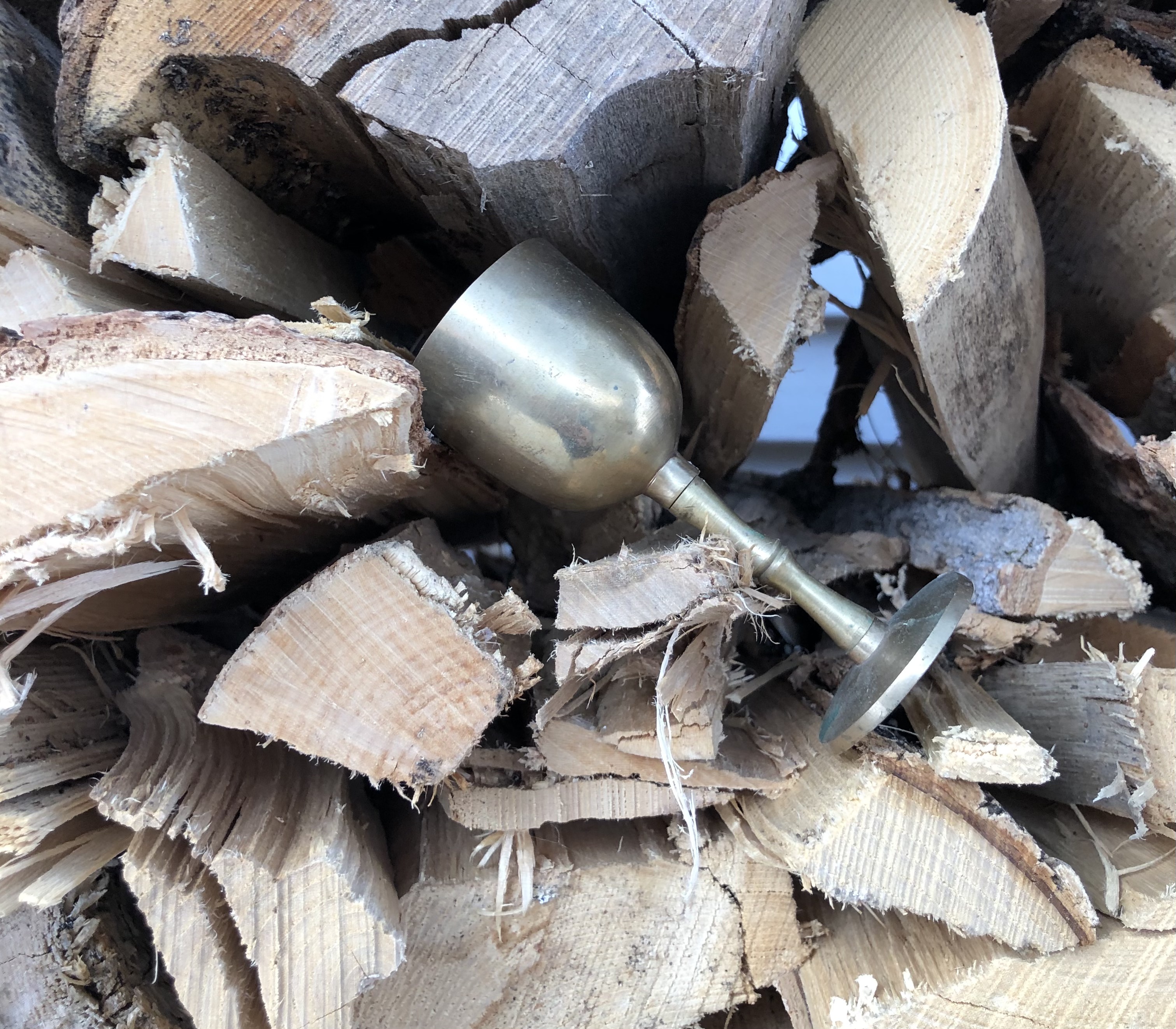
More found stuff…

Instead of Lunch…

On the solstice Monday, I’m standing along a dirt road, bent down, petting a dog.

The recent cold snap has broken, and the midday is nearly balmy. Some winters in Vermont are like this: cold and thaw ricochet back and forth. Each thaw reminds us that we’ll endure the bitter cold. Beneath my boots, mud may not be far away. But I know — and not just by the low declination of light — that plenty of winter remains.

The conversation I’m having bends around again to the observation I’ve gnawed over and over: how human irrationality winds all through these bucolic Vermont villages. Likely, it’s the human condition.

Irrationality or not, for these moments, I’m standing in shallow snow, on a hillside with a view of the valley below and the not-so-far blue mountains in the distance. The little dog’s ears are velvety to my bare fingers. And, for these few midday moments, I soak in these landscape of brown dirt road, pristine snow, pale blue sky, conversation. Spring is an infinity away, but spring always arrives. I’ve been here before.

Photo by Gabriela S.

The Saving Grace of Winter is Beauty

These December days are so cold the air is smoky with a mist that can’t melt. Daylight is scant.

Walking up Main Street in Greensboro, my boot heels kicking clumps of road salt, I detour to the public beach, scene of so many summer hours of pleasure.

In the otherwise empty parking lot, two pickup trucks are parked side by side, drivers’ windows rolled down, a cloud of cigarette smoke motionless between them.

December narrows us down and opens us up; we relish the pleasure of our warm, well-lit houses, the bowl of steaming noodles, our cats and our library books. And yet the cold appears to ripple endlessly, infinitely beyond the frozen lake and mountains. The winter night sky dwarfs us. We’re but tiny stars ourselves, on this icy landscape.

Day by day we’re spinning towards the solstice.

Winter solitude–
in a world of one color
the sound of wind.

— Bashō

Caspian Lake, Greensboro

Driving Lessons

The dress my daughter wore in the photo below was a thrift-store find. A soft flannel, the dress was her favorite those years she was two and three. She wore the dress until it was above her knees. I can still remember how her bare knees fit perfectly into the palm of my hands, her skin suntanned long into the fall, often lightly scratched or bruised from playing.

At fifteen, now, she feels light-years beyond those days.

Here’s a piece I wrote about this summer when she and I switched places in the car, beginning, “This fall, my 15-year-old daughter Gabriela was at the wheel of my Subaru when I panicked….”

Photo by Diane Grenkow

Rich

Snow drifts down this morning, officially or not marking the beginning of winter. As always, the cats and I are the first awake in our house, the cats hungry for a bowl of food and then sprawling on the rug, satisfied, happy with the prospect of another day.

The first snowfall perhaps belongs in the realm of childhood, the magical enchantment of waking and realizing the overnight world has silently transformed into white. No one in our house is in the Land of Little any longer, joyous at the prospect of a zillionth reading of The Snowy Day.

Nonetheless — and despite the months ahead of Vermont snow — these moments of gust and flake and the wind chimes singing, the daughters sleeping, the cats purring, are, for the moment, sweet and silent.

The room was suddenly rich and the great bay-window was
Spawning snow and pink roses against it
Soundlessly collateral and incompatible:
World is suddener than we fancy it.

World is crazier and more of it than we think,
Incorrigibly plural….

Louis MacNeice

Adequate Materials

When I was in labor with my first daughter, at some point I glanced at a clock and realized I was in trouble. That was the only rational moment I remember from that entire labor; everything else is nearly wordless in my memory.

In those final hours, in the pauses between straining to push her into this world, I imagined the peace of a summer forest, the leaves sun-dappled. She was born in wintery February, but I drew on that memory, gathering much needed strength, as I imagined digging my fingers into the black soil, fingering pebbles of quartz and shards of slate.

So, too, now, as we’re entering the dark month of December, I look at my youngest daughter — my teenager — who is learning to endure the closure of school, the upsidedownness of her world. How invaluable, suddenly, appears a game of Yahtzee, a batch of cookies, a cat before the fire, hot coffee and conversation.

It was her habit to build up laughter out of inadequate materials.
― John Steinbeck, The Grapes of Wrath