Zen. Broken Sink Drain. A Meaningful Life.

back porch view

I’m lying on the couch reading Sigrid Rausing’s Mayhem when my daughter calls from the kitchen, ‘Mom, you’re not going to like this!’

The sink drain has split apart again and gray water floods the kitchen floor. For a moment, I think, whatever, and then ask her to get an old towel.

I have now repaired this drain three times, each time in nothing but sheer annoyance and impatience.

The problem, naturally, has something to do with PVC and epoxy, but more to do with me. My ex-husband put in this drain, in his trademark cob-job way, fitting together scraps of plastic pipe. I’m irritated at my own ineptness, my unwillingness to devote real time to YouTubing a solution, the scantness of my nonworking hours.

I’d rather paint a wall than repair a drain.

After we mop up the water and pile the unwashed dishes on the sink drainboard, we put on our boots and take a walk in the falling snow. It’s the first snowfall of the year. Snow is our old friend, falling silently, sparkling in house and streetlights. This first bit will melt today and return again soon.

Sunday morning. Put the house in order. Take the broken pieces to the hardware store. Ask for advice.

True recovery is a profoundly ethical journey, finding meaning and dignity through solidarity and restitution. Without that, there may be a cessation of drinking or substance use, but there is no real recovery.”

— Sigrid Lausing

Frost Slivers.

Hardwick, Vermont

Vermont November is the month of introspection.

Beloved friends from long ago stop by for coffee and conversation on their way from here to there. We’d last seen them when we first moved in this house, less five years ago.

We take that figure of five years and turn it around and around — so much has happened in those five years. As with everyone I meet from afar these days, I ask what’s happening where they live. The conversation has a strange, almost wartime sentiment, as we compare notes.

In mid-afternoon, I bury daffodil bulbs. The soil has already begun to freezing. My bare fingers burrow through silvers of white frost, the teeth of winter beginning to grow. Finished, I brush off my hands on my jeans and stow my shovel in the barn.

We’re Geese.

Saturday afternoon, I’m walking with an acquaintance on the trails behind the high school, talking about public education. How is education changing? What’s happening?

Beneath a maple, we stop and talk for a little. I tell her about my youngest daughter, who’s 16 and at a place of reflection, asking, Who am I? Where is my life going? Writing made me realize how easily we drift into one life or another, drawn along by circumstances and the people surrounding us. How easily we fall into what seems like a good idea, a fad that might define us.

What seems like a hundred years ago when I was an undergraduate at Marlboro College, someone painted Know Thyself on the sidewalk beside the dining hall. Listening to my daughter as I go about doing my same old things — washing dishes or making dumplings or knitting a hat for a Christmas present — I realize I’m witnessing her small adolescent pack struggle with this same old question made completely brand-new for each of these young people. I’m riveted.

On the trail, a flock of geese flies so low I hear their wings flapping. On our way back to the school, I keep thinking about those geese.

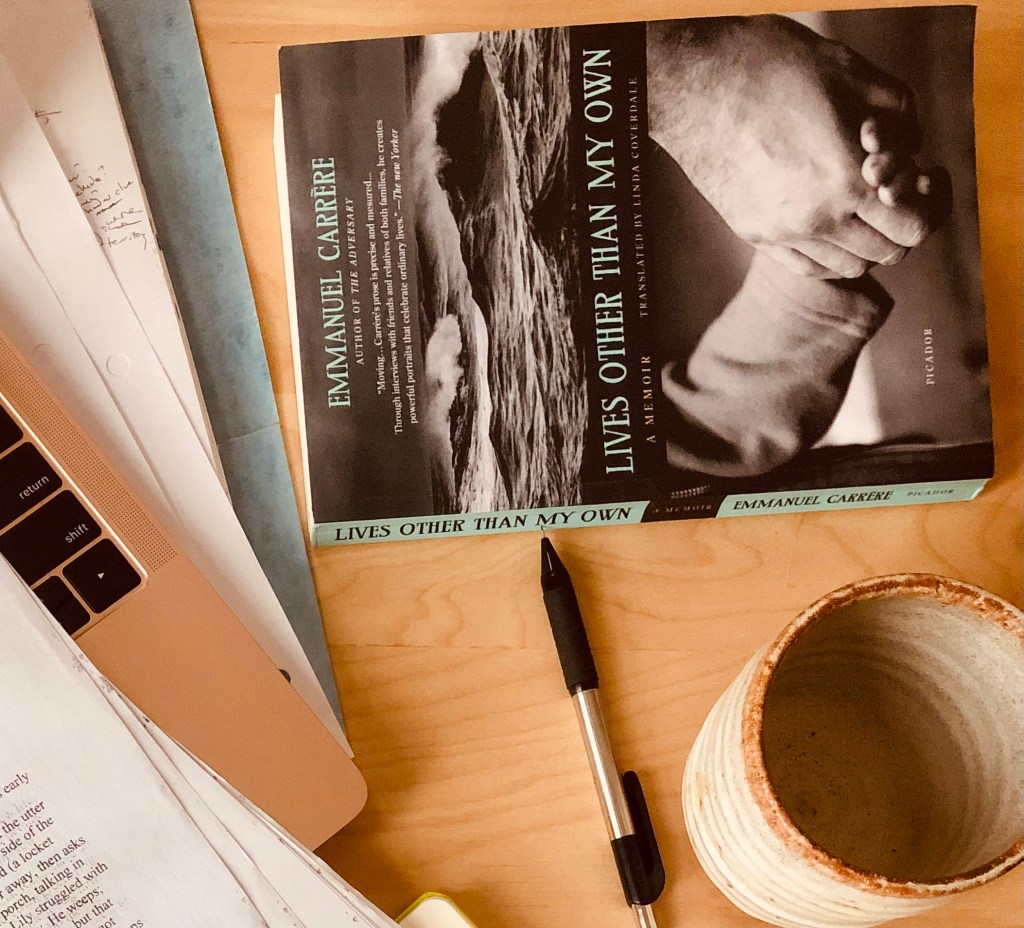
One can claim that growing up… means abandoning magical thinking for rational thinking, yet one can also maintain that nothing should be abandoned, that what is true on one floor of the mind may not be true on another, but that one must live on every floor of the mind, from the cellar to the attic.”

— Emmanuel Carrère, Lives Other Than My Own

Driving Dream. Daughter.

In a dream, my daughter drives along an interstate and rounds a curve. A semi spreads across the road, its back-end across our lane. In a fraction of a moment, I predict we’ll hit the truck. Before I can speak, my daughter steers to the right, and I have a sickening foreboding that she’ll hit the truck and I, on the right, will emerge unscathed. I’m not afraid really; it’s grief that nails me.

She steers us around the truck, over the grass, back onto the road, and keeps driving. My heart hammers.

In the dark, I lay awake. There’s a lesson here, I counsel myself.

On this rainy October morning, here’s a few lines about parenting from Anne Lamott and an excerpt of my book in The Fix.

…one of the worst things about being a parent, for me, is the self-discovery, the being face to face with one’s secret insanity and brokenness and rage.” 

― Anne Lamott, Operating Instructions: A Journal of My Son’s First Year
Greensboro, Vermont

A Woman’s Body in the World.

On this balmy October morning, the cats and I woke up early to read Katherine Dykstra’s What Happened to Paula. In book’s midpoint, the word “possibility” appears, the same word that appears in my book Unstitched.

As the mother of two daughters, there’s so much conversation in our house about women’s bodies in this world — what keeps us well, what feeds our souls, and, inevitably, how women and men have a different experience in this world. Dykstra’s book is a narrative about a long-unsolved murder of a young woman, but also the story of women’s bodies and souls in our nation. Dykstra writes: “There is rarely physical equality between men and women.”

Here’s possibility:

Book Recs. Messy Democracy.

I’ve been on a reading binge on the Anthony Swofford/Christa Parravani husband and wife author duo, jumping around their memoirs. I picked up Parravani’s most recent book, Loved and Wanted, and then interlibrary-loaned others. Swofford wrote Jarhead — the marine memoir that just about everyone was reading a number of years ago, and I never did.

Yesterday morning, my oldest daughter got up at three to make her flights to visit my parents in New Mexico. In those murky depths of the night, I got up at three, too. When she left, a cat and I lay on the couch, reading Hotels, Hospitals and Jails. Ending with a father and son RV journey, the book’s ending did that miraculous thing, spinning not just that book but how I look at literature in a wider, more powerful light.

Hotels ends with the beginning of the couple’s marriage. Parravani’s Loved and Wanted takes place years into marriage and baby-raising. That, perhaps, is about all I’ll say about that.

My papers and notebooks were scattered around the couch from the virtual select board meeting I attended the night before. Nearly four hours long, the Selectboard discussed darn near everything in town, from federal Covid money to the sheriff’s update regarding a shooting to whether the board should consider moving a road. While democracy may be struggling in much of the country, in rural Vermont, messy democracy still rules.

Autumn is nearly over

that person dressed in fine silk

has borrowed everything.

— Buson

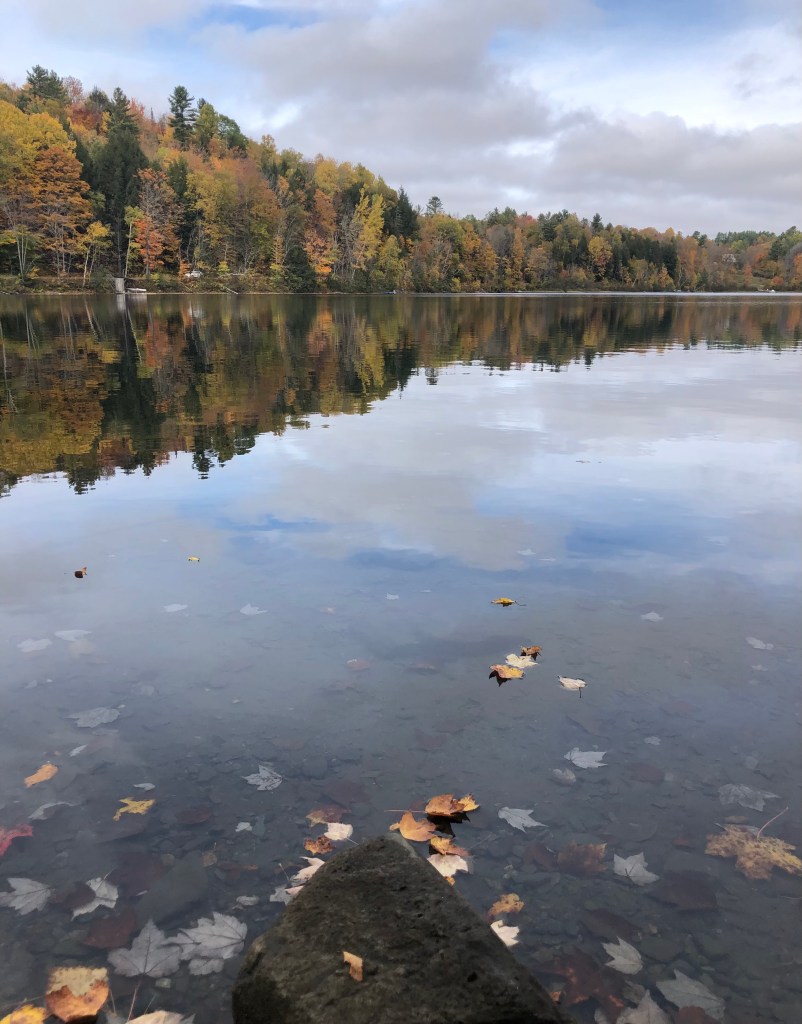
#10 Pond, Calais, Vermont