On Gaslighting.

Via email, my daughter’s school sends me a survey. The survey poses a question about what I desire for my student. The question is phrased in a way that reminds me of a question I was recently asked, by someone I hardly know. The question was unique; the questioner asked specifically about me and my life, and how I saw my life in the wider context of the town.

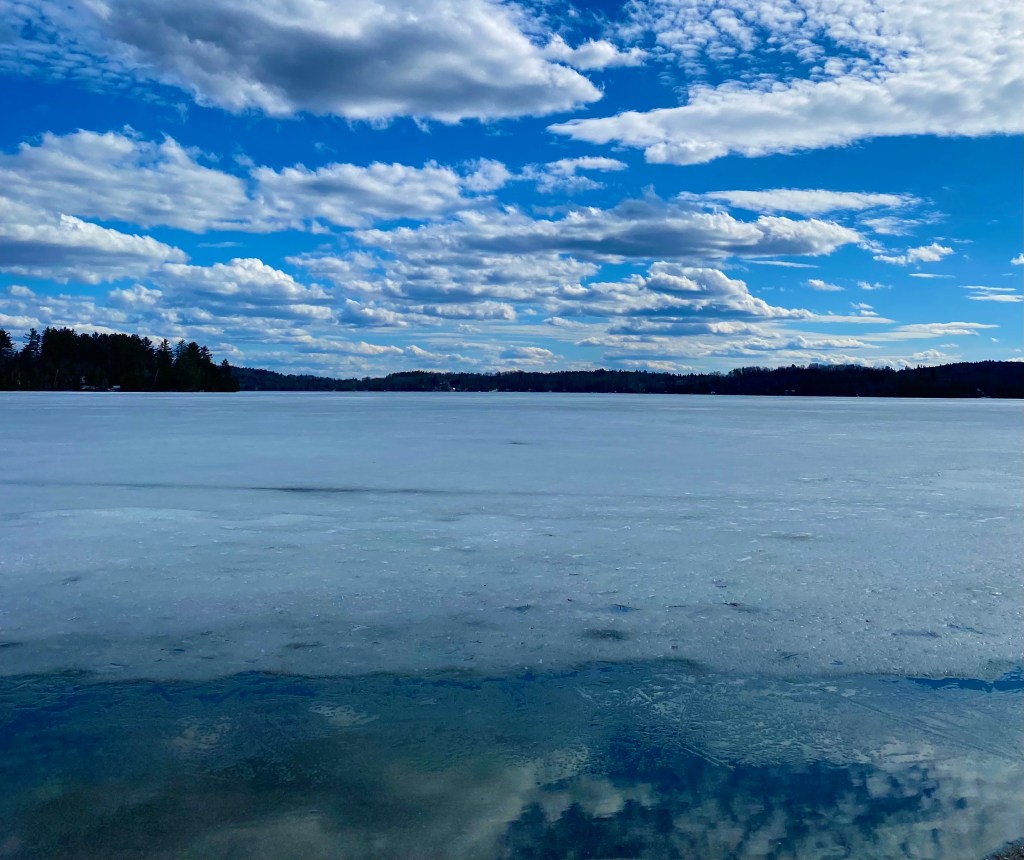
I’ve been thinking of that question since that conversation, returning to it in odd moments while opening my post office box or washing the oatmeal pot. It’s a question we might all want to be asking ourselves — not just what would improve our individual lives, but how do we understand ourselves in the landscape of where we live. Or maybe this is simply April musings, cusp of a storm that could go either way, rain or snow or perhaps simply wind, sweetened with the scent of thawing soil.

Here’s a few lines from a New Yorker article that seem contemporarily apt….

Gaslighting essentially turns its targets against themselves, she writes, by harnessing “the very same capacities through which we create lives that have meaning to us as individuals,” such as the capacities to love, to trust, to empathize with others, and to recognize the fallibility of our perceptions and beliefs. This last point has always struck me as one of gaslighting’s keenest betrayals: it takes what is essentially an ethically productive form of humility, the awareness that one might be wrong, and turns it into a liability.

— Leslie Jamison

“Writing is about breaking down…”

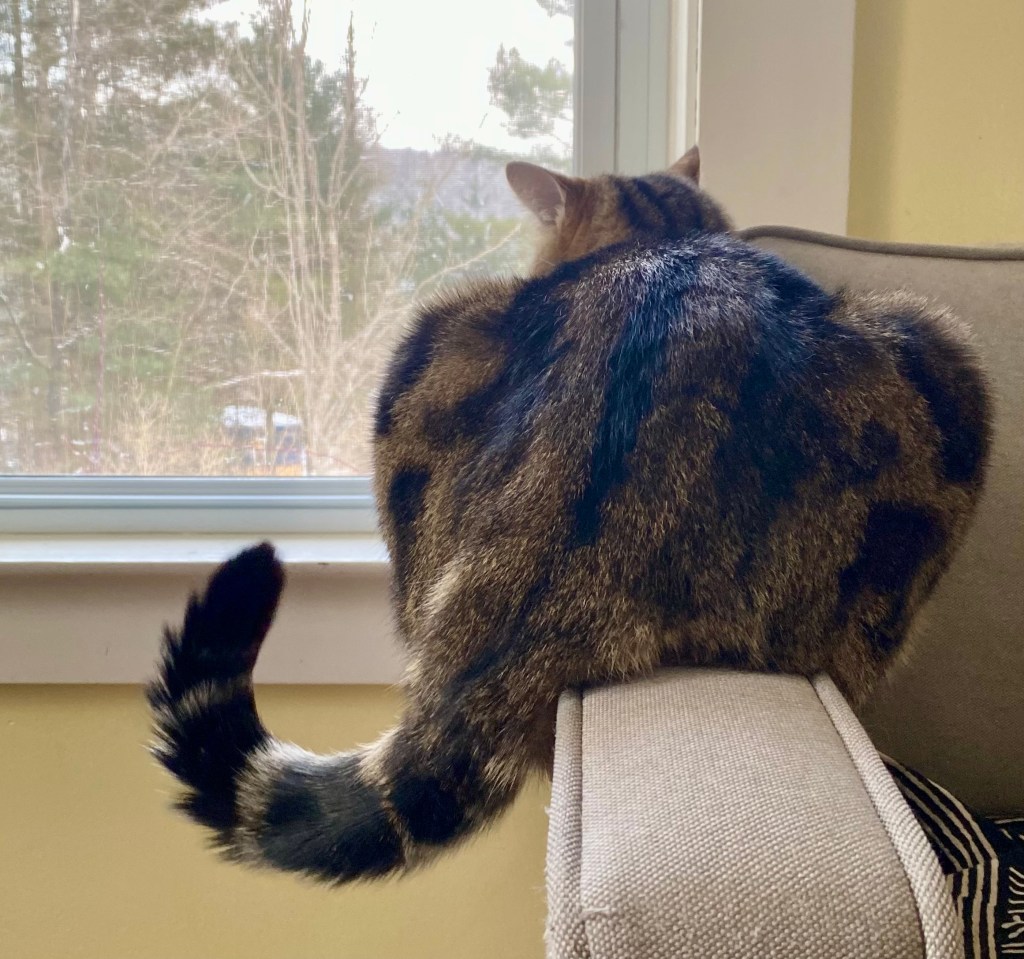
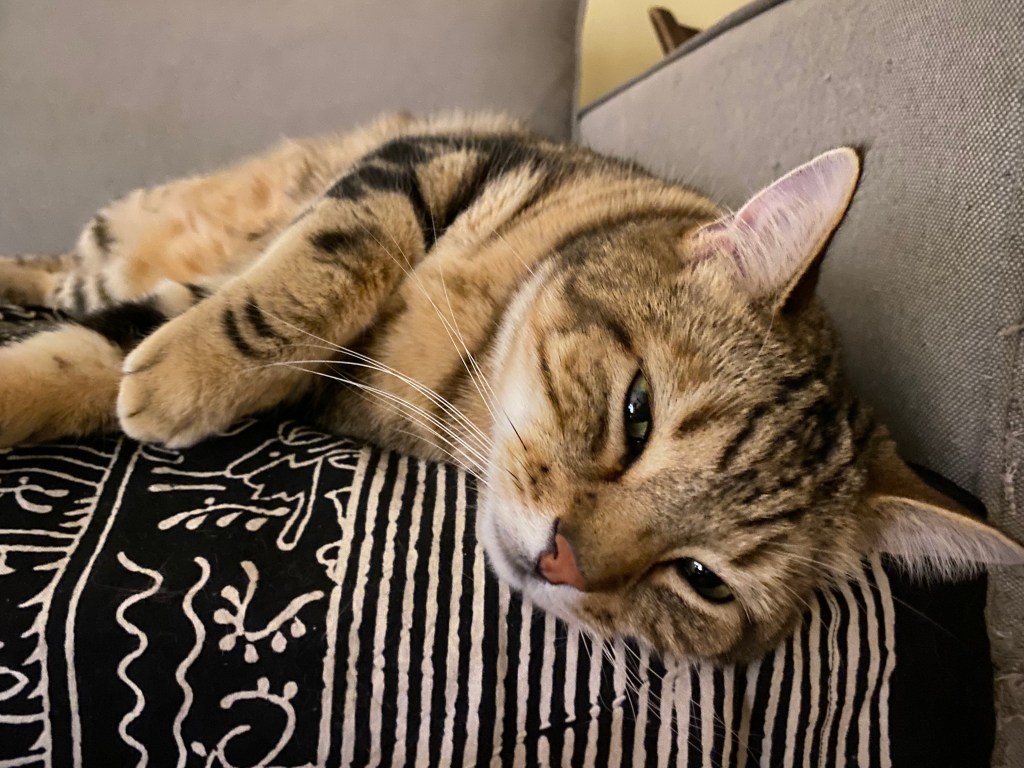
A book of Knausgaard’s essays makes its way into my house. On a snowy day, the cats and I finish putting together my taxes, then read. The snow piles and drifts. The next day, the snow melts and melts, running in sun-sparkling rivulets. Readers either love Knausgaard or despise him, like readers understand Halldór Laxness, or don’t, much in the same way that I have never understood Jane Austen. When I began reading Knausgaard’s Struggle books, a neighbor read at my breakneck pace, loving his words. She and I have long since traveled our own different lives. But reading these essays reminds me of her, how profoundly she believed in beauty as a force. Whichever way she’s traveled, I wonder how that’s worked out for her.

Writing is about breaking down what you can do and what you’ve learned, something that would be inconceivable to a craftsman, a cabinetmaker, for instance, who can’t possibly start from scratch every time.

— Karl Ove Knausgaard

Cats, Coyotes.

The return trip from my parents’ house in New Mexico to my own Hardwick, Vermont, house was 20 hours. When I stepped off the plane, I was effusively grateful to see my daughters waiting to drive me home, to wrap me again in our own particular kind of family — loving and funny, with the fierce rivers of stories that run between us.

A friend texts me and sweetly offers to make me a meal; these days, about all I’ve done is trudge into work, then lie on couch with my cats, reading Michael Crummy and soaking in Jon Stewart’s election update. When my daughters were babies, I lived in a rarefied kind of atmosphere, of warm milk and scant sleep and intense curiosity: what now? what next? As if bookended, my parents in very old age live in a unique world, too, suffused with New Mexican sunlight, and with a similar uncertainty: what next?

In that middle-of-the-night drive to Albuquerque, circling through the airport parking lot, I spied a coyote. I pulled over, opened the car door, and looked back. Under the amber streetlights, the coyote hurried along, brushy tail bouncing, not so much as glancing over its shoulder at me. Around us, so much cement, then the desert, undulating, spreading up into the hills, disappearing from sight.

The wild creature vanished into the dark.

“A body must bear what can’t be helped.”

— Michael Crummy

The Revenge Business.

Washing dishes this morning, I catch a little of NPR’s Morning Edition. Mandy Patinkin who starred in The Princess Bride says his famous line about avenging his father’s death. As I’m scrubbing out the coffee pot, Patinkin says the more important line is about how revenge never got anyone what they wanted. Ever.

For February, this Saturday is crazy warm. I hang the laundry outside to dry and open the windows. I finish up some work at the coffee shop and talk with a school board member from the board I quit, abruptly, last spring. A few raindrops are falling as we step outside on the sidewalk.

In the little rain, I walk home, thinking about that revenge line. Families, nations, epochs, have run on revenge. And the math always works out in its own calculation. Check out the NPR segment.

The sound of one hand clapping, revisited.

This week, I unexpectedly find myself waiting for someone I don’t really know and end up reading a copy of Ken Wilber’s collected writings. Winter has finally come. The purest and loveliest of snowfalls fills up our world. I wait much longer than I had guessed. A woman comes in to sweep the floor, and we talk for a bit. Sunlight pours through enormous windows.

Here’s some Ken Wilber I soaked in:

You know the Zen koan, “What is the sound of one hand clapping?” Usually, of course, we need two hands to clap – and that is the structure of typical experience. We have a sense of ourselves as a subject in here, and the world as an object out there. We have these “two hands” of experience, the subject and the object. And typical experience is a smashing of these two hands together to make a commotion, a sound. The object out there smashes into me as a subject, and I have an experience – the two hands clap together and experience emerges.

And so the typical structure of experience is like a punch in the face. The ordinary self is the battered self – it is utterly battered by the universe “out there.” The ordinary self is a series of bruises, of scars, the results of these two hands of experience smashing together. This bruising is called “dukkha,” suffering. As Krishnamurti used to say, in that gap between the subject and the object lies the entire misery of humankind.

On my way home, I do something I’ve never done in the winter. I park along the edge of an unfamiliar road. I’ve forgotten my hat. The wind is wild, as if I’m on a stormy sea. My hair tangles over my eyes. Oh sun, oh wind, oh endless snow.

Midwinter, here.

A little chaos…

I call the mechanic back about my car who says it’s all good news, a replaced muffler, and the car looks fine.

Finally. Something repaired in the chain of a dying range, a done-in washing machine, my own washed-out and piss-poor attitude.

In one of the few sunny days I’ve seen recently, I’m standing on my back porch, listening to water dripping. We talk a little about the shitstorm of this decade so far, the election roaring up in nearby New Hampshire. He mentions he doesn’t know my political leanings, and I laugh. I’ve been writing him checks for years now, and I’m certain it’s no surprise who I didn’t vote for. But he bends our conversation a little further, kicking the standard gloom-and-doom away and remarks that we might as salvage some happiness in this life.

On this rainy midwinter day, I convince my youngest to drive north to a library in search of a Claire Dederer book. Here’s a few lines from the last chapter of Monsters.

Love is anarchy. Love is chaos. We don’t love the deserving; we love flawed and imperfect human beings, in an emotional logic that belongs to an entirely different weather system than the chilly climate of reason….