Tiny Treasure

A little boy, maybe six, came into the library yesterday with his hand cupped around some precious thing. I had propped the door open to let in the warm September sunlight and a few stray flies. His short hair sweat-soaked, he wore a t-shirt so large it nearly covered his knees.

He laid a crumpled bird shell near my laptop and asked me to keep it safe. I found it, he said by explanation.

The boy was supposed to be somewhere else, and we heard an adult outside calling his name. On his way out, his hand hovered over an apple on my desk, a yellow-skinned fruit with a few dark blemishes I had picked from a wild tree that afternoon, walking to the post office.

I told him it wasn’t sweet, as I lifted the apple and handed it to him.

September’s such a quiet month, with the cricket songs slowly spinning quieter. Wordlessly, he considered, and then he took the apple and disappeared into the sunlight again.

I wondered if the boy would return for his treasure. He did.

Soon the child’s clear eye is clouded over by ideas and opinions, preconceptions, and abstractions…. Not until years later does an instinct come that a vital sense of mystery has been withdrawn. The sun glints through the pines and the heart is pierced in a moment of beauty and strange pain, like a memory of paradise. After that day, we become seekers.

– Peter Matthiessen

IMG_1900.JPG

Nichols Ledge, Woodbury, Vermont

“This Infuriatingly Intricate Web”

A well-known local author mentioned at the most recent of his readings I attended that he’s writing a book about koans – a book I can’t wait to read, because isn’t life just a series of unfolding koans? Have I ever actually solved one? Some days, it seems to me, not likely.

My daughter spied a V of geese winging south yesterday, the first we’ve seen of this season, but one among countless Vs we’ve watched since she was a tiny girl, her arm crooked around my neck. Fall is familiar, graciously beautiful, infinitely sad, followed by the brilliant beauty of sparse winter: the same Vermont story, year after year, and yet I’m always surprised by the September mornings’ cool mist, the cucumber vines shriveling, all done with this life.

Cooking dinner yesterday, I read an article in the New Yorker about that terrible disease, cancer. Innocuously enough, the article begins with mollusks in Lake Michigan, journeys through seed and soil, and ends with a koan:

… as ambitious cancer researchers study soil as well as seed, one sees the beginnings of a new approach. It would return us to the true meaning of “holistic”: to take the body, the organism, its anatomy, its physiology—this infuriatingly intricate web—as a whole. Such an approach would help us understand the phenomenon in all its vexing diversity; it would help us understand when you have cancer and when cancer has you. It would encourage doctors to ask not just what you have but what you are.

– Siddhartha Mukherjee

FullSizeRender


Antidote: Wild Bears

When I visited Michigan as a kid with my family, years ago, we saw a man with a t-shirt marked with the phrase Say something GOOD about Detroit. These days, I often feel that way about the news. Or, worse, just say something not underpinned with corruption or misery.

So here’s my something: nearly 70 curious folks showed up in tiny Woodbury’s town hall last night to hear New Hamphire’s Ben Kilham speak about his experience raising orphaned bear cubs, reacclimatizing these creatures into the wild, and his decades of studying and admiring these beautiful woodland mammals. On a hot July evening, in this historic one-room building, friends and strangers listened, asked numerous questions, bought books. The Kilhams themselves reminded me of my parents, with an IMAX filmmaker in tow who I thought at first was their son, navigating their route and arranging a late post-presentation dinner plan.

Afterwards, lingering and chatting under a floodlight, we passed around the leftover donut holes and swatted mosquitoes. Summer. July. Vermont.

In late winter
I sometimes glimpse bits of steam
coming up from
some fault in the old snow
and bend close and see it is lung-colored
and put down my nose
and know
the chilly, enduring odor of bear…
From Galway Kinnell’s “The Bear”
FullSizeRender

Back Again

In a rosy dawn yesterday, we left Prince Edward Island, the sleeping kids sprawled in our little Toyota, sun-browned and a little too red on one daughter’s shoulders, myself driving and drinking coffee from my thermos, listening to CBC.

As I listened to the Island Morning’s interview with Henry Hank Gallant who walked across Canada in 1967, I thought how different the tenor of this place feels compared to my own country, even relatively liberal-minded Vermont. Much later, deep in Maine’s interior, listening now to Maine Public Radio, Trump’s voice whined over the airwaves about a great trade agreement, and all three of my young passengers who were playing Blackjack on a folded-over atlas howled. We are not Trump aficionados.

But Trump’s word great gave me a thread of the difference between these two nations: America, so fiercely militaristic and competitive, and its civil life – while doubtlessly filled with decent people – underpinned with suspicion and distrust.

We were glad to sail over the Connecticut River and return to our little Vermont village, to stop at the grocery store and have the teenage cashier whose hair was now dyed iridescent green rather than the cherry red from two weeks ago ask, How was your trip?

Dripping humidity here, the kind my mother abhorred when I was a child. July – the growing month in Vermont. My older daughter laced up her shoes and disappeared into the mist for a run.

A nation that continues year after year to spend more money on military defense than on programs of social uplift is approaching spiritual doom.

– Martin Luther King

FullSizeRender

Nearly perfect strawberries I bought from an old man with just a few teeth along a roadside in Maine.

And Then This…

Yesterday, in the early frosty morning, my daughter and I stood in her elementary school’s muddy parking lot, with no one around, in a brief pause between kids and adults coming and going. Red-wing blackbirds chorussed in the leafless branches of a maple tree. As long as I live, I can’t imagine ever tiring of that melody.

Even with the frost, the morning already smelled of thawing mud. We could sense the earth and its critters shaking off winter’s slumbers.

Like that: the light of April rushing back in. Spring.

….In spring, when the moon rose, it meant
time was endless….
– Louise Glück, “The Silver Lily”
IMG_0494

Squishy Season

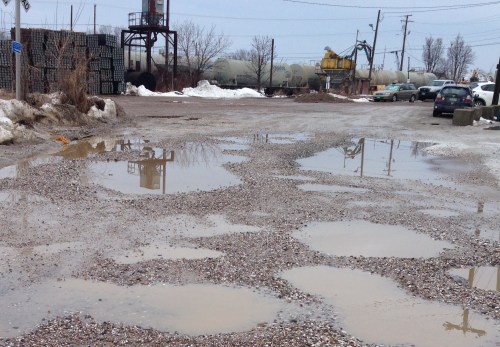
‘Tis the season of mud in Vermont. I once had a neighbor (now relocated back to an enormous city) who hated mud. Her daughter and my daughter were both little then, with rubber boots and pink raincoats decorated with kitties, and the girls adored splashing in March and April puddles, digging with sticks in the ditches along our roadsides, and baking mud cakes in kitchens they built with fallen branches, on carpeted floors of pine needles. Sweet days.

The girls spent many more hours at my house than at hers, shedding their filthy and soaked clothes on our porch and sprawling before the wood stove to warm up, eating popcorn and drinking honeyed tea and giggling. Sweet days.

Let us settle ourselves, and work and wedge our feet downwards through the mud and slush of opinion and tradition, and pride and prejudice, appearance and delusion, through the alluvium which covers the globe, through poetry and philosophy and religion, through church and state, through Paris and London, through New York and Boston and Concord, till we come to a hard bottom that rocks in place which we can call reality and say, “This is and no mistake.”

– Henry David Thoreau, Walden

FullSizeRender

Burlington, Vermont