A Gift of Sticks, Maybe

Here’s a fantastic use of Facebook: a friend and colleague offers hydrangeas — come thin my patch, dig and carry.

I’ve known this woman longer than I’ve had children, so our conversation, while we dig, winds in and out of family and bits of gossip about the local library scene.

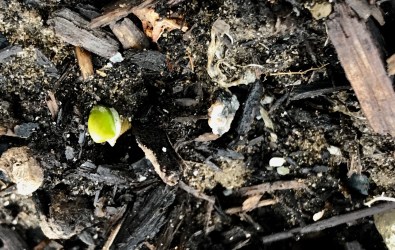
We pack the back of my little silver Toyota with boxes of sticks and fibrous roots, black crumbles of soil. I cradle a fat earthworm in one palm while we talk, then gently return this creature to damp earth. The early, misty morning is fragrant with the unmistakable scent of opened-up soil.

In the afternoon, at home, I plant two long rows of these hydrangeas,  separated by a path down to the woods.

My girls are skeptical of planting what they see as sticks. Really?

Act of faith. And not that extreme. These sticks will grow.

We are suspicious of grace. We are afraid of the very lavishness of the gift.

— Madeline L’Engle, Walking On Water

IMG_4385.jpg

Coltsfoot by Molly S.

Z39.50

On a rainy day, I’m at a cataloging class at the state library. Through the open window, rain pours from the roof. I admire the library world for its insistence on precision and order, its intensely democratic approach, the unapologetic quest for knowledge and creativity.

In Vermont, numerous tiny one-woman libraries like my own hold the same democratic importance as the large city libraries. Such a complicated network laces this system together — like Z39.50, the mysterious (for me) way library systems speak to each other and exchange information.

Later in the morning, the rain stills. Through the open window, robin sing. The teacher pauses, says, Spring’s here, and waits for just a moment, a subtle acknowledgment of the beauty of communication.

The only thing that you absolutely have to know, is the location of the library.

— Albert Einstein

IMG_1677.jpg


A Word About the Garden: Sign of Spring, Hardwick, VT, #10

Robins land in my garden — how close these songbirds swoop to my hands curiously digging in leaf mulch for the first green bits of garlic, the sage greening at a few unlikely ends.

The garden at our former house spread enormously, surrounded by buckwheat field and forest, the woods spreading unbroken over Woodbury Mountain, territory of moose and black bear, bobcat. The songbirds, leery, remained at a distance. Always, at that house, I sensed a tension between domesticity and the wild, my garden the sometimes porous buffer between human and animal life.

Here, on a sandy moraine with a view of the river, the sweetening bones of Hardwick’s passed souls lying six feet buried beyond the row of lilacs, cultivating this patch of earth will be a different variation of home and wild. We haven’t moved far, but cardinals nest here; at our former house, we had seen only a single, stray, lost red bird.

April showers have fallen for days, and I expect rain to fall for days more. The girls complain, but I think, Let it fall… Water our soil, the knotty clumps of root, deeply, well.

The leaves are fresh after the rain,
The air is cool and clear,
The sun is shining warm again,
The sparrows hopping in the lane
Are brisk and full of cheer…
It is a happy thing, I say,
To be alive on such a day.

— James Stephens, “April Showers”

IMG_1579

Mud Season in All Its Holy Glory

My daughter texts me at work: My car is stuck in the mud.

Snap, I think. I continue what I’m doing, thinking my girl can likely solve whatever she’s gotten into now. It’s the last day of February, 2018, a day so warm I’ve propped open the library door. The lilies are pushing up around the school, and I step outside with a patron to watch a woolly bear inching its way across the walk.

My daughter, laughing, calls me and tells me she could no longer drive her little Toyota on a muddy road. I just stopped! In her nice Danskos, she stayed in her car, surrounded by glistening mud. The town road crew, working nearby, asked if she was going to move, and she explained her predicament. The road commissioner had her slip over to the passenger seat. He floored her car, drove it free, and suggested she might want to stay off that stretch of road.

Ah, spring.

….I, who so often used to wish to float free
of earth, now with all my being want to stay,
to climb with you on other evenings to this stone,
maybe finding a bear, or a coyote, like
the one who, at dusk, a week ago, passed
in his scissorish gait ten feet from where we sat—
this earth we attach ourselves to so fiercely….

— Galway Kinnell

IMG_1226.jpg

The Worth of a Tree

After Obama as a senator had been on NPR’s Wait, Wait, Don’t Tell Me, host Peter Sagal mentioned they had to scrap the charisma off the floor. Last night, my local bookstore, The Galaxy Bookshop, asked Howard Frank Mosher’s brother Terry to read from Mosher’s posthumous collection of stories, and I’m sure the booksellers had to sweep what might be described as just plain Niceness off the floor. What a lovely family. What weeping. What laughter. What a life, Mr. Mosher.

Terry Mosher spoke about a Robert Frost poem their father read to the boys when they young, and mentioned how deeply and tenaciously those lines rooted in his brother’s fiction. He quoted, “The trial by market everything must come to,” and noted that all through Mosher’s writing runs rural people fighting against measuring land in monetary terms, the worth of life in dollars and cents, which sums up one of the deepest conundrums in current Vermont — or stretch that way, way beyond my Green Mountain State borders, far into the terrain of human nature.

The city had withdrawn into itself
And left at last the country to the country…
— From Robert Frost’s “Christmas Trees”
IMG_0986.jpg

Where we are

Winter’s Grass-Is-Greener

Driving down the Woodbury gulf in the twilight, staring at the road — snow-crusted, ice packed, with two curving black lines of asphalt worn through winter — I remember all those years of driving mountainous Route 9 in southern Vermont and wonder, What if I’d stayed in Brattleboro? What if my kids went to school there? I made soup with my publisher and used the Brooks Library with their enormous windows? What if I lived on Elliot Street again?

That’s January thinking.

My gaze lifts from the treacherous road to the gray and white mountains folding around that narrow valley, with the waterfalls and the rocky cliffs high overhead.

Trouble follows you anywhere. I know that. The last time I was in Brattleboro, itinerancy surprised me, the darker threads of our society thickening. I was glad I hadn’t stayed, that I had swapped a larger town for a smaller one. In the end maybe, it’s all Vermont roads, with those mysteriously beautiful mountains always greater than us, rising silently.

The winter wind flings pebbles
at the temple bell

— Buson

IMG_0912.jpg

Store Window Art, Hardwick, Vermont