True Compass

Yesterday, my 15-year-old drove on the interstate for the first time. Fittingly, this route was one of our favorites — a hardly used stretch across northern Vermont and New Hampshire.

Coming home, we took the long way around St. Johnsbury, where one interstate joins in with another.

At a particular but unremarkable place, just as we crested a hill, I remember driving this same highway in our old blue Volvo, my then-husband in the passenger seat, our girls in the back, talking and doing some kid craft project. My then-husband and I were listening to an NPR report about Teddy Kennedy and the late senator’s true compass.

So many years have passed since then. Our youngest is now driving, utterly confident, her sister and I offering advice — be wary of semis, know that blind spot. As I’m chauffeured by her, I think how my daughters will be tested in their lives in ways neither of their parents have, their own forming compasses pushed and challenged. So often, I feel I endlessly run my mouth with advice — don’t trust any other driver, suspect impairment and incompetence — but I know my girls always make their choices, create their own lives, enact their own unique dramas.

Mostly, I’m just so damn glad to be here, still part of their lives, ragged and worn out, the worrying mama….

True compass, I ponder as we drive home. This piece I keep to myself.

August

Sunday morning finds us walking in the rain on Nature Conservancy property — a place I’ve visited for over two decades now. We meet another couple walking a small pug. Other than that, no one other than cows.

We walk along old farm roads, flanked by towering maples, looking for wild raspberries. The rain warms into a humid mist.

Immense maple, white quartz, rusting barbed wire fences, myriad shades of green. Here’s where we are, and nowhere else.

At home, the garden has grown half-wild, the cosmos taller than my head. That evening, eating sausage and onions and peppers, we sit outside, talking. Even for the teenager, everything drops away — maybe school? maybe soccer practice? — as the warm August evening slowly pushes in.

A crescent moon lights the sky over our house. My oldest yawns. There’s nothing else but this moment.

The oak tree:
not interested
in cherry blossoms.

— Basho

Outside of Time

For work reasons, I’m often driving these days on a backroad in Greensboro, Vermont — a wooded stretch of dirt road with few houses. At a particular place, I always remember the August day when I was driving along with a friend, our two five-year-olds in the backseat. The five-year-olds were likely conspiring or arguing. We were driving home from a circus performance in a tent in a large hayfield.

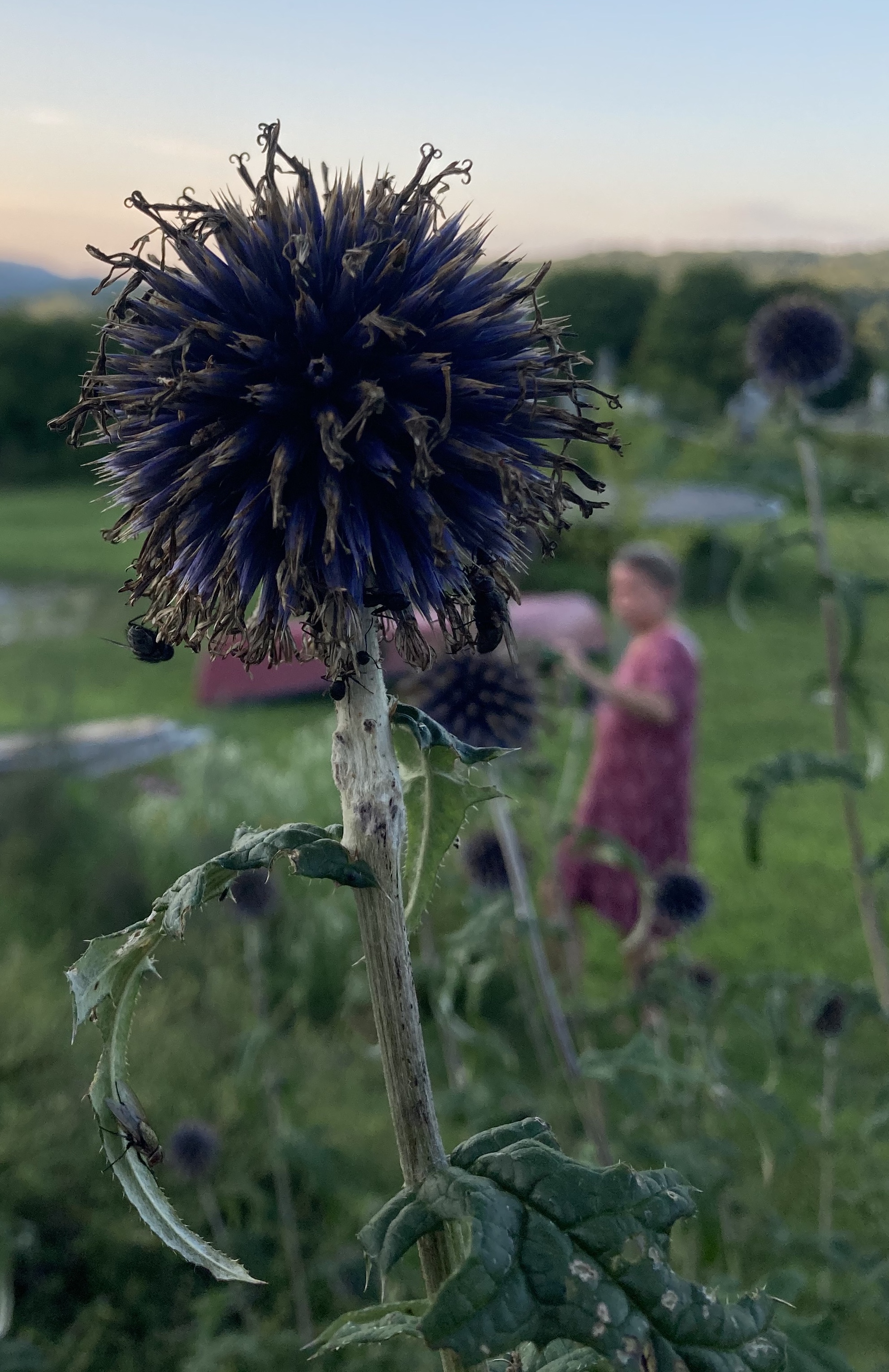
My friend got out of the car and ran off the road with her camera. She wanted to photograph some giant flowers in the woods. Were they Giant Hogweed? Cow Parsnip? She took her time while I stayed with the five-year-olds. The kids were buckled in, and we weren’t letting them out.

Oh, August. Memories upon memories. Who wants to remember January with its endless days of 20 below zero? But August? Somehow, in these days, we’re always young parents, with that enthusiasm for enormous wildflowers and all the time in the world to take photos — at least for these few, gorgeously shimmering days.

IMG_8163

Photo by Gabriela S.

More Summer

Every month might as well be a whole entire season in Vermont. August is the month of the best things — wood stacking and pickle canning, tart made from the first fruit from our tree, whipped cream, purring cats, and all this sunlight. Sure, we need rain, but in Vermont I can’t help but relish these days after days of sunlight. Early mornings, I work outside on the deck, the air chilly, drinking coffee, watching the rising sun pinken the horizon.

For a brief bit of time, I’m ignoring the math of counting down to autumn.

Saturday afternoon, my older daughter suggests eating tart before dinner. Why not? Really, why not?

So we do.

Late August, given heavy rain and sun
For a full week, the blackberries would ripen.
— Seamus Heaney, from “Blackberry-Picking”

IMG_8171

Small Joys

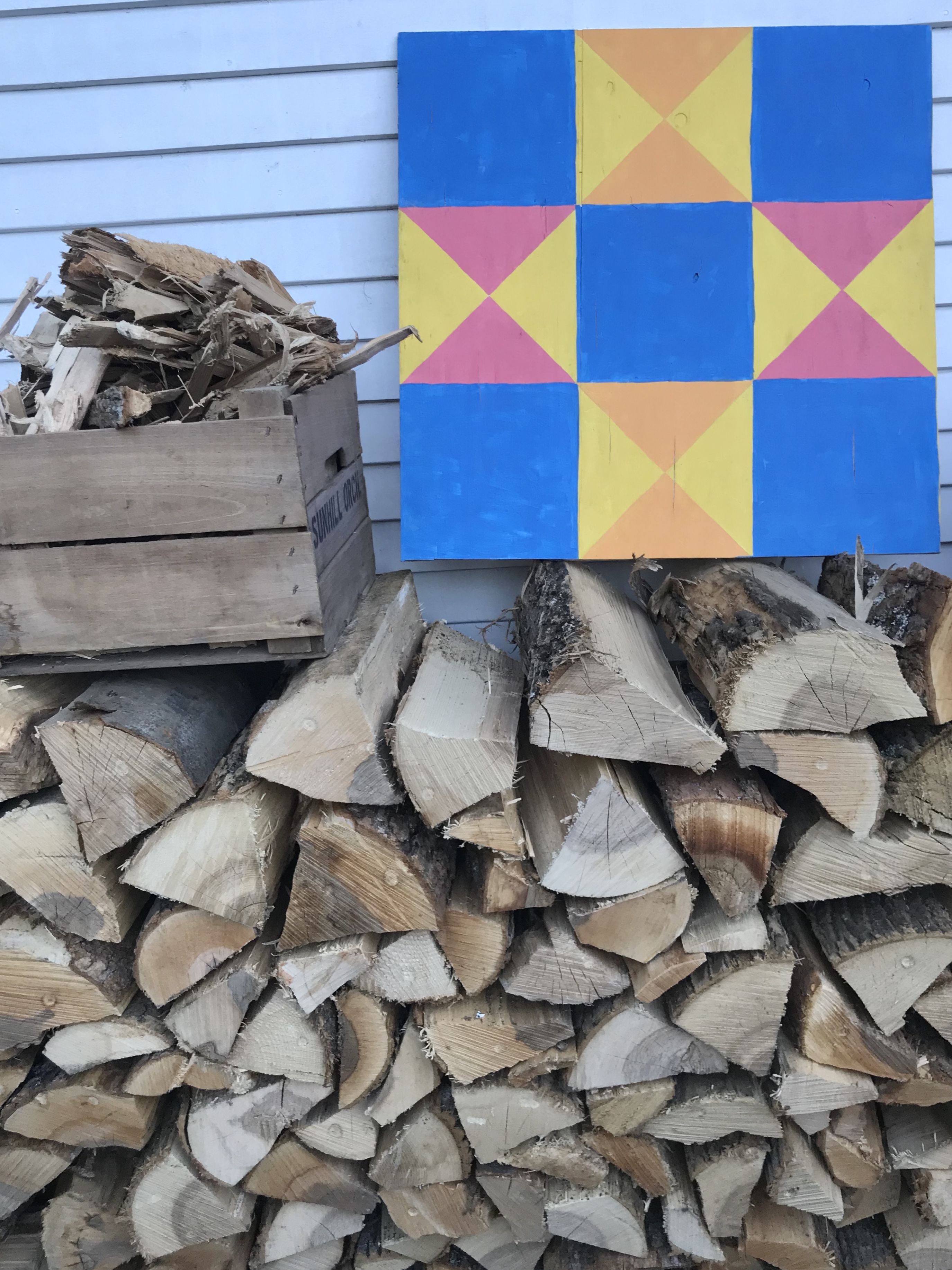
Friday afternoon, I knock off work early and stack wood with my youngest.

She’s a far better wood stacker than I am, precise in her ends, creating long tight rows on our porch. About the only thing I have going for me is endurance; I’m determined to stack it all, on this fine sunny day — that endurance, and my utter pleasure to be working outdoors, breathing the sweet smell of sap.

She rakes the piles of bark and the slivers we’ll use for kindling, as we talk about little things, nothing much. Later, she swims with a few friends, the three happy. Seeing her happiness fills me with joy.

On the cusp of school reopening, uncertainty is palpable. Will school open for a week? A month? What kind of crazy plan is this? Like most parents, I’m wondering what’s the way forward? What’s the way to feed her desire for learning and friends — in a pandemic? Who knows?

When I set the rake back in the barn, I find our hatchet. Its head is dull and loosened, in need of repair. Years ago, ax repair would have been my husband’s purview. I hold its hardwood handle. Okay, I think. Find a different solution.

The neighbor’s cat sprawls on our woodpile, gray belly up to the sun, purring.

The cool breeze.
With all his strength
The cricket.

— Issa

IMG_8167.jpg

Photo by Gabriela S.

Neighbors

I’m listening to a friend I like very much describe her neighbors’ extensive political signs — sizable banners and flags decorate this rural Vermont property. I’m tallying up my book purchase bills for my library when I suddenly pause, listening harder as my friend says she doesn’t think she can walk across the dirt road and be friendly anymore.

A variation of the conversation surface again at dinner, when my oldest says her Instagram posts have been criticized as not political enough, not making a vocal stand against injustice. We’re eating tomatoes and sweet onions my youngest picked from the garden.

Our conversation winds around to the late and great John Lewis, and I remind my daughter of the challenge Lewis posed:

When historians pick up their pens to write the story of the 21st century, let them say that it was your generation who laid down the heavy burdens of hate at last and that peace finally triumphed over violence, aggression and war. So I say to you, walk with the wind, brothers and sisters, and let the spirit of peace and the power of everlasting love be your guide.

My daughter, worn out from a long week at work, struggles — what am I supposed to do? Like anyone, she desires to walk the path of justice and goodness. Then she tells her sister and me the heartbreaking story she witnessed that day at work of a Black woman, white men, and fear. What could I have done? she asks me.

I don’t have the answer for her. Listening, I suddenly think, Fuck Instagram and our human — or perhaps American — compulsion to sum up the story of justice and injustice in a few brief sentences. My daughter leaves for a run, utterly dissatisfied and miserable.

I sympathize with my friend who didn’t want to cross that road to her neighbors’ porch again. I’m as guilty as anyone else of barricading my heart to those I don’t understand. But the world, surely, changes through compassion. There’s nothing glitzy or flashy about compassion — it’s messy and painful. But isn’t that the challenge?

IMG_8165

Photo by Gabriela S.