Goodness

This morning, hearing news of the Trumps’ positive test results, I think of where I was just a few hours ago, on a hillside in Greensboro.

The Nature Conservancy owns pieces of land all around where we live, some unmarked, others with a trailhead and sign, beckoning in the curious foot traveler.

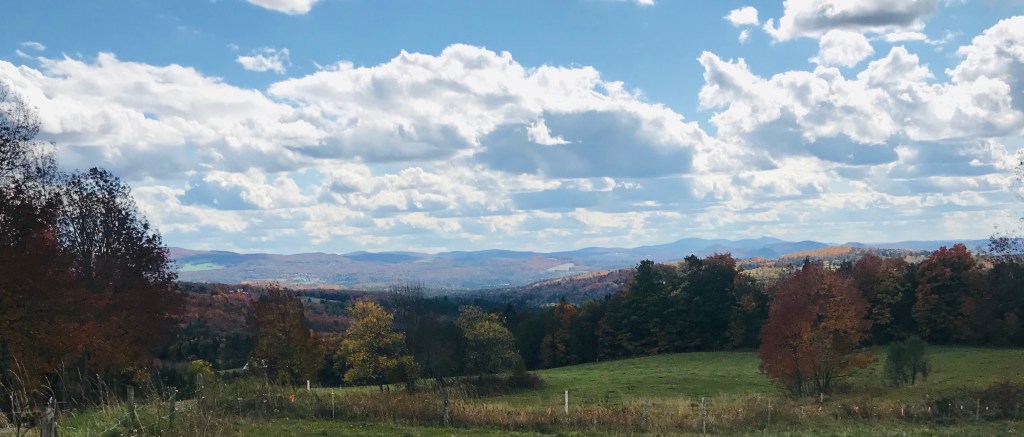
At Barr Hill yesterday, I didn’t have time to walk that short loop, but paused to admire the view, the little crickets leaping over my shoes. A couple, seeing me, put on their masks, got into their car, and drove away. So for a little while, it was just me and the postcard-stunning autumn — yellow and red mountains, the shining patch of lake, the sky.

The land was donated years ago by a local family. In Greensboro, there’s deep channels of money, its origins often hidden — “old money” — and in Greensboro, too, there’s runnels of poverty, far away from the lake’s summer wonderland, but just as real and alive.

Whatever happens with the Trumps, the virus will go on, until it’s finished, one way or another. But all through this time, these long months and what will inevitably stretch ahead, my daughters and I have gone into the wilderness around us. At the library where I work, often these days I walk along the wetlands, even just for a handful of minutes, breathing in.

Try to do some good in this life, I think. Keep land open. Write a book. Teach a kid to read. Use what’s at hand…

“If you want to live, it’s good to be friendly.” 

― Art Spiegelman, Maus
Season Change

My daughter and her friend were been hired for the afternoon to harvest pumpkins.

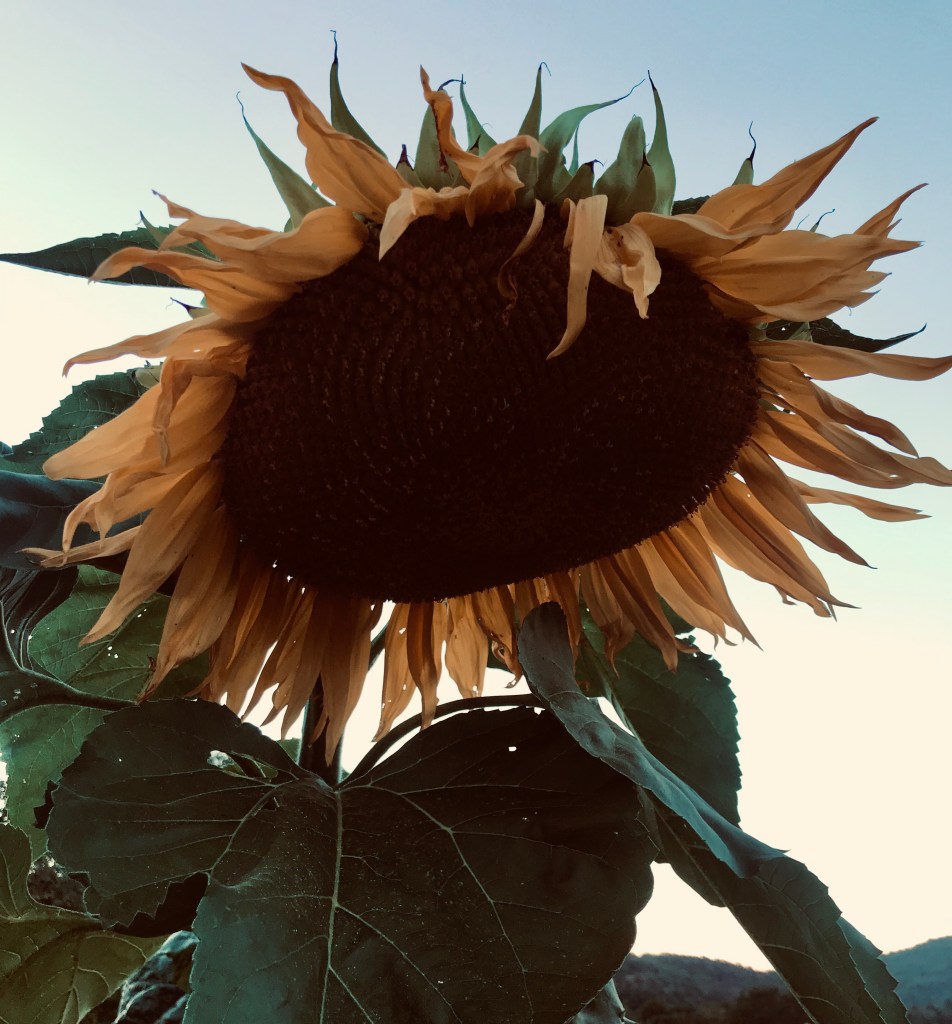
That afternoon, picking up the girls at the farm, I stood talking for awhile with the couple, whom I’ve known since my oldest daughter was a toddler. They showed me the sunflowers they had managed to save from the frost by covering. The flowers, I could see, were not long for living.

Bundled in sweaters and sweatshirts, we stood talking in the late afternoon sunlight. The couple was appreciative of my daughter and her friend — how the girls’ hard work boosted the boys’ output. I laughed, watching the girls walk towards me, out of the field, holding gloves in their hands, talking with each other.

I remembered those long-ago summer and fall days, when I had worn this child on my back while I sold maple syrup and homemade ice cream. Her little fingers reached over my shoulder, looking for snacks.

The couple’s son drove up on a tractor, a father now himself. As I drove back to our warm house, baking lasagne and apple crisp, I kept thinking of how that couple would give my youngest a tiny pumpkin every year at the farmers’ market. She would carry that orange squash in her two hands, like treasure.

Jack Frost? Not Yet

At breakfast, my daughter mentioned a frost warning.

What? I thought. Already?

At the post office later that day, I chatted with an acquaintance who was at the counter buying stamps, his tiny dog tucked under his arm. He said, Why is frost always such a shock every year?

Indeed.

My girl and I picked the remainder of the tomatoes and peppers, covered what seemed like it should be covered. At the end, I tossed an old sheet over a patch of my zinnias. Really? she asked. You’re covering flowers?

But they’ve given me such pleasure, I said, even autumn-ragged as they are now.

The frost passed us over. A few more days of summer here.

The autumn grass

Wilts at once.

Playing with it. 

Empty House

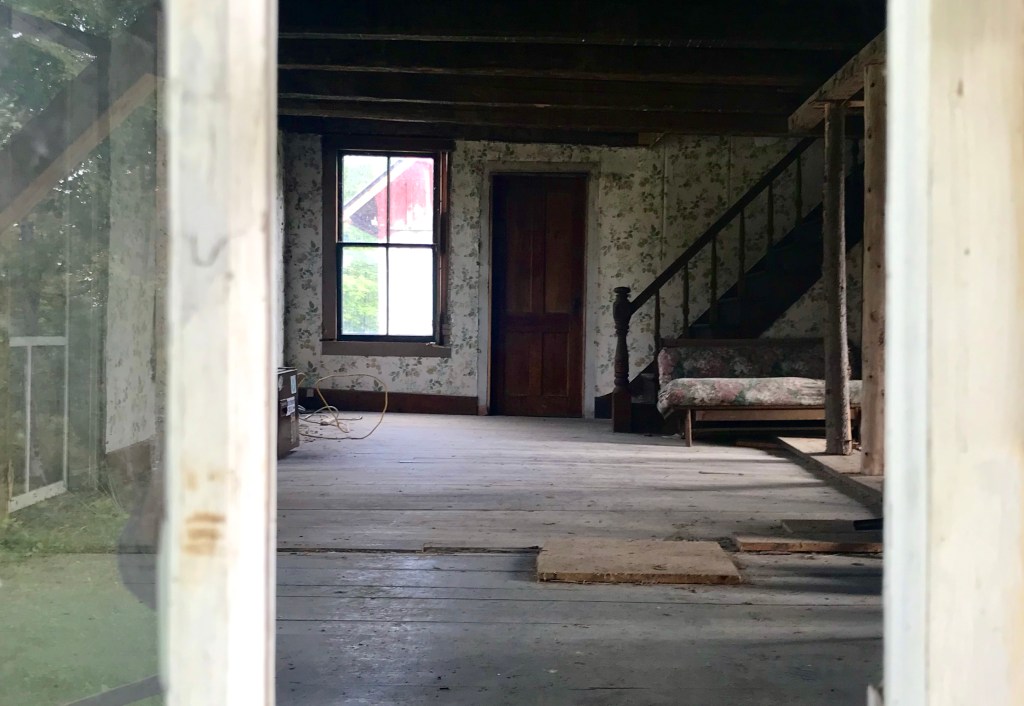
The afternoon’s end finds me on a remote road, looking at an abandoned house. No one’s lived here in a long time, save for intermittent squatters.

It’s the first day of school for my high school sophomore. Although I’m at this property for work, I keep thinking of my daughter.

Behind this house are two immense white pines. I stand there, listening to the breeze rising off Lake Eligo, imagining what it was like a hundred years ago to farm here. What will it be like a hundred years from now? The question looms impossibly.

I bend down and peer through a missing pane of glass in the door.

In Yaa Gyasi’s Transcendent Kingdom, I read a line from Thoreau: “Not till we are lost, in other words not till we have lost the world, do we begin to find ourselves, and realize where we are and the infinite extent of our relations.”

In so many ways, that sums up my experience. But that lostness I know now, is hardly a brief experience. The thing about the pandemic is that it’s exposed all the weaknesses in our society, and in ourselves, too. In my own world, I see acutely how pandemic has highlighted the near impossibility of single parenting, as I find myself these days unmoored, the thinness of my life exposed.

These days, in my work, I’m able to listen to people’s stories about how they’re experiencing the pandemic. These stories are often so much about loss — particularly about families separated — and worry about an uncertain future. Surely, I think, if there’s a time stories connect us, it’s now.

So on this first day of school, with the sweet scent of Vermont’s fall, with so much uncertain, I walk around this abandoned house, thinking of how time flows on. Near the step, I find a tiny plastic pig. Using the hem of my shirt, I rub dirt from the creature, then leave the toy on the broken step, hoping a child will chance upon it.

Homework

In the evening, with the windows open to the crickets’ songs, my daughters sit on the couch, doing homework together, while I read about the 1918 pandemic and knit.

Half-listening, I hear my daughters figure out the answer to a chemistry question, googling definitions. Decades beyond my own high school science classes, I’m no good here. Inevitably, these discussions always remind me of my adolescent years — well before google — when my father was the in-house reference for anything from trigonometry to weird geography questions.

Not so, in this house. I advise the girls to call my brother.

But as I listen, I realize they’re piecing through an interesting problem about change on the molecular level, and my youngest notes that change is the one constant.

It’s a particularly poignant observation for a 15-year-old, and I lay down my knitting and take a walk in the darkness around our house.

This week — heck, these months — seem filled with stories of people around me whose lives are in upheaval. These are all people I know and care about, in varying degrees. I keep thinking how, on a political level, so much misery is caused by exploiting the weakness of others. So, too, in our own personal levels, where so much of our energy often jockeys for a position of strength, betraying a marriage, a confidence, a professional relationship.

Meanwhile, change is the one constant. Surely, if nothing else, that could be a theme for 2020.

And yet, perhaps, it’s not.

In the darkness, I stand near the woodpile, breathing in the scent of sap and fresh wood, of damp soil turned up. Our cat sits on the windowsill, peering out at me. Overhead, the Milky Way spreads across the sky. My daughters’ voices drift through the screen, figuring out their answers, laughing a little — for the moment — happy.

In the Journey

In these warm September days, the little boys who live across the street dig in their dirt driveway, holding up their tractors for me to admire, their faces covered with dirt. The older boy, who’s heading into whatever might be kindergarten this year, wears his Spiderman suit everyday.

Our two houses are at the end of the one-way road. The two brothers, this summer, have begun dismantling the road’s pavement, picking up the broken asphalt pieces and building a tower in their driveway. I look at the tower with immense pleasure. Sure, the world may be falling down around us, but here’s two little boys, recreating the world.

I can’t help but wonder if someday these boys will remember the Covid time as the summer of digging, like I remember the summer of my brother’s fourth year as the time he dug a bear trap — and then fell into it.

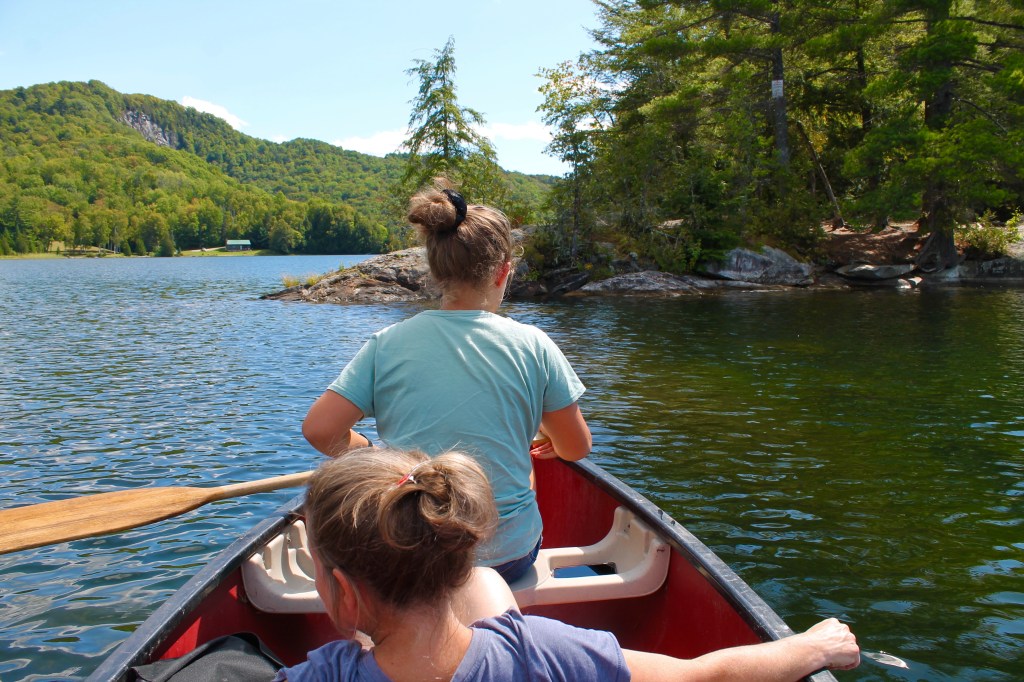
On our end, with my daughters, we canoed out to an island of hemlock trees, a beautiful place, silent but for the water lapping the shores and a loon calling across the pond. The girls packed sandwiches and apples and a bag of potato chips. We ate everything and then rowed across the pond. Why not? This is where we are. What’s the rush to go anywhere?

On the eve of school (possibly) reopening, I keep thinking of Maria Montessori’s wisdom….

Preventing war is the work of politicians, establishing peace is the work of educationists.
― Maria Montessori

Nichols Pond, Woodbury, Vermont
Photo by Molly S.