Moon.

On her way out last night, my daughter calls back into the house, Come see the moon!

A full moon rises behind our barn — the July Buck Moon. The night is so luminescent I can easily see the lilies along the barn.

I suppose the moon reflects the faraway sun, but the moonlight glows so vibrantly, like living molten gold, that the moon this night seems particularly alive, so close I imagine reaching out and dipping my hands into the round bucket of its beauty.

I know, theoretically, our house on this planet is spinning, too, but from our patch of grass and stone walkway and garden and house, it appears the lovely moon will rise and sail over our house and us sleeping in our bedrooms all night along. A magical thought — one I take comfort from.

“And The Moon and the Stars and the World”

Long walks at night– 
that’s what good for the soul: 
peeking into windows 
watching tired housewives

— Charles Bukowski
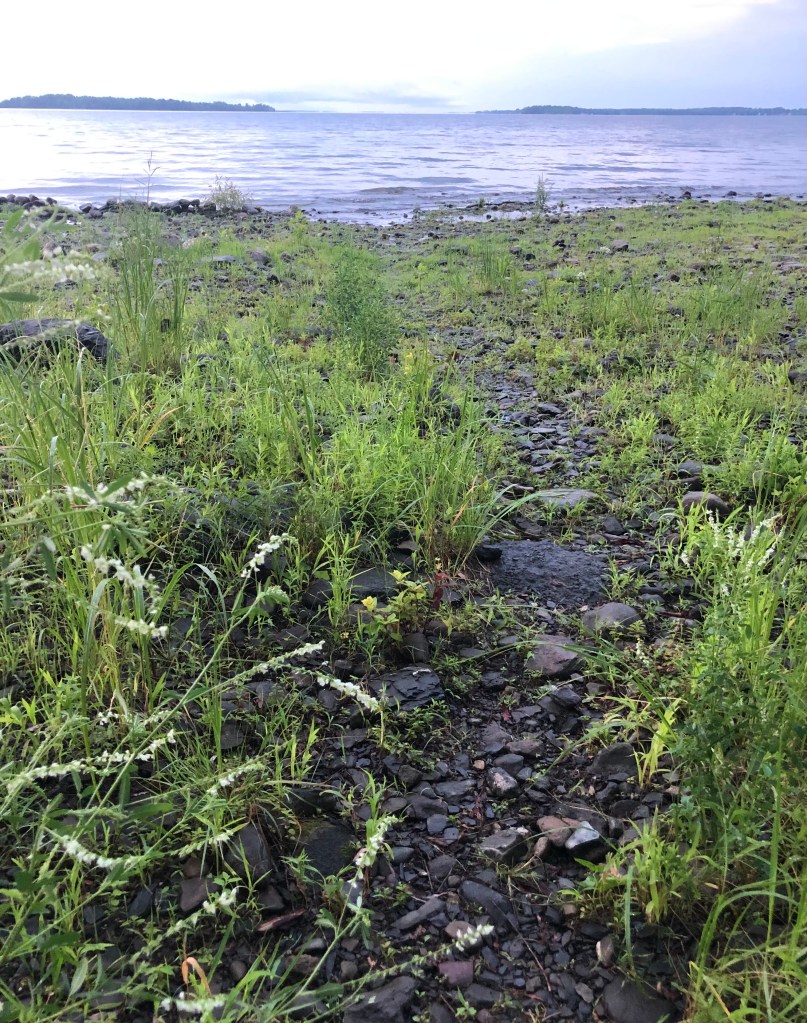
Burton Island, Vermont

Ferry Boat Captaining

For years, I’ve taken my daughter and her friends camping for a few days on an island in Lake Champlain. We’ve been going so long now that the years and memories have interwoven — the July the raccoons ate most of our food, how I always cook pasta and clams and greens from my garden, the way we always explore every bit of the island.

What’s changed is that the girls themselves have grown from kids to teenagers. This year, less biking and more talking.

In the early night, I lie awake in the dark, listening to the lingering remains of a thunderstorm and the girls tracing through school and soccer, questioning and wondering and thinking their way through the world.

On the way home on the ferry, we admire a sweatshirt the ferry boat captain is wearing. The shirt must have been issued by the Vermont State Parks. The back reads, 2020 We Did It.

We sit on the ferry’s open top. In the cabin, the captain invites in all the little kids on the ferry, surrounding himself with five and six and seven year olds. On the loudspeaker, he says, Lots of future captains with us today. We’re so lucky. All the way back from the island to the mainland, the kids cluster around him. There’s one place between rocks, marked with buoys, so shallow we can see rocks gliding beneath the lake water. He guides us through effortlessly, and in the open water again offers his chair to the children, who take turns. The children are radiant. The captain places his hand on a boy’s head and smiles joyfully.

Burton Island, Vermont

Family.

My friend and I spent many hours drinking coffee and watching our (then) little kids play at the edge of Caspian Lake, on colder summer days moving our coffee to the front seat of the car while my daughter’s hair blew over her eyes and lips in the wind. Those little kids are all grown up now, busily figuring out their own lives.

This Saturday, while we’re swimming, my daughters have dressed in heels and dresses and gone to a wedding. Late that night, after a long drive, they return with stories not about the dress or the Inn or the cake, but with stories of people and families and whose lives have gone awry and who is kind. An aunt and uncle of the bride have traded in family participation for a cult. Another family member is wandering out west, immersed in her own story, having cut herself free from any family obligation.

In the midst of this are the young adults, all working hard, scrambling in the severe shortage of housing in Vermont, trading advice about colleges and education. Brushing our teeth, we laugh and laugh. My daughters are no longer young in the way of using sand toys at the beach, but very young at heart, ready to make the world new in their own lives and hearts.

Family, we agree, using this word as both a noun and a verb.

Midsummer. Rain. Snails in the cabbage. Blooming calendula. I wouldn’t trade these obligations for the world.

“I am so far from being a pessimist…on the contrary, in spite of my scars, I am tickled to death at life.” 

― Eugene O’Neill

‘This is what you shall do…’

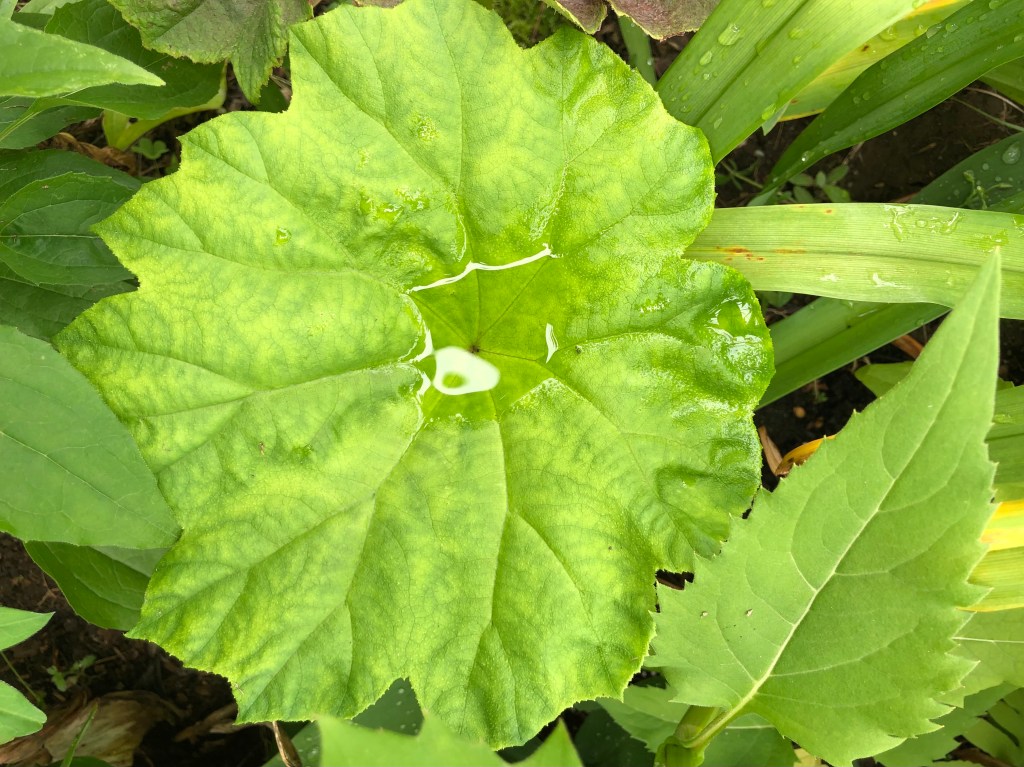
Planting rudbeckia this afternoon, my shovel hits something hard in the sandy soil. I scrape and unearth a brick and then several pieces, all in surprisingly good shape. How useful, I think.

I dig harder, wondering, who buries bricks? and then discover a drill bit, too.

With my fingers, I unearth that and ponder. I know a carpenter who worked here a number of years ago, and I wonder if the tool is his.

For a moment, my eyes sweep the perennials in the front yard — forsythia and roses and lilies and peonies — and wonder what else lies buried in all that soil.

I plant the rudbeckia, stack the bricks in the barn, and hide the drill bit in a secret place.

Oh, sweet July and all your forty shades of green. Keep on surprising me.

This is what you shall do; Love the earth and sun and the animals, despise riches, give alms to every one that asks, stand up for the stupid and crazy, devote your income and labor to others, hate tyrants, argue not concerning God, have patience and indulgence toward the people, take off your hat to nothing known or unknown or to any man or number of men, go freely with powerful uneducated persons and with the young and with the mothers of families…”

— Walt Whitman

Cash. Wood. Still Lovely July.

In my bank account appears $250 from the IRS. I could spend this money six ways to Sunday. What I do is order more firewood. For years, the only expenses we had for firewood were chainsaws and fuel, property taxes, and the our own labor.

Living in town now, I buy firewood. There’s nothing else like the wet-sap scent of freshly cut and split wood. I buy from a man who lives in the next town over. When he delivers, we have an annual check-in about what’s happening, standing beside a great pile of split wood, talking about the weather or what’s happening in Washington or sweeter things, like his baby granddaughter.

The thing about burning wood is all the steps — tree, woodpile, glowing fire and happiness, ash that I spread in my garden.

Last night, as I turned off the lights and headed upstairs, I spied one of our cats lying on the rug before the wood stove, wistfully staring. It’s sultry July, and many days off (I hope) from kneeling before the wood stove.

Hardwick, Vermont

A Little Green.

An acquaintance stops into work. I’m jammed to the point of frazzled with a list of what needs to be done, but I quit for a bit and shoot the breeze, ask what’s up in his world, and how his very large (by Vermont standards) business is faring.

We’re Vermonters, so our conversation naturally bends towards the weather. We’re dry — not New Mexico dry, where my parents live — but so dry in Vermont wells are going dry. Listening, I think how much of the summer is yet to come. Then he heads off to his day, and I head back into mine.

In the evening, I’m in a meeting at the town offices when the rain begins. The town offices are in a 100-year-old schoolhouse. It’s a well-made building of wood and walls of pressed-tin over, now shabby in places and in need of TLC, but endearing with history and craft. By then, the day has stretched out quite long for me, but I’m happy to be in this building, with jovial people who are doing their community part.

When I step outside in the dark, cold has moved in with the rain. But the rain falls steadily, at least for some amount of time. The next morning, the hillsides are vibrant green in a way I haven’t seen for some time.

We’re dry, but not as dry as we were before.