Light a Candle. Keep It Alive.

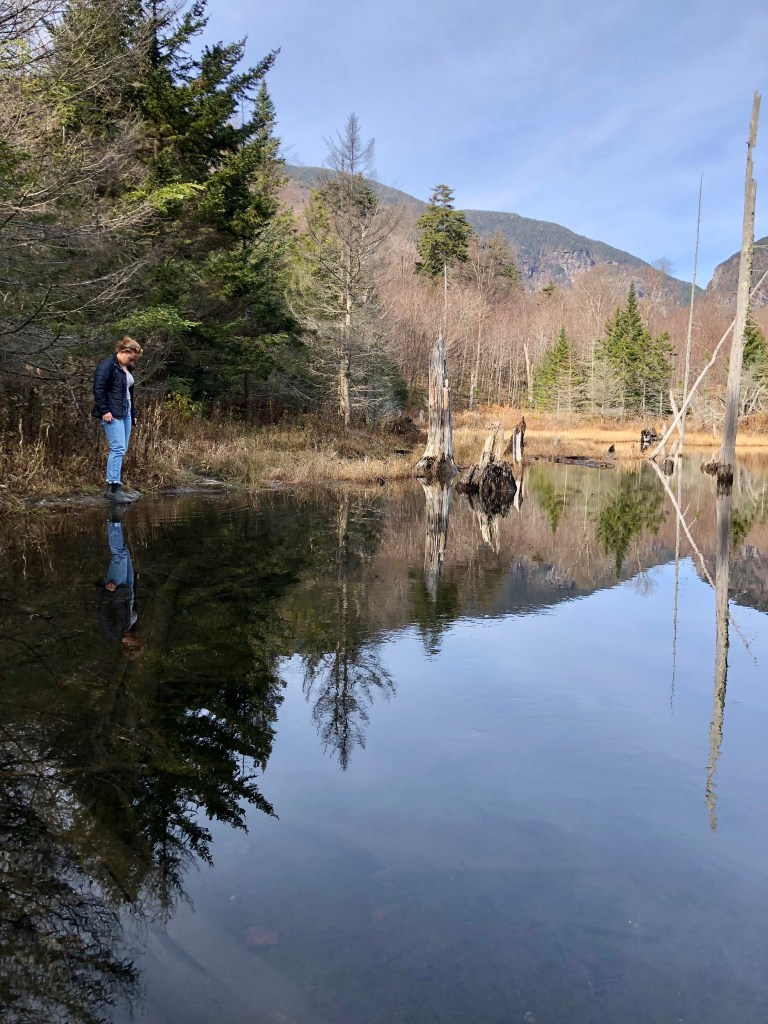
Mt. Mansfield, Vermont

My daughters’ preschools had a sweet November festival called the Lantern Walk. The little kids each made their own lantern, from a mason jar or metal or wax, and strung it through with a wire. On a dark November evening, always right about now, the families arrived, and everyone took a walk through the woods with these candlelit lanterns, singing. The metaphor was, and is, immensely appealing.

In all my daughters’ lantern walks, the route often changed. One year, the teacher led the families down a steep hill. Rural Vermont is dark, dark, dark, on these November nights. The parents whispered to each other, fence here, and watch the big root.

These November days and nights, the wood stove is again glowing in our house and the wind blows over our hillside. Like Shakespeare’s play within a play, I remember those walks as Lantern Walk within a Long Lantern Walk.

On another note, State 14 ran an excerpt of Unstitched. It’s always such a pleasure to appear in this Vermont publication.

Late Fall Mud.

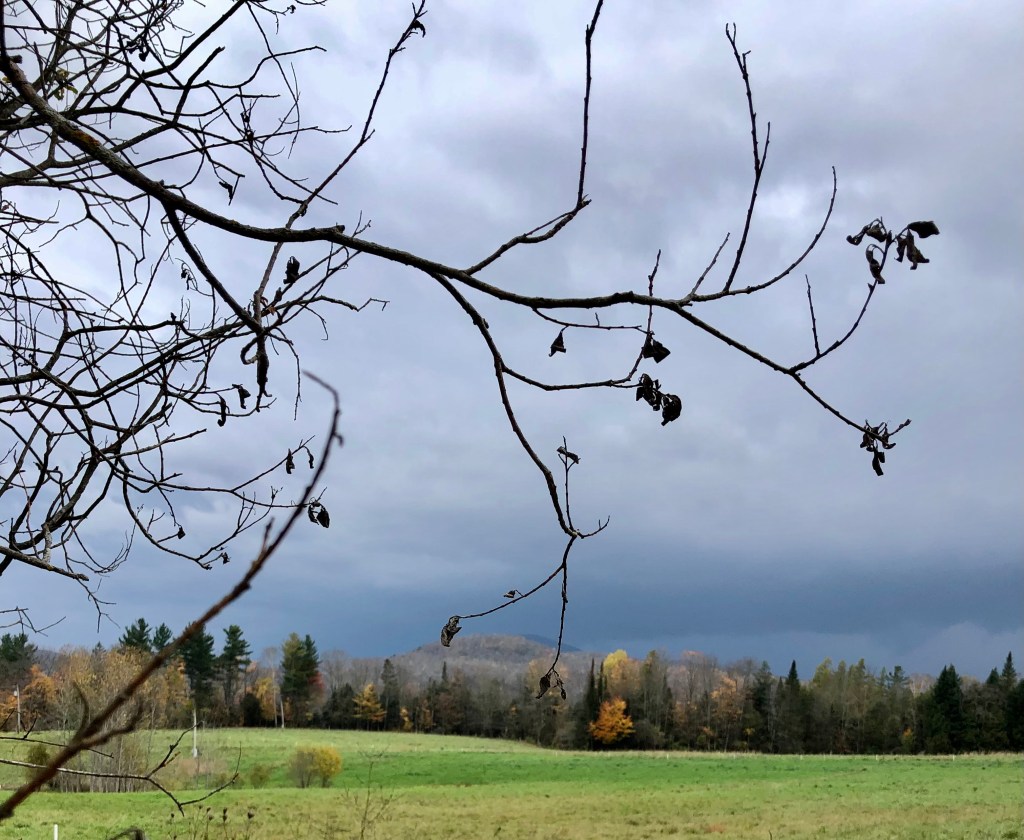
This photo sums up November — little remainders of green, intermittent mud, and a long road ahead. It’s not all bad news, for sure. November twilights are the loveliest — pale blue and blood red.

On Anne Sexton’s birthday, a line from this poet: “Put your ear down close to your soul and listen hard.” 

What could be better advice for November?

Frost Slivers.

Hardwick, Vermont

Vermont November is the month of introspection.

Beloved friends from long ago stop by for coffee and conversation on their way from here to there. We’d last seen them when we first moved in this house, less five years ago.

We take that figure of five years and turn it around and around — so much has happened in those five years. As with everyone I meet from afar these days, I ask what’s happening where they live. The conversation has a strange, almost wartime sentiment, as we compare notes.

In mid-afternoon, I bury daffodil bulbs. The soil has already begun to freezing. My bare fingers burrow through silvers of white frost, the teeth of winter beginning to grow. Finished, I brush off my hands on my jeans and stow my shovel in the barn.

Why the World Never Ends.

In a light rain and pitch dark, my daughters and I arrive at Montpelier’s Hubbard Park for the annual Enchanted Forest. Masked, spread out, bundled up, I have the strange sensation that the three of us are alone, and yet not alone.

The forest path winds along lit jack o’lanterns and burning torches, and among live musicians and giant puppets. Near the crest of the hill glowing paper lanterns decorate a giant oak tree.

The climax of the walk is a creation story re-enactment of a very old woman. Her black dog unravels her weaving as she tends to the changing seasons. As the rain falls more steadily, I realize the story is the tale of my life, as a writer and a mother — the story of the tension between order and disorder and the human longing for order to reign. Yet total order, total perfection, is impossible in this earthly realm.

We walk back through the mud puddles. Before heading home, my oldest pulls into a convenience store. Under a well-lit overhang, I stand outside, watching a man pump gas into an enormous SUV. He’s with a woman wearing a coat that falls to her ankles, a pretty garment with leaves and vines. I’m too far to hear what they’re saying, but I see his hand reach out and slip the top button closed on her coat and smooth the collar over her clavicle.

Through the plate glass window, my daughters stand at the store’s counter, buying hot chocolate. They’re wearing masks, so I can’t see their mouths, but from the way they look at each other, I know they’re laughing.

November looms tomorrow. Our New England darkness. Tighten your coat collar.

Hardwick, Vermont

Kicking Up Leaves.

My daughter and I are standing on a street corner in Montpelier, Vermont, talking about some little thing — maybe the mighty silver maple on the library’s lawn and how those leaves are always the last to turn gold. How I remember this every year at the same annual mark, and then forget this for the rest of the year.

While we’re talking, I keep thinking of this lovely library, and how I took my daughters there as little girls. Later, I often worked all day in the upstairs reading rooms with views of the trees. Not so, anymore, in our pandemic world.

Across the street, a couple kicks fallen leaves at each other. I stop talking, thinking, Oh, no, what fresh hell is this? when the couple begins laughing. They’re each holding white paper cup, and he has a paper bag that might be full of sweet delicious things from a nearby bakery.

That moment — that tiny joyful moment — opens up our day. Sweet normalcy. Oh, yes. Bring that on.

One of my most favorite autumn poems:

on a withered branch
sits a crow
autumn nightfall

—Basho

Fall.

The moon is a perfect circle of cream.

In the dark, we walk downtown and leave letters in the mailbox. Through the valley’s mist, house and streetlights glow. November looms. Poet Thomas Hood described November: “No dawn — no dusk — no proper time of day.”

The news around us is of two, unrelated homicides, neither far from our house, in our rural state with scant violent crime. In the dark, I bring in an armful of wood and pause for a moment. Across the valley, I see a pair of headlights crest a dark hillside and begin a descent, slow to my eyes through the mist.

Through the house windows, I see my daughters before the wood stove, our walls painted butter-yellow. The crickets are gone. Late fall pushes in. Every year, the darkness enfolds us again, inescapable and mysterious.

Over my shoulder there’s that moon.

Hardwick, Vermont