Which Way?

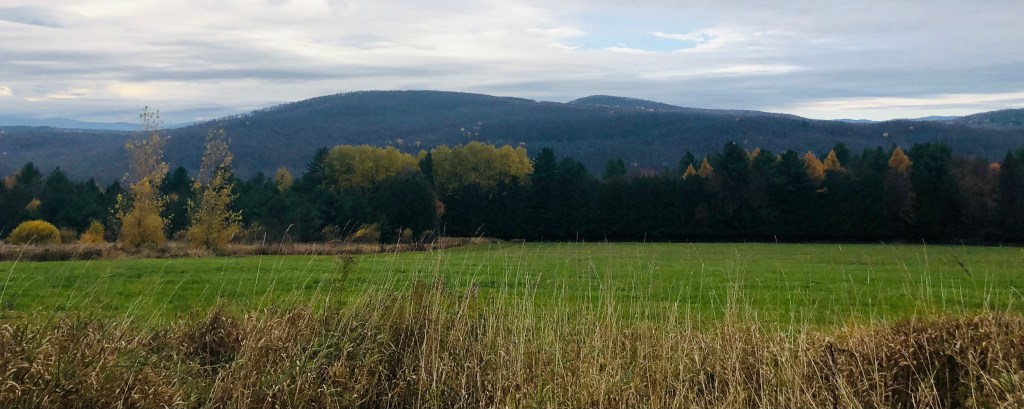
Midday, I walk along Caspian Lake’s edge. By now, the summer people have long since gone elsewhere, back to their own tangled lives. In no mood to see anyone and chat, I take the woods path. I know my way well enough now — all these little wanders — that I know where to turn and hide when I hear voices through the woods. The day is clear, the water so transparent I can almost imagine swimming across its blue surface.

I’m so caught up in my mind’s little narrative that when I cross out of the trees and into a meadow I nearly step into a woman walking her dog. We nod and exchange little greetings about nice day and who knew November could be so pleasant? Her golden retriever rubs my knee. I crouch down and let her dog touch the palm of my hands with her nose. There’s nothing more between the stranger and me but this: the dog, the wet nose, the creature hungry to know me.

November is the beaver moon, sunlight falling through bare branches, and the question of winter: which way will this go?

Upon a withered branch
A crow has stopped this
Autumn evening

— Bashō

Election Day.

On this election day, I hang out the laundry in a bitter wind, sharply turned from the weekend’s balminess. Pinning up t-shirts and dresses, I think of Henry David Thoreau’s famous words:

“Take long walks in stormy weather or through deep snows in the fields and woods, if you would keep your spirits up. Deal with brute nature. Be cold and hungry and weary.” 

I read in Walden in high school and took that copy with me when I moved to Vermont. I simply never returned it, and imagined Thoreau wouldn’t have been particularly opposed to my theft. On this windy day, the laundry won’t need long to dry, which is perhaps just as well as the dark moves in now by suppertime. Last night, in the passenger seat of my daughter’s car, the early night pressed around us — enchanting or foreboding? I could have leaned either way. As I pin up the last of the kitchen towels, I keep thinking of the line There will be no catharsis. These words came in a conversation about a recent death in our town. How much we all seem to long for a revelation, the loaves and fishes thing, the who’s in the know and has the real scoop about the true and genuine causes of this or that unhappiness. History, of course, prevails upon all of us, pushing down our small lives, our dear dramas.

Like Thoreau, I am a New Englander, and November leans in with her force.We all might be the wiser for being out in her wind today.

Time Out of Mind.

On the town forest trails, I spy two deer. Across the fallen leaves, now brown and dry, we eye each other. If I hadn’t seen a flicker of white tail, I would have kept running. But I have seen them, and so I determine to wait. I’m in shorts and a t-shirt; it’s so freakishly warm for November that people seem to be in a tizzy of utter delight tinged with dawning horror that this climate change thing, it’s really moving along. Nonetheless, these days are sweet.

The deer nearer me turns her? his? head just over one shoulder, checking in perhaps with the companion. Then they turn together and run. At the top of the hill, white tails bouncing, the creatures stop and look back at me, perhaps in nothing but curiosity. They vanish into the woods.

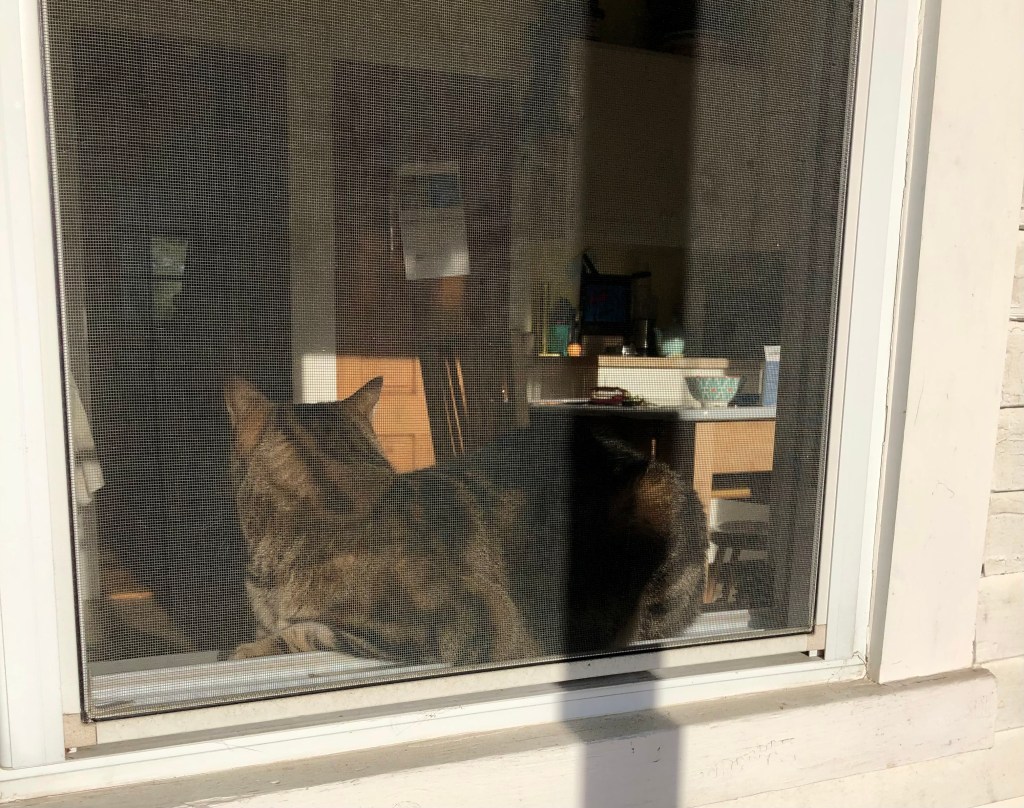
This is a November when I let the fire extinguish in the woodstove, hang the laundry outside, open the windows and make my cats happy. I chop apples into halves and quarters and eighths and throw the pieces into muffin batter, as if the world can measured and understood by rudimentary math, by counting two eggs and a quarter-cup of milk. In the afternoon, I abandon my thoughtful list of chores and lie in the weeds behind our house, reading Maggie O’Farrell, journeying imaginatively back in time to a Duchess’s life. It’s the same question that’s mesmerized me for years: how much of our lives do we determine and how much is dumb fate?

In the sunlight, I sleep and then wake breathing the complex scents of warm, humusy soil and spicy green leaves, and around all the dry crumbles of what this year’s frost has already bitten. In the cemetery behind my house, a man and a boy fly red kites, the long tails fluttering like ribbons.

November Is, What November Is.

By chance, I meet a woman who was a teacher in a nursery school my daughter attended. She’s partnered now and has a child of her own. We exchange a few words, back and forth about little things, facts and details, while waiting for coffee. As with all of us, she’s older now although fixed in my memory as that very young woman who adored my daughter and said she would gladly keep her. In this few minutes, I have no sense of which way her life has unfolded. It’s none of my business really but here I am, wondering, nosy as all get-out as my daughters claim. Her child isn’t with her, and I wonder about the child, too. Back in those days, I believed in simple formulas for happiness (2 parents plus 1 home equals happiness). As with so much else in my life, I’ve rethought all that.

…. Balmy November. In the evening, I walk in the dark, cutting down through the wild patch behind our house and around the school ballfield. The three-quarters moon rises, more luminescent than any earthly thing. The neighbors are fighting. A door slams, and then the late autumn silence wraps around. November moves on, doing what it will.

…. Last, I discovered Anderson Cooper’s podcast “All There Is” through The New Yorker. For Stephen Colbert fans, I particularly recommend the interview about how grief shaped this man’s life.

“Grief is its own thing. It’s not like it’s in me and I’m going to deal with it. It’s a thing, and you have to be okay with its presence. If you try to ignore it, it will be like a wolf at your door.”

— Stephen Colbert

Mark a Line in a Forest.

The farmhouse is built on a cliff above a glacial lake. It’s been years since anyone lived there, although the roof and windows are intact yet. I walk around the house and then stand for a moment at the steep hillside that tumbles down to the lake. Someone lives down below, and I spy a flash of silver roof in the sunlight. Beyond it, the lake.

The road is exceptionally narrow, winding uphill more steeply than most Vermont roads. Whoever built here, I’m guessing, chose this place for the sheer beauty of the view. A foolhardy choice, perhaps, as the house and farm have long since turned over and over in ownership.

I’m here to look at survey marks, line up orange and blue blazes with paper, and read deeper down into the stories of people, of friends and enemies, of what land means to various people. Surveys, roads, grudges, loyalties, all the barriers we erect between ourselves.

Inadvertently, I take the slow road home, stuck in construction on the highway that winds along the lake. A duck flies overhead. At home, I meet my daughter who has just returned from soccer practice. We sit in her car, talking, talking, about olive bread and cheese, sautéing mushrooms with garlic. Around our house and my garden the foliage is simultaneously luminescent and gone by, the leaves dropped dead to the ground, the trees uncloaked. For these moments, the sky is suffused pink. My daughter says, “Not bad.” Around us, an infinity of stories held just for a moment in my hand.

“Nevertheless, something will come of all this.”

– John Gardner

Peony Roots.

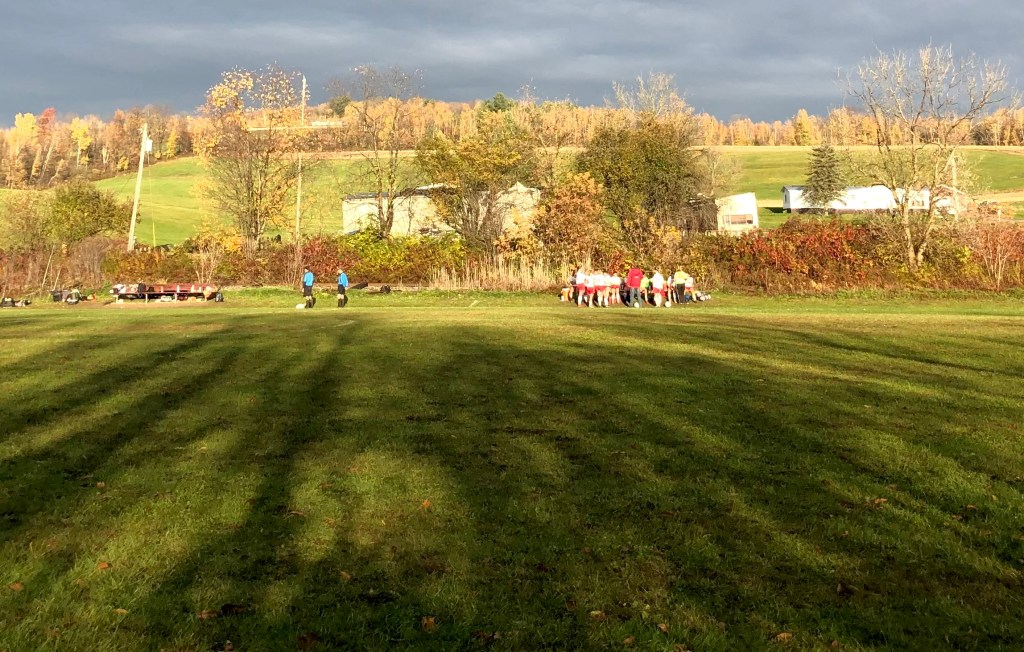
Nearing the end of soccer season, my daughter’s high school community suffers a second tragic death in just a few years. In this little rural school, the news seems almost unbelievable, except it’s not.

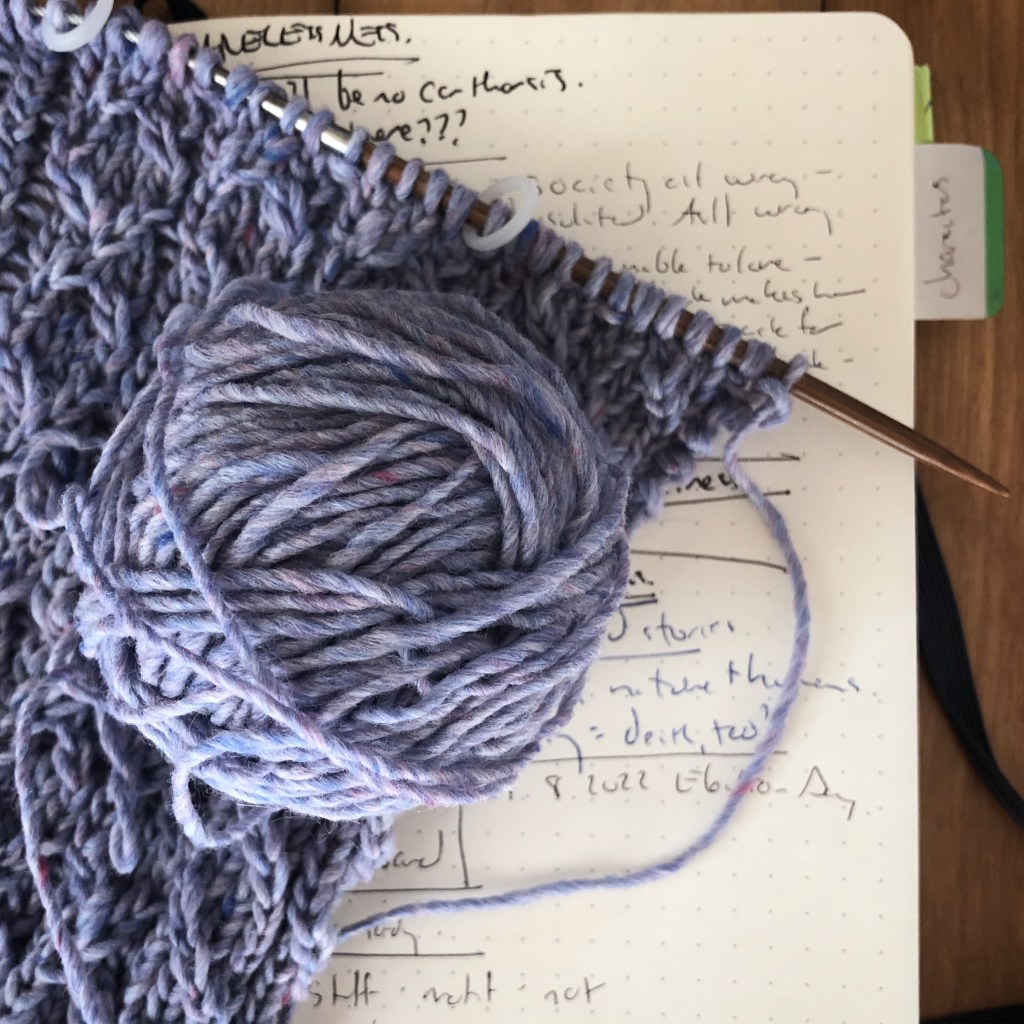
The loss is not my own personal grief, and so I keep on, of course. On a Tuesday, I leave work early and drive to a game in a northern town where I’ve never been. All morning, a cold rain had fallen. The school is in a town where a Blue Seal Feed plant dominates the shabby downtown. I appear with my knitting needles and a ball of yarn. I’ve forgotten a chair, and another mother takes pity on me and walks back through the mud to her car to retrieve an extra. I end up at the end of the row of spectators. A black cat with white paws wanders by and jumps into my lap. Beside me is a high school boy whose name I never asked who christens the cat Mittens and tells me about his cat named Turkey who was born on Thanksgiving. He speaks slowly and calmly about ordinary things like the railroad workers driving along the tracks in their trucks at the end of the workday. Cigarette smoke streams through their opened windows.

I drive home alone, missing my friend who is no longer my friend because of some certainly unforgivable thing that passed between us. Nonetheless, I miss her as I drive through the long autumn twilight. In this unfamiliar territory, I pass through farm fields where tractors are silhouetted against the sunset, through fields harrowed up black or still emerald green from the year’s final hay cutting. Mist floats over still ponds. The forests are a mixture of gold and russet, gray where branches emerge. Shot through with the day’s final sunlight, the landscape might be an 18th century oil painting.

The darkness catches up with me. At home, the cats will be hungry, the fire in the wood stove gone down to embers. I pass through a village where I haven’t been in twenty years. I had visited with a young woman both baked cakes for a living and built bridges.

As I drive through the forests and over mountains a few other vehicles pass my way — a milk truck, scattered cars. This American Life tells me stories as I live through my own American Life. Both times when Covid entered my house I felt the thinness of my life. Beneath a red-neon GAS sign, I stop for gas. My jeans are mud-splattered. Despite the drive and my car’s heat, I’m shivering although the air here, away from the sodden field and the river, feels almost balmy against my face.

I screw on the gas cap and step away from the pumps where it’s only my car, anyway, with the cardboard box of peony roots someone salvaged from their garden and passed along to me. The evening star gleams over Elmore Mountain. For some inexplicable reason, I remember stepping out into the New Mexico night the last time I visited with my brother, relishing the night’s splendor. We talked about those numberless nights camping as children, sometimes humid, sometimes frosty, in good times and bad. The night is an ancient, ubiquitous realm. Red and white lights of traffic glide along the road. I get back in my car and place my hands over the heater’s blowing vents.