Memory Game.

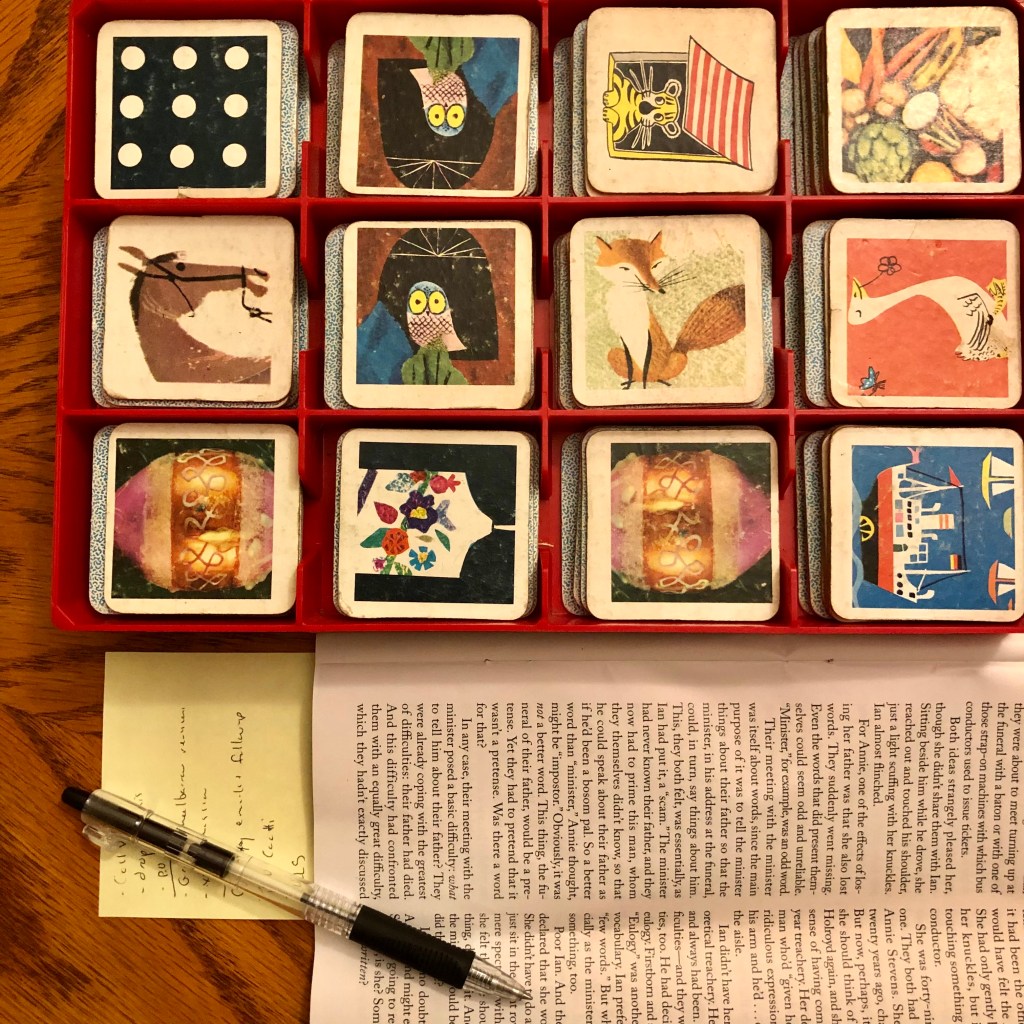
Thanksgiving weekend, we pulled out the memory game. Not so long ago, my youngest and I played the game almost daily. The game was from my own childhood, and somewhere along the way came to us.

The cardboard squares are now old and well-used from hundreds of games. We turn them around and around in our hands, talking and playing, remembering and mis-remembering.

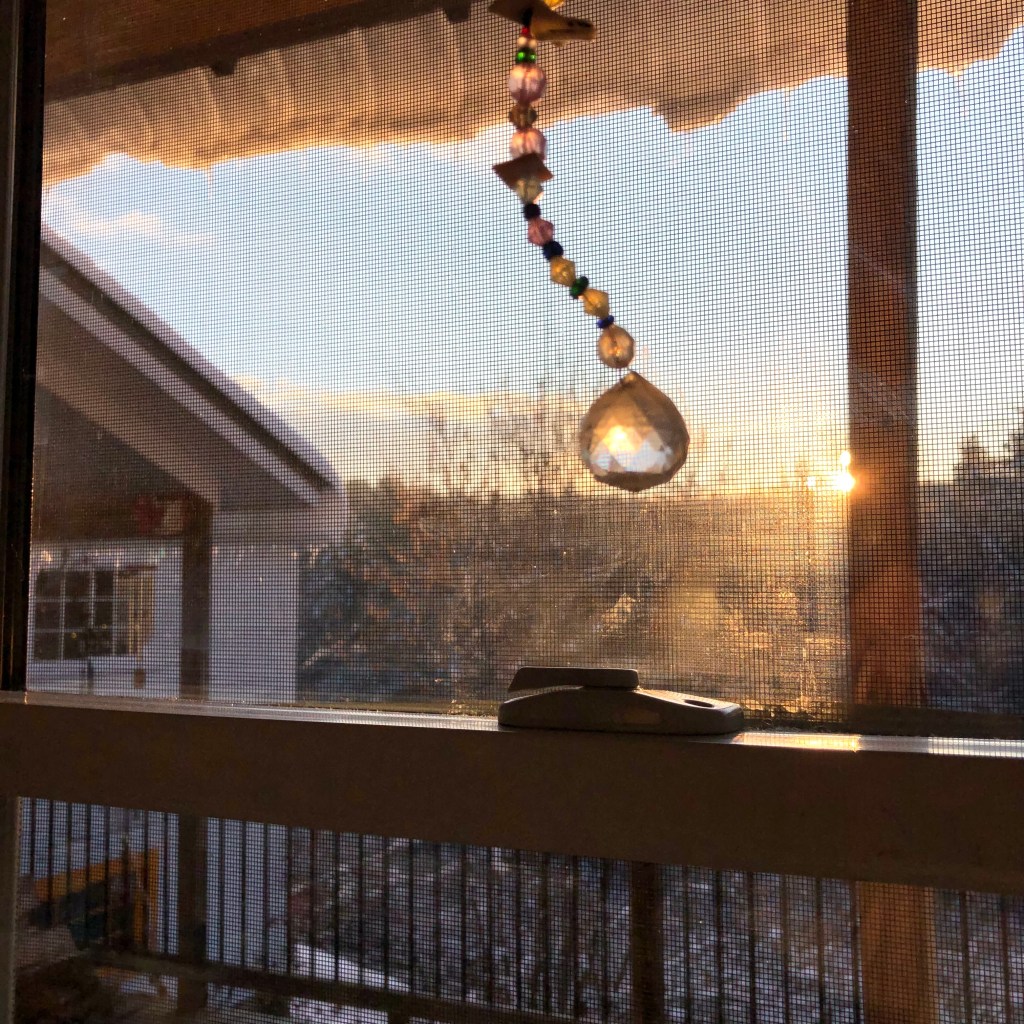
On this December 1 day of sunlight, I cut kale from the garden. The soil beneath my boots is soft, the ice melting into mud. At last night’s virtual Almanac launch, the editors spoke about the importance of print, of books you can hold in your hands, press your face into the opened pages and breathe in the scent of paper and ink.

The memory pieces all have names we’ve made up: pointy tree and leafy tree, yellow girl, blue girl, ugly quilt, the ball, the sun. Strangely, there is no moon. I brew tea. We eat leftover pumpkin pie. Here again is the question: what’s real? Answer: bird in the hand.

Reading. Fear of Dogs. Starlight.

The July after I graduated from college, I stayed in a cabin a short walk through the woods on a back road. The one-room space had been built as a studio with a wall of windows that faced what had once been a view and now was shaded by leafy maples. In winter, the cabin was heated by a woodstove. An outhouse had been dug behind the cabin. My friend was visiting her mother in California. I stayed in the cabin and fed her dog. The dog didn’t listen to me at all. He ran off and chased the sheep down the road, whose owners claimed they could shoot the dog. I was twenty-two and knew nothing about farming, but I was afraid of the angry farmer and didn’t argue. The dog still didn’t listen to me.

Despite the dog and the farmer, I loved the cabin. The economy was terrible; there were few jobs, and I was trying to figure out my next step. I read a lot of Ann Beattie who was popular in the 1990s. I remembered that small paperback Chilly Scenes of Winter I owned for years, when I stepped outside yesterday evening. I had been reading Tess Gunty‘s The Rabbit Hutch, a novel a far stylistic throw from Beattie. In the dark, a truck towing an empty trailer rattled by.

Down the sidewalk, a dog growled. A man tugged the dog’s leash. No: the dog snarled. I knew the mutually unhappy pair, the man’s sole dominance apparently through that leash. I crossed the street and cut down along the brook through the log yard, walking quickly in the tepid night. On my living room rug, that Gunty library book waited, spread pages-down, spine up. Sure, the world changes, moment by moment. And yet, sometimes not so. Overhead, stars and no moon.

“What will happen can’t be stopped. Aim for Grace.”

— Ann Beattie

November.

I must appear half-drowned when I walk into the library, because the librarian asks me just how bad is the weather?

I reach into my jacket and extract a few books, then slip under my sweater the one he hands me. Three-thirty in the afternoon, and a dark rain presses against the windows. The weather reminds me of Ethan Frome, of Walden, of the wildness of Dostoyevsky, the human longing for a hot hearth and candlelight over a bowl of soup.

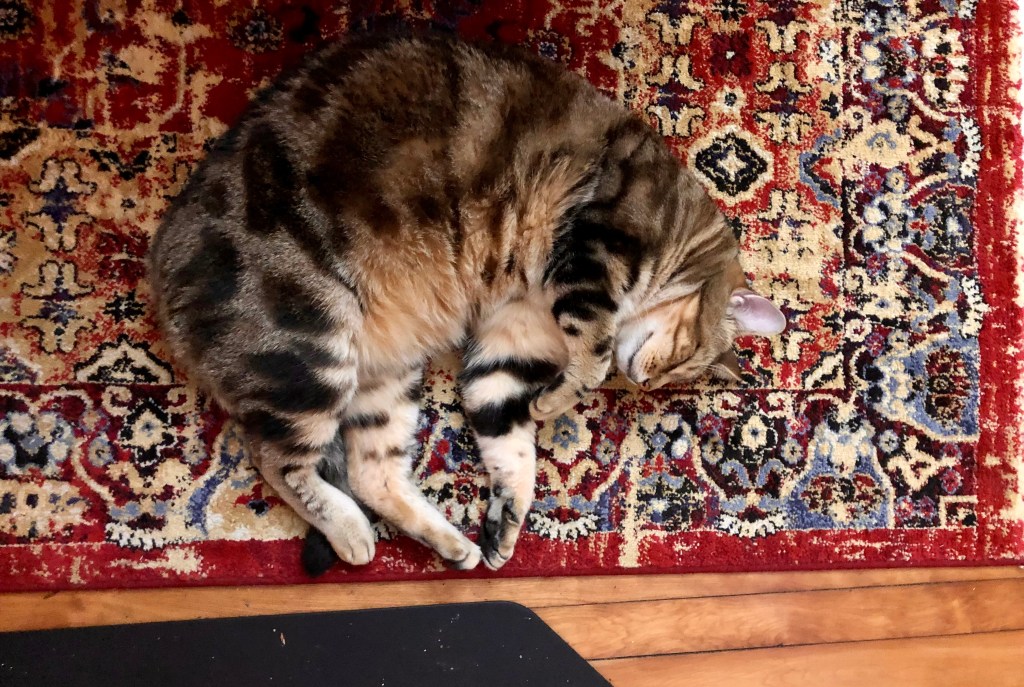
At home, my cats — self-satisfied as cats are — are pleased they survived the visiting dogs. They’ve regained their places before the wood stove, still slightly disdainful that we’ve allowed in the canines. There’s no one out, the roads nearly deserted, the sky concealed beneath the clouds. A wet wind blows.

At home, I wash the dishes and empty the compost in the bin beneath the apple tree. A cardinal flies into the tree’s thickety branches, a welcome sight.

“There are two ways of spreading light: to be the candle or the mirror that receives it.” 

— Edith Wharton

The Whole World.

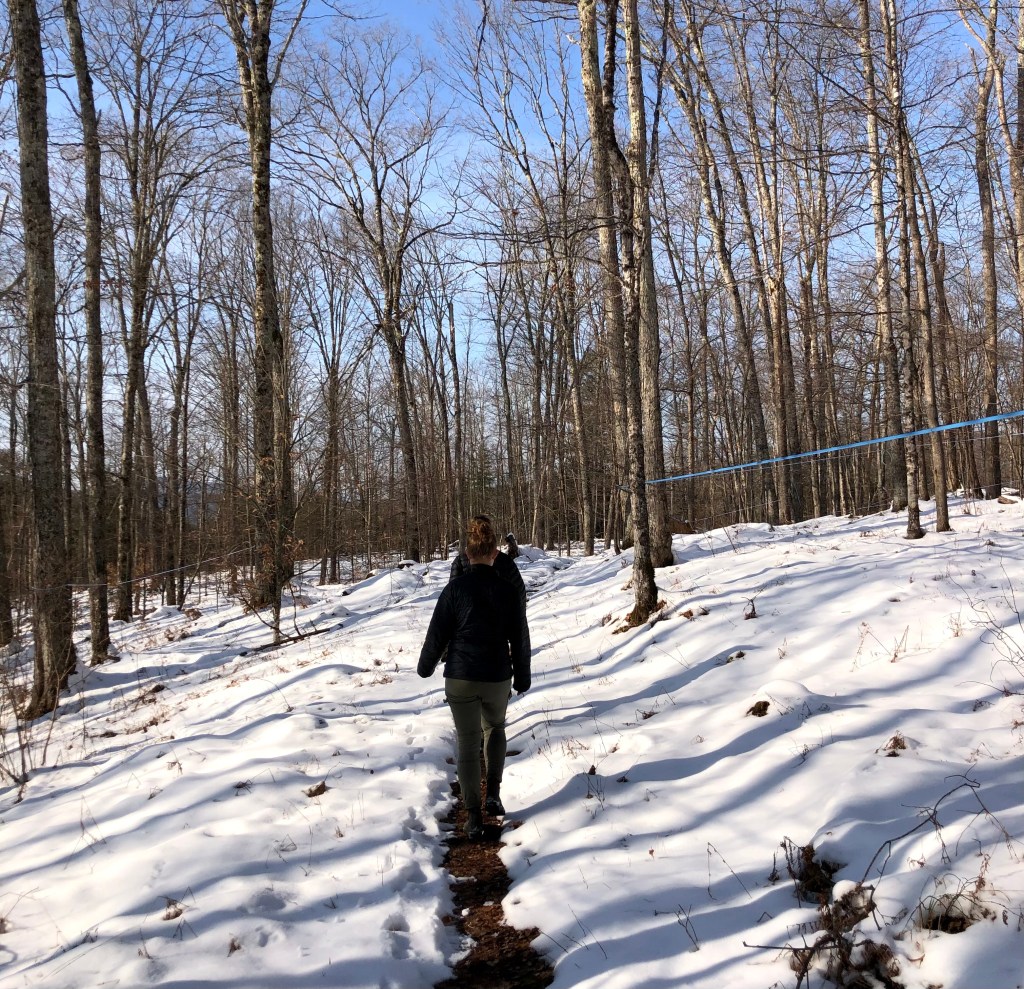
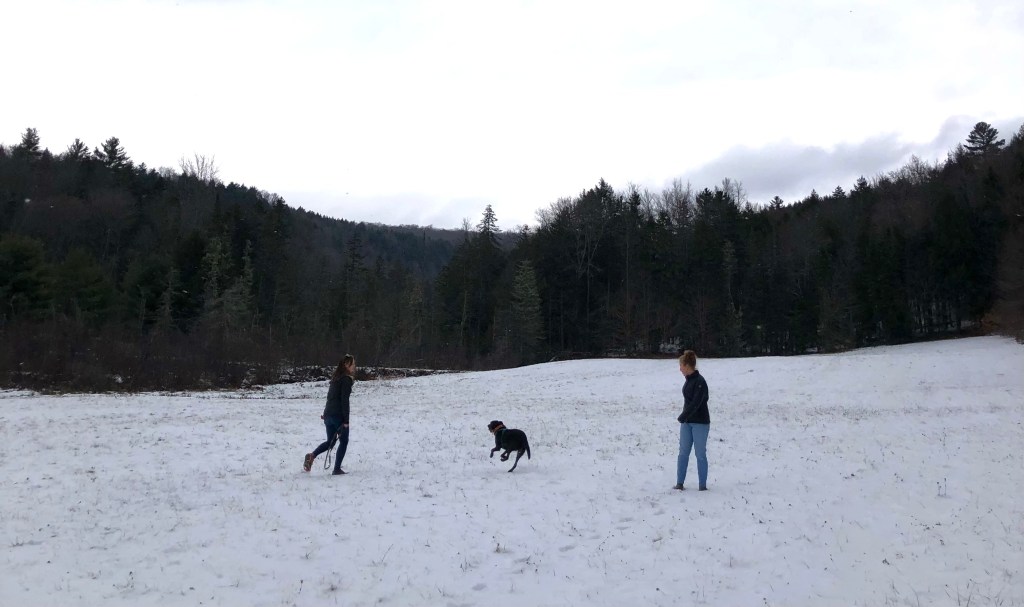
In the beaver dam realm, we spy the quicksilver flash of wet fur, bright eyes. The ice there is thin, barely beginning its winter’s work. We cross the snow-shallow field, then head into the woods and cut down again where the swamp lies in the fold between two hillsides, ghostly in its black-water, dead tree beauty. Then up, up, up we trudge, the dogs eager. We find bootprints in the snow, a few drops of blood from a wounded prey, and then we’re back again to the dirt road. All day, the light seems like twilight, and then we pass through twilight and into the night, and still we’re awake, talking, circling back to the same old subjects. In the morning’s dark, I scrape ashes from the stove and carry out the hot bucket. My brother stands on the porch, watching his dog nose at my herb garden. The damp rushes at my face.

“Like Maine,” I say.

“Yeah,” my brother answers. “But it’s Vermont.”

Happy Thanksgiving, wherever you might be.

“Assurance”

You will never be alone, you hear so deep a sound when autumn comes. Yellow pulls across the hills and thrums, or in the silence after lightning before it says its names — and then the clouds’ wide-mouthed apologies. You were aimed from birth: you will never be alone. Rain will come, a gutter filled, an Amazon, long aisles — you never heard so deep a sound, moss on rock, and years. You turn your head — that’s what the silence meant: you’re not alone. The whole wide world pours down.

— William Stafford

Days of Little Light.

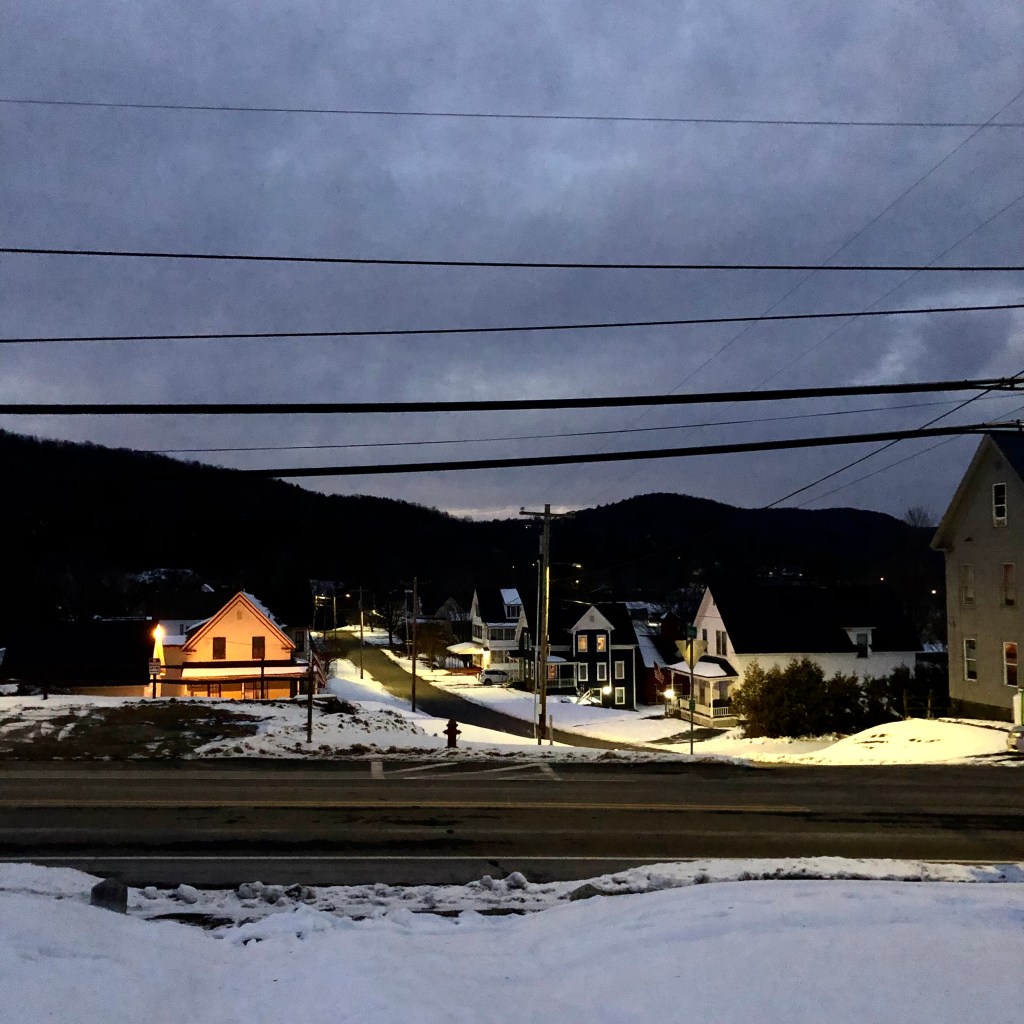
Night has fallen down all the way by the time I leave work. Just below freezing, the wind cuts up with a taste of wet — the feel of sugaring season but the light is all wrong. It’s a month before the solstice, and now I’ve given into the darkness utterly. The truth is, much as I rail against the scantness of light at this annual time, I relish it, too. This time of year entices us to go deep, soul-search, spread out the cards and see what’s there.

Dark to dark, our days go. My daughter phones on her way to work, two stray cats yowling in her car. She’s bathed these hungry creatures and found a home for them, a tiny bit of kindness in the midst of a complicated world. Ever in her blur, she hands off these cats to a new home, blessing them in her own way, and moves on into her day.

“What does it mean to grow rich?… Is it to retain a capacity for awe and astonishment in our lives, to continue to hunger after what is genuine and worthy? Is it to live at moral peace with the universe?” 

— Barry Lopez

Snapshot. Vermont Thursday.

In Newport, at the Vermont/Canadian border, a woman in a bubble-gum pink blazer strikes up a conversation with me in a parking lot about the snow falling into Lake Memphremagog. Mid-morning, dense clouds, fat snowflakes disappearing into the gray lake. I’ve never been around the Canadian edges of this lake.

In Newport, I stopped first to visit my new acquaintance Lila Bennett to check out the work she and her colleagues are doing at the Journey to Recovery Community Center. The center is suffused with natural light, alive with plants and colors, and it’s immediately obvious that they’re engaged in that old-fashioned phrase, “the good fight,” work that saves and salvages lives. Lila shows me the stack of my books, too, that the center is giving away for free, to anyone who wants to read it. I thank her profusely.

I’m in Newport, too, to find my way into a state building, up through a reverse rabbit warren into a large and light-filled room where the state’s staff tells Selectboard members and volunteers from Vermont’s tiny Northeast Kingdom towns about the chunks of federal money in the state’s coffers and asks how to get that money to the needy and broken places in our rural communities.

The room is packed. I sit in the back beside a state senator who offers me advice while I knit a sweater cuff. My blue and orange balls of fingerling yarn roll beneath a stranger’s chair.

The snow falls all morning. A woman I knew 25 years ago comes up and reintroduces herself and launches into her enthusiasm for the rail trail. I chat with the Department of Libraries staff member who reads my blog.

Finished, I hurry down to the lake’s boardwalk before I leave, to breathe in some of that cold wet air. Years ago, my little girl lost a flipflop in this lake. I was talking to someone from the farmers market where I worked, and I turned around when my daughter cried out. She had stuck her foot through the railings and lost her shoe. My friend tried to save her shoe with a stick, but the pink- and purple-flowered flipflop bobbed away, headed northward.

I can’t see my future clearly…

The road becomes itself

single stone after single stone

made of limitless possibility,

endless awe.

— Jacqueline Suskin