Water. Ice. Rain. Cold. Mud.

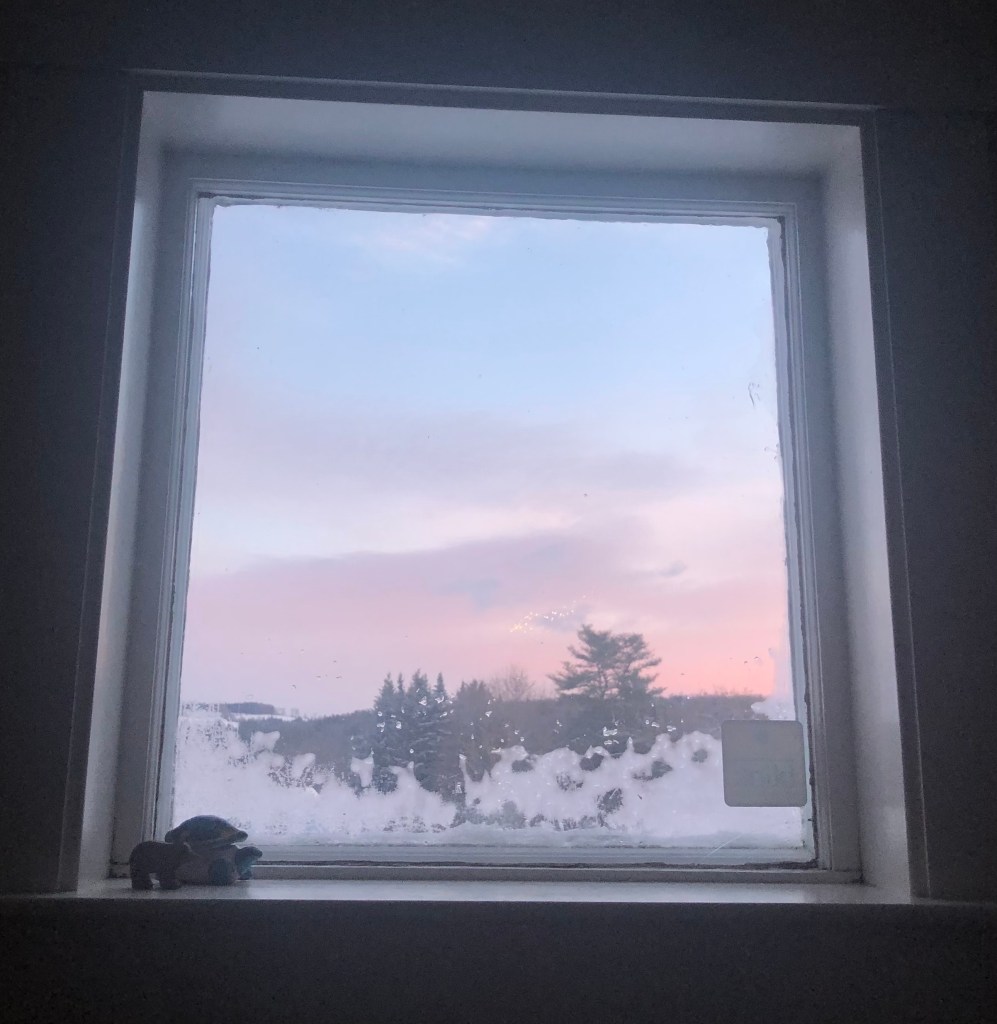
The light is slowly returning; I repeat this to myself in defiance of the gray and brown. How bright a fresh sparkle of snow would feel.

Is it mud season? Sugaring season? Has winter barely begun? One thing that does seem evident is that cabin fever has set in extraordinarily early this year. At work, a stranger phones in and asks for info. I offer the facts, just the facts, and then the stranger remarks, What I’d really like is a small piece of good news to start the new year. I can’t resist; I laugh. I note his bar is pretty darn low. I tell him about seeing a flock of evening grosbeaks Christmas morning in the box elders behind our porch.

That’s something, he agrees. He asks me a few more questions, then remarks that he doesn’t even need to care about these questions, anyway. He could let this go. He says thank you, goodbye, and hangs up. In a strange circumstantial way, I realize I was his good news.

“Caring for each other is a form of radical survival that we don’t always take into account.” 

― Ada Limon

Galaxy Bookshop.

Our town’s beloved bookstore suffered water damage from a fire in an upstairs apartment last summer. The Galaxy Bookshop has been hop-skipping from living rooms to temporary quarters for months and has now reopened. This Saturday, 10 a.m.-6 p.m., the Galaxy celebrates its return with writers and local food.

If you’re in the area, or even reasonably nearby, stop in. One of my most favorite novelists on the planet, Tunbridge’s Jeffrey Lent will greet visitors in the morning, with the wonderful Natalie Kinsey-Warnock. The day’s intermittent guests include Daphne Kalmar, Christine McDowell, the Hewitts, David Hinton and Jody Gladding.

Thanks to Sean Prentiss (and his lovely wife Sarah) for getting this going.

So often, a visit to a bookshop has cheered me, and reminded me that there are good things in the world.

— Vincent van Gogh

Family Stories.

The cats eye the dog with disdain. The dog considers the cats a potential meal or simple annoyance; we don’t know. The dog sneaks into the kitchen and steals the bowl of chocolate covered stars which horrifies my daughters. In that tussle, the braver cat slinks behind the wood stove and regains his favored position.

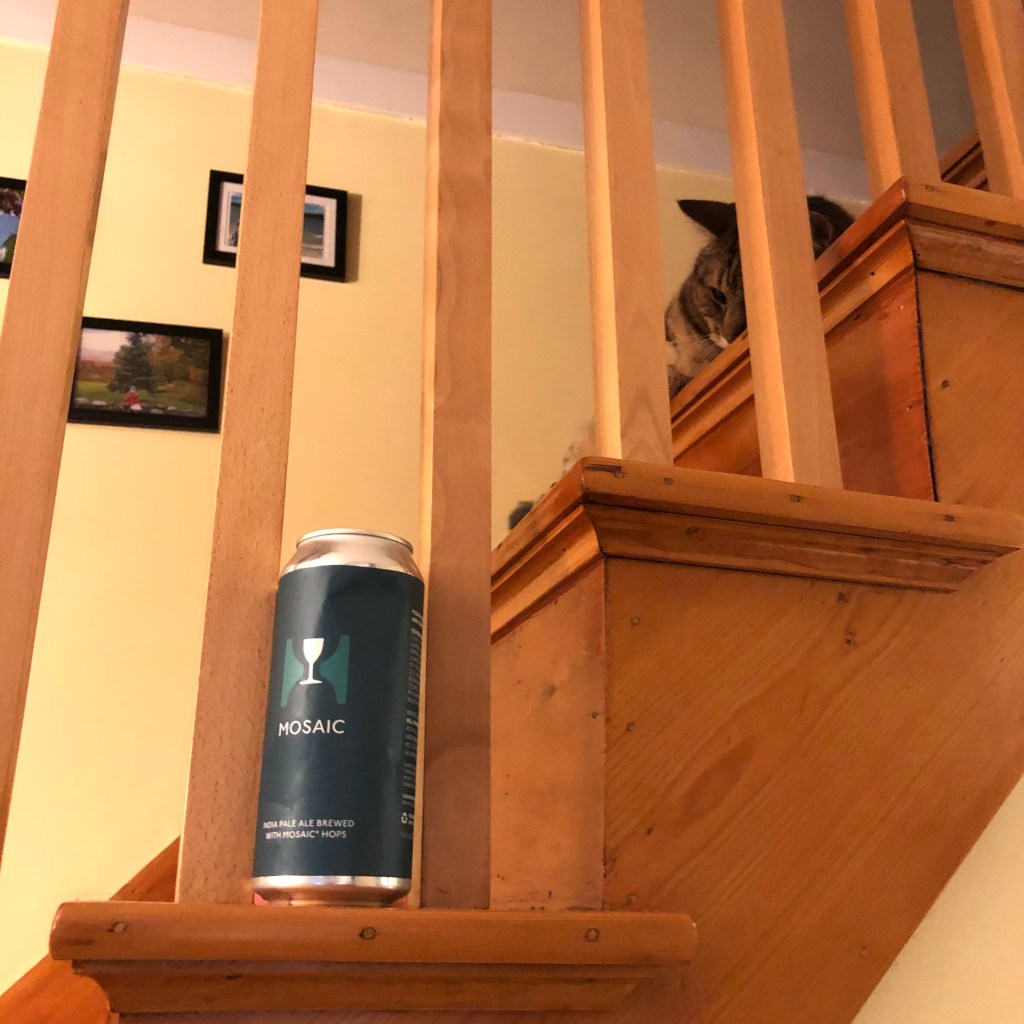
My oldest has no heat in her apartment, worries about her houseplants, has heat and then again has no heat. She texts me before five in the morning, and then my brother and I lie awake and text each other through the bedroom wall. I write, looks rough in Buffalo. I make endless pots of coffee. My brother, the brewery owner, drinks beer. We play Concentration, Chinese Checkers, Wordle.

The bathroom needs painting, and we discuss paint options, how Steam might pair with Orange Juice like our father’s study. The remains could be used in our tiny dining room.

After he’s home, he sends me three photos. In one, my youngest as a tiny girl stands in a borrowed homemade dress with mud smeared to her elbows and daubed on her face. My oldest leans down from an apple tree, sunlight in the leaves over her head. My brother pedals a tricycle. I remember the summer day I took that photo of my youngest. We had stopped by a site where her father was building a house. So much mud, so much pleasure for this child. Years later, I saw that homeowner ice skating with his young daughter. How much I wanted to know if he still lived in that house. How well had it held up for him? Instead, we exchanged chit-chat about the ice, and I never learned his story.

In the dog’s absence, the cats retake their rug and wood stove territory, protagonists in their own cat-language drama.

Composite.

After the death of Ray McNeill, I scavenged a phone number for a woman who roomed in my freshman college dorm and phoned her. We hadn’t seen each other in years. She called me, years ago, after a mutual friend died unexpectedly from heart failure. Our conversation has no real point, no precise question I want answered. We agree we didn’t like each other, years ago, but can’t remember why. What was the contention and why did it matter so much?

Four degrees this morning. I’ve experienced forty below zero, but, good lord, four degrees is not compatible with prolonged human exposure. I carry the stove ashes out and stand for a moment, a few snowflakes drifting down from the darkness, illuminated in my kitchen window’s electric light. Below me in the valley, the scattered lights of the village glow: power still on here. All night, wind threw handfuls of icy snow at our windows. I lay awake listening and reading, my cat curled on my bed, wary of my visiting brother’s dog.

My youngest and I, as the initial rain set in, discovered a rainbow over the village. A fortuitous sign? All depends on how you read that, which way luck will run.

Soundtrack.

My oldest plays Noah Kahan as the soundtrack to her life, the young man who sings of loving Vermont in all its bareness and glory: I love Vermont, but it’s the season of the sticks

I pull over on the roadside. There’s no one around, not even a crow keeping me company. Solstice season, the precipice of one thing tipping into another, the darkest of the season tipping over into the real winter yet to begin. I am decades into my own love personal affair with Vermont.

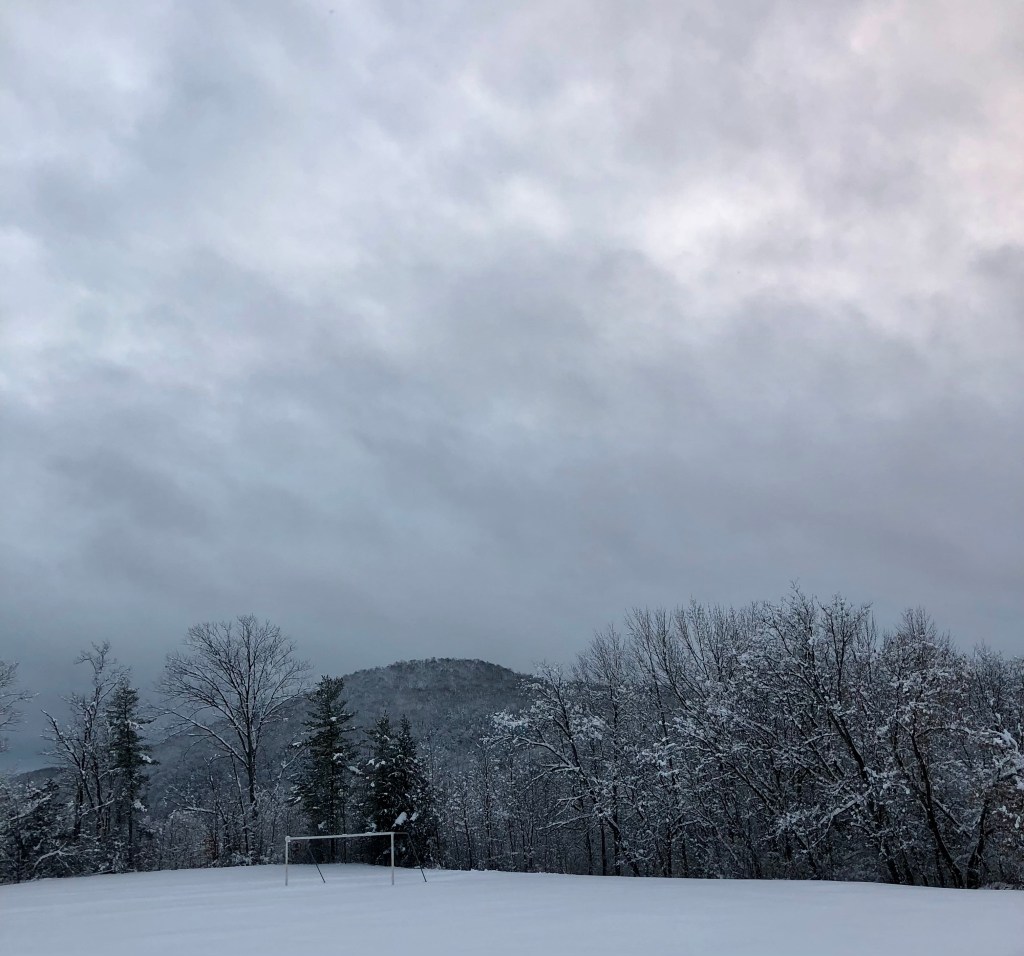
Winter is the perfect season for a writer with its shocking beauty, the looming threat of frostbite, the profound metaphor of darkness and light, heat and cold, stillness and the edging-in resurrection of spring. On the deepest level, perhaps, winter reinforces the need for patience.

Noah Kahan sings: So I thought that if I piled something good on all my bad
That I could cancel out the darkness I inherited from dad…

How’s that for a variation of an Eugene O’Neill play?

Curious about this Kahan character? Check out Vermont Public Radio’s story.

The Present, the Forgotten.

Midday or so, I jam on my boots and head out for a walk down to the lake, leaving behind my desk with piles of hard questions. I’ve forgotten my mittens, so I walk with my hands in my pockets while the wind tears over the lake. The summer people are all long gone, houses boarded up against the elements and thieves. Ahead of me on the road, a stranger walks with a little dog who leaps in snowbanks.

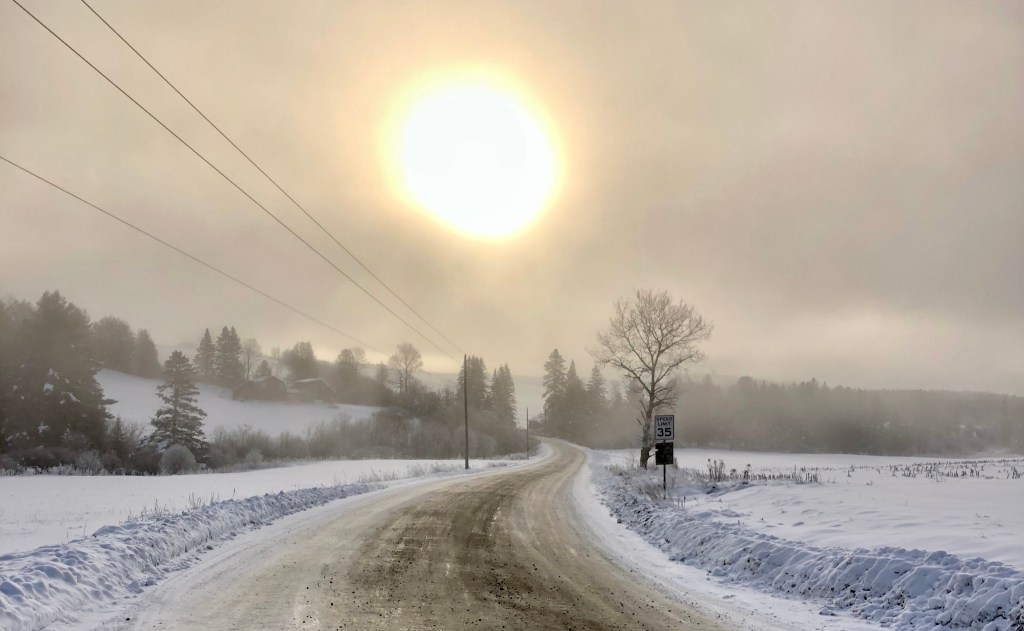
The sunlight is clear, sparkling on the snow, the lake white-capped and simultaneously blue and gray and the green that copper turns after rain.

Last winter, the town began plowing the sidewalk that cuts through the old school’s green. A woman had snowshoed a labyrinth in the snowy lawn for years. The sidewalk divides that space. She protested. The plowing continued. I see she’s marked that labyrinth behind the church. Ahead of me, the little brown dog stops in the road that no one else but us is traveling, its head cocked to one side, staring at me. A gust of wind blinds me with snow for a moment, and then drops just as quickly.

As I walk up to the little dog, I bend down and say hello. The man explains that the dog has rules about people walking behind them — not allowed — and then the three of us walk together, the dog now happily flipping itself into snowbanks. “It’s a bit of an inconvenience,” the stranger tells me, “especially when I have work to do.” At the main paved road, traffic is sparse. A lone Subaru passes with salt-streaked windows.

We part ways. I walk along the short stretch of pavement and turn at the old maple tree that I begged the Selectboard not to cut last year, arguing that the breaking branches were falling only on the grass. “Give it one more year,” I asked, secretly hoping the tree-cutting plans would drift into forgotten things.

At the door, I stamp snow off my boots: a walk with a handful of immutable things.