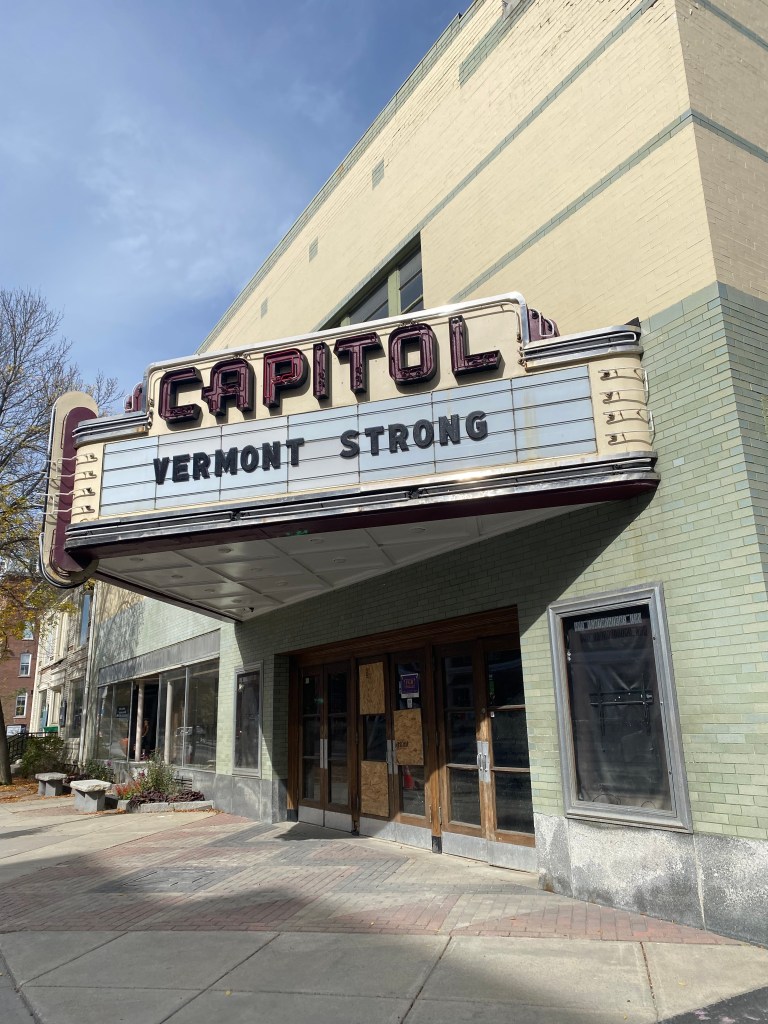
Post-Flood, Montpelier.

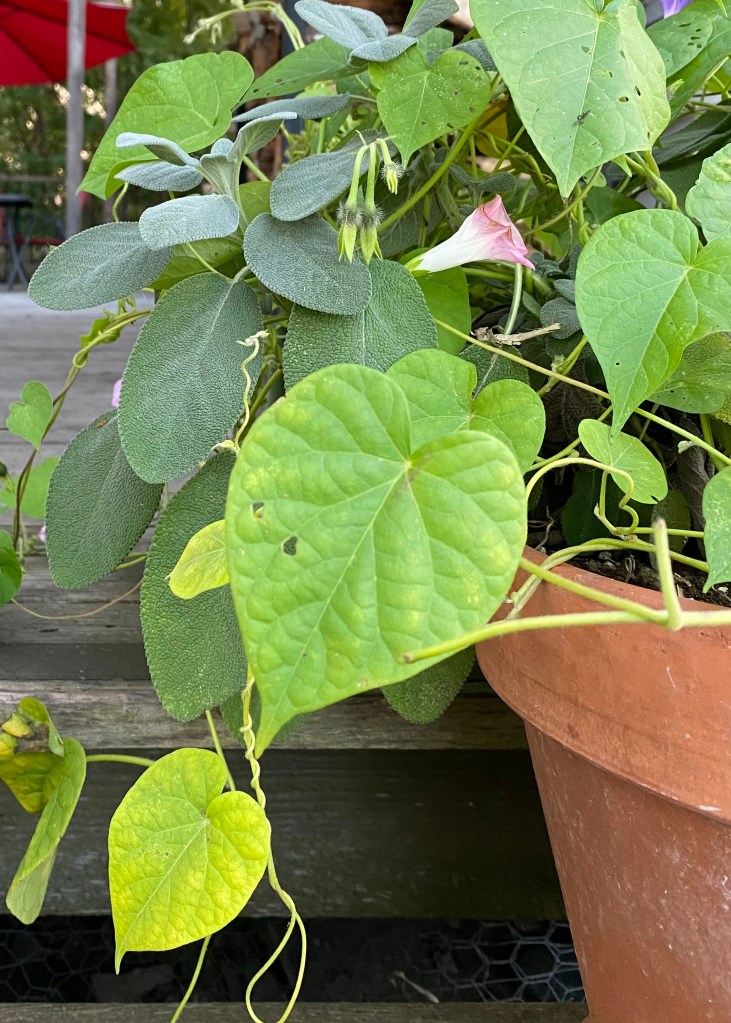
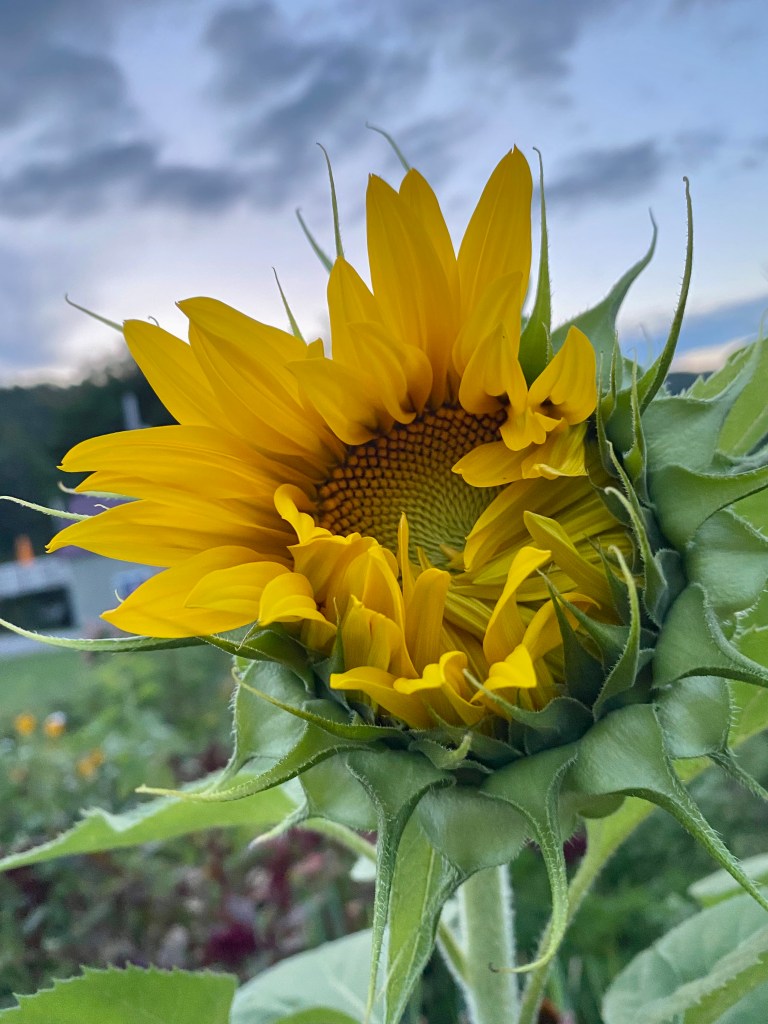
As if overnight, the fall foliage has vanished, swept into gray. The secret of Vermont’s autumn is the long lingering twilights, languorous and violet. Branch by branch, the trees are emerging from their summer splendor. Before frost yet, my garden rages on, orange tithonia, candy-colored cosmos, the morning glories that intrepidly vine through sunflowers and tomatoes and borage.

This weekend, I walked through Montpelier. So much of Vermont’s capital remains boarded up after the July flood, in need of money or labor. Other folks have shuttered up and headed elsewhere. It’s impossible to pretend that the world around us isn’t swirling in chaos. Nonetheless, when I come in with my fingers and toes cold, I build a fire. The neighbors string up gold lights. Quickly, quickly, and immensely slowly, the season settles in.

“You must try,
the voice said, to become colder.
I understood at once.
It’s like the bodies of gods: cast in bronze,
braced in stone. Only something heartless
could bear the full weight.” 

— Jane Hirshfield

A Mixed Delight.

All week, we say to each other, This might be the last nice day or Only a few good days left, as if our Shire-ish Vermont realm teeters on the brink of disappearance. Not so, of course.

I leave work early and disappear into the town forest, stepping off the main trails which suddenly seem populated, and hurry down the narrow bike paths, picking up speed and running in my shoes that I’ve meant to replace with their torn toes and worn soles. Add that chore to the list of the mundane: clean the upstairs closet, shake out the living room rug, replace the burned-out lightbulb over the bathroom sink.

October is a hard reckoning month in Vermont, the sizing up of the summer (not enough swimming, surely not enough sunlight) and the letting go of gardening as winter edges in, steadily, inexorably. I rake leaves, mulch the garden, put away my shovel and hoe.

For years, I canned crazily, hundreds of jars of beans and tomatoes and apples. This year, the mainstay of my garden is flowers. Months ago, the flowers gained the upper hand, and I can scarcely pick my way through the tangle of vine and petal: a patch of succor for pollinators, slow moving now, and birds.

My mother asks what’s new, what’s happening: skeins of geese fly over our house. Like the skeins of yarn I unwind and then rewind into fat balls. Sprawled on the windowsill beside my desk, my cat studies a gray squirrel fattening its cheeks with sunflower seeds. Red, gold, green: autumn.

We must risk delight. We can do without pleasure,
but not delight. Not enjoyment. We must have
the stubbornness to accept our gladness in the ruthless
furnace of this world. 

— Jack Gilbert

Talking Past Dark.

A friend comes to visits, heads to my picnic table, and we commence talking. Hours later, a dewy dusk has descended. I’m shivering, my sweater cuffs pulled all the way over my hands. Inside, my cats are grousing for a fire in the wood stove.

I remember my friend’s oldest son sitting on my couch, about an eon ago. The boy was so small his legs didn’t reach the end of the couch. Now, he’s thinking of heading into a PhD program.

I haven’t seen this friend in months, since before I traveled to Europe and decided I was born on a continent that mismatches me. Yet, we start talking as though I was a young mother again, walking along the dirt road with a toddler, my hair unbrushed for days.

It’s a cliche of course, how the world changes and how it remains the same, that one long Heraclitus river — always the stream, never the same.

The foxes didn’t return to den behind my house this year. A few stray lilacs bloomed in late September. The harvest moon sails up in the sky. All our hours of talking and we solve absolutely nothing, not a single problem, except this, perhaps: a fattening of our friendship, this woman who assured me I would survive my divorce, that my life would continue. The sun heads down, and we keep on talking.

Good Weight of Firewood.

The wood man delivers me green firewood, wood I plan to burn next year, God willing. He brings bees, too, or maybe the creatures simply appear magically from my gardens or trees, hovering on this sweet-smelling-of-sap pile. The day’s flawlessly sunny, and we stand beside the wood and butterfly bush my daughter bought me, talking. His truck is 40 years old, older than him, and he yarns on from there, telling me about his sugarbush and the taps he leases and how much syrup he made last year and the year before. A former sugar maker myself, we talk the talk about reverse osmosis and arches and how he nearly but not quite burned his front pans last year. We talk ropy sap. We talk how long it takes to fill a 40 gallon drum.

I write him a check for a week’s worth of my wages. He heads out, still laughing, leaning out his window, telling me his wife expects him home for lunch.

When he’s gone, I lift a piece of maple, heft its weight, breathe in its smell. This wood man’s given me good weight.

Facts Yet Matter.

As one of the things I do to keep my household of daughter and me and two cats churning along, I spend an inordinate amount of time on minutes for a complicated development review board hearing. The writing poses the interesting questions of what to include, what to delete, clarity of the whole, simplicity of sentence. Beneath this, the minutes are a miniature of a town and the push-pull around building and change, of past and present and future, of how multiple stories of people intersect.

A deep appeal for me, writing these minutes, is that the facts matter. I arrange numbers and percentages, how these describe boards and a proposed building beneath a stand of cedars.

What I don’t include is that beyond the cedars the bank drops steeply into the water. The water is particularly clean. I’ve been swimming at the public beach for years, and I know how you can swim far out and look down at the sandy bottom. Flecks of mica glitter in the sunlight. The facts of my own story include an especially warm October day many years ago when a friend and I ventured far out into the lake. We swam among the first of the fallen red leaves. The day was so warm and the water so still.

And a line from Nikita Gill that sums up my tenor of thinking these days….

“We have all taken turns being Red Riding Hood and we have all been the wolf.” 

— Nikita Gill

In Very Vermont Fashion….

… I stopped by an art opening in a former brick stagecoach inn. In the Vermont way, the art was eclectic and superlative, the cheese local, the diminutive cupcakes homebaked, and the company excellent. My friend is the easy kind of person who doesn’t mind stepping forward with a plate of olives in her hand and introducing herself to a former library volunteer of mine whose name I can’t quite place….

Across the dirt road is an old barn where a stone labyrinth was placed a few years back. While my friend and I were talking, we watched two strangers do an excuse me, no, excuse me, sorting out who was going to enter the labyrinth first.

Small pleasures, friends, against the inevitable chaos of life.