Our Place in this World

WHEN WE FAIL TO TEACH our children how to inhabit the places where they have been raised—when we don’t teach them the stories, the customs, the practices, the nature of those places—then we also fail to teach them how to be at home anywhere.

But suppose local history, culture, and natural history were at the center of our teaching. Wouldn’t that, you might well ask, just encourage parochialism and xenophobia, and don’t we already have those attributes in more than adequate supply?

I would argue, on the contrary, that parochialism and xenophobia are fed by the suspicion that all the really important things happen somewhere else. One of the magical effects of freeing the imagination to go to work in the place where it finds itself is how this enlarges the world.

– Paul Gruchow, “Discovering the Universe of Home”

By sheer fortuitousness, I stumbled upon Gruchow – particularly keen as I’m writing an essay on Thoreau, sense of place and my own Vermont writing.  If there’s one thing in my (perhaps questionable) parenting I’ve given my daughters it’s place in spades:  here, this clayey piece of land, is where you learned to walk and run; the grass under the apple tree where tea was sipped from miniature, ladybug-painted cups with dolls; the dirt road where you learned to pedal a two-wheeler; our house under the gossamer Milky Way. Right now, our place in this bend of Vermont gleams a myriad of green, heady with the fragrance of mud and multiple blossoms.

IMG_1461-2

The Long Trail, Johnson, Vermont
July

Here’s the thing about Thoreau and gardening:  Thoreauvian time is distinctly non-linear, perceiving the world through cyclical seasons.  Walden is written as a single-year cycle, with multiple circles within.  As gardeners, we must all, on some level, embrace the world in variations of rebirth, growth, and demise.

Today, my garden bursts in profusion:  white currants, greens, rogue chamomile mixed in with the bee balm.  A woodchuck we saw running by…..

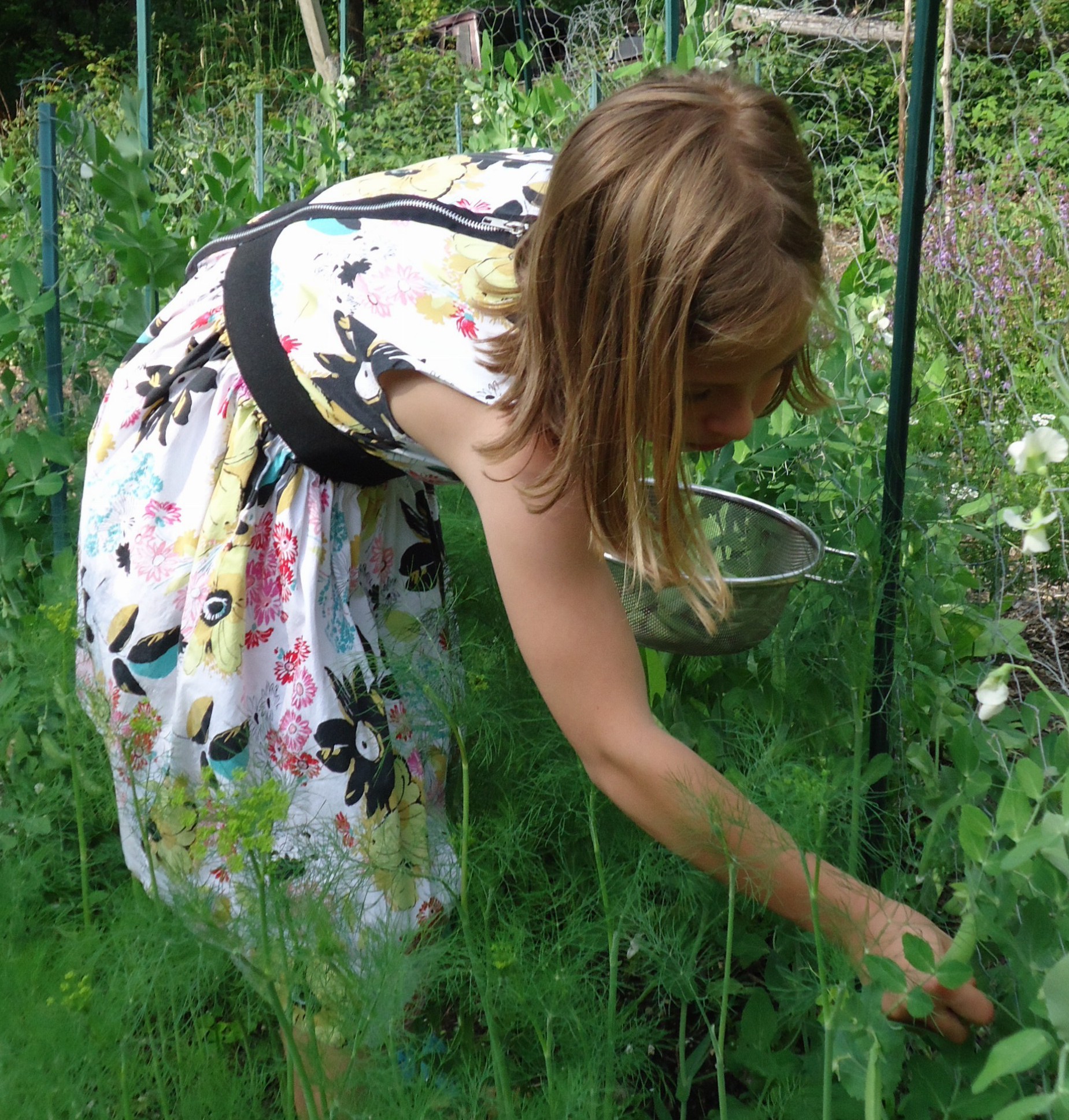
This is the season of a ten-year-old girl picking peas, of dinner cooked over an outside fire, of rain on the sunhat left on the grass while we played an evening game at the neighbors’ house.  Their four-year-old daughter showed us her garden, while her younger brother ran in excited figure eights.  Walking home tonight,  my daughter’s hand in mine, fireworks from Cabot and Morrisville lit up the night sky over our mountain, while fireflies blinked around us.  Our heels struck the dirt road, our guide home in the thick country dark, the frogs peeping and the owls calling, this season of Vermont July.

Children, who play life, discern its true law and relations more clearly than men…  At the same time that we are earnest to explore and learn all things, we require that all things be mysterious and unexplorable, that land and sea be indefinitely wild, unsurveyed and unfathomable by us because unfathomable.

– Thoreau

DSC01005

DSC01011

Happy Birthday

We hold these truths to be self-evident, that all men are created equal, that they are endowed by their Creator with certain unalienable Rights, that among these are Life, Liberty and the pursuit of Happiness…. be that apple pie, a small vineyard, or the stock market.

DSC00966

The pursuit of happiness doesn’t get any more American than that.  But way down at the end of this document, those signers staked their personal bets on something called Providence and did a blood-brother we’re-all-in-the-same-boat handshake.  Huh.

And for the support of this Declaration, with a firm reliance on the protection of divine Providence, we mutually pledge to each other our Lives, our Fortunes and our sacred Honor.

A Little Levity Now…..

While writing an essay on Thoreau and a sense of place in contemporary Vermont literature, I’ve reread Donald Hall’s “Why I Hate Vermont.”  Having spent a chunk of my childhood in Hall’s New Hampshire, I can only laugh at this essay.  It’s wickedly funny (and his claim about the trout is actually true).

In Vermont deer are required to have shots.  In Vermont people keep flocks of spayed sheep to decorate their lawns.  In Vermont when inchling trout are released into streams, a state law requires that they be preboned and stuffed with wild rice delicately flavored with garlic and thyme…. In Vermont, in 1999, the license plate slogan was Eat Three Nutritious Meals a Day.  In legislative committee this slogan edged out Experience Mozart.

– Donald Hall

DSC00938

The more serious side of Vermont…..

The Haunting Hermit Thrush

Every so often, I think of pulling up my modern version of tent stakes and lighting out for new territory.  What would I miss?  A house I seem incapable of heating for much of the year?  A summer that’s been rain, downpour, sheets of storm?  A road nearly impassable in mud season?  Black flies?  Maggots in the brassica roots?

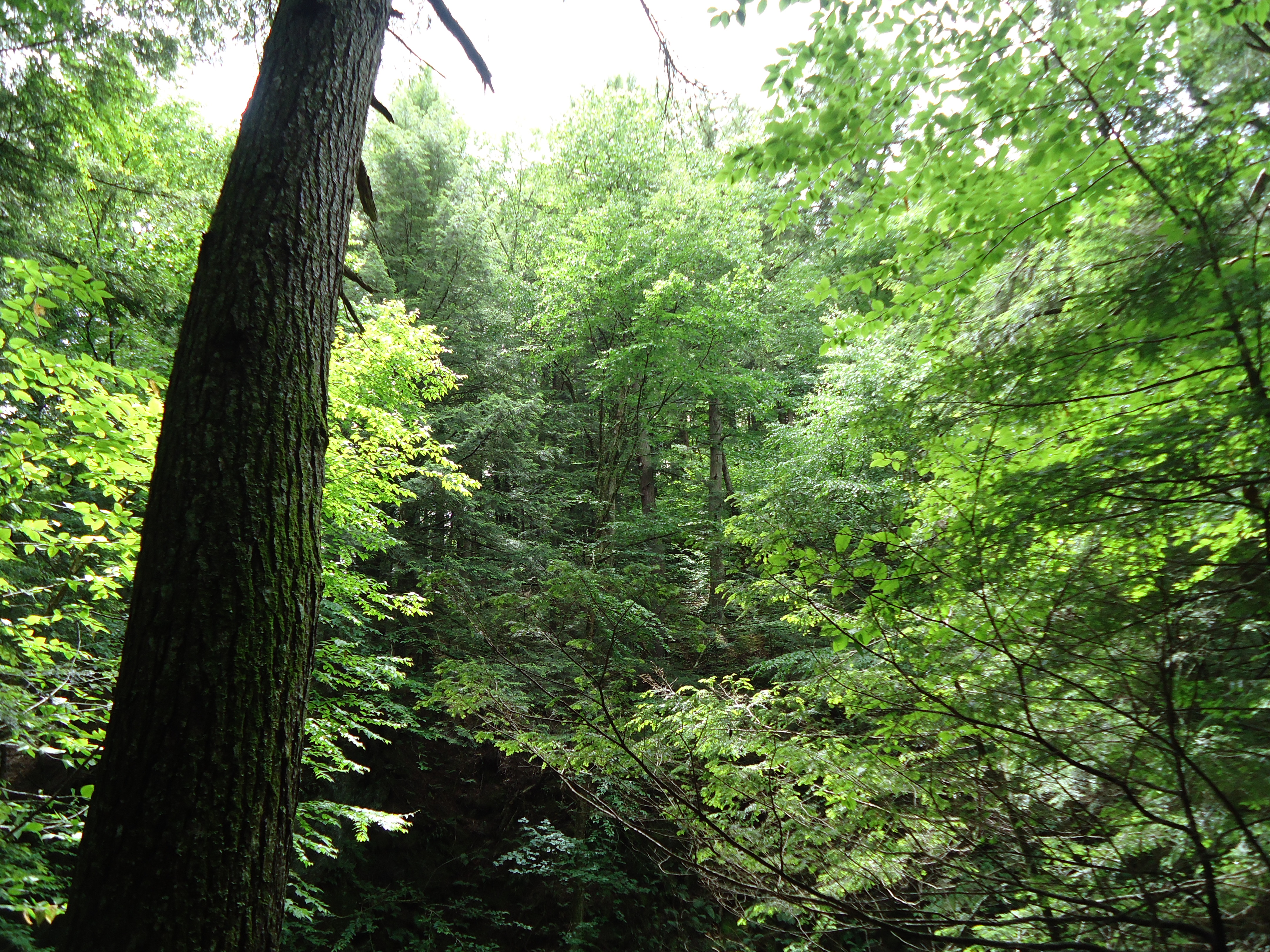
Walking down to the mailbox today, I realized I would miss the pure, haunting melody of the hermit thrush, this tiny, unassuming brown bird.  The hermit thrush is a forest bird, not a bird feeder creature, and not inclined to appear in a suburban backyard.  For just a brief bit of the year, the forest around us sings with its loveliness, an auditory treasure.

… we drop everything to listen as a
hermit thrush distills its fragmentary,
hesitant, in the end

unbroken music.

Amy Clampitt

DSC00929

R-E-S-P-E-C-T

Coffee this morning with my ten-year-old, while she ate cereal.  I was writing a list for the today and listening to music on my laptop, when my child suddenly burst out laughing.  “I basically know this song by heart!  My teacher loves it.”  Aretha Franklin:  R-E-S-P-E-C-T.  I laughed, too.

Respect.

I acknowledge today, in full respect of their great strength and prickliness, the wild raspberries are winning the garden battle.  In particular, crouching under the mighty asparagus, weeds of all tenor and tenacity — clover, smart weed, invasive buttercup — are thriving.  I knew, going into the summer and facing more work hours and one less mouth to feed, that I had to scale down in some way on a garden already about as large as I could handle.  I’ve cover cropped a few beds, planted potatoes that are about the easiest things to grow, and maniacally mulched.  Nonetheless, areas of the garden are wholly lacking joy.  It’s problematic, for instance, to let your fence fall down in deer territory.  While I feel convinced, in my female household, that the girls and I are holding things up, there are times when a few hours of male labor would shore things a little straighter.  Is it really a solution to let wild raspberries become my garden fence, in a strange rendition of the sleeping beauty fairytale?  Where’s the line between winning the battle, being pathetic, and getting along?

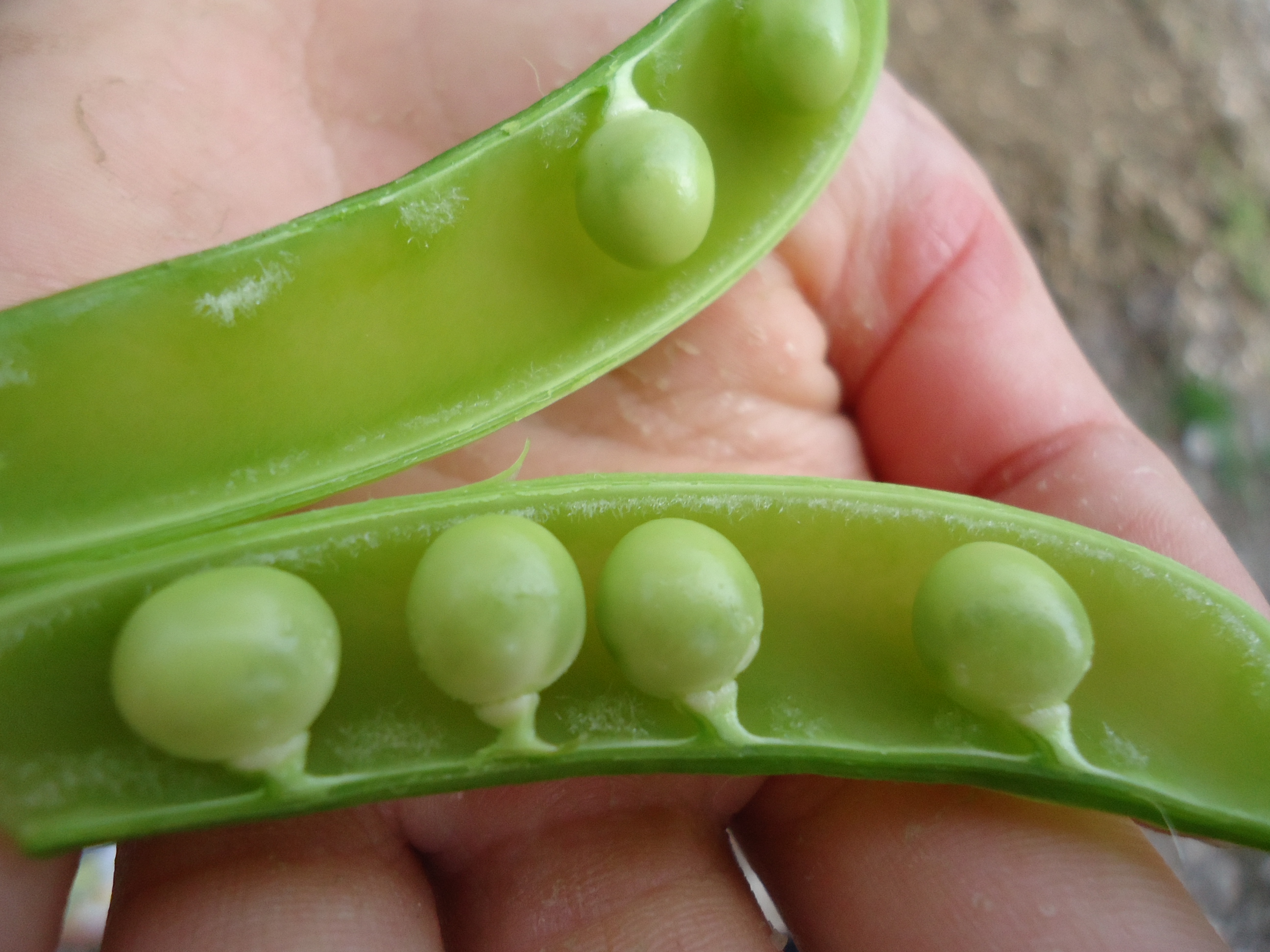
So, that single word stayed with me in the garden – respect – while I pruned the tomatoes and thinned the corn and stood staring into the woods, eating peas in their tender shells.  It’s easy to respect those I love, but difficult to muster down deep any kind of affinity for those who tear at me:  the raspberry canes, for instance, and the far more wicked and intrepid blackberries that have punctured the soles of my shoes.

My daughter and her friend came to find me, wanting to cook dinner outside.  I lifted my shirt from the ground and pulled it on.  In one sleeve, on my bare and dirty arm, I touched a slug.  Repulsed, I dropped the shirt.  Then, while the children ran off on their project, I knelt and, with one finger, extracted that brown slug from my shirt, a gelatinous, clammy creature.  I carried it outside the garden and laid the fat thing in the ferns.  My fingers were smeared with a brownish-yellow stickiness.  The slug inched its way, painfully slowly, beneath the fern and disappeared.

SLUGS

Who could have dreamed them up? At least snails

have shells, but all these have is—nothing…

– Brian Swann

DSC00915